Artwork
Shoe Shop
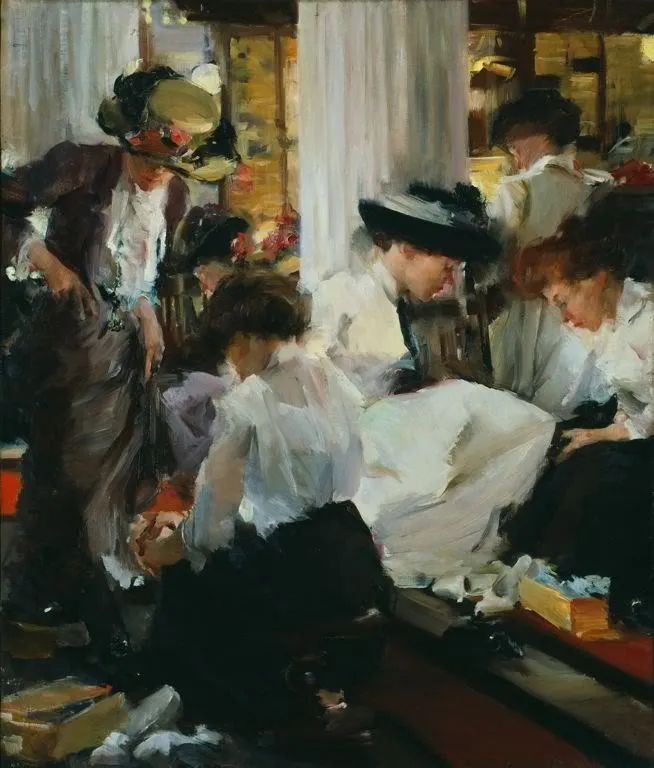
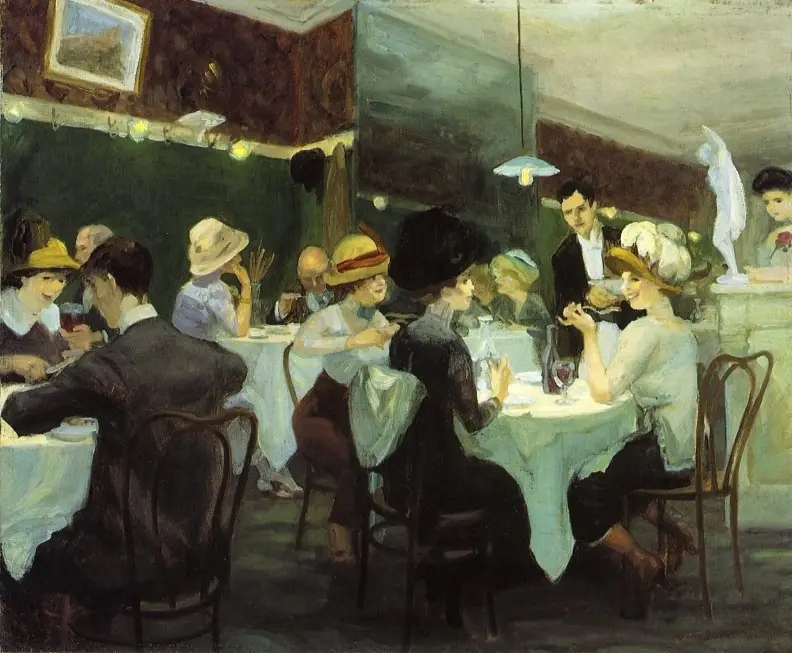
Shoe Shop is an oil painting by the Ashcan School artist Elizabeth Sparhawk-Jones. It dates from 1911 and is held in the collection of the Art Institute of Chicago.
About this work
Overview
Elizabeth Sparhawk-Jones painted Shoe Shop in 1911, early in her career, while living and working in urban centers including New York, Philadelphia, and Paris.
Elizabeth Sparhawk-Jones painted Shoe Shop in 1911, early in her career, while living and working in urban centers including New York, Philadelphia, and Paris. Executed in oil on canvas, the work captures a quiet interior scene with attention to ordinary life. It resides in the Art Institute of Chicago’s collection, representing a moment when American artists turned toward domestic and commercial spaces as subjects worthy of serious depiction.
Subject & Meaning
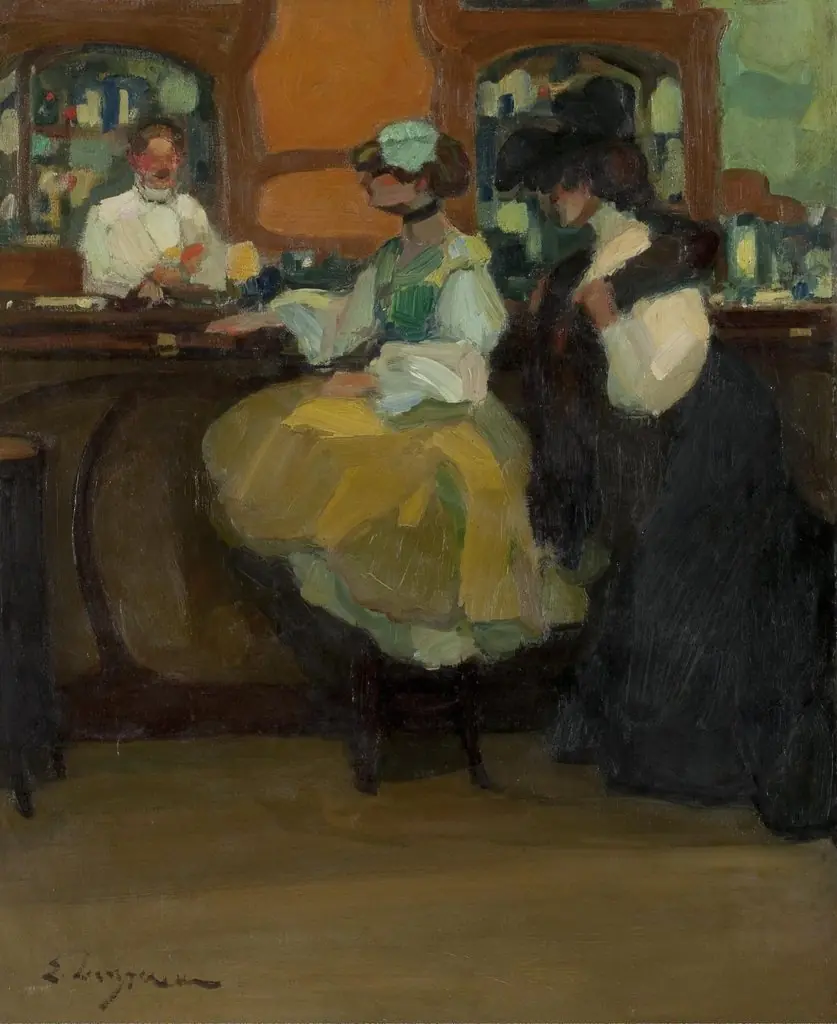
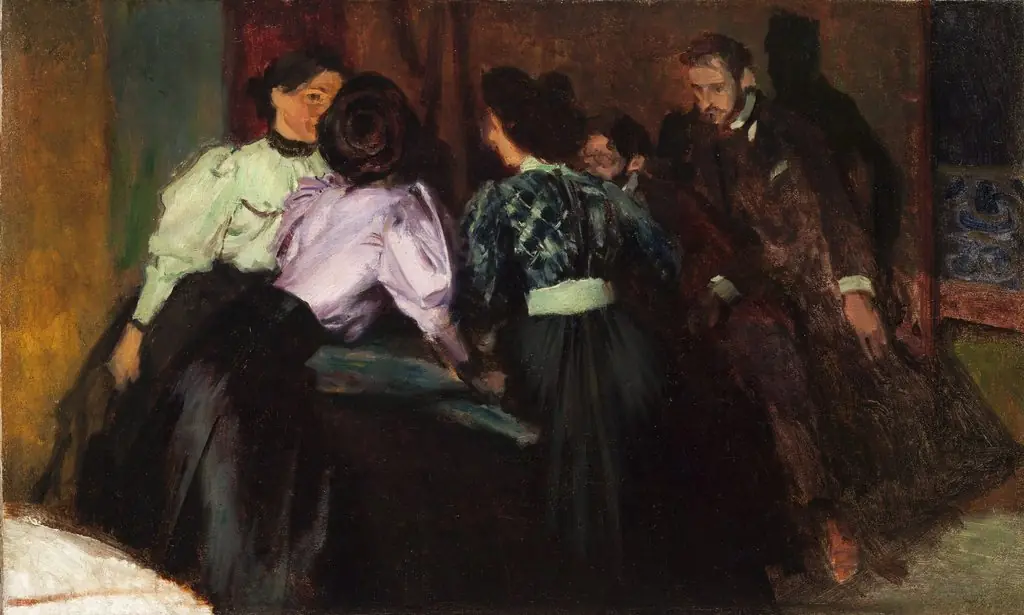
The painting shows several women in formal dress gathered around a room filled with footwear and accessories. Their postures suggest quiet conversation, evoking a sense of shared routine rather than spectacle. The setting, a shop or fitting room, hints at the intersection of commerce and personal ritual.
The absence of male figures and the focus on women’s interactions underscore a private, feminine sphere often overlooked in early 20th-century art.
Technique & Style
Sparhawk-Jones employed naturalistic lighting to define form and texture, illuminating fabric, leather, and skin with soft, directional rays. Her brushwork is precise yet unobtrusive, favoring subtle tonal shifts over bold contrasts. While the scene recalls Ash Can realism in its subject matter, the handling of light leans toward impressionist sensitivity, creating warmth without theatricality. Color is restrained, dominated by muted tones that enhance the scene’s intimacy.
History & Provenance
Created during Sparhawk-Jones’s formative years, Shoe Shop was likely exhibited in early 20th-century American salons before entering the Art Institute of Chicago’s collection. Its acquisition reflects institutional interest in women artists of the period, though her work remained relatively underrecognized compared to male contemporaries. The painting’s survival and preservation offer rare insight into a female artist’s perspective on urban commerce and social ritual.
Context
In 1911, American art was shifting from academic traditions toward depictions of everyday life. While Ash Can artists often portrayed gritty street scenes, Sparhawk-Jones focused on interior spaces frequented by women, shops, parlors, and studios. Her choice to depict a shoe shop, a commercial yet personal environment, aligns with broader cultural changes as women gained visibility in public and economic life.
Legacy
Though Sparhawk-Jones did not achieve widespread fame during her lifetime, Shoe Shop endures as a quiet testament to her observational skill and sensitivity to domestic space. It contributes to a growing recognition of women artists who documented the nuances of female experience in early modern America. The painting remains a reference point for scholars examining gender, labor, and light in early 20th-century American painting.
Artist & collection
Artist
Elizabeth Sparhawk-Jones (born Elizabeth Huntington Jones; November 8, 1885 – December 26, 1968) was an American painter who lived in New York City, Philadelphia, and Paris, France.