Artwork
William Cullen Bryant
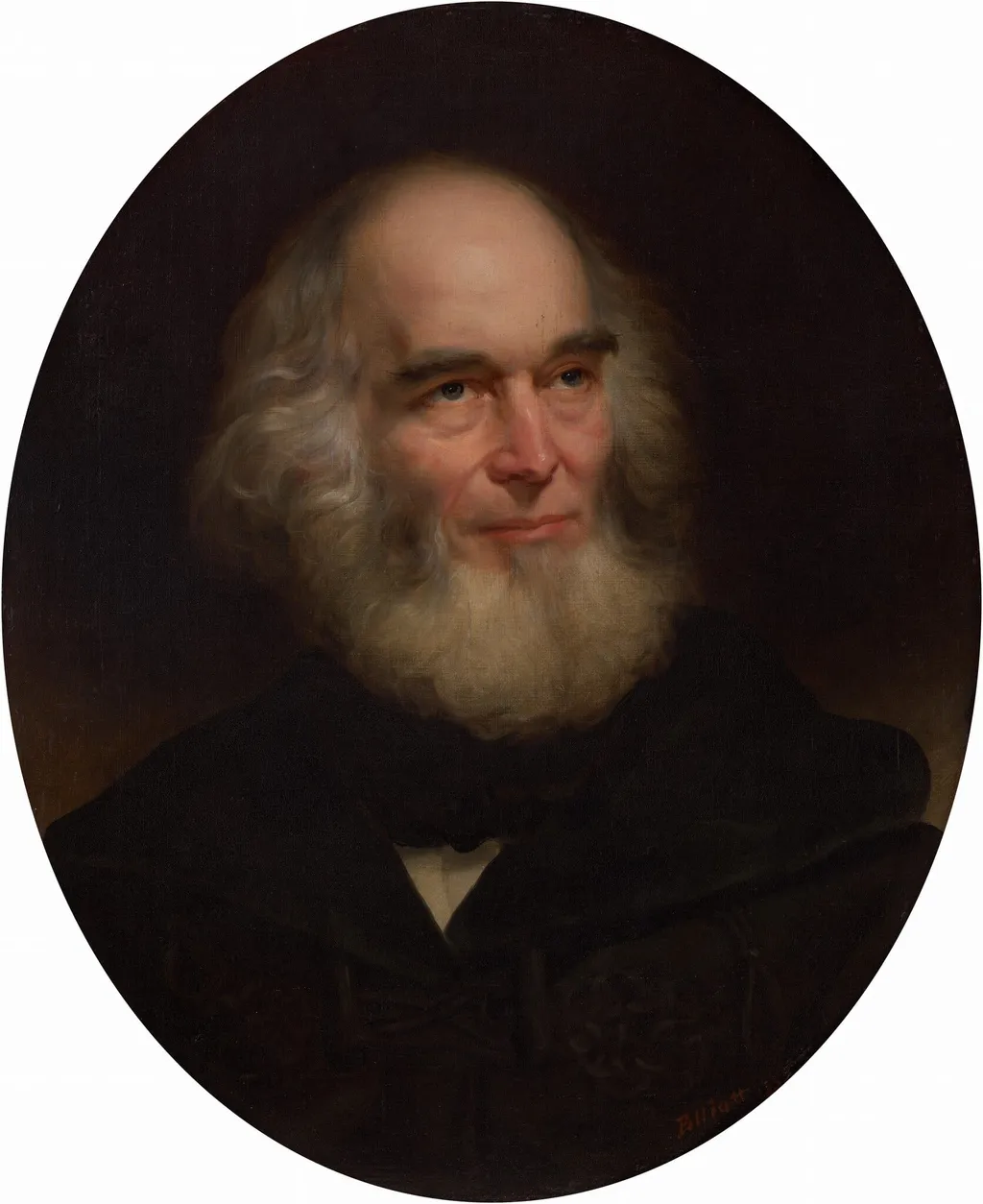
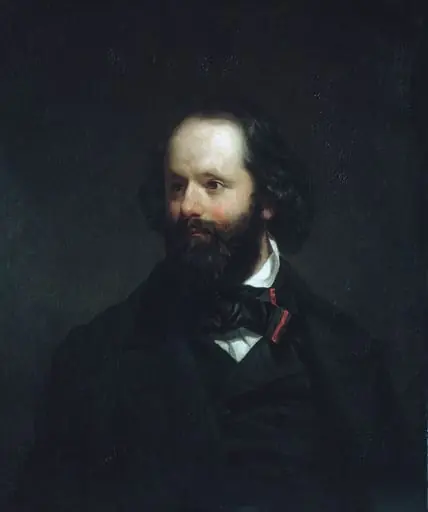
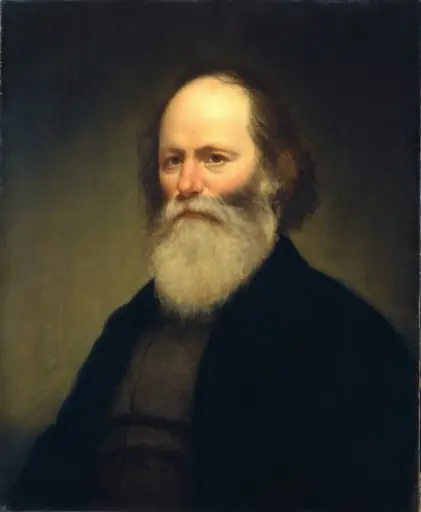
William Cullen Bryant is an oil painting by the Impressionist artist Charles Loring Elliott. It dates from 1854 and is held in the collection of the National Gallery of Art.
- Inscription
- Inscribed:lower right: Elliot / 185[4?]
About this work
Technique & Style
The painting's surface demonstrates careful handling of light and texture, with layered oil applications that model facial features and fabric details.
Charles Loring Elliott created the 1854 oil painting William Cullen Bryant on canvas, rendered in a realistic style typical of mid-19th-century American portraiture. The work measures 61.6 cm by 51.12 cm and has been part of the National Gallery of Art's collection in Washington, D.C., following its acquisition in 2015 from the Corcoran Gallery of Art's bequest.
The painting's surface demonstrates careful handling of light and texture, with layered oil applications that model facial features and fabric details. Its condition remains stable, though prolonged exposure to environmental factors has resulted in minor craquelure across the upper left quadrant, a characteristic noted in conservation records.
Formally, Elliott employs a restrained palette of earth tones and muted blues to convey a contemplative mood, while compositional balance is achieved through the sitter's central placement and subtle diagonal gestures of the draped clothing.
History & Provenance
Charles Loring Elliott created the oil-on-canvas portrait of William Cullen Bryant in 1854. The work was originally owned by Rufus W. Griswold, who lent it to an exhibition at the National Academy of Design in New York that same year. Griswold's estate was not the final stop; the painting subsequently entered the collection of James C. McGuire of Washington.
McGuire, a major collector and original trustee of the Corcoran Gallery of Art, bequeathed the piece to that institution in September 1888. The National Gallery of Art in Washington, D.C., acquired the painting in 2015.
The painting is held by the National Gallery of Art, Washington, D.C., accessioned through the Corcoran Gallery of Art bequest in 1888 and transferred in 2015.
It was first exhibited in 1854 at the National Academy of Design, New York, when lent by Rufus W. Griswold.
Context
Charles Loring Elliott painted William Cullen Bryant in 1854, capturing the poet as a dignified figure amid the evolving American literary landscape. The work entered the collection of the Corcoran Gallery of Art through the bequest of James C. McGuire, a noted Washington collector and original trustee of the institution, reflecting the intertwined networks of antebellum literary figures and art patrons. Its subsequent acquisition by the National Gallery of Art in 2015 underscores its recognized significance within American art history, bridging 19th-century literary and visual cultures.
Scholarly attention has long highlighted the painting's role in contextualizing Bryant's cultural stature beyond poetry, situating it within the broader discourse of American artistic representation during the mid-19th century. The work's provenance, documented through Griswold's exhibition at the National Academy of Design and McGuire's collecting legacy, illustrates the convergence of literary criticism, artistic patronage, and institutional development in post-revolutionary America.
Elliott's portrayal aligns with contemporary efforts to elevate literary icons through visual art, a practice that contributed to the canonization of American literary figures. The painting's dimensions (61.6 x 51.12 cm) and oil-on-canvas medium, consistent with mid-century portraiture standards, further contextualize its material engagement with the era's artistic conventions.
Overview
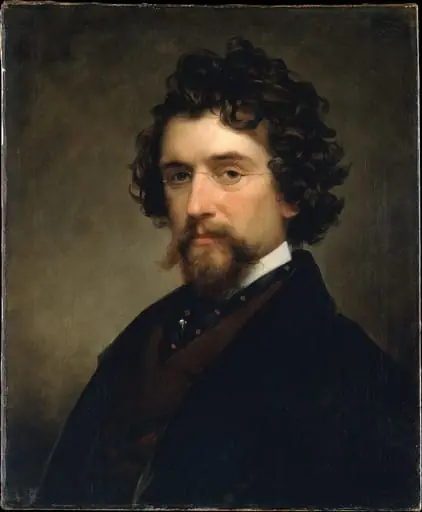
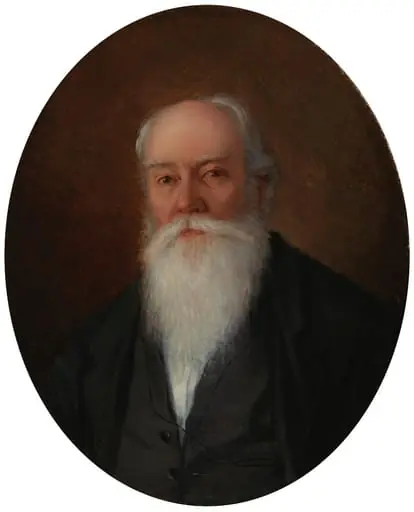
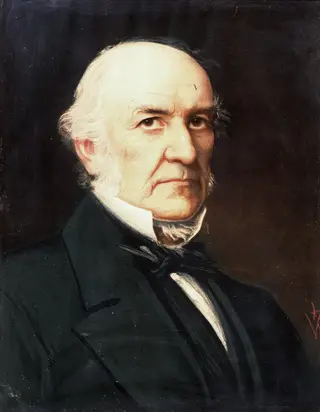
Charles Loring Elliott's 1854 oil on canvas, William Cullen Bryant, presents a half-length portrait of the distinguished American poet and journalist. The composition centers on the sitter, an elderly man with a full white beard and hair, dressed in a formal black jacket and bow tie. Elliott renders the subject with a high degree of naturalism, capturing the texture of the facial hair and the subtle play of light on the clothing.
Bryant is depicted with a calm, thoughtful expression, gazing slightly off-center, which conveys a sense of intellectual depth and quiet dignity. Executed during the mid-19th century, this work reflects Elliott's reputation as a leading American portraitist who prioritized psychological realism over idealization. The painting stands as a significant document of American literary history, preserving the likeness of a major cultural figure at a mature stage in his career.
It exemplifies the artist's ability to convey character through direct observation and restrained technique, avoiding the sentimentalism common in portraiture of the era.
Subject & Meaning
The portrait depicts Bryant in a moment of quiet contemplation, his calm expression suggesting the intellectual gravitas associated with his literary career. The plain attire and subdued background keep attention on his features, emphasizing the personal character of the poet rather than any narrative scene.
Own this work as a print
Artist & collection

Artist
Charles Loring Elliott (1812 – 1868) was an American painter known for his portraits.