Artwork
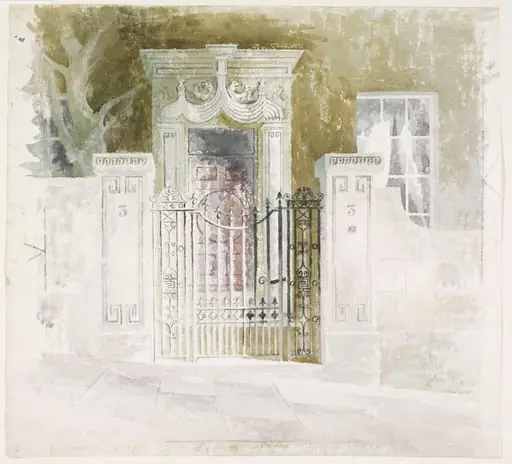
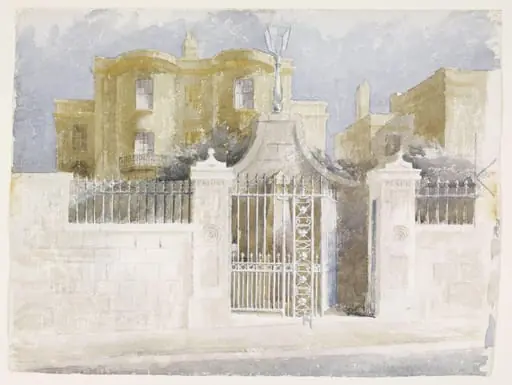
Gateway, Cavendish Villa, Middle Common, Bath
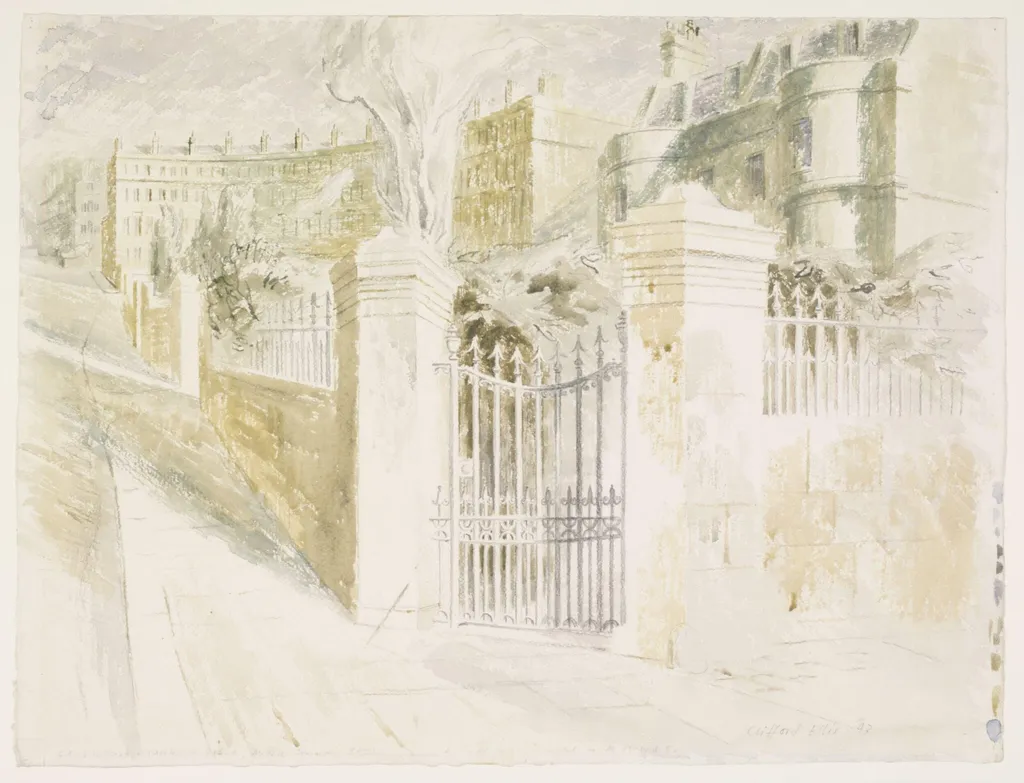
Gateway, Cavendish Villa, Middle Common, Bath is a watercolor work on paper by the Social Realist artist Ellis. It dates from 1943 and is held in the collection of the Victoria and Albert Museum.
About this work
Overview
The project sought to preserve visual records of places vulnerable to conflict and societal transformation, producing over 1,500 works between 1940 and 1943.
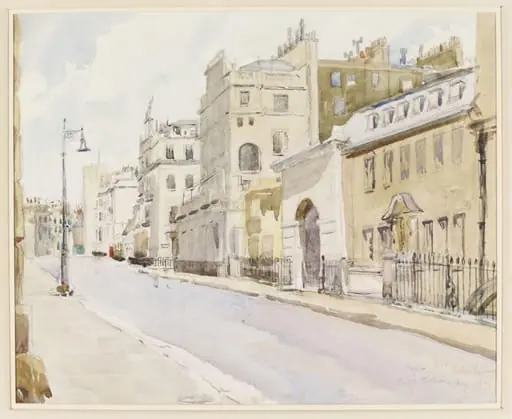
Created in 1943, this watercolour by Ellis captures a decorative iron gate at Cavendish Villa in Bath, set against the backdrop of Cavendish Crescent. It belongs to the Recording Britain collection, a wartime initiative that commissioned artists to record the nation’s architectural heritage. The project sought to preserve visual records of places vulnerable to conflict and societal transformation, producing over 1,500 works between 1940 and 1943.
Subject & Meaning
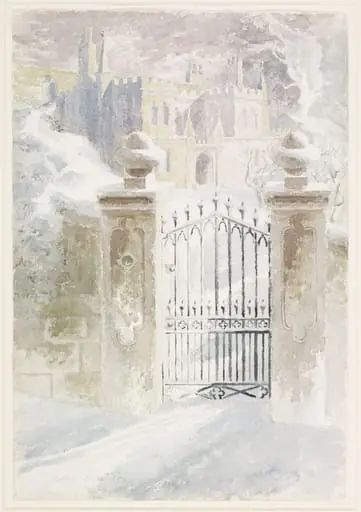
The scene focuses on an ornamental wrought-iron gate with a curved, crown-like top, framing a stone wall and leading to a row of Georgian townhouses. The gate, a modest yet distinctive feature of domestic architecture, symbolizes the quiet elegance of pre-war urban life. Its inclusion in the collection reflects an effort to document everyday structures that might be lost to war or modernization, emphasizing cultural continuity over grand monuments.
Technique & Style
Ellis employed a light, fluid watercolour technique with loose brushwork and minimal detail. Areas of the composition, particularly the background buildings, appear deliberately unfinished, suggesting spontaneity and immediacy. The pale washes of colour convey the softness of daylight on stone and metal, while the gate’s intricate ironwork is suggested rather than meticulously rendered, aligning with the project’s emphasis on rapid documentation over polished finish.
History & Provenance
The work was produced as part of the Recording Britain scheme, initiated by Sir Kenneth Clark and administered by the Victoria and Albert Museum. Artists were commissioned to travel across the country, recording landscapes and buildings at risk from wartime destruction or urban change. Ellis’s watercolour entered the collection in 1943 and remains held by the V&A, where it is preserved as part of a broader archive of British visual heritage from the early 1940s.
Context
During the Second World War, fears of aerial bombardment and postwar redevelopment prompted a national effort to document Britain’s architectural character. The Recording Britain project responded to this anxiety by mobilizing artists to capture scenes of ordinary life and vernacular design. Ellis’s depiction of a Bath garden gate reflects the movement’s focus on the subtle, often overlooked details of domestic architecture that defined regional identity.
Legacy
The Recording Britain collection endures as a vital historical record of the British landscape during a period of upheaval. Ellis’s watercolour, like others in the series, offers a quiet testament to the resilience of everyday spaces. Its presence in the V&A ensures continued access for scholars and the public, reinforcing the value of artistic documentation as a form of cultural preservation beyond wartime necessity.
Artist & collection
Artist
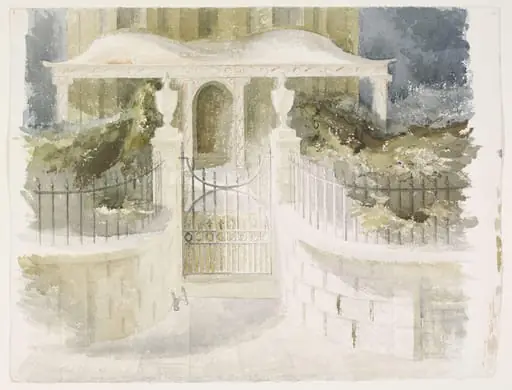
This British artist left a quiet record of Bath in the early 1940s, painting watercolors of iron gates, gateways, and front doors.