Artwork
The Oude Kerk in Amsterdam during a Service
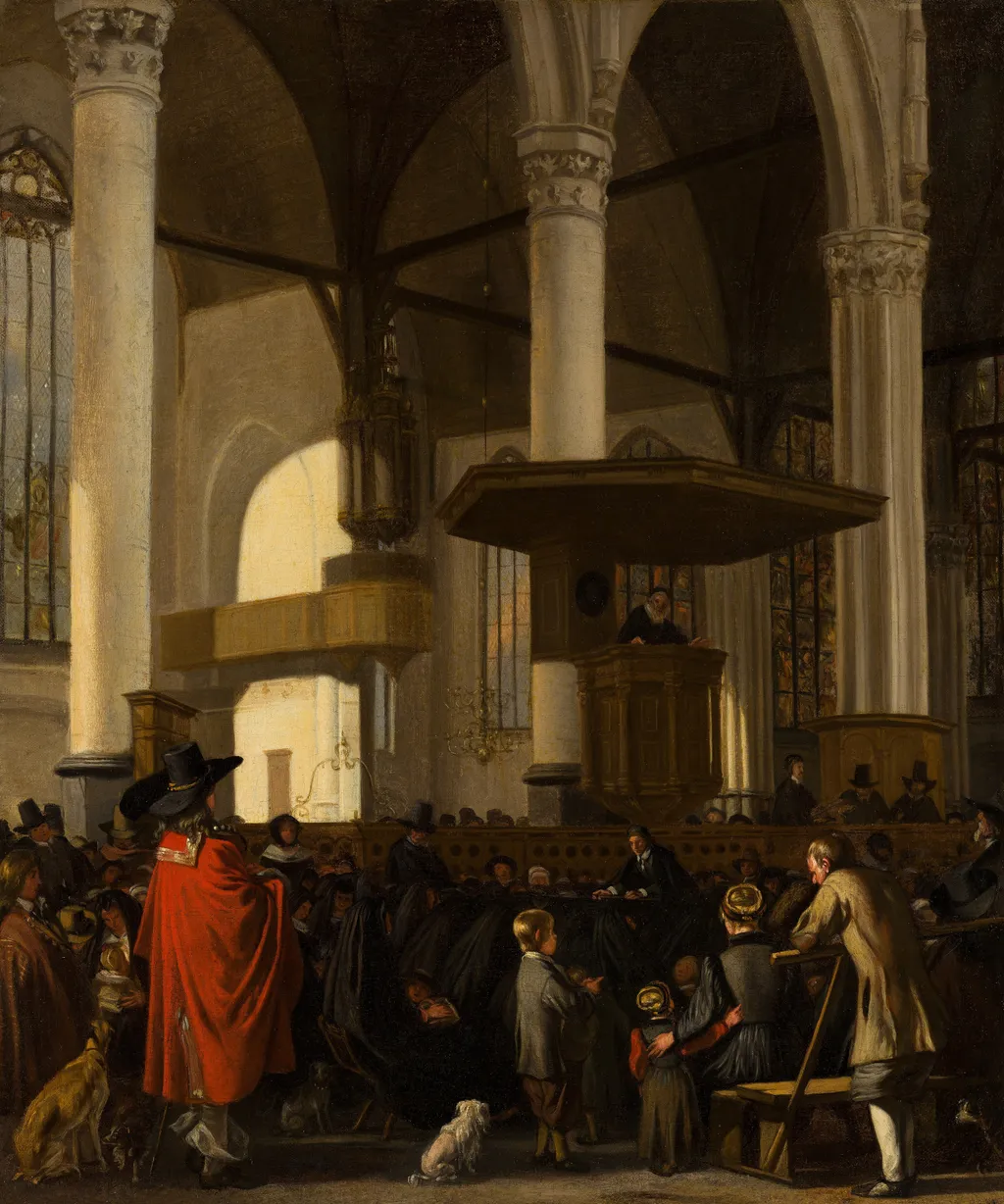
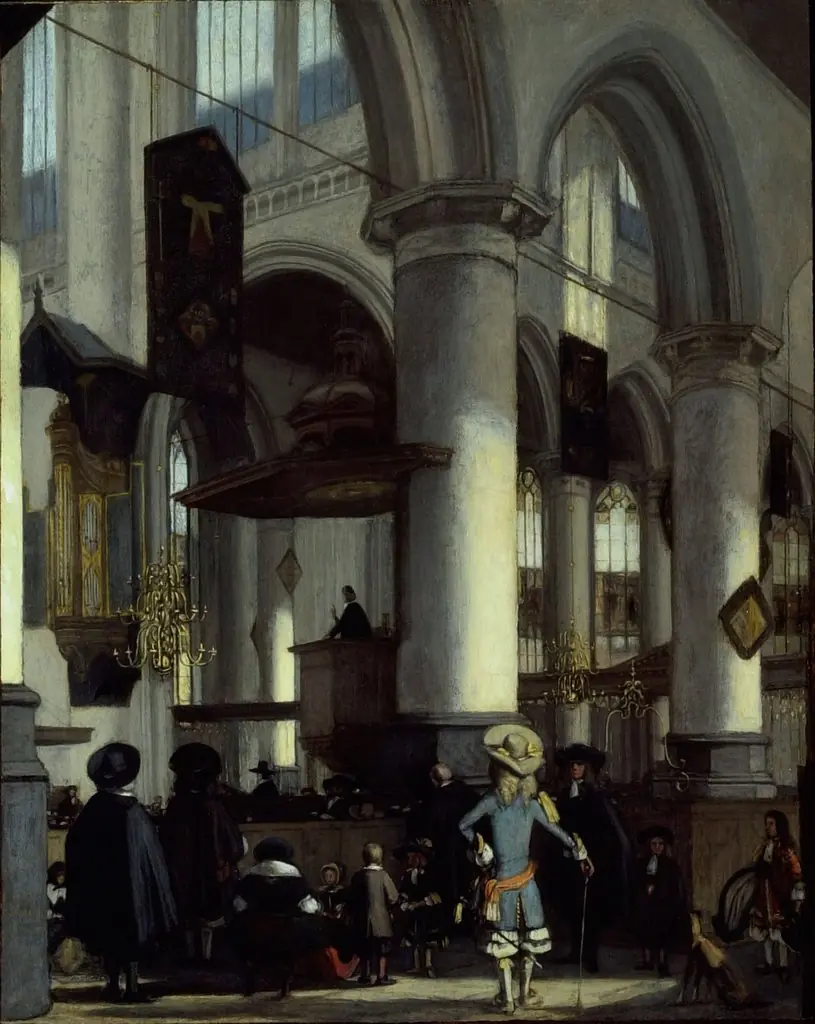
The Oude Kerk in Amsterdam during a Service is an oil painting by the Dutch Golden Age artist Emanuel de Witte. It dates from 1654 and is held in the collection of the Mauritshuis.
About this work
Subject & Meaning
The scene depicts the interior of the Oude Kerk in Amsterdam during a Protestant service, emphasizing the Calvinist emphasis on unadorned worship.
The scene depicts the interior of the Oude Kerk in Amsterdam during a Protestant service, emphasizing the Calvinist emphasis on unadorned worship. The composition centers on the pulpit, a focal point of Reformed liturgy, flanked by an empty nave and pews. Figures, including men, women, and children, are engaged in quiet prayer or conversation, reflecting the communal yet restrained character of Dutch Reformed practice.
A dog lies near the foreground, a motif often read as a symbol of domestic piety and moral order within the sacred space.
The architectural setting, with its Gothic vaults and monumental piers, serves as a backdrop that underscores the historical lineage of the church, even as its emptiness evokes the stripped-down aesthetic of Protestant reform. The painting’s subdued palette and sparse figures convey the spiritual gravity and communal discipline central to the Dutch Reformed tradition.
Technique & Style
Emanuel de Witte created The Oude Kerk in Amsterdam during a Service in 1654 using oil paint applied to a canvas support. The work measures 50 cm in height and 41.5 cm in width, presenting a detailed church interior genre scene. Stylistically, the painting captures the specific atmosphere of a Protestant service within the Oude Kerk, depicting architectural elements such as piers, arches, and a pulpit alongside figures engaged in worship.
The composition includes human subjects of various ages, as well as a dog, illustrating the daily life and liturgical practices of the period within the sacred space. This handling of the medium allows for the precise rendering of the interior's spatial depth and the interplay of light and shadow typical of the artist's approach to architectural subjects.
Context
Emanuel de Witte's 1654 oil painting The Oude Kerk in Amsterdam during a Service exemplifies his specialization in church interior scenes, capturing the spatial complexity and atmospheric effects characteristic of Dutch Golden Age architecture. The work, housed in the Mauritshuis, portrays the church's nave with precise linear perspective, incorporating figures engaged in Protestant liturgy to convey both sacred space and contemporary religious practice. Its composition reflects de Witte's broader context within 17th-century Dutch painting, where interior religious spaces were rendered with meticulous architectural detail and subtle narrative elements.
The Mauritshuis's catalog notes its depiction of the pier, pulpit, and arch, alongside symbolic elements like a dog, reinforcing the painting's integration of physical and devotional space within the Oude Kerk's actual structure.
Legacy
Emanuel de Witte's 1654 painting The Oude Kerk in Amsterdam during a Service, housed in the Mauritshuis, helped shape perceptions of Protestant interior spaces and liturgical practice in Dutch art. Its detailed depiction of a service influenced later church interior compositions in 17th-century Dutch painting, particularly in the treatment of light, spatial depth, and narrative detail within sacred settings.
Overview
Emanuel de Witte’s 1654 oil on canvas, The Oude Kerk in Amsterdam during a Service, captures a bustling interior of Amsterdam’s historic church. The composition centers on a congregation gathered beneath soaring stone arches, illuminated by daylight that filters through a doorway and stained‑glass windows. The work is part of the Mauritshuis collection, offering a detailed glimpse of 17th‑century Protestant worship.
History & Provenance
Painted in 1654, the work remained in private Dutch collections before entering the Mauritshuis in the 20th century. Its acquisition reflects the museum’s focus on Dutch genre and interior scenes, and the painting now serves as a representative example of de Witte’s oeuvre within the institution’s holdings.
Own this work as a print
Artist & collection
Artist
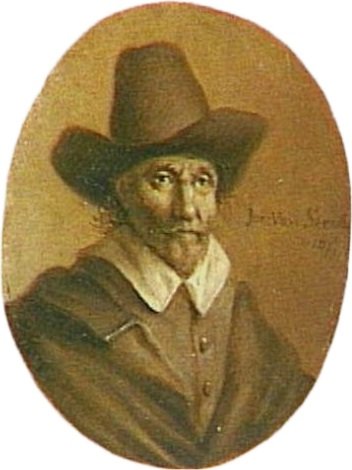
Emanuel de Witte (1617–1692) was a Dutch perspective painter. In contrast to Pieter Jansz Saenredam, who emphasized architectural accuracy, De Witte was more concerned with the atmosphere of his interiors. Though few in…

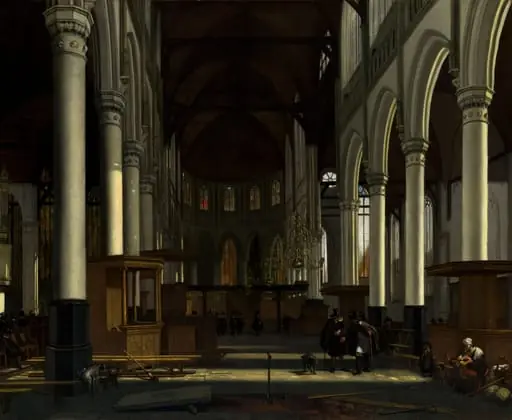 The Interior of the Oude Kerk, Amsterdam
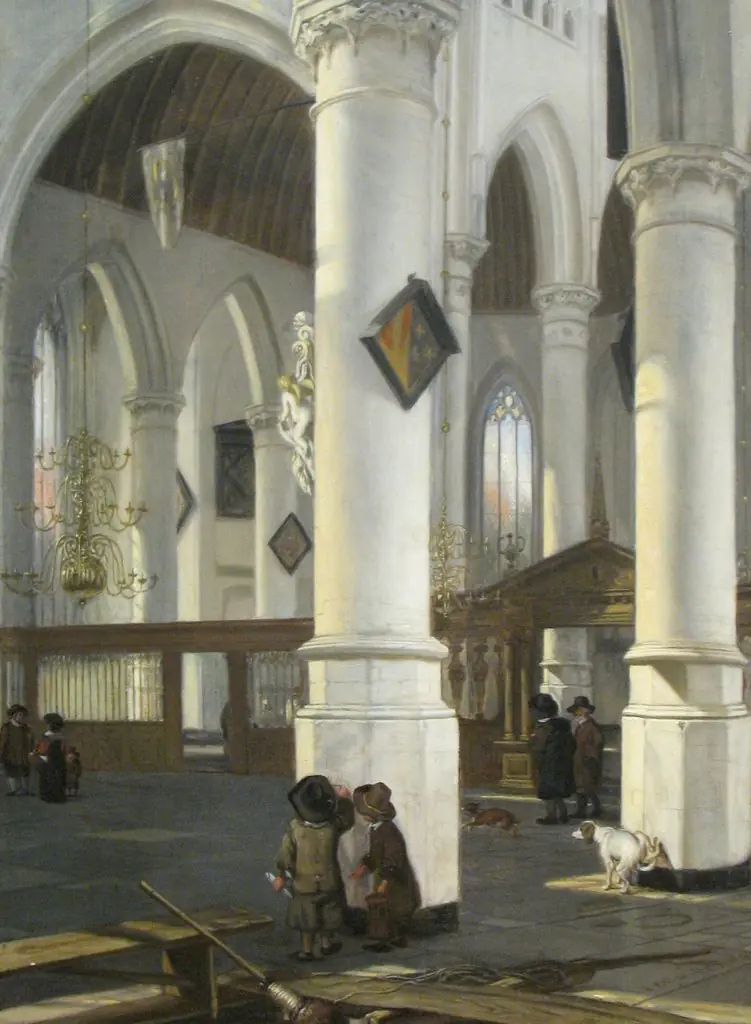 Interior of the Oude Kerk, Delft
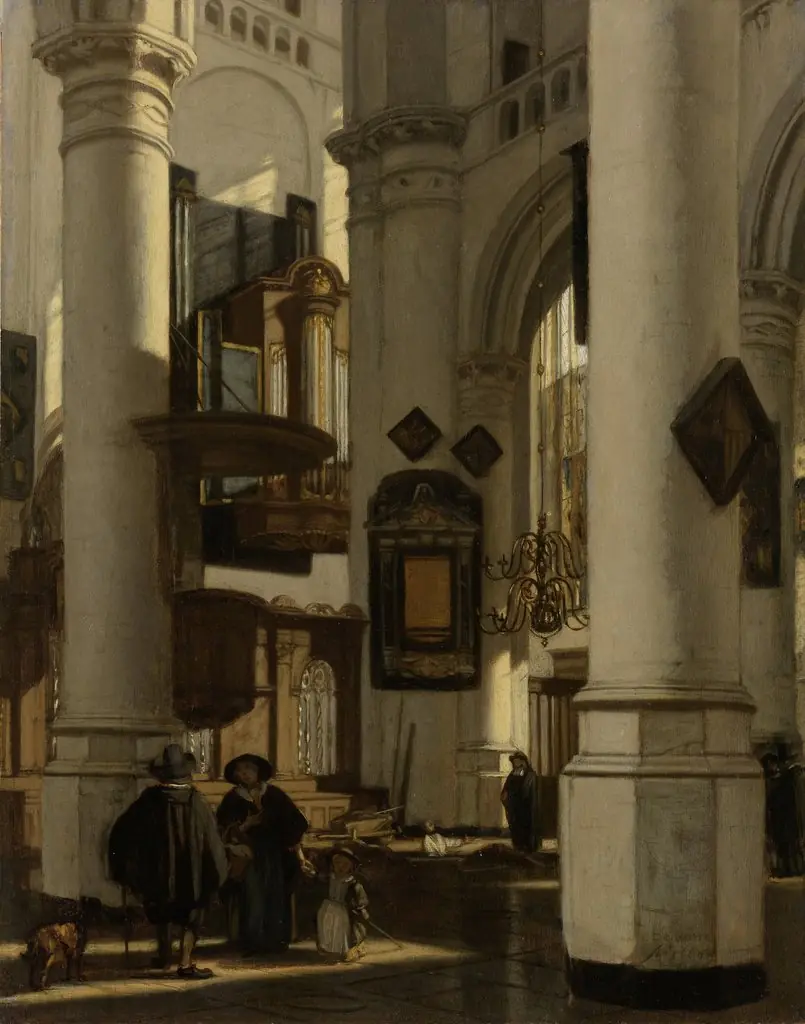 Interior of a Protestant, Gothic Church, with a Gravedigger in the Choir
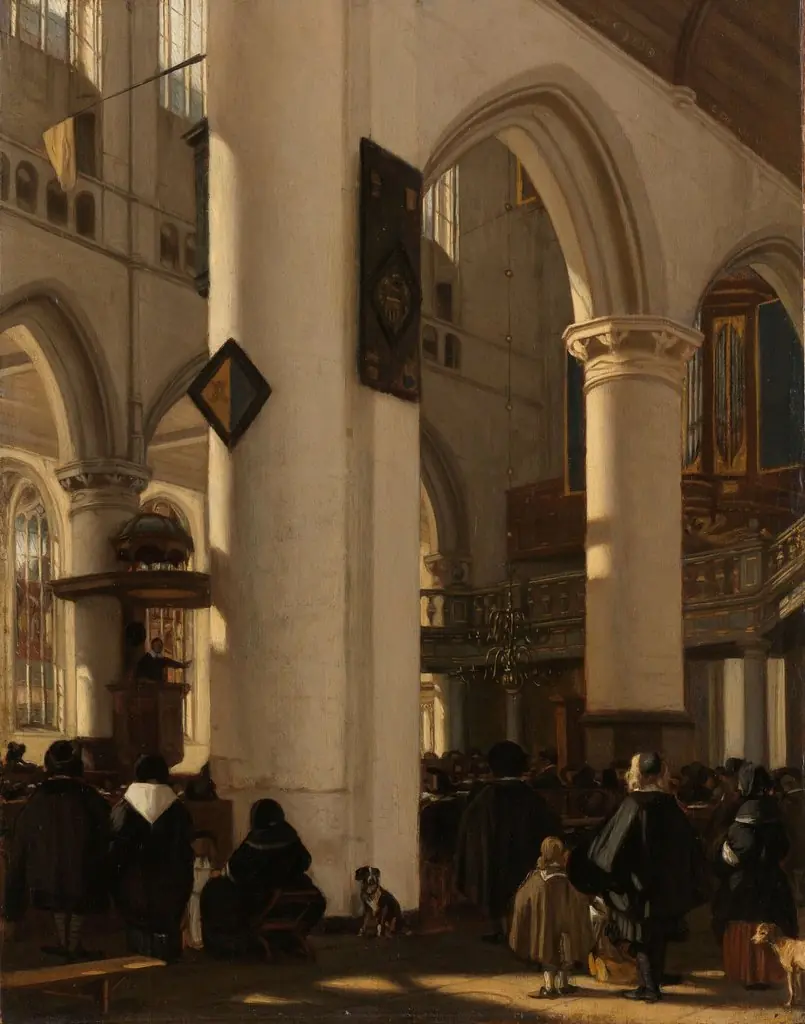 Interior of a Protestant, Gothic Church during a Service
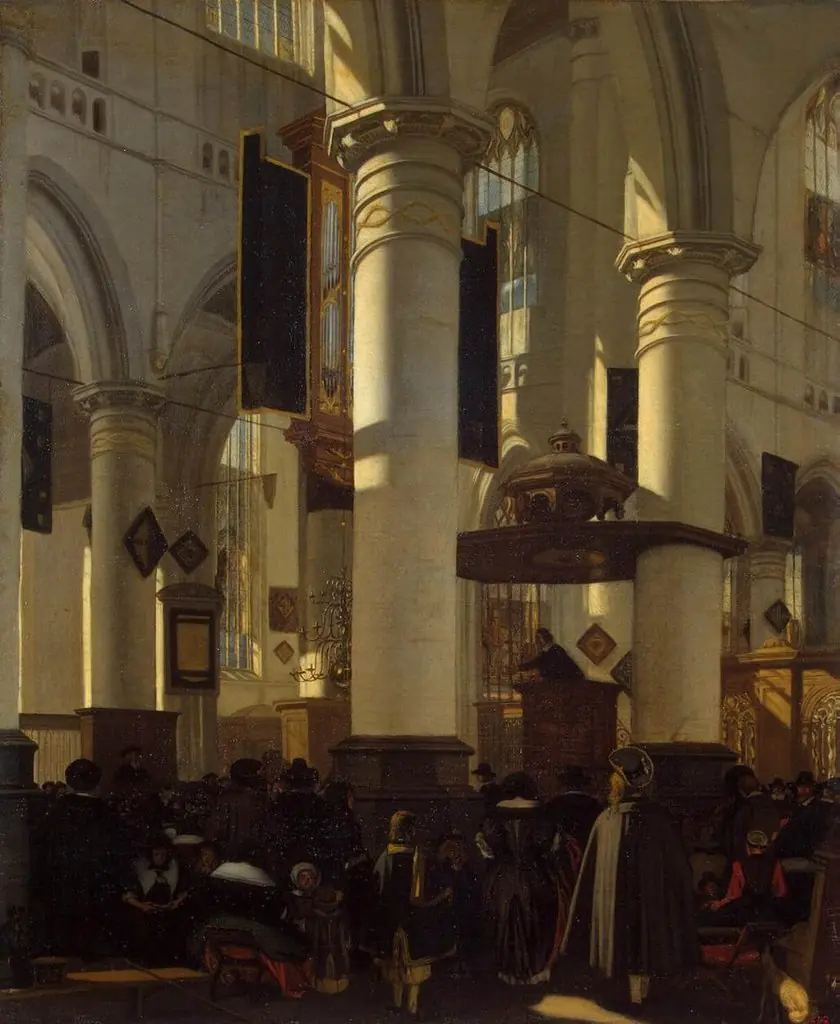 Interior of a Church
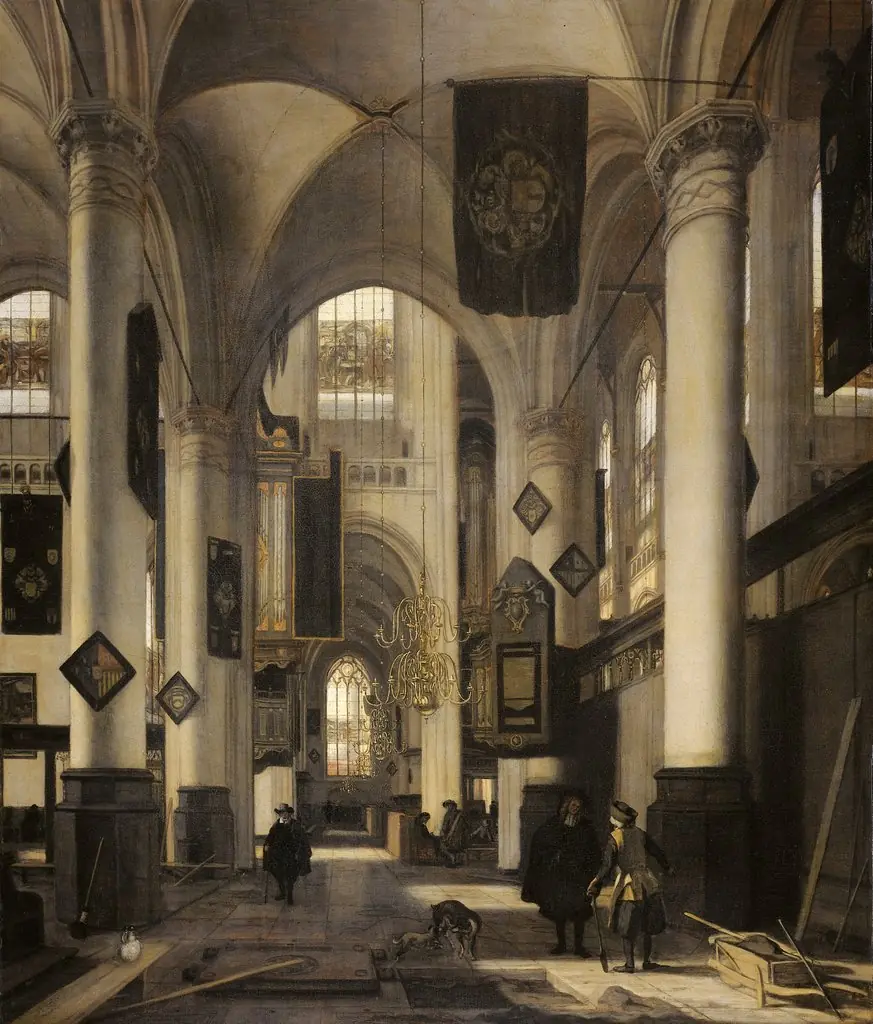 Interior of a Protestant Gothic Church
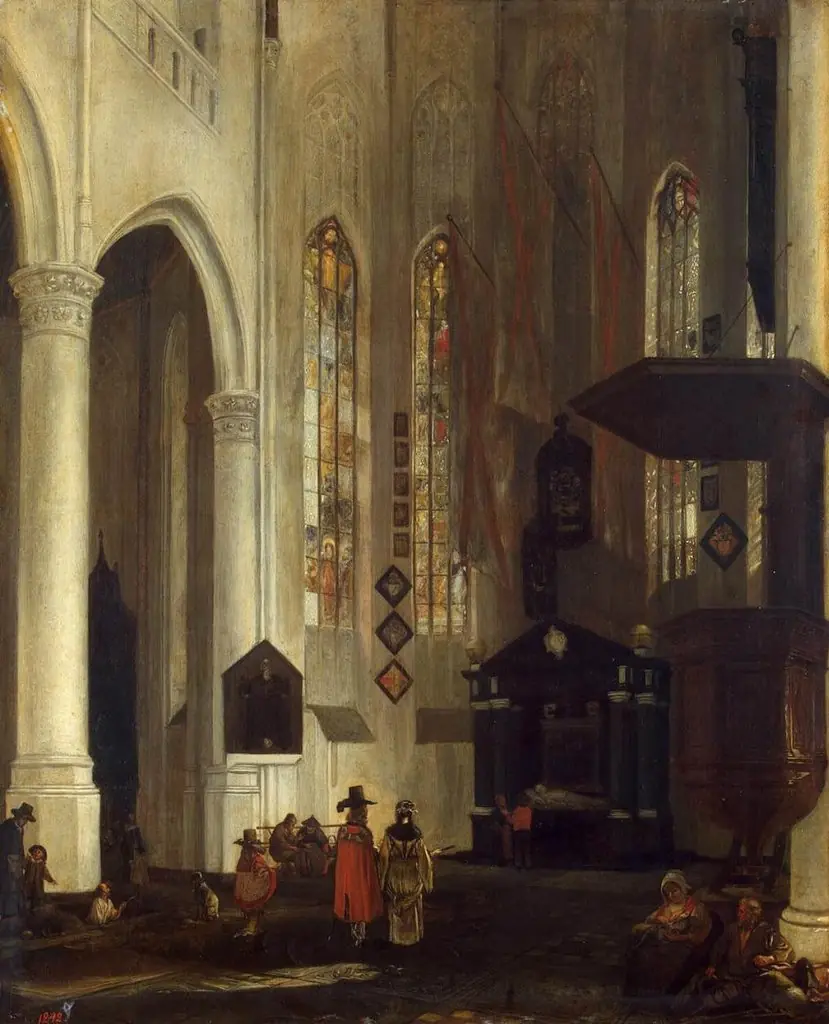 Old Church (Oudekerk) in Delft with the Tomb of Admiral Pieter Pieterszoon Hein (Heyn)
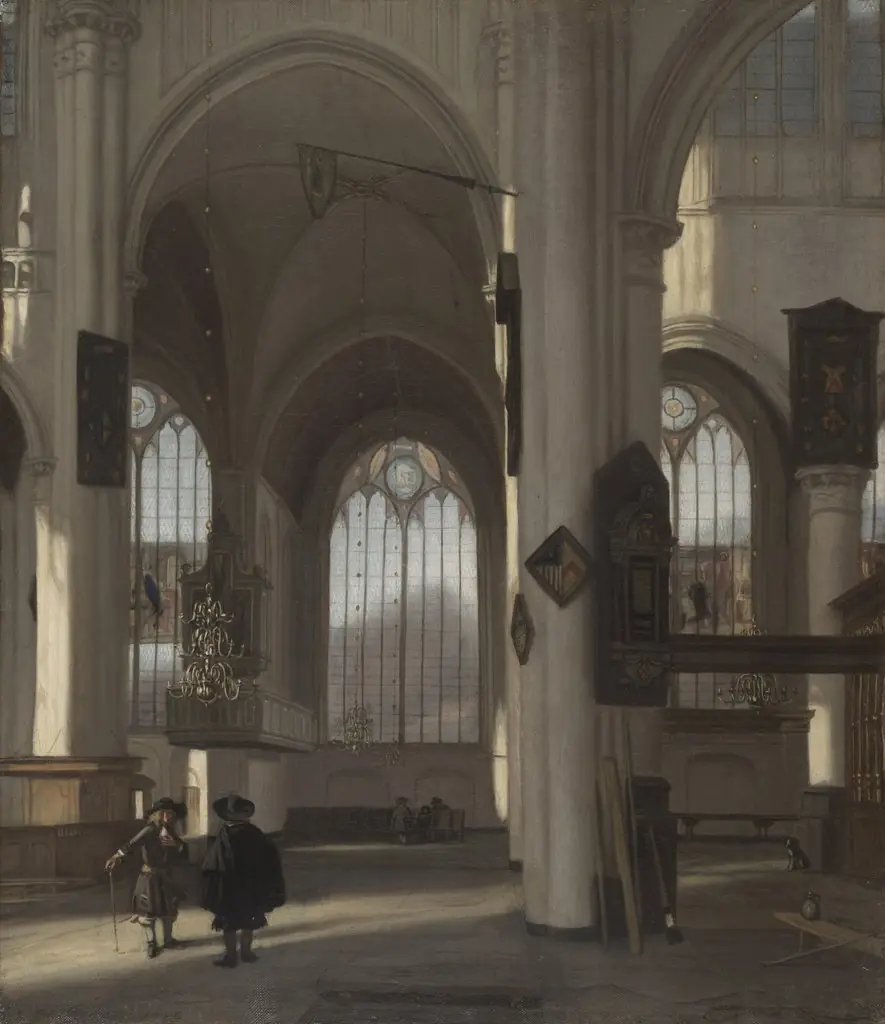 Interior of a Church