Artwork
Interior of a Dutch Church
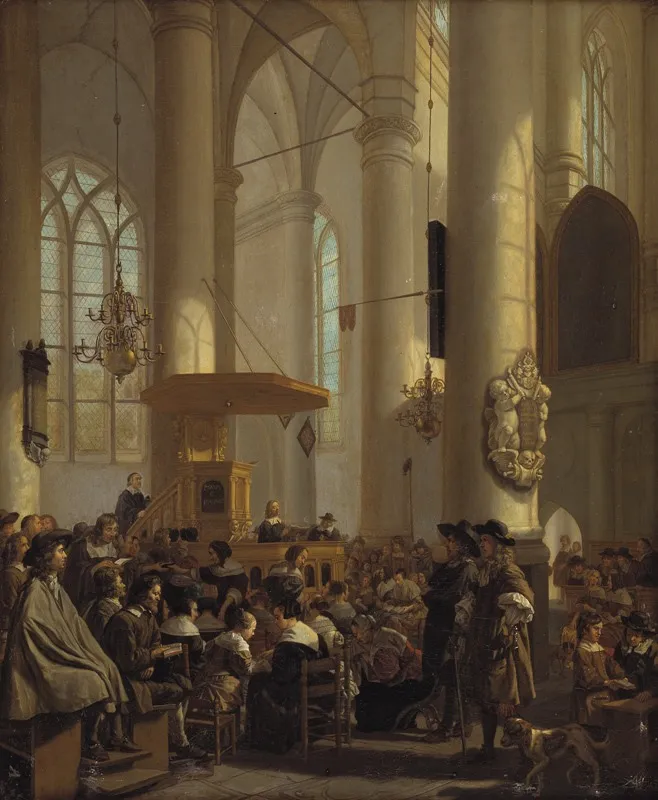
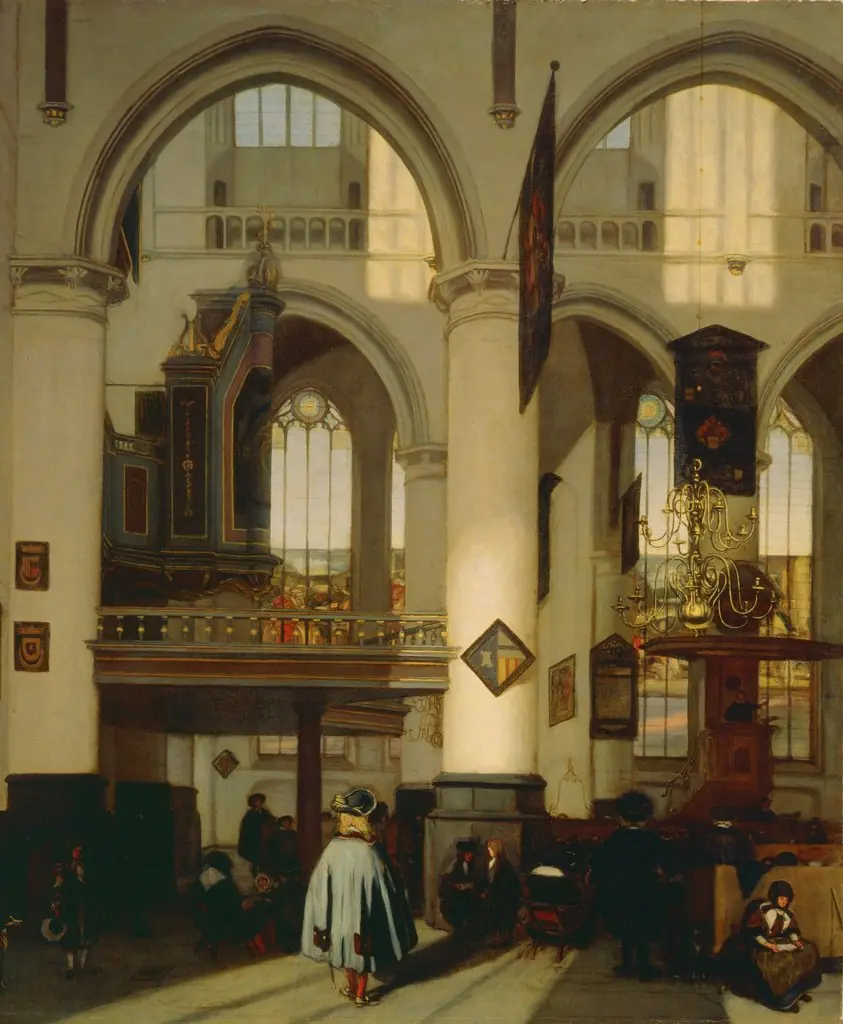
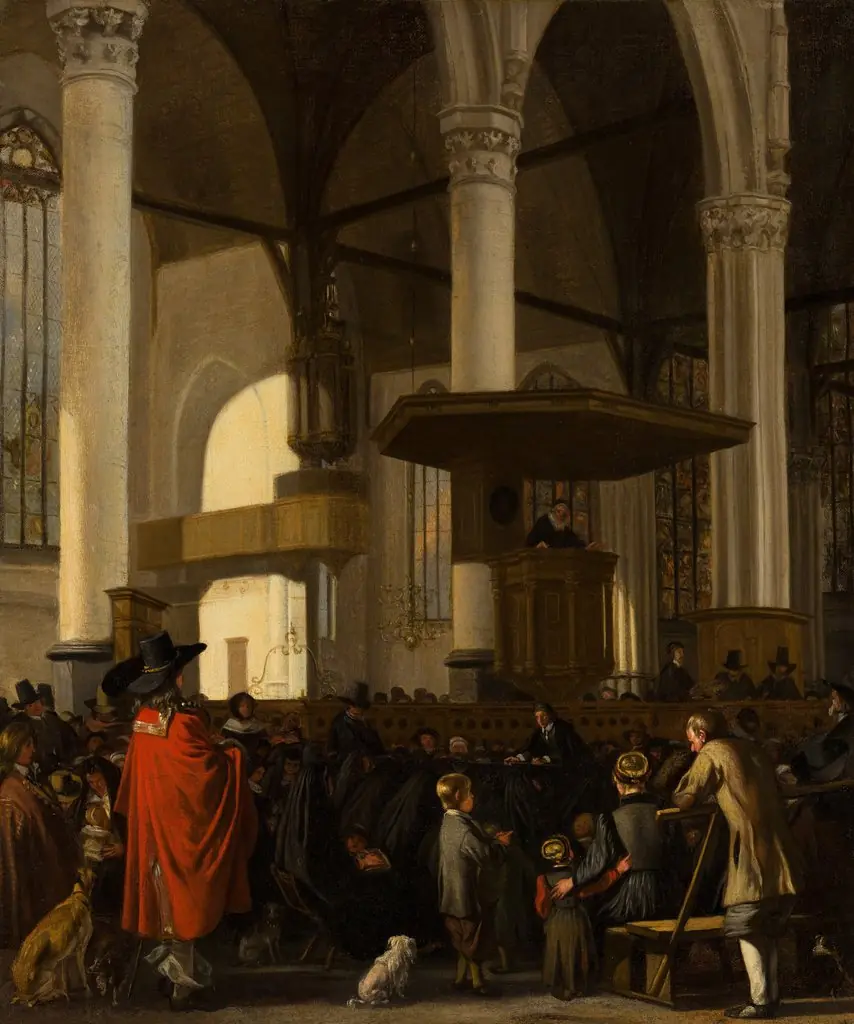
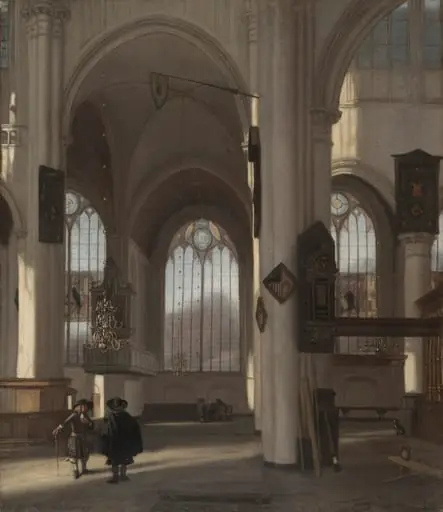
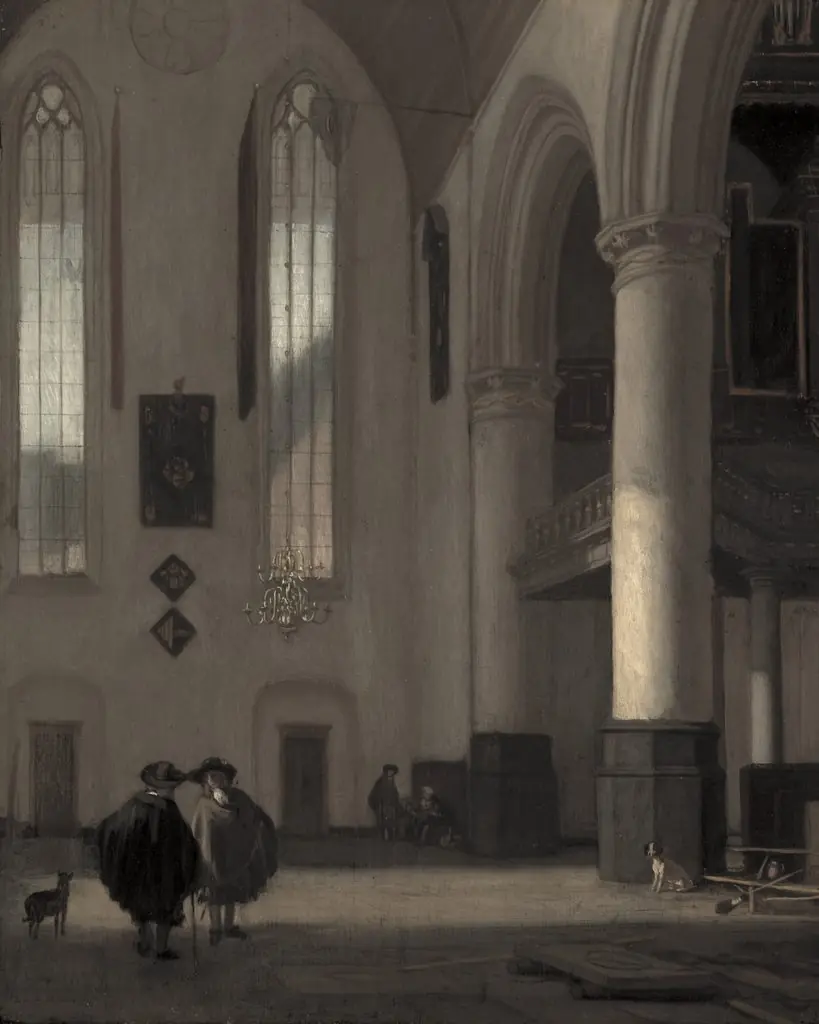
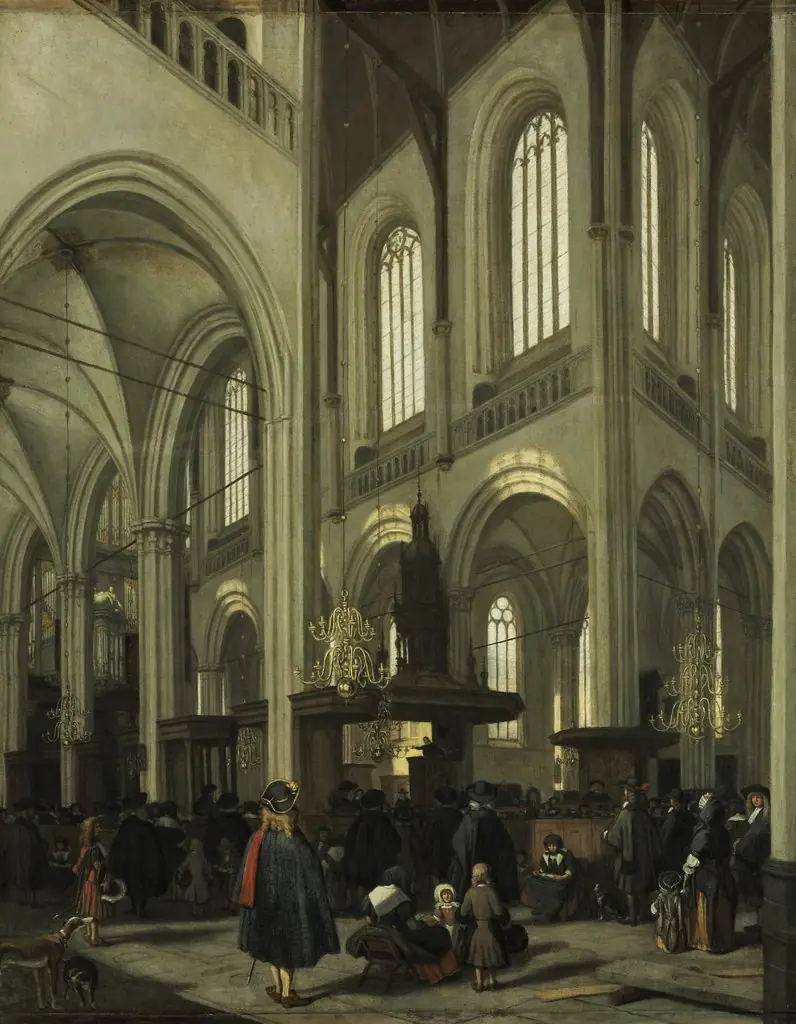
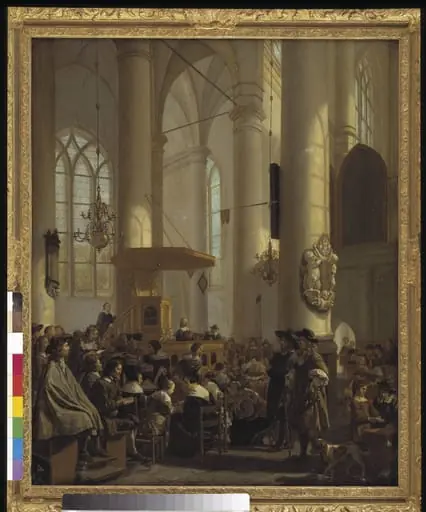
Interior of a Dutch Church is an oil painting by the Dutch Golden Age artist Rutger van Langevelt. It dates from 1659 and is held in the collection of the Statens Museum for Kunst.
About this work
Overview
5 by 72 centimeters, the work depicts a spacious Gothic church interior during a sermon, populated by attentive congregants.
Interior of a Dutch Church is an oil painting on canvas by the Dutch Golden Age artist Rutger van Langevelt, dated 1659. Measuring 86.5 by 72 centimeters, the work depicts a spacious Gothic church interior during a sermon, populated by attentive congregants. The painting is held in the collection of the Statens Museum for Kunst (National Gallery of Denmark) in Copenhagen. Though van Langevelt is not among the most widely studied painters of the Dutch Golden Age, this canvas exemplifies the specialized genre of church interior painting that flourished in the Netherlands during the seventeenth century, demonstrating the period's fascination with architectural space, atmospheric light, and scenes of everyday devotion.
Subject & Meaning
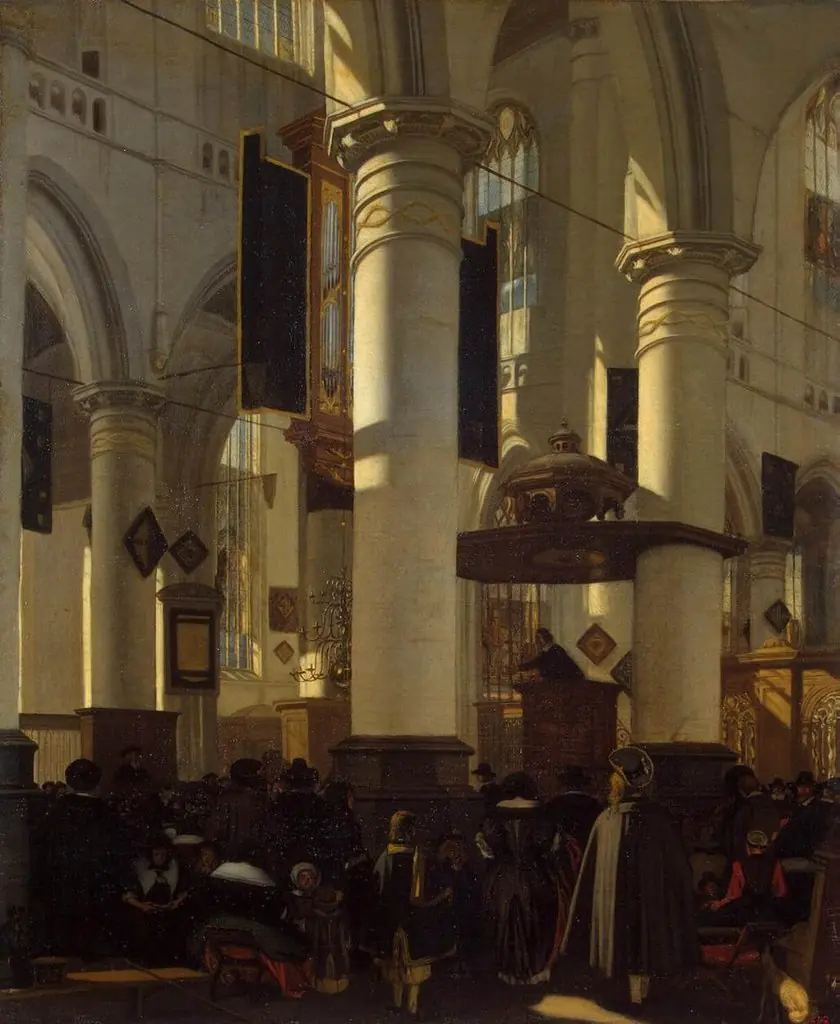
The painting presents a sermon in progress within a large Gothic church. At left, a preacher stands in an elevated wooden pulpit with a canopy, addressing the congregation. The assembled figures, seated on wooden chairs and benches, face the pulpit; their attire, dark cloaks, wide-brimmed hats, and white collars, marks them as respectable Dutch citizens of the mid-seventeenth century. In the foreground right, two standing men converse near a column adorned with sculptural relief featuring cherubs, while a dog stands nearby. A dark rectangular panel, possibly a memorial tablet or epitaph, hangs on a central column. The iconography is restrained and Protestant in character: no altarpiece, no crucifix, no saints, but rather a plain interior focused on the word. The dog, a common motif in Dutch genre painting, may signal fidelity or simply enliven the scene with domestic detail. The overall mood is one of calm, orderly devotion, the congregation gathered in quiet attention rather than ecstatic worship.
Technique & Style
Van Langevelt executed the work in oil on canvas with smooth, detailed brushwork that pays careful attention to architectural precision and the textures of fabrics. The palette is dominated by warm browns, creams, and muted golds, creating a harmonious, subdued atmosphere. Light streams through tall arched windows with diamond-patterned glass, casting soft shadows across the pale walls and large stone floor tiles. Brass chandeliers hang from soaring vaults, their metallic surfaces catching the ambient light. The artist employs linear perspective to organize the receding space of nave and aisle, with tall cylindrical columns and soaring Gothic arches providing a rhythmic structural framework. The handling of light and shadow lends depth and spatial coherence to the composition, while the small scale of the figures relative to the architecture emphasizes the monumentality of the interior. The overall effect is one of measured realism, characteristic of Dutch church interior painting at mid-century.
History & Provenance
The painting is dated 1659, a period when van Langevelt was active in the Dutch Republic before his later move to Berlin. The work entered the collection of the Statens Museum for Kunst, where it remains today. Its accession history and earlier provenance are not documented in the available sources. Exhibition history is likewise not specified.
Context
Rutger van Langevelt was born in Nijmegen on 15 February 1635 and died in Berlin on 15 March 1695. He worked as both painter and architect, a dual vocation that informed his precise rendering of architectural space. His specialization in church interiors placed him within a thriving Dutch genre that included figures such as Emanuel de Witte, Gerard Houckgeest, and Hendrick van Vliet. Unlike the more dramatically lit and psychologically tense church interiors of de Witte, van Langevelt's approach, as seen in this canvas, tends toward calm orderliness and descriptive clarity. His later relocation to Berlin suggests a career that extended beyond the Dutch Republic, though the precise circumstances of this move and his activities at the Brandenburg court remain obscure. Critical scholarship on van Langevelt remains limited; he has not attracted the sustained attention devoted to his more famous contemporaries, and his works are studied primarily within the broader context of Dutch architectural painting.
Artist & collection
Artist
Rutger von Langerfeld, or Rutger van Langevelt (15 February 1635, in Nijmegen – 15 March 1695, in Berlin), was a Dutch mathematician, painter and architect.