Artwork
Farmhouse in ruins
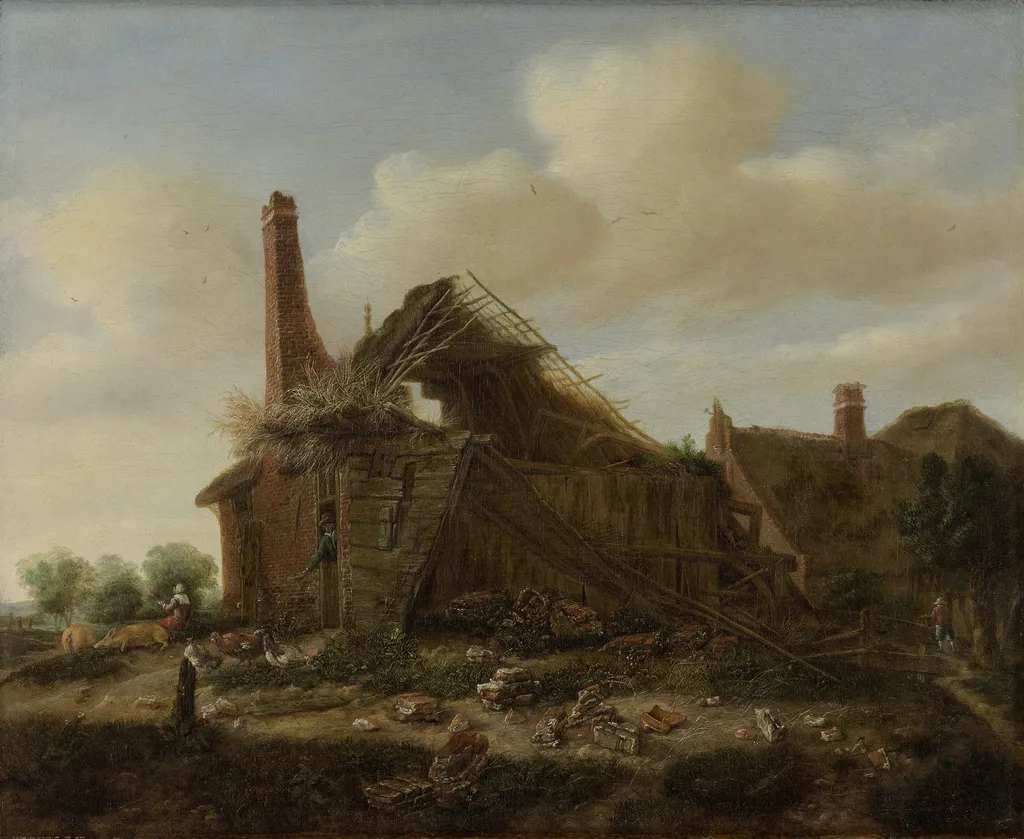
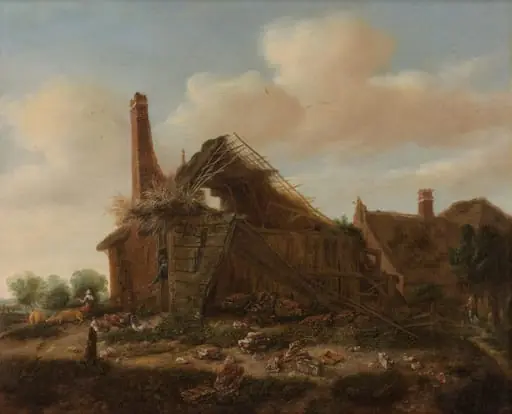
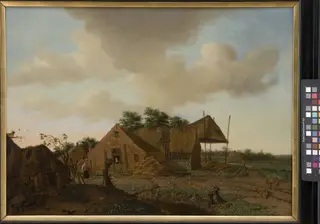
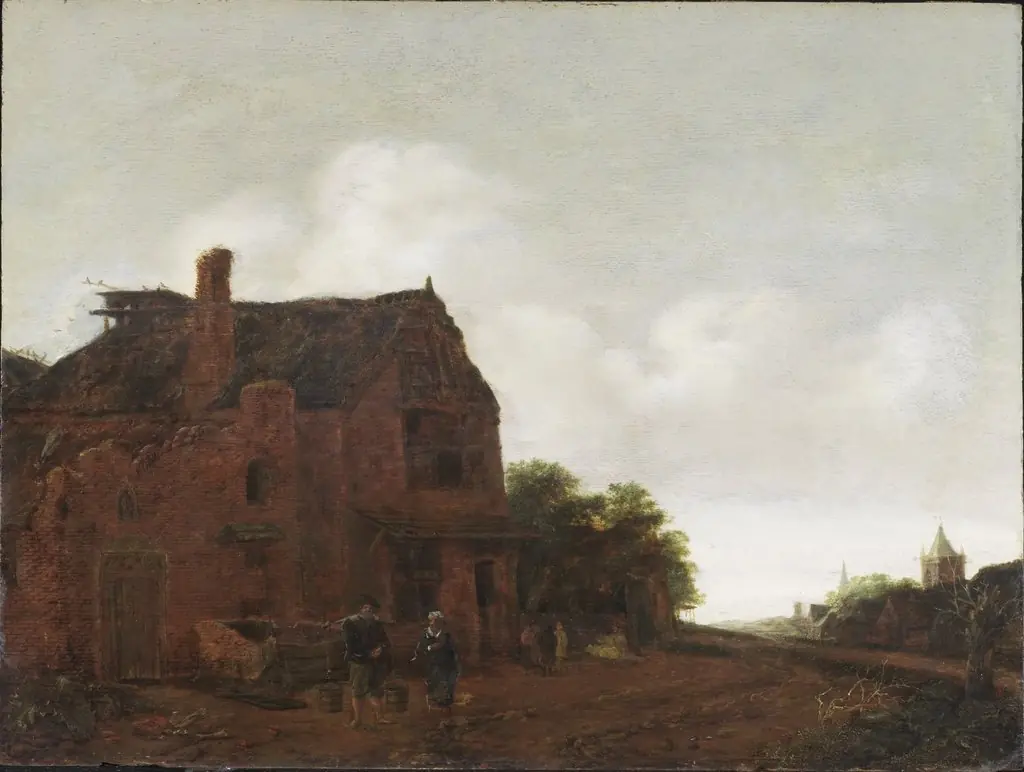
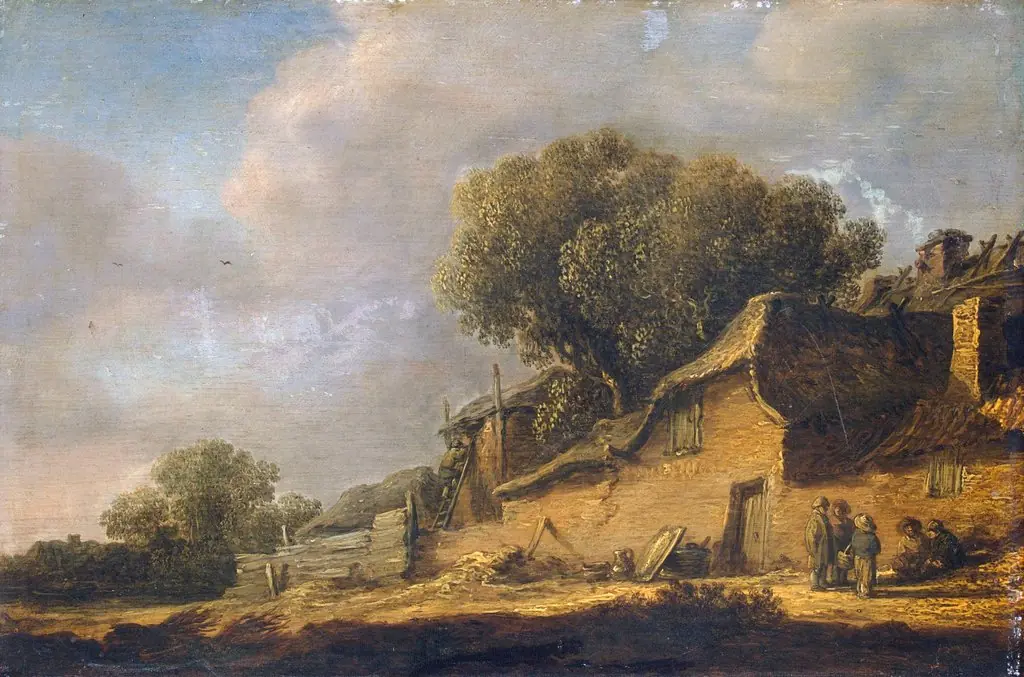
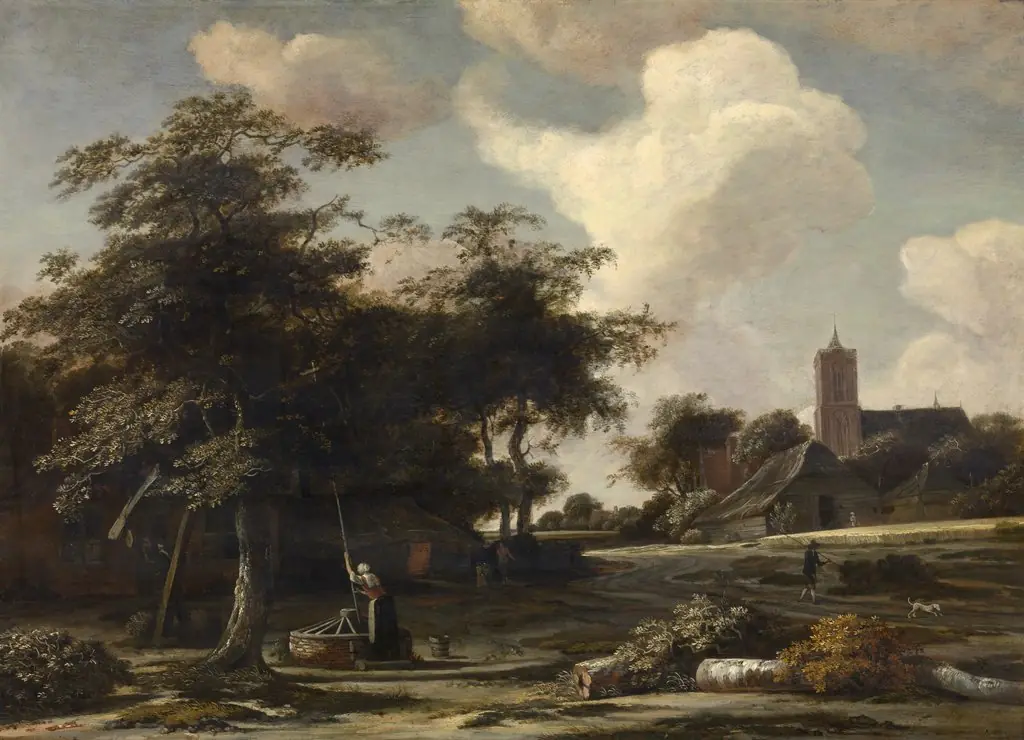
Farmhouse in ruins is an oil painting by the Dutch Golden Age artist Emanuel Murant. It dates from 1670 and is held in the collection of the Rijksmuseum.
About this work
Subject & Meaning
Executed in oil on canvas in 1670, the work belongs to the landscape genre and reflects the influence of Jacob van Ruisdael on Emanuel Murant’s style.
The painting Farmhouse in ruins portrays a crumbling rural dwelling surrounded by a man, a chicken and a pig, elements that together suggest the fragility of agrarian life. Executed in oil on canvas in 1670, the work belongs to the landscape genre and reflects the influence of Jacob van Ruisdael on Emanuel Murant’s style. The depiction of decaying architecture alongside domestic animals functions as a visual allegory for the transience of prosperity and the inevitable passage of time. The composition was recorded in the Rijksmuseum collection, where it remains on display.
Technique & Style
The work is an oil painting executed on canvas, measuring 33 cm in height by 41 cm in width and dated to 1670. It belongs to the landscape genre and portrays a farmhouse in ruins together with a man, a chicken and a pig, a composition that echoes the tonal treatment of Dutch masters such as Jacob Ruisdael.
The painting’s handling of light and atmospheric depth reflects a derivative approach to the Dutch landscape tradition, while its subject matter combines architectural decay with modest genre figures. The piece is part of the Rijksmuseum collection and is classified as a painting.
History & Provenance
The painting Farmhouse in Ruins was created by Emanuel Murant in 1670. Executed in oil on canvas, the work measures 33 cm in height and 41 cm in width. It is identified as a landscape painting that depicts a ruined house accompanied by figures and animals, specifically a man, a chicken, and a pig. The piece is currently held in the collection of the Rijksmuseum.
Overview
Emanuel Murant's 1670 oil painting, "Farmhouse in ruins," presents a detailed landscape depicting a state of architectural decay within a rural setting. This work, now housed in the Rijksmuseum, captures a quiet moment of everyday life amidst a crumbling structure. It exemplifies the artist's focus on the subtle interplay between human activity and the natural process of deterioration, rendered with careful observation.
Own this work as a print
Artist & collection