Artwork
The Flood Gate
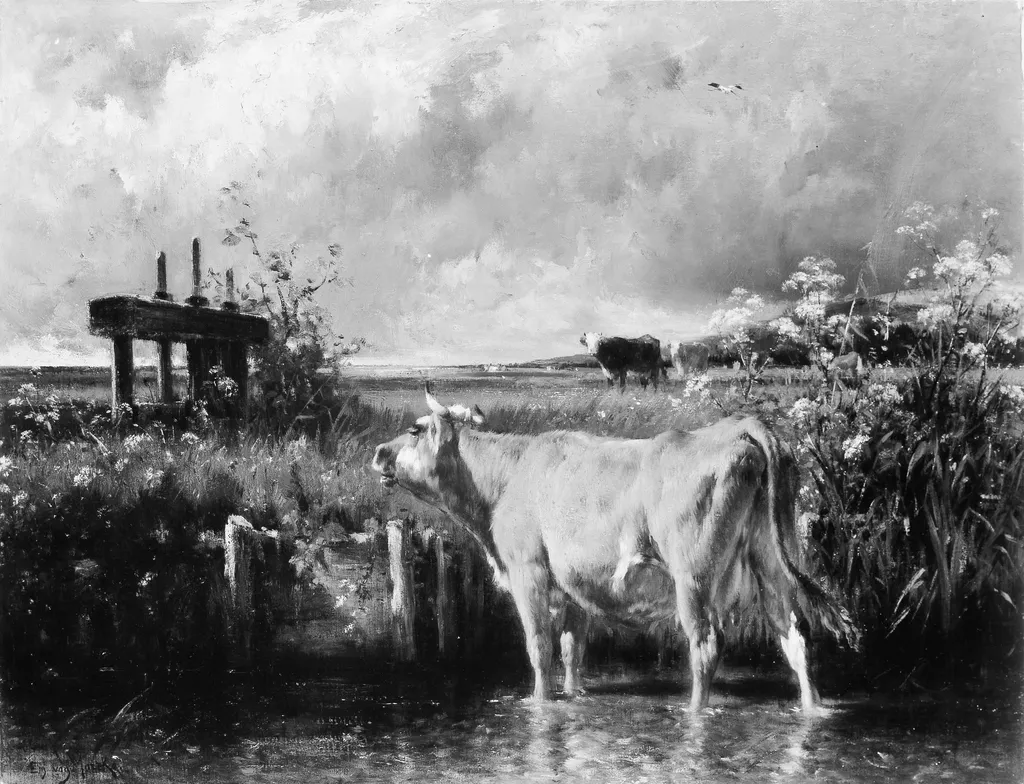
The Flood Gate is an oil painting by the Barbizon school artist Emile van Marcke. It dates from 1868 and is held in the collection of the Metropolitan Museum of Art.
About this work
Technique & Style
Information regarding the painting’s current condition, conservation history, or specific handling techniques is not provided in the available sources.
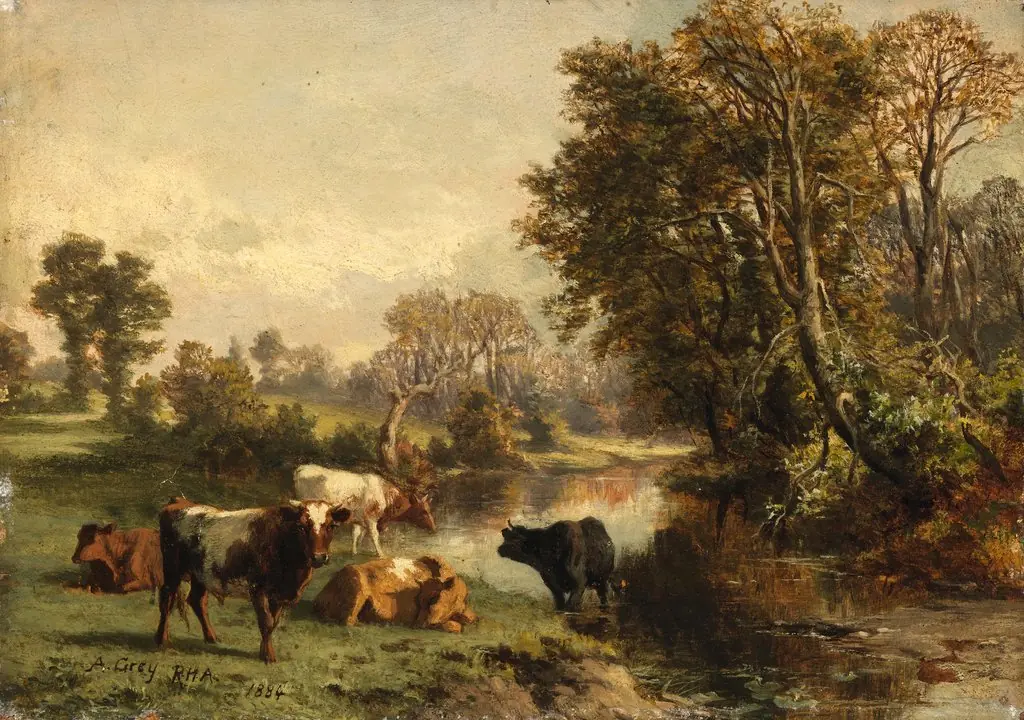
The Flood Gate is an oil painting on canvas executed in 1868 by Emile van Marcke. Classified as a landscape, the work measures approximately 62.2 cm in height and 82.6 cm in width and is held in the collection of the Metropolitan Museum of Art. The artist employed oil paint applied to a stretched canvas support to depict a pastoral scene featuring cattle within a broad landscape, reflecting the genre’s emphasis on naturalistic detail and atmospheric effect.
Information regarding the painting’s current condition, conservation history, or specific handling techniques is not provided in the available sources.
History & Provenance
The Flood Gate by Emile van Marcke is dated to 1868 based on internal records and the Wikidata entry, which both list 1868 as the year of inception. The painting entered the collection of the Metropolitan Museum of Art, where it remains located. The work is classified as a landscape genre painting depicting cattle, consistent with van Marcke’s thematic focus during this period.
Émile van Marcke's 1868 landscape painting, The Flood Gate, is held in the collection of the Metropolitan Museum of Art. The work, executed in oil on canvas, measures 62.2 cm in height and 82.6 cm in width. While the specific inventory or accession number is not provided in the available records, the museum currently houses the piece as part of its permanent holdings.
The painting depicts a pastoral scene featuring cattle within a landscape setting. No specific exhibition history or past loan records are documented in the provided sources, limiting the historical scope to its creation date and current institutional location. The work remains attributed to the French artist Emile van Marcke, known for his landscape genre paintings.
Overview
Émile van Marcke's 1868 oil painting, The Flood Gate, exemplifies his focus on animal subjects within a pastoral setting. This work aligns with the Barbizon School movement, known for its emphasis on natural landscapes. The painting is currently housed in the collection of The Metropolitan Museum of Art, representing a significant example of the artist's output.
Subject & Meaning
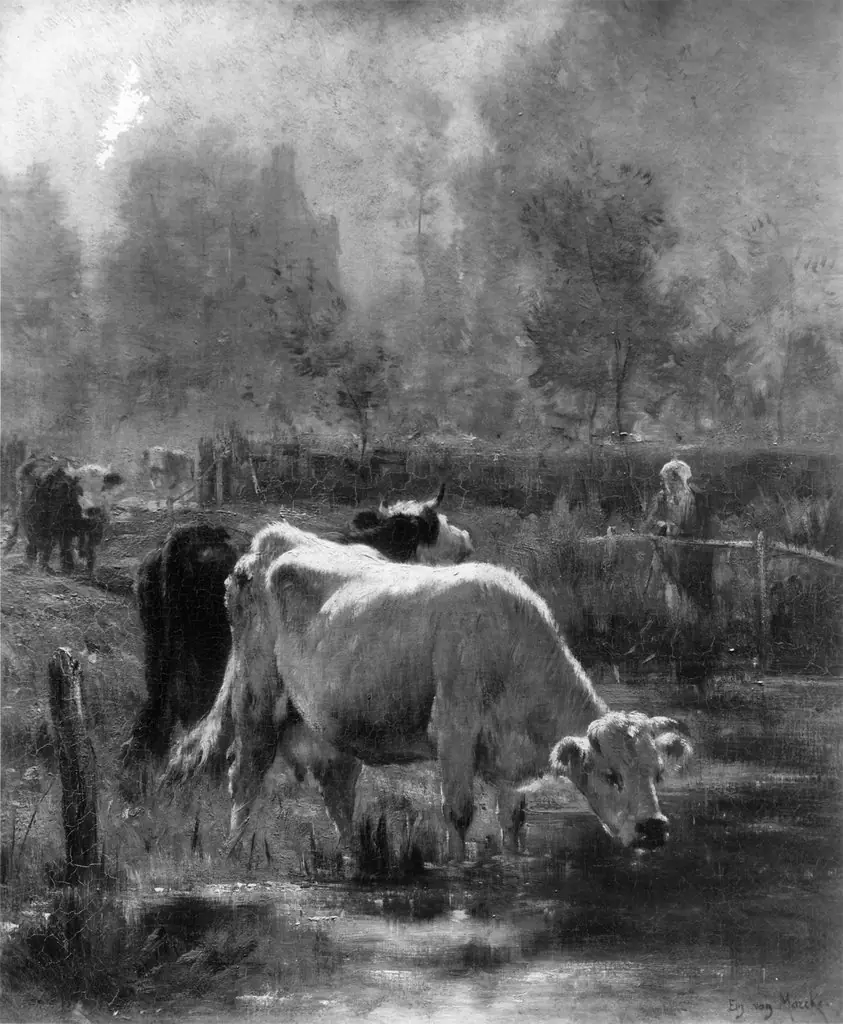
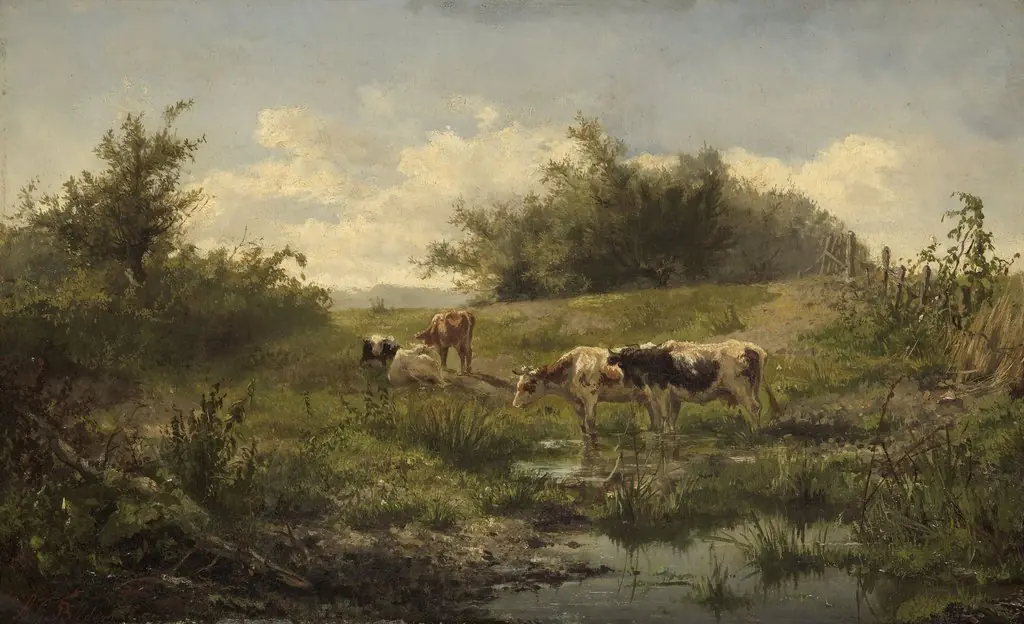
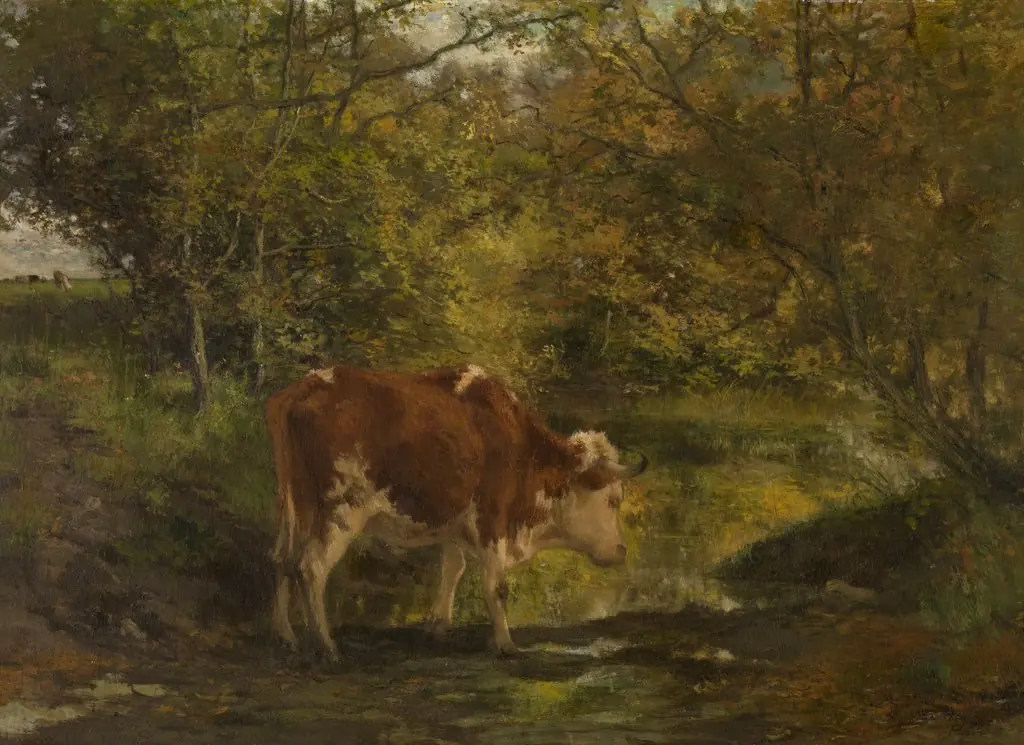
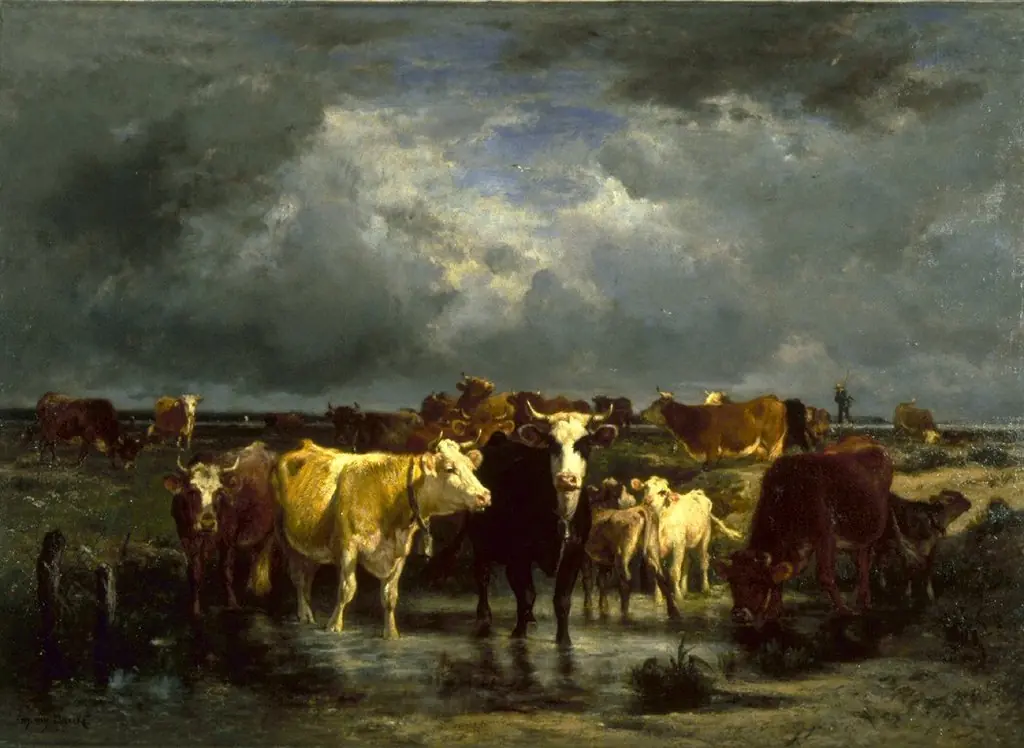
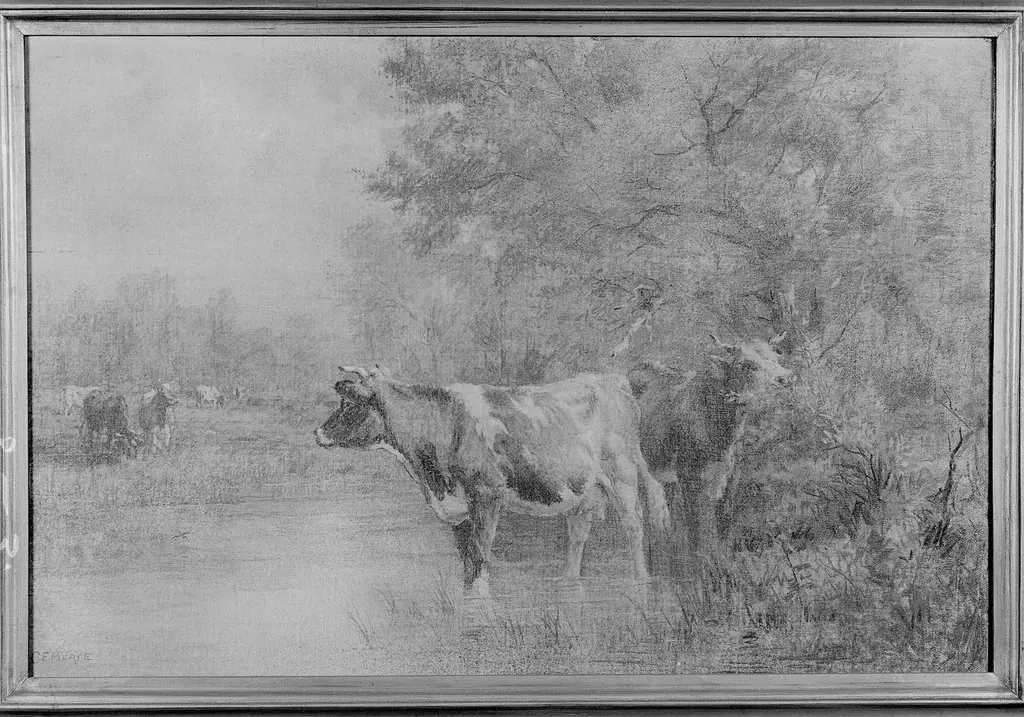
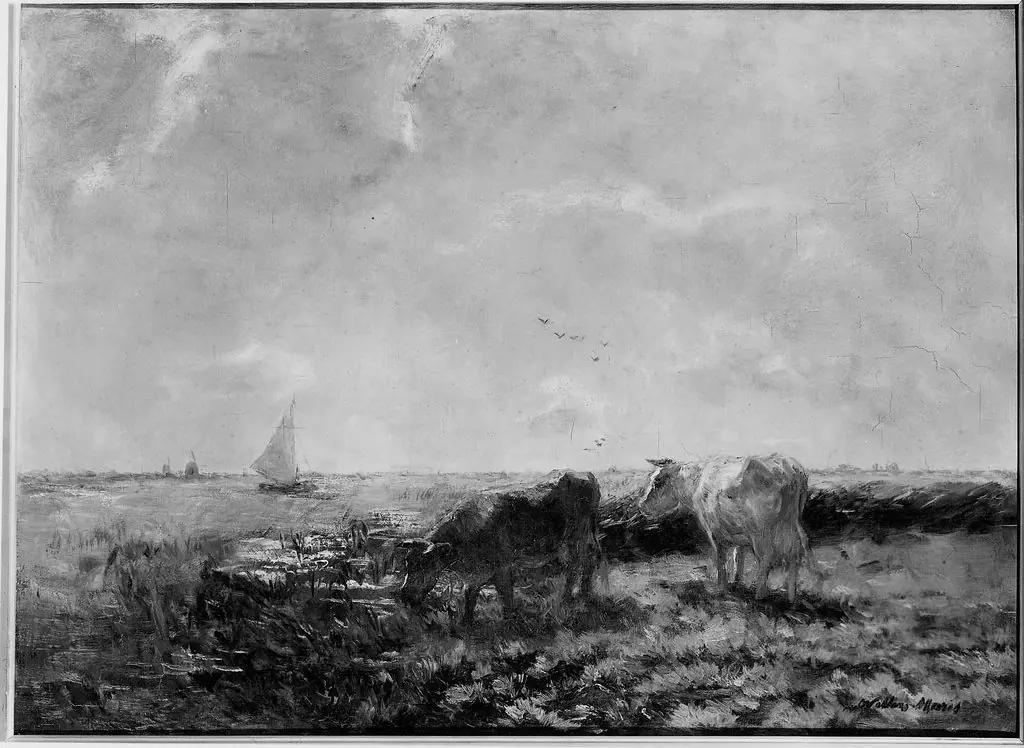
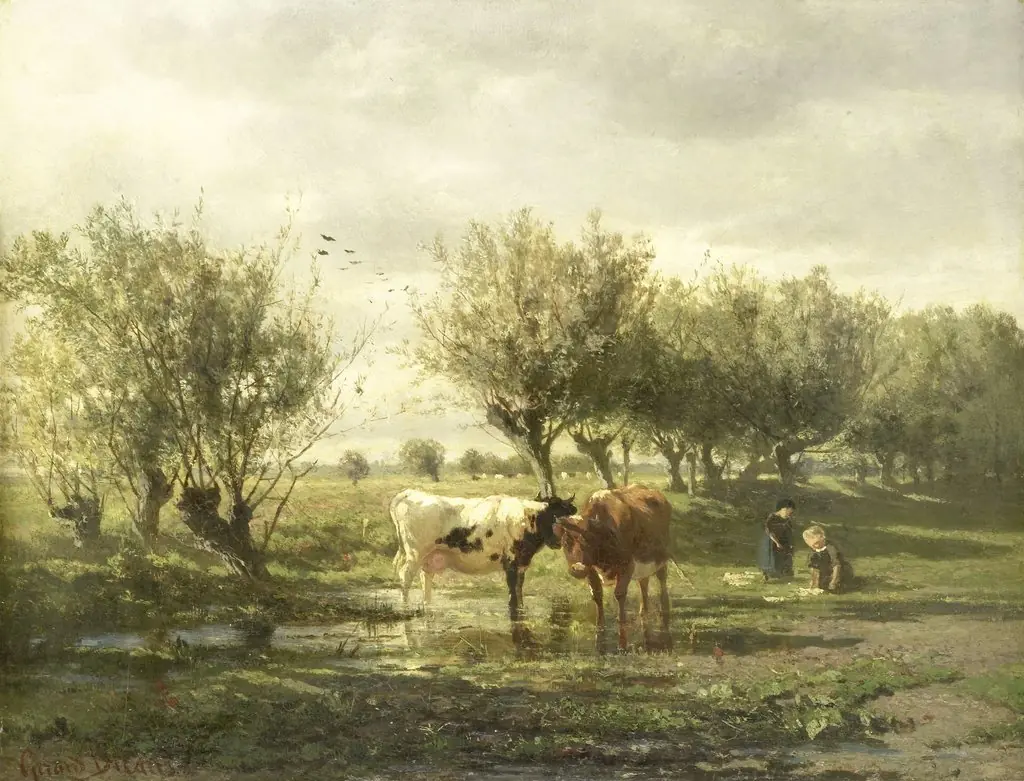
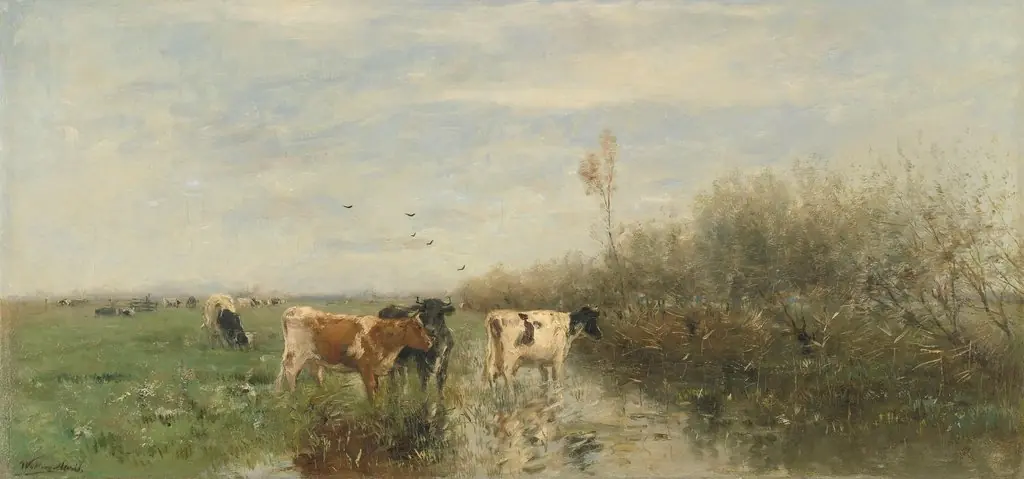
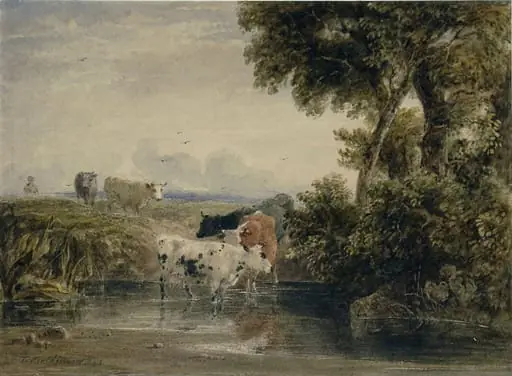
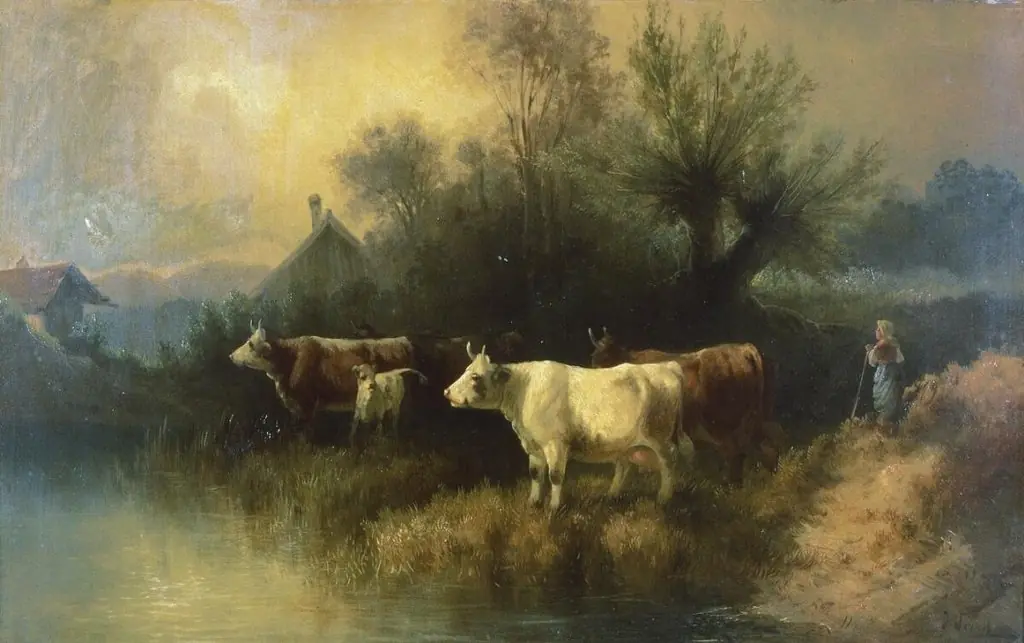
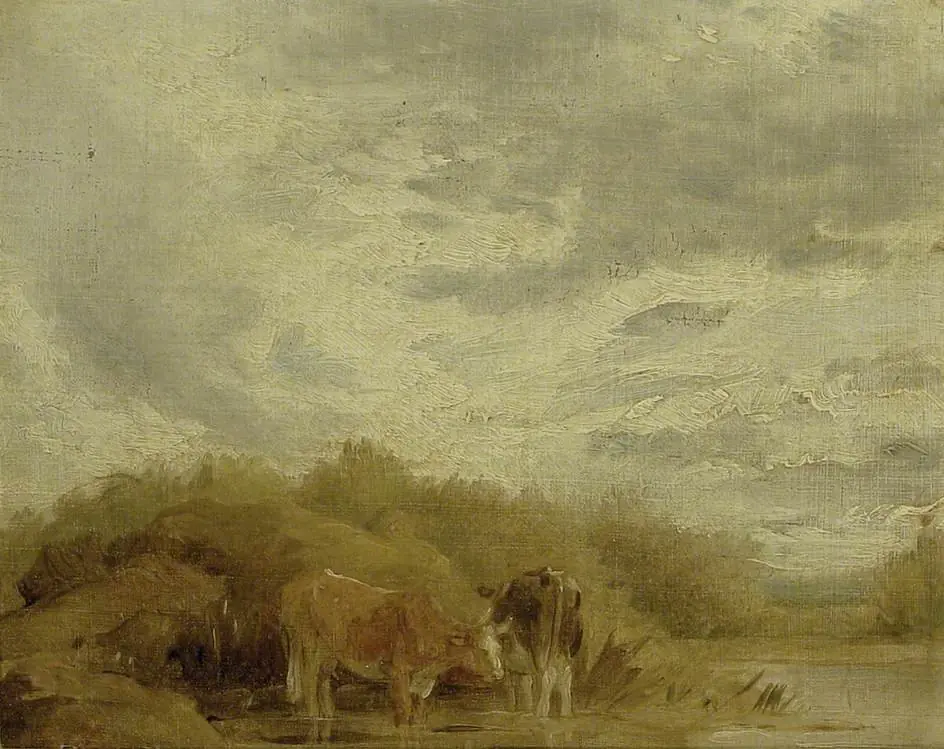
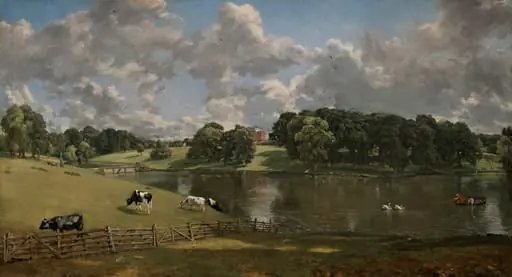
The painting presents a tranquil rural scene, centered on a single cow standing in shallow water, facing left. To the left, a wooden flood gate is visible, while a group of cattle grazes in a field on the right. A cloudy sky hangs overhead, contributing to the quiet atmosphere of this natural environment, a common theme for the artist.
Context
Émile van Marcke, a French painter recognized for his consistent focus on cattle, created this work within the framework of the Barbizon School. This artistic movement, active in the mid-19th century, championed direct observation of nature and often depicted rural life and landscapes, a tradition The Flood Gate clearly embodies through its subject matter and approach.
Own this work as a print
Artist & collection
Artist
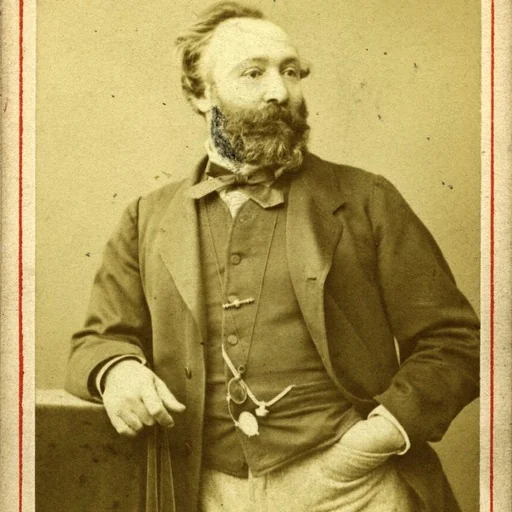
Émile van Marcke, born Charles Émile van Marcke de Lummen (15 August 1827 in Sèvres – 24 December 1890 in Hyeres), was a French cattle painter.