Artwork
Head of the Virgin
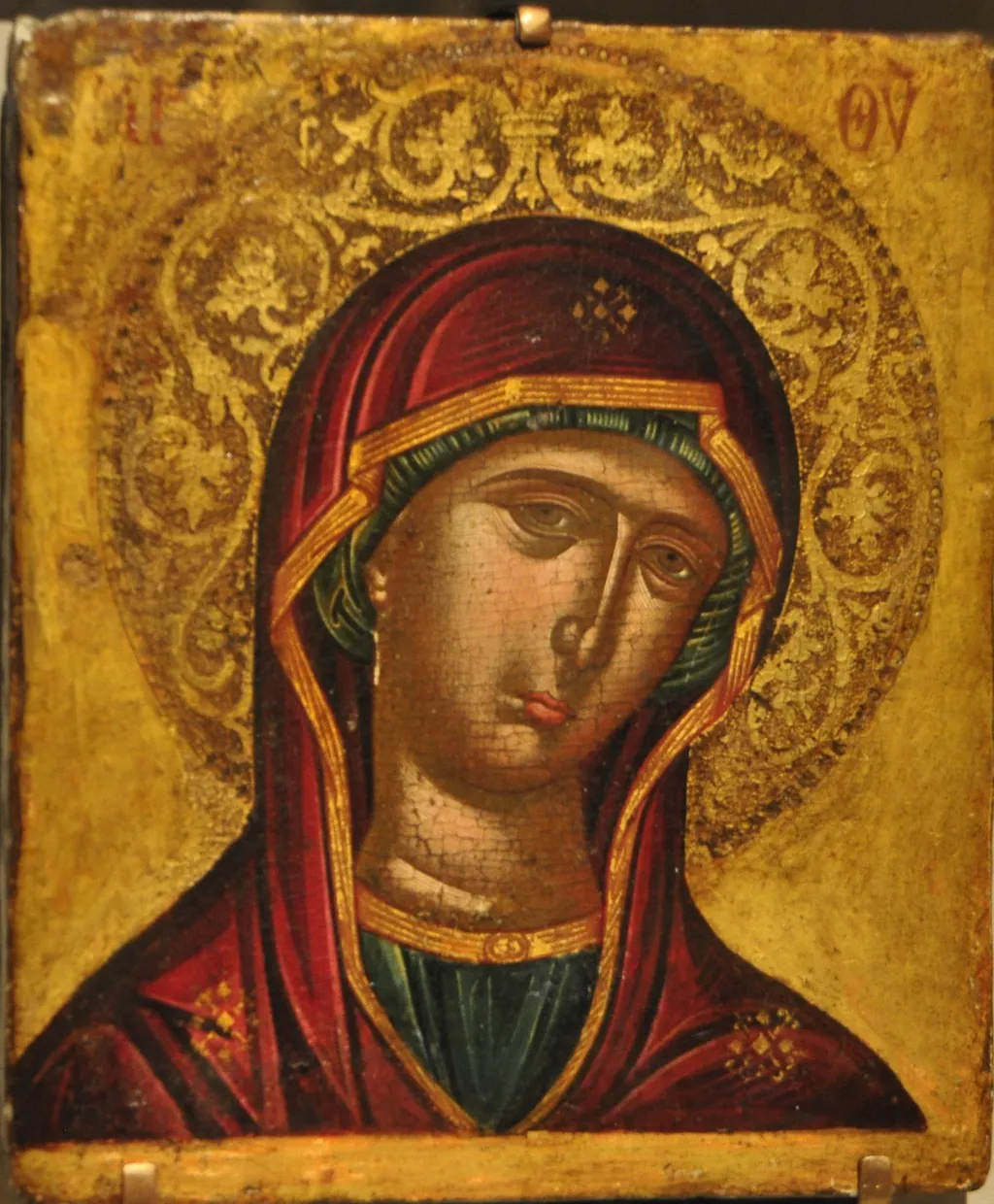
Head of the Virgin is a tempera painting by the Byzantine icon painting artist Emmanuel Tzanes. It dates from 1657 and is held in the collection of the Metropolitan Museum of Art.
About this work
Subject & Meaning
By isolating the figure's head, the composition emphasizes a focused spiritual presence intended for veneration rather than narrative storytelling.
Created in 1657 by Emmanuel Tzanes, this tempera and gold leaf panel painting depicts the Virgin Mary as its sole subject. The work functions as a devotional image within the tradition of religious art, specifically emerging from the Cretan School movement. By isolating the figure's head, the composition emphasizes a focused spiritual presence intended for veneration rather than narrative storytelling.
The use of gold leaf alongside tempera on panel reflects the enduring Byzantine aesthetic conventions maintained by Cretan artists during the mid-seventeenth century, symbolizing the divine light associated with the holy figure.
History & Provenance
Head of the Virgin was created in 1657 by the Cretan School artist Emmanuel Tzanes. Executed in tempera and gold leaf on a wooden panel, the work depicts the Virgin Mary within the genre of religious art and is held in the permanent collection of the Metropolitan Museum of Art. No exhibition history outside of the museum's collection is documented in the available sources.
Overview
Emmanuel Tzanes, a Greek Renaissance artist and cleric, created Head of the Virgin in 1657 using tempera. This painting depicts a veiled woman, likely the Virgin Mary, characterized by a serene yet solemn expression and a golden halo. The work exemplifies the Byzantine iconographic tradition, which Tzanes practiced extensively, and is now part of The Metropolitan Museum of Art's collection.
Technique & Style
Tzanes executed this painting in tempera, a medium historically favored for icons, which uses egg yolk as a binder to create durable, luminous surfaces and allows for precise detail. The work adheres to the established conventions of Byzantine iconography, characterized by its stylized forms and spiritual focus. It also reflects the Cretan school's approach, incorporating subtle Venetian artistic influences prevalent during Tzanes's career.
Context
Emmanuel Tzanes was a prominent Greek clergyman and prolific iconographer, known for producing over 130 religious works. He served as a parish priest at the Greek Orthodox church of San Giorgio dei Greci in Venice, a significant center for the Greek diaspora. His artistic practice was deeply rooted in the Byzantine tradition, aligning with the artistic and religious environment of the Flanginian School, which fostered this distinct style.
Own this work as a print
Artist & collection
Artist
Emmanuel Tzanes (Greek: Εμμανουήλ Τζάνες; 1610 – 28 March 1690), also known as Bounialis (Greek: Μπουνιαλής), Emmanuel Tzane-Bounialis, Emmanuel Zane, or Emmanuel Tzane, was a Greek Renaissance iconographer, author, clergyman, and educator.

- Jumalanäiti, Hodigitria - Tiennäyttäjä, bysanttilainen ikoni
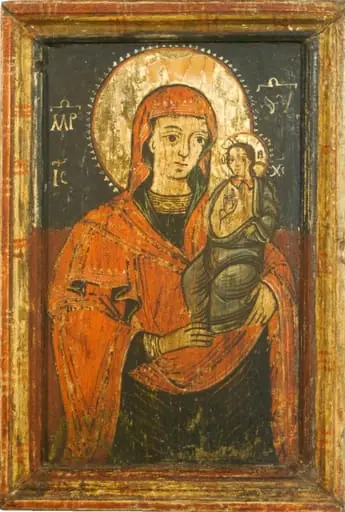 Maica Domnului cu Pruncul
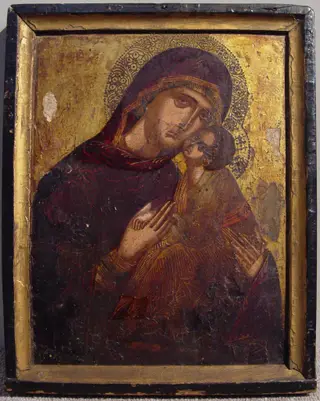 Icon with the Virgin and Child
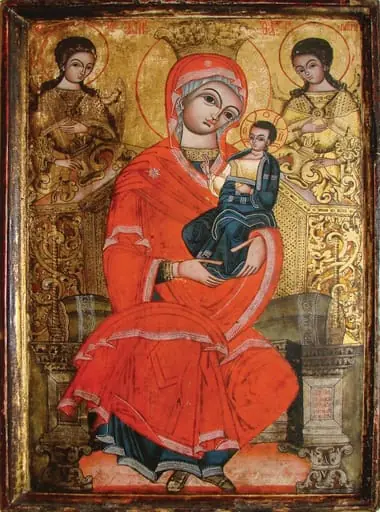 Maica Domnului cu Pruncul
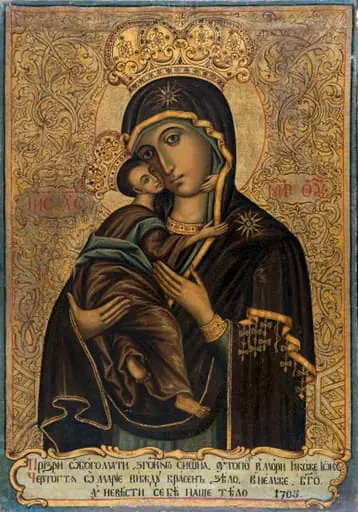 Madona cu pruncul
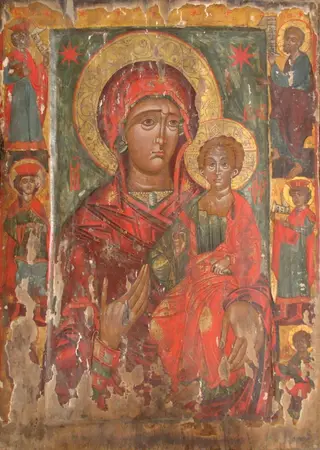 Maica Domnului cu Pruncul, flancată de prooroci
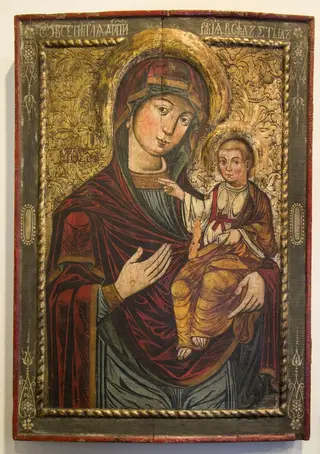 Maica Domnului cu pruncul; Icoană de catapeteasmă; Icoană împărătească
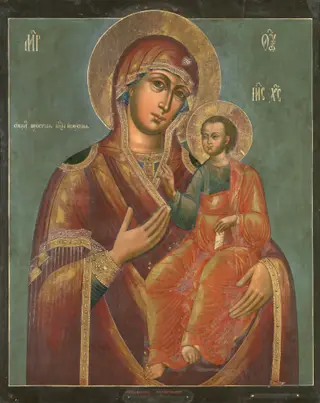 Mother of God from Iviron
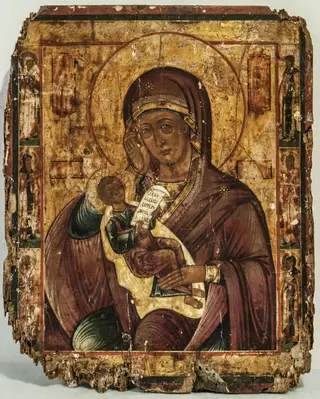 Icoana „Potolește întristările noastre” o înfățișează pe Maica Domnului ținând mâna stângă sub cap, care este ușor înclinat. Aceasta sugerează că Născătoarea de Dumnezeu ascultă lacrimile și rugăciunile tuturor credincioșilor care apelează la ea, în nevoile, necazurile și întristările lor. Cu mâna dreaptă, Fecioara Maria ține Pruncul Iisus. Mântuitorul ține în mâinile Sale un sul desfăcut, pe care sunt înscrise următoarele cuvinte: „Judecați cu dreptate, arătând milă unii față de alții, nu jigniți văduvele și orfanii și nu țineți răutate în inima voastră față de fratele vostru”.Maica este pictată pe fondul foiței aurite, cu o expresie blândă. Înveșmântată cu maforion grena, cu borduri aurite , dublate de o dantelărie fină, albă, pe umeri și frunte stelele întreitei feciorii. Stola verde cu galon lat aurit, la gât și mâneci. Pruncul , culcat în brațele Maicii pe o pânză albă, are o expresie tristă. Picioarele desculțe. Nimb cruciger, cu însemnele consacrate. Nimbul Fecioarei, trasat cu roșu, depășește bordura lată, aurită. Lateral, pe chenar, câte trei sfinți, în picioare. Se poate descifra doar inscripția de pe aureola sfântului Zosim și a sfintei Xenia(stânga). Inscripțiile referitoare la Iisus și Maica Domnului sunt casetate pe fondul aurit. Linia desenului foarte fină, drapajul veșmintelor bogat, cu unele accente de repictare(tușele de alb). Icoana prezintă degradări ale stratului pictural(eroziuni, clacuri, desprinderi, lacune, vernis îmbătrânit) și ale suportului(atac xilofag mai vechi care a fragilizat lemnul)
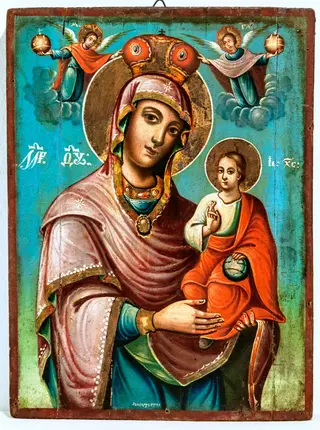 Tema
Tema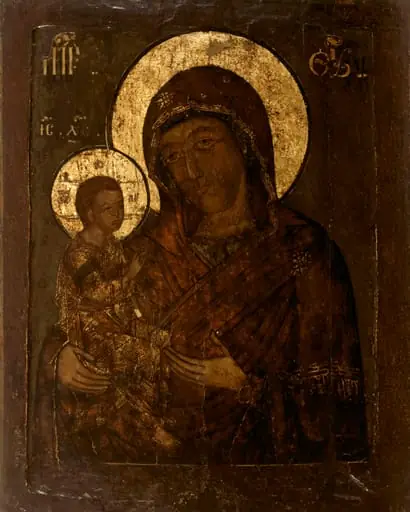 Jerusalemin Jumalanäiti, (Hodigitria), venäläinen ikoni
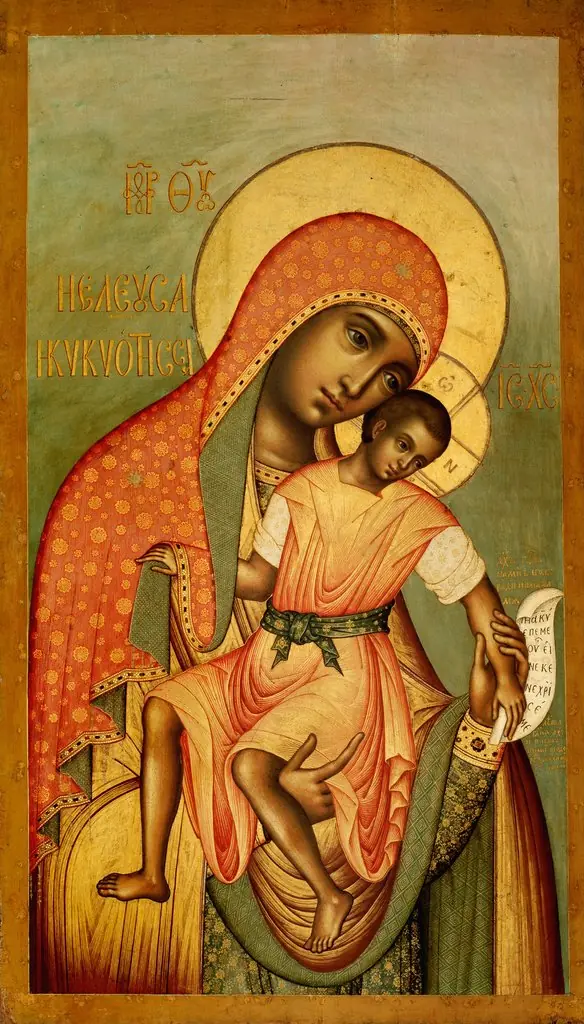 Virgin Eleousa of Kykkos