Artwork
Mother of God from Iviron
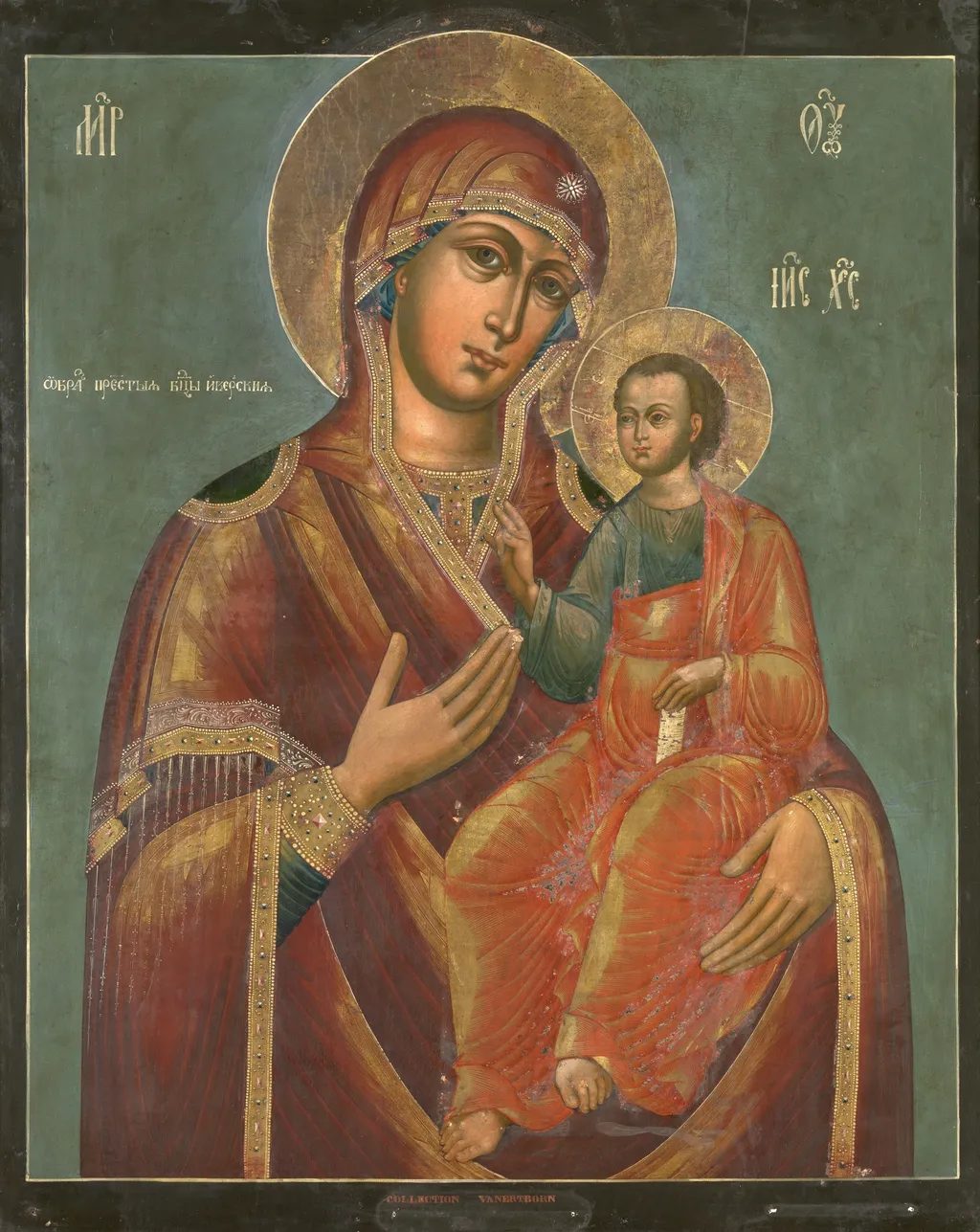
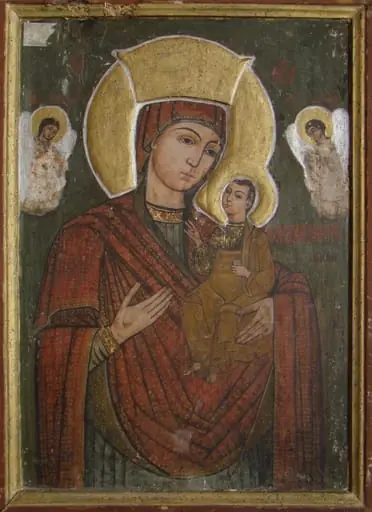
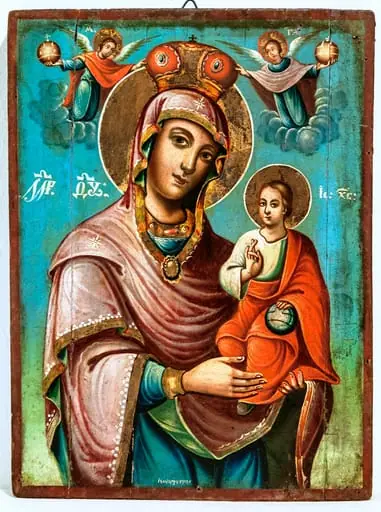
Mother of God from Iviron is an oil painting by the Russian Icon artist Unknown. It dates from 1750 and is held in the collection of the Royal Museum of Fine Arts Antwerp. This oil painting depicts the Virgin Mary seated with the Christ Child on her lap, rendered in a traditional Byzantine iconographic style.
About this work
Overview
The muted green background focuses attention on the figures, while the rich red and gold of Mary’s robe conveys dignity and divine association.
This oil painting depicts the Virgin Mary seated with the Christ Child on her lap, rendered in a traditional Byzantine iconographic style. Both figures are marked by halos, signifying their sacred status. The composition is centered and symmetrical, emphasizing stillness and reverence.
The muted green background focuses attention on the figures, while the rich red and gold of Mary’s robe conveys dignity and divine association.
Subject & Meaning
The image represents the Theotokos, or Mother of God, a central figure in Eastern Christian devotion. Mary’s outstretched hands, neither embracing nor presenting the Child, suggest an intercessory role, offering the divine to the viewer. The Child’s calm posture and direct gaze reinforce his role as both human and divine. The painting functions as an object of veneration, inviting contemplation rather than emotional drama.
Technique & Style
Executed in oil paint, the work employs a restrained palette with deliberate contrasts: the red of Mary’s mantle against the muted green background, and the orange and green of the Child’s garments. Gold highlights define halos and robe edges, adding luminosity without excess. The figures are rendered with smooth, flattened forms and minimal modeling, reflecting the enduring influence of Byzantine iconography rather than Western naturalism.
History & Provenance
The painting originates from the Iviron Monastery on Mount Athos, a major center of Orthodox monasticism. It was likely created in the late medieval period, possibly the 14th or 15th century, and later entered the collection of the Royal Museum of Fine Arts Antwerp, likely through ecclesiastical or aristocratic channels during the early modern era. Its journey reflects the movement of religious art across Orthodox and Catholic regions.
Context
Created during a time when Byzantine artistic traditions persisted in monastic communities, this work aligns with devotional practices that prioritized spiritual presence over individual expression. Similar icons were used in private prayer and liturgical settings. The Iviron Monastery, known for its scholarly and artistic output, produced numerous such images, which circulated widely in the Orthodox world and beyond.
Legacy
The painting remains a testament to the endurance of Byzantine iconography in Western collections. Its presence in Antwerp underscores the historical exchange between Eastern and Western Christian traditions. While stylistically distinct from contemporary Renaissance works, it contributes to broader understandings of medieval religious art and the transmission of sacred imagery across cultural boundaries.
Artist & collection









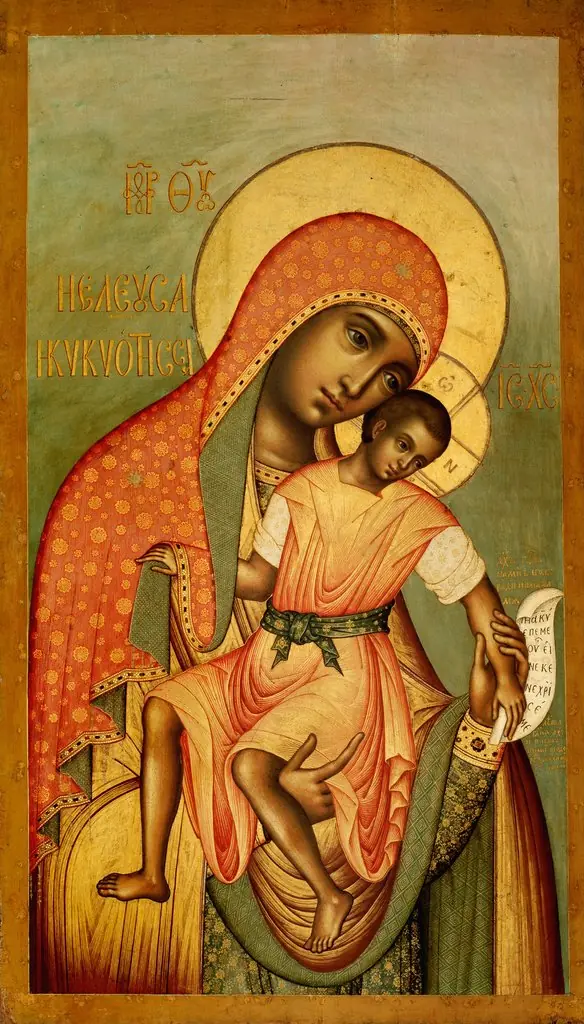 Virgin Eleousa of Kykkos
 Jumalanäiti, Hodigitria - Tiennäyttäjä, bysanttilainen ikoni
 Maica Domnului cu Pruncul
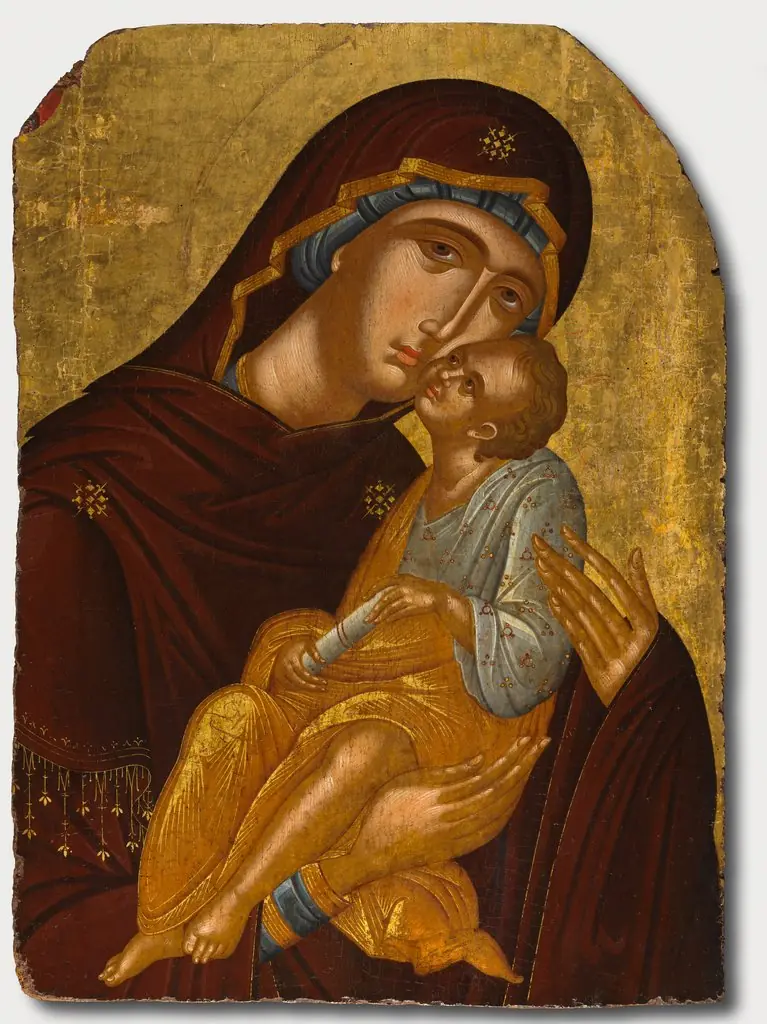
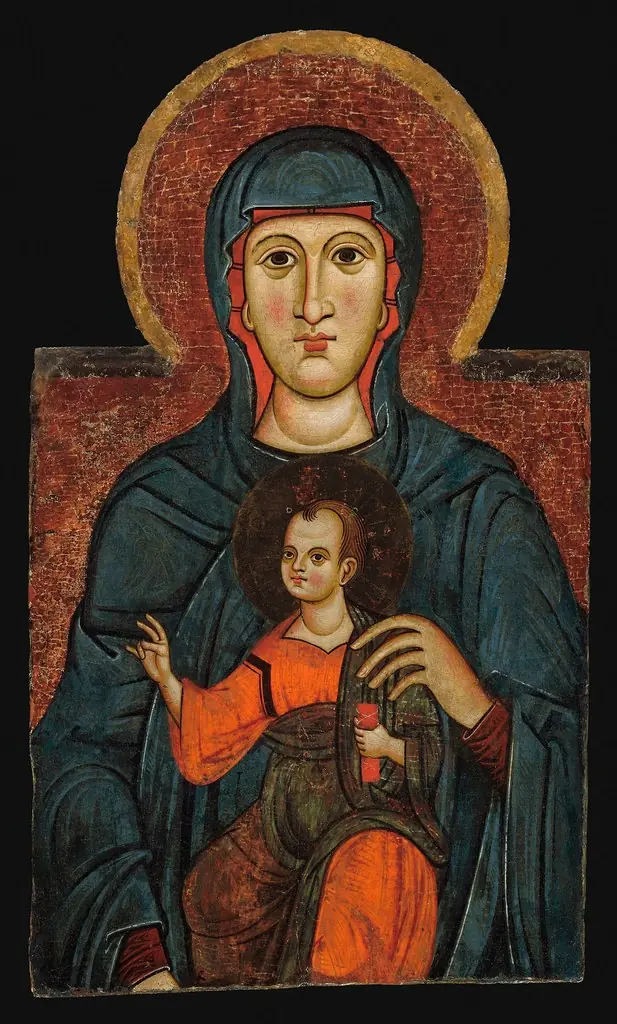 Virgin and Child
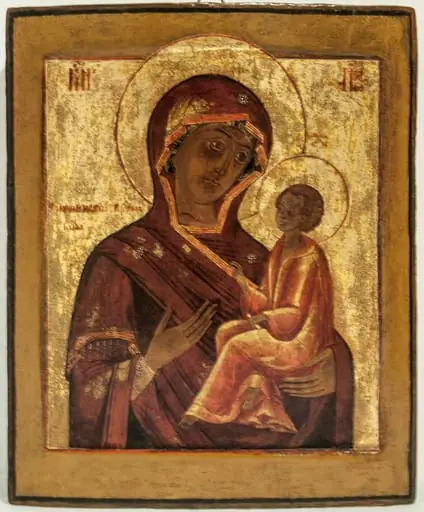 Icoa cee
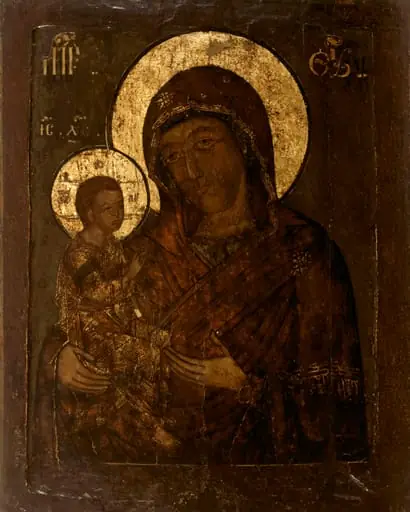 Jerusalemin Jumalanäiti, (Hodigitria), venäläinen ikoni
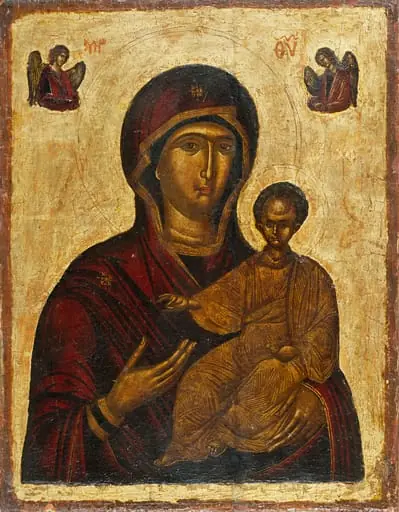
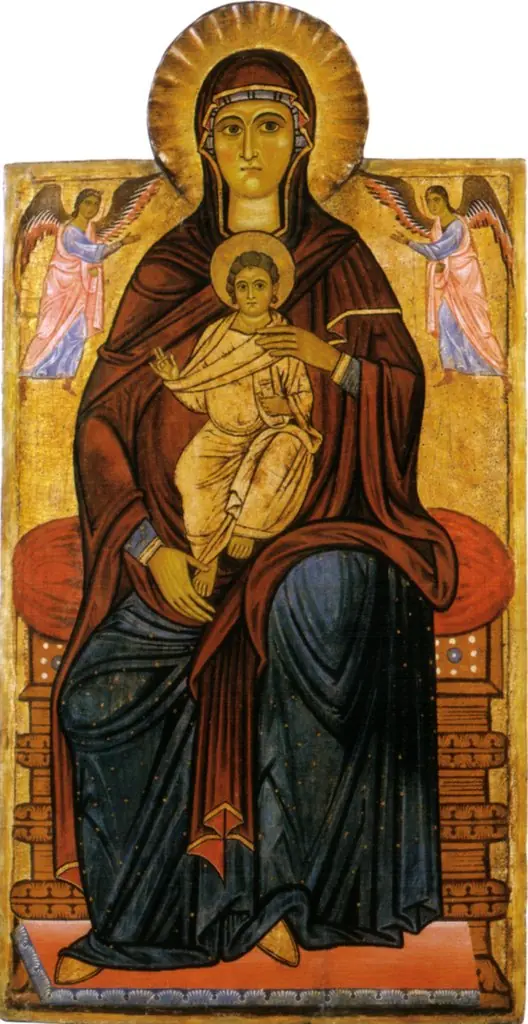 Madonna with Child enthroned with two Angels
 Tema
Tema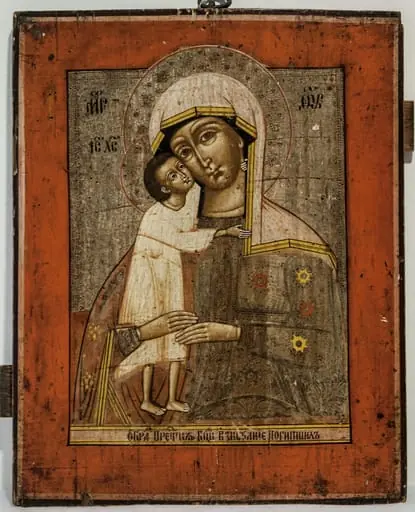 Maica Domnului, tipul Eleusa(dulcea sărutare, Mângâietoarea) îl ține strâns în brațe pe Iisus prunc, în picioare, cu obrazul lipit de cel al Maicii și o mână petrecută pe după gâtul ei. Iisus are nimbul cruciger, marcat cu motive florale punctate, Este înveșmântat într-o tunică 3/4 alb-gălbuie, care lasă să i se vadă picioarele. Maica poartă un maforion alb, bordat cu galben, partea din stânga a veșmântului din foiță metalică, decorată cu motive florale pictate cu roșu și galben, motive fitomorfe și geometrice incizate. În partea dreaptă veșmântul este roșu, decorat cu motive florale de culoare galbenă, foița fiind prezentă doar la mânecă. Nimbul decorat cu motive florale punctate în stratul de foiță metalică, Figurile modelate din culoare (alb, ocru) cu accente grafice fine, albe, sunt specifice icoanei rusești. Cromatica: alb, galben, roșu, auriu, brun, negru, foiță metalică, chenar roșu deschis, mărginit de două linii în nuanțe de roșu deschis și brun.Chenarul interior dublat de două șiruri de cercuri ștanțate în foiță. Inscripția dispusă pe o bandă dreptunghiulară în partea de jops a icoanei : Icoana Preacuratei Fecioare Prevăzând Jertfa (lui Iisus).
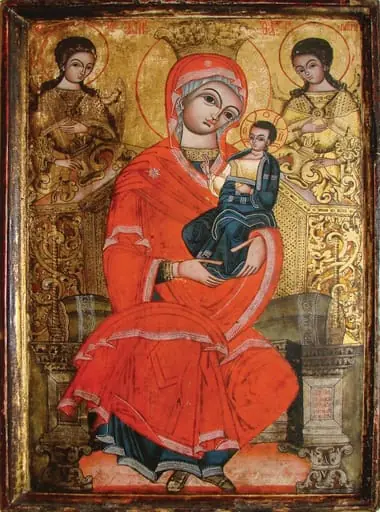 Maica Domnului cu Pruncul