Artwork
Virgin Eleousa of Kykkos
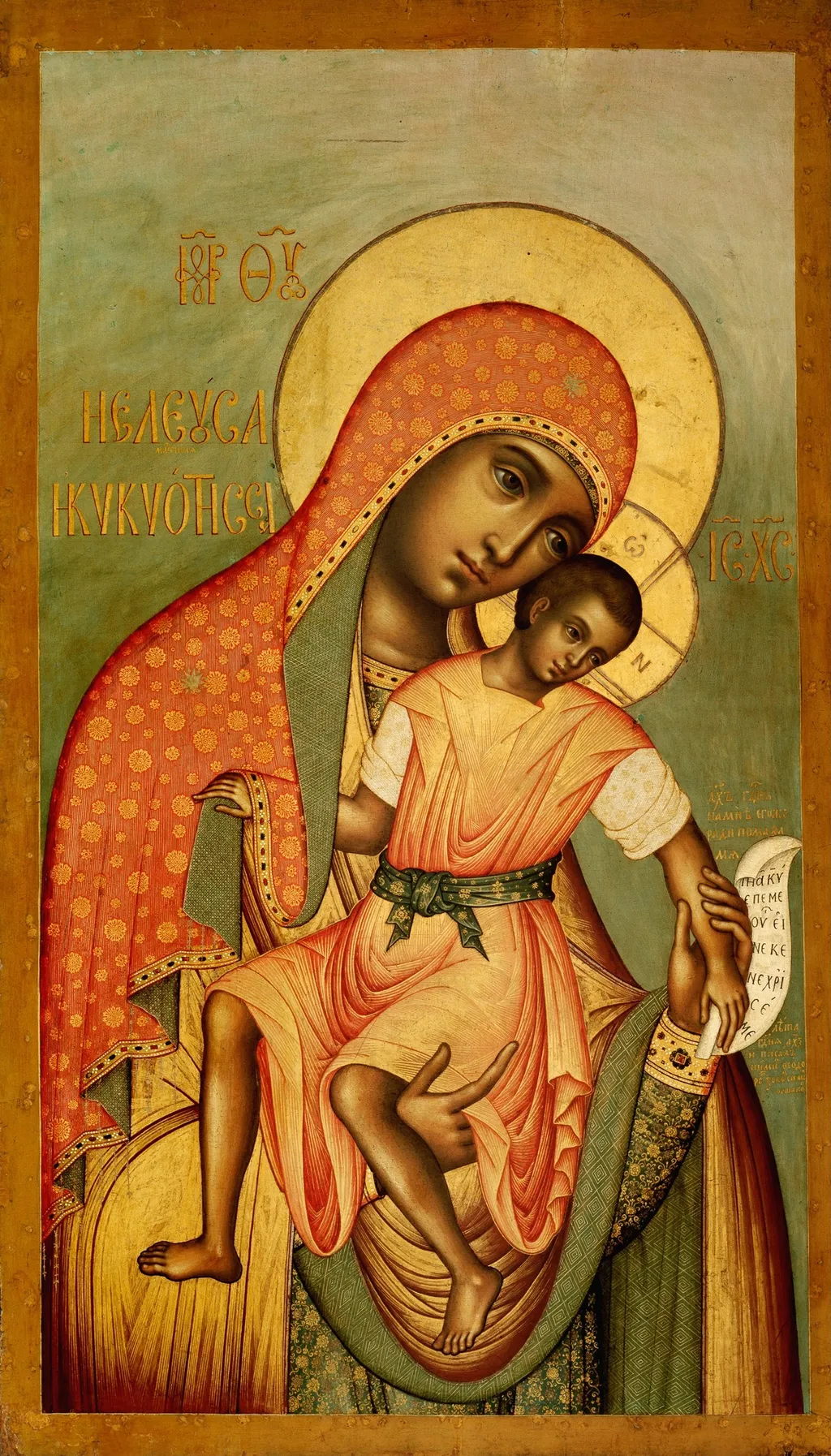
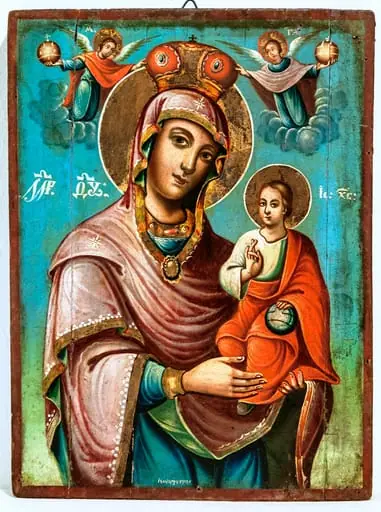
Virgin Eleousa of Kykkos is a tempera painting by the Russian Icon artist Simon Ushakov. It dates from 1668 and is held in the collection of the Tretyakov Gallery.
About this work
Overview
The painting is part of the Tretyakov Gallery’s collection and represents a devotional image widely venerated in Orthodox Christianity.
Painted in 1668 by Simon Ushakov, this tempera work belongs to the Russian icon tradition and reflects the evolving religious aesthetics of mid-17th-century Russia. Ushakov, a court artist and participant in Patriarch Nikon’s reforms, merged conventional iconography with greater naturalism. The painting is part of the Tretyakov Gallery’s collection and represents a devotional image widely venerated in Orthodox Christianity.
Subject & Meaning
The image follows the Eleousa type, portraying the Virgin Mary in a moment of intimate tenderness with the Christ Child. Her gaze and hand resting on his shoulder convey maternal compassion, while the child’s presence signifies divine incarnation. This composition emphasizes emotional connection over formal hierarchy, aligning with reform-era efforts to deepen personal devotion through more humanized sacred figures.
Technique & Style
Executed in tempera on wood, the painting employs layered pigments to achieve subtle luminosity and texture. Ushakov’s brushwork refines traditional icon patterns, particularly in the delicate floral motifs adorning Mary’s robe and hood. The muted green background recedes softly, allowing the rich reds and pinks of the figures to dominate without competing for attention, enhancing the image’s contemplative tone.
History & Provenance
Created during a period of liturgical and artistic reform under Patriarch Nikon, the painting reflects tensions between traditional Byzantine styles and emerging Western-influenced realism. Ushakov’s role in the Moscow Kremlin’s icon workshop positioned him at the center of these changes. The work entered the Tretyakov Gallery’s collection in the 19th century, where it remains as part of Russia’s national artistic heritage.
Context
In 17th-century Russia, religious authority sought to standardize icons, yet artists like Ushakov introduced nuanced expressions and spatial depth. This painting emerged amid debates over whether icons should retain strict canonical forms or embrace greater naturalism. The Eleousa type, already popular in Byzantine and Slavic traditions, was reinterpreted here to meet new devotional expectations within Orthodox practice.
Legacy
Ushakov’s approach influenced later Russian iconography by demonstrating that spiritual authority could coexist with refined technique. While not universally accepted during his lifetime, his stylistic innovations contributed to the gradual evolution of Russian sacred art. The Kykkos Virgin remains a reference point in studies of icon reform, illustrating how tradition and innovation intersected in a time of religious transformation.
Artist & collection
Artist
Simon (Pimen) Fyodorovich Ushakov (Russian: Симон (Пимен) Фёдорович Ушаков; c. 1626 – 25 June 1686) was a Russian icon painter. Together with Fyodor Zubov and Fyodor Rozhnov, he is associated with the comprehensive…

- Mother of God from Iviron
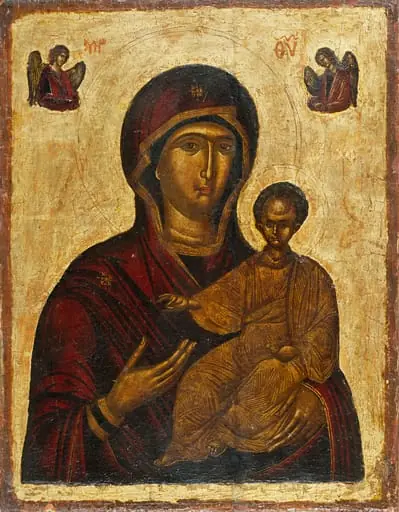 Jumalanäiti, Hodigitria - Tiennäyttäjä, bysanttilainen ikoni
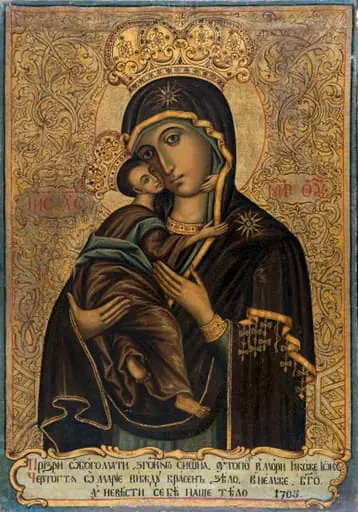 Madona cu pruncul
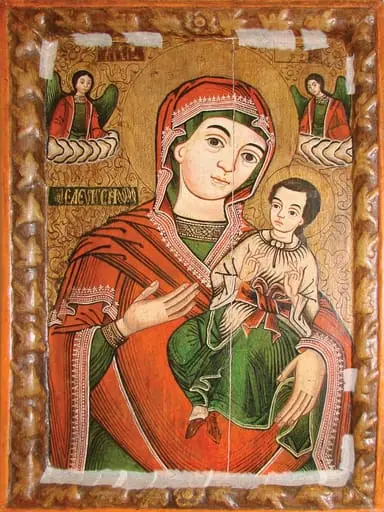 Maica Domnului cu Pruncul
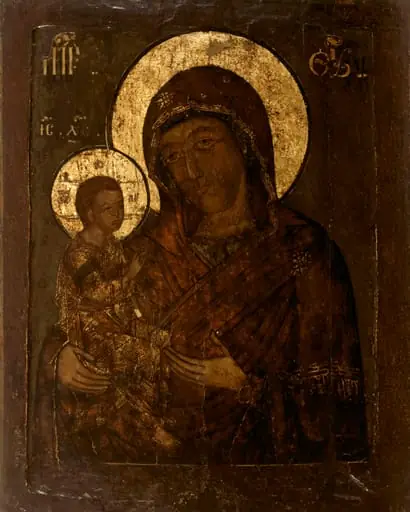 Jerusalemin Jumalanäiti, (Hodigitria), venäläinen ikoni
 Tema
Tema Icoa cee
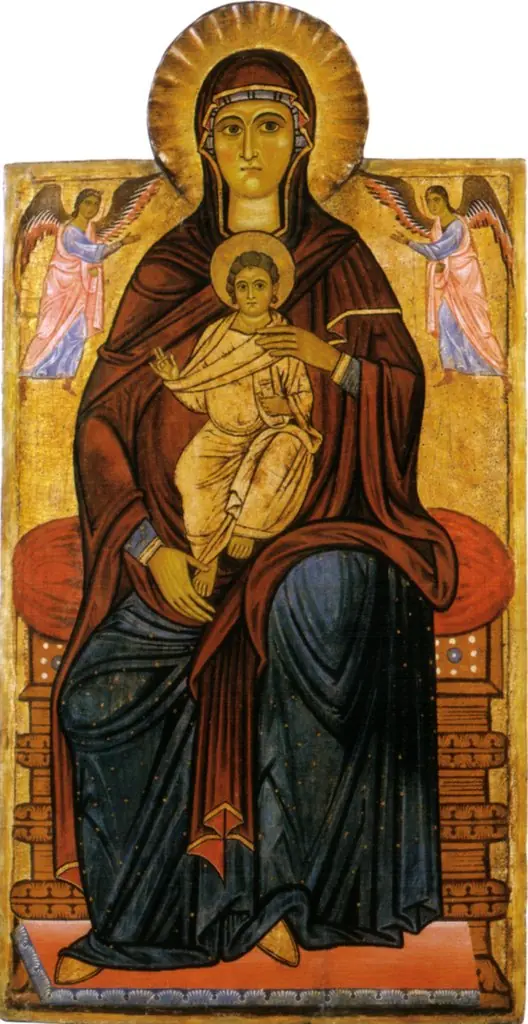 Madonna with Child enthroned with two Angels
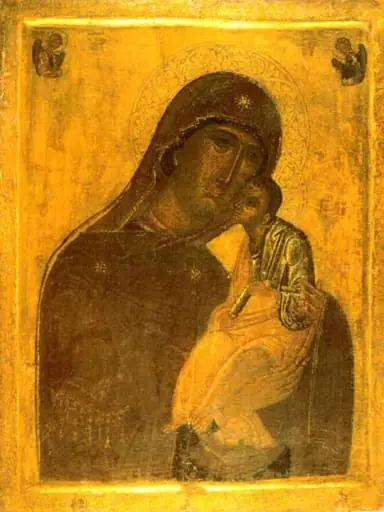 Maica Domnului cu Pruncul - Eleusa
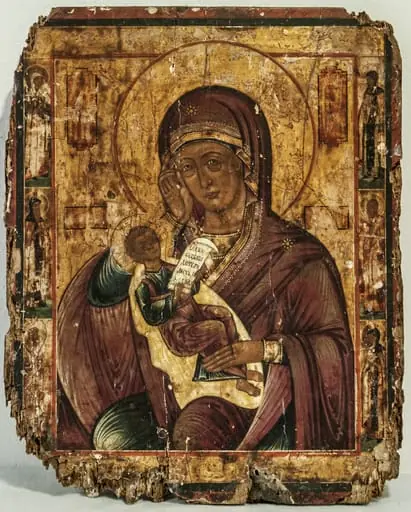 Icoana „Potolește întristările noastre” o înfățișează pe Maica Domnului ținând mâna stângă sub cap, care este ușor înclinat. Aceasta sugerează că Născătoarea de Dumnezeu ascultă lacrimile și rugăciunile tuturor credincioșilor care apelează la ea, în nevoile, necazurile și întristările lor. Cu mâna dreaptă, Fecioara Maria ține Pruncul Iisus. Mântuitorul ține în mâinile Sale un sul desfăcut, pe care sunt înscrise următoarele cuvinte: „Judecați cu dreptate, arătând milă unii față de alții, nu jigniți văduvele și orfanii și nu țineți răutate în inima voastră față de fratele vostru”.Maica este pictată pe fondul foiței aurite, cu o expresie blândă. Înveșmântată cu maforion grena, cu borduri aurite , dublate de o dantelărie fină, albă, pe umeri și frunte stelele întreitei feciorii. Stola verde cu galon lat aurit, la gât și mâneci. Pruncul , culcat în brațele Maicii pe o pânză albă, are o expresie tristă. Picioarele desculțe. Nimb cruciger, cu însemnele consacrate. Nimbul Fecioarei, trasat cu roșu, depășește bordura lată, aurită. Lateral, pe chenar, câte trei sfinți, în picioare. Se poate descifra doar inscripția de pe aureola sfântului Zosim și a sfintei Xenia(stânga). Inscripțiile referitoare la Iisus și Maica Domnului sunt casetate pe fondul aurit. Linia desenului foarte fină, drapajul veșmintelor bogat, cu unele accente de repictare(tușele de alb). Icoana prezintă degradări ale stratului pictural(eroziuni, clacuri, desprinderi, lacune, vernis îmbătrânit) și ale suportului(atac xilofag mai vechi care a fragilizat lemnul)
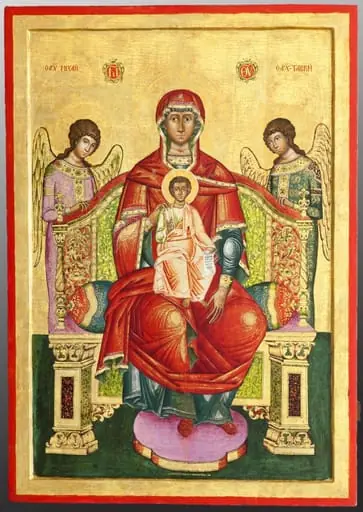 Maica Domnului cu Pruncul - Stăpâna Îngerilor
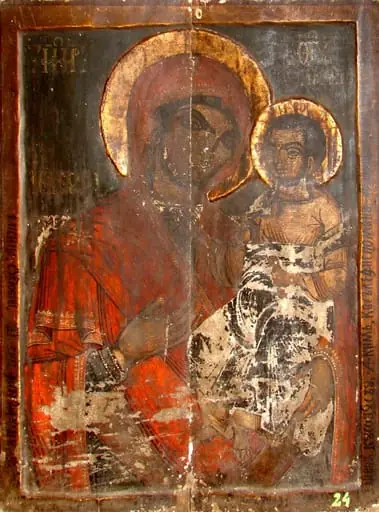 Maica Domnului cu Pruncul