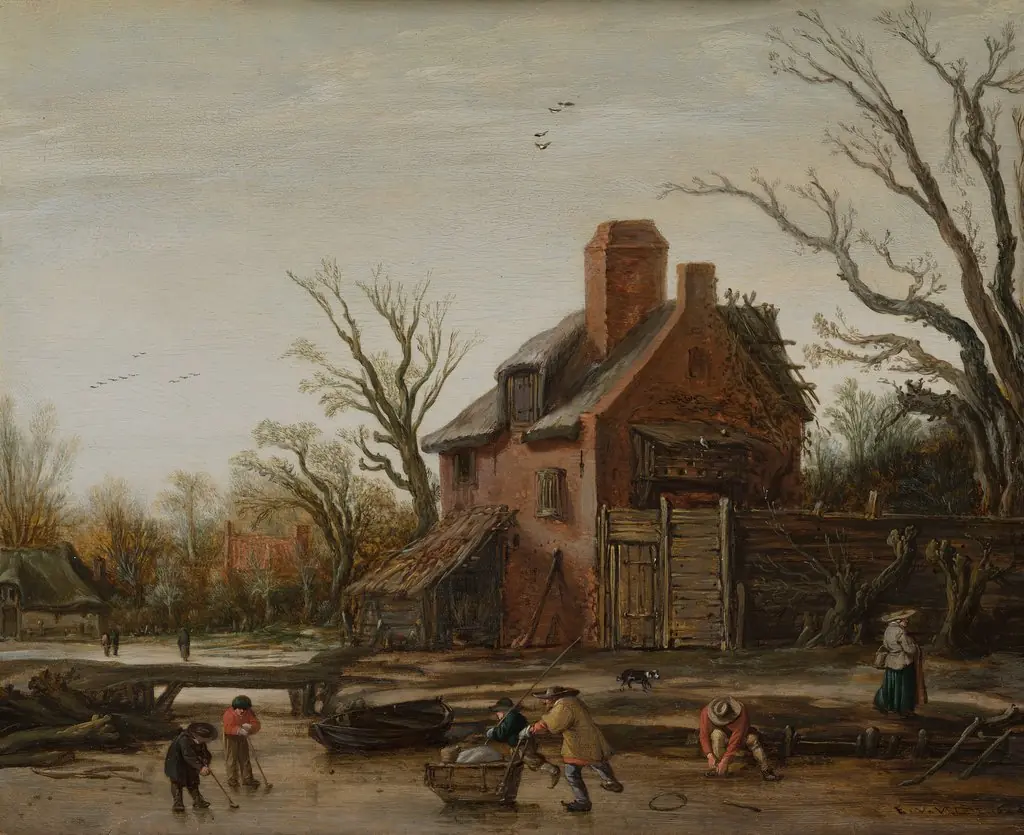
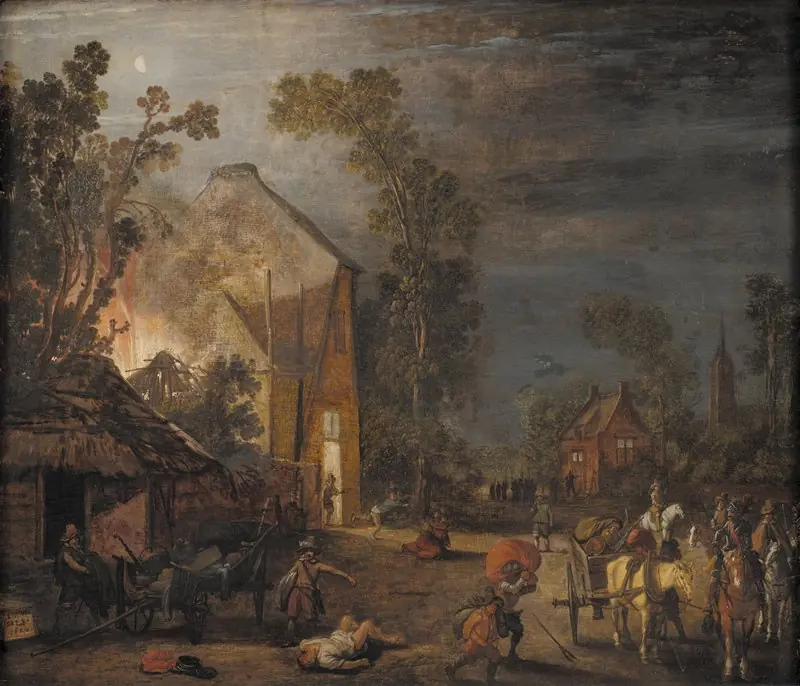
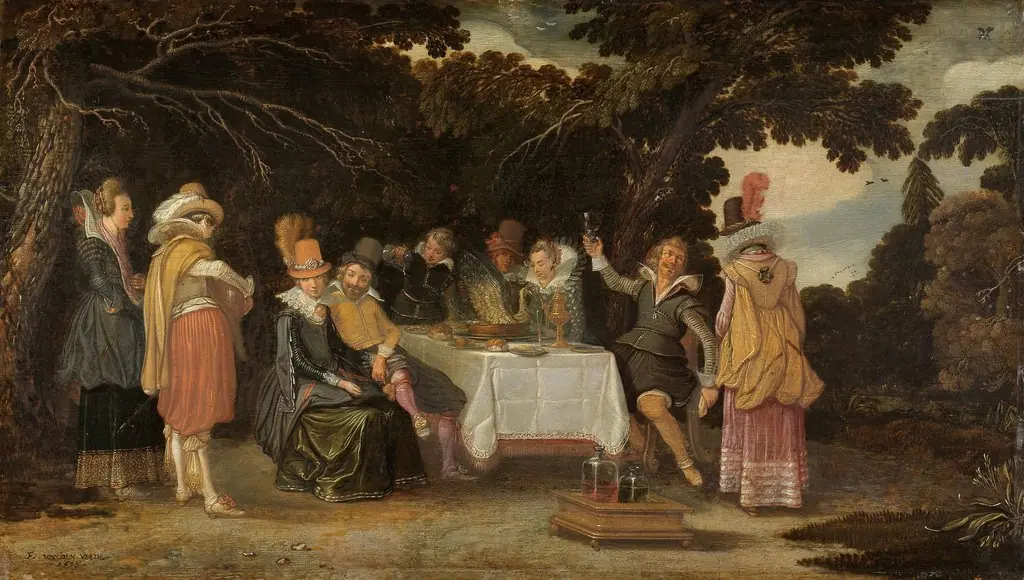
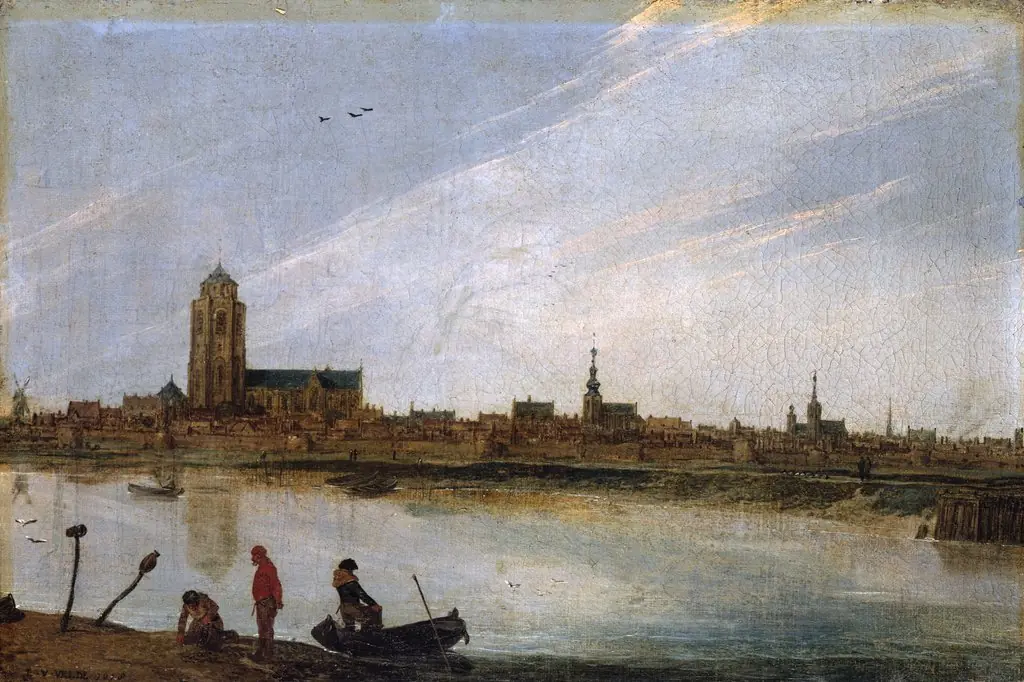
Artwork
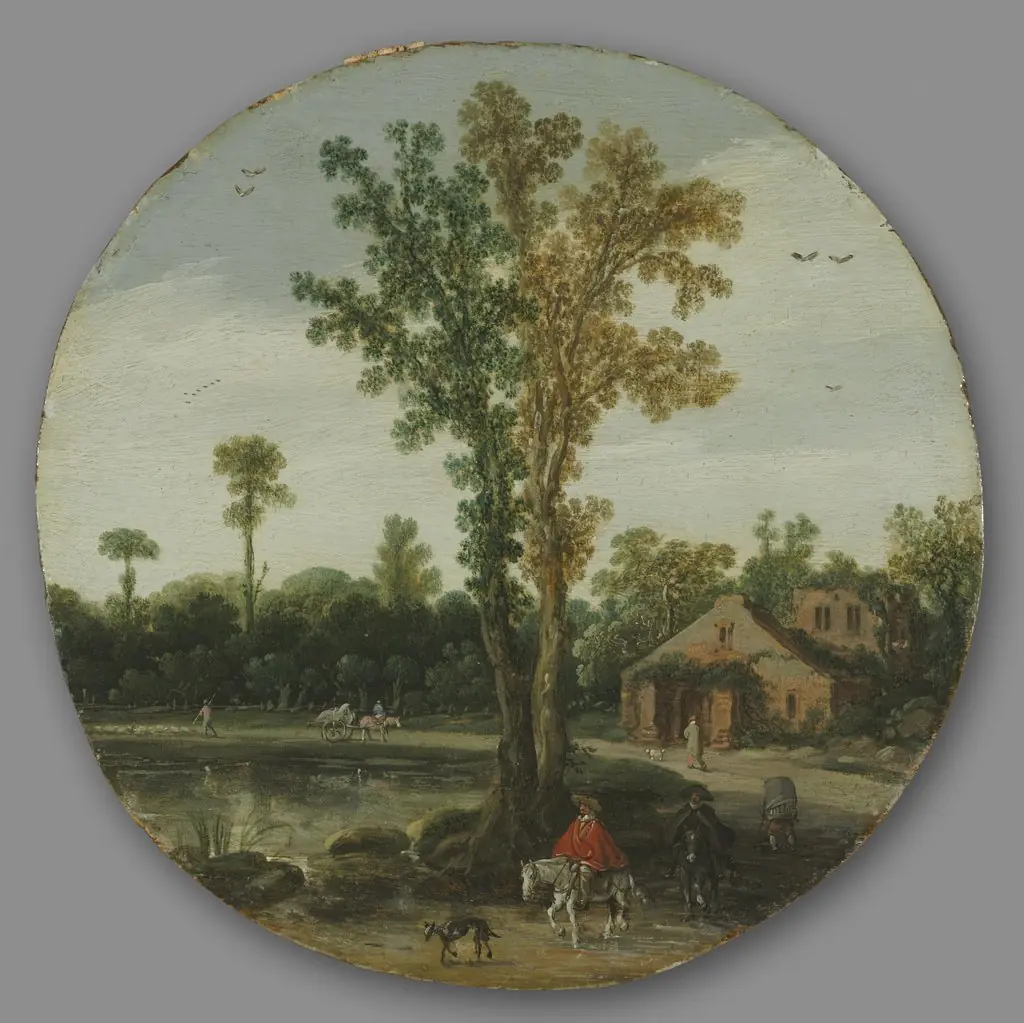
Travelers by a Lake
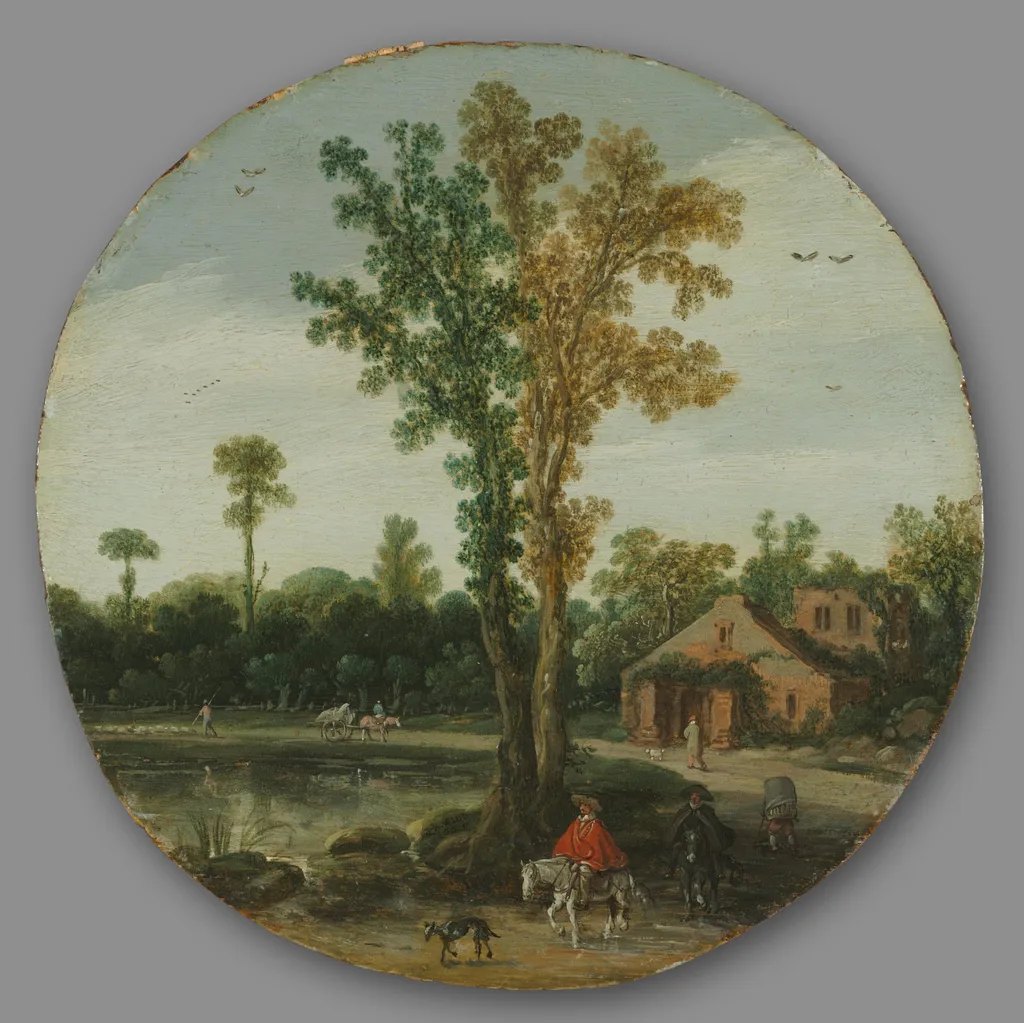
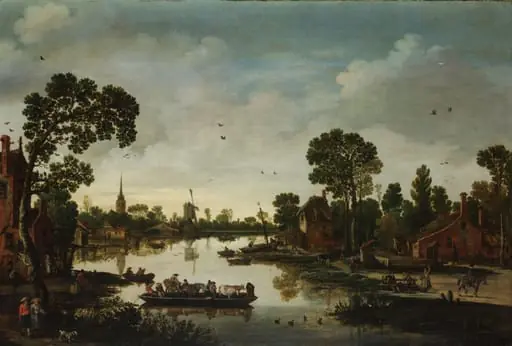
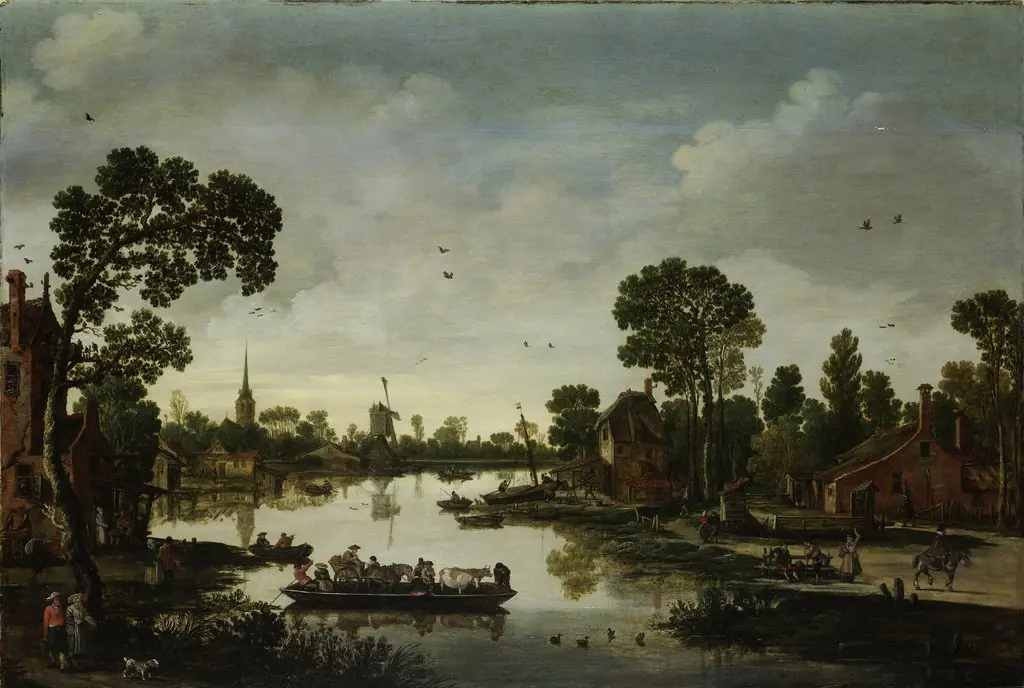
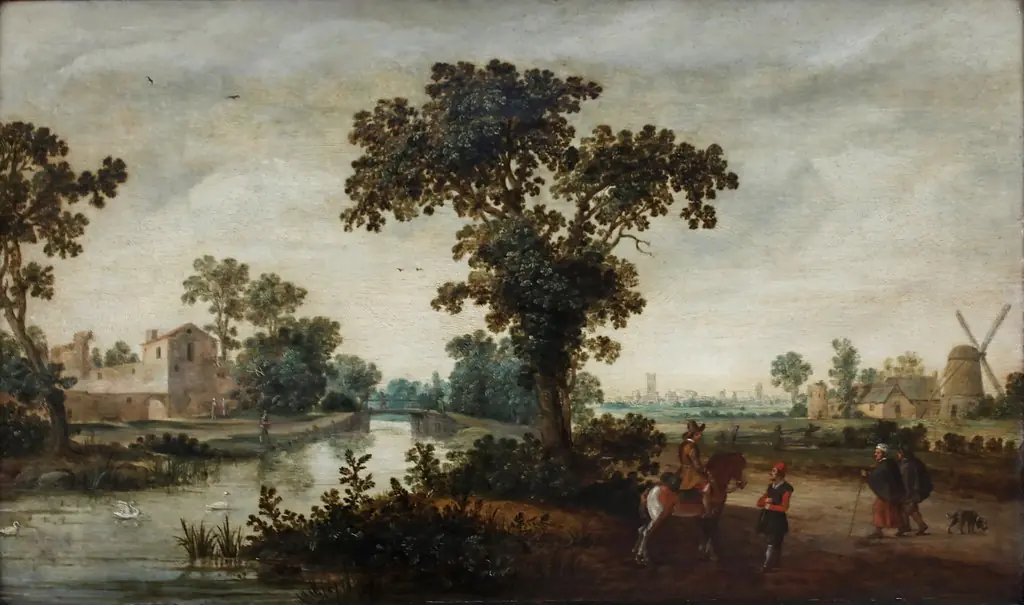
Travelers by a Lake is an unspecified painting by the Baroque artist Esaias van de Velde. It dates from 1625 and is held in the collection of the Cleveland Museum of Art.
- Accession no.
- 1982.128
- Credit line
- John L. Severance Fund
About this work
Overview
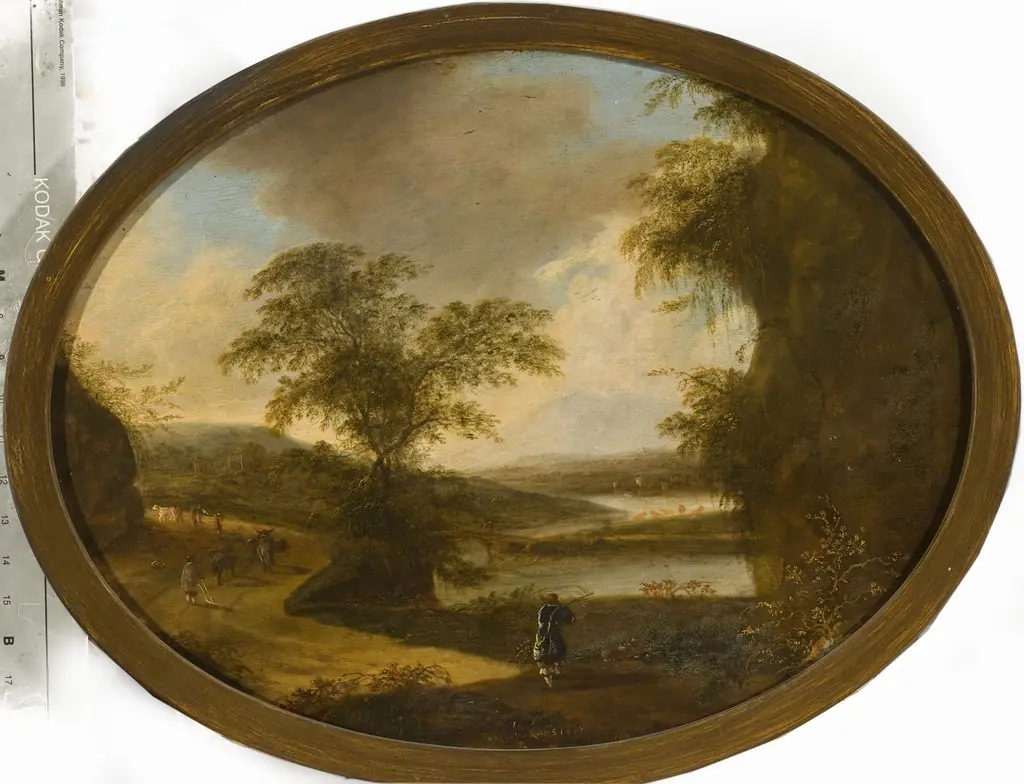
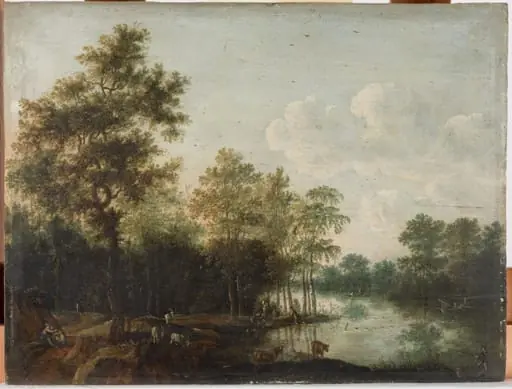
This painting by Esaias van de Velde depicts a quiet lakeside scene with travelers resting, horses grazing, and distant ruins under a broad, cloud-streaked sky.
This painting by Esaias van de Velde depicts a quiet lakeside scene with travelers resting, horses grazing, and distant ruins under a broad, cloud-streaked sky. Unlike earlier Dutch works that treated nature as a decorative frame for religious tales, this piece centers the ordinary landscape itself, its terrain, light, and inhabitants, as the primary subject, marking a shift in artistic focus during the early 17th century.
Subject & Meaning
The figures, travelers paused on a muddy path, a man leaning on a stick, animals at rest, embody quiet daily life rather than grand narrative. Their presence, unembellished and unidealized, suggests a contemplative harmony between humans and the land. The ruined structure hints at time’s passage, reinforcing a mood of stillness and continuity, appealing to urban viewers who longed for the simplicity of rural life amid rapid city growth.
Technique & Style
Van de Velde relied on outdoor sketches for observation but composed the final work in his studio, blending memory and study to create a cohesive scene. The brushwork is restrained, with soft transitions between earth, water, and sky. The water’s stillness and muted tones anchor the composition, while the expansive sky balances the horizontal expanse of the land, enhancing the sense of calm.
History & Provenance
Painted in the 1620s during van de Velde’s mature period, this work emerged from Haarlem’s burgeoning landscape tradition. Though specific ownership records are sparse, it aligns with the tastes of Dutch urban patrons who collected such scenes as reflections of national identity after independence from Spain. The painting reflects a broader cultural turn toward valuing native scenery over imported mythological themes.
Context
Before the 1610s, Dutch landscapes served primarily as background elements in religious or allegorical paintings. Van de Velde and his contemporaries redefined the genre by depicting local topography with observational accuracy, muddy paths, modest architecture, and ordinary figures, transforming the Dutch countryside into a worthy subject of art, independent of narrative or symbolism.
Legacy
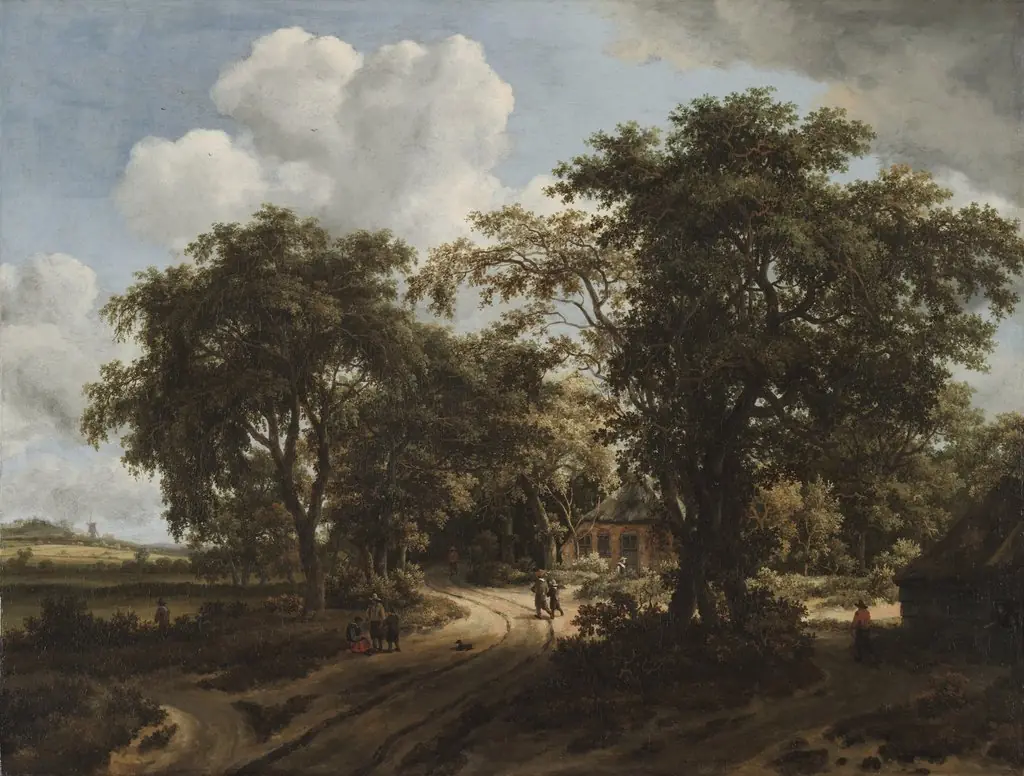
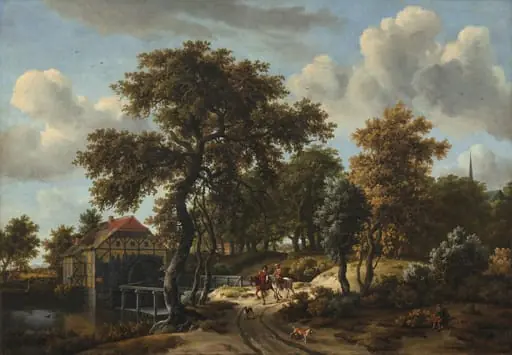
Van de Velde’s approach laid groundwork for later Dutch landscape painters like Jacob van Ruisdael and Meindert Hobbema. By elevating everyday scenes to the level of serious art, he helped establish landscape as an autonomous genre in Northern European painting, influencing how future generations perceived and represented their environment.
Own this work as a print
Artist & collection
Artist
Esaias van de Velde (17 May 1587 (baptized) – 18 November 1630 (buried)) was a Dutch Golden Age painter, mainly of landscapes and a printmaker who experimented with etching.