Artwork
Descent from the cross
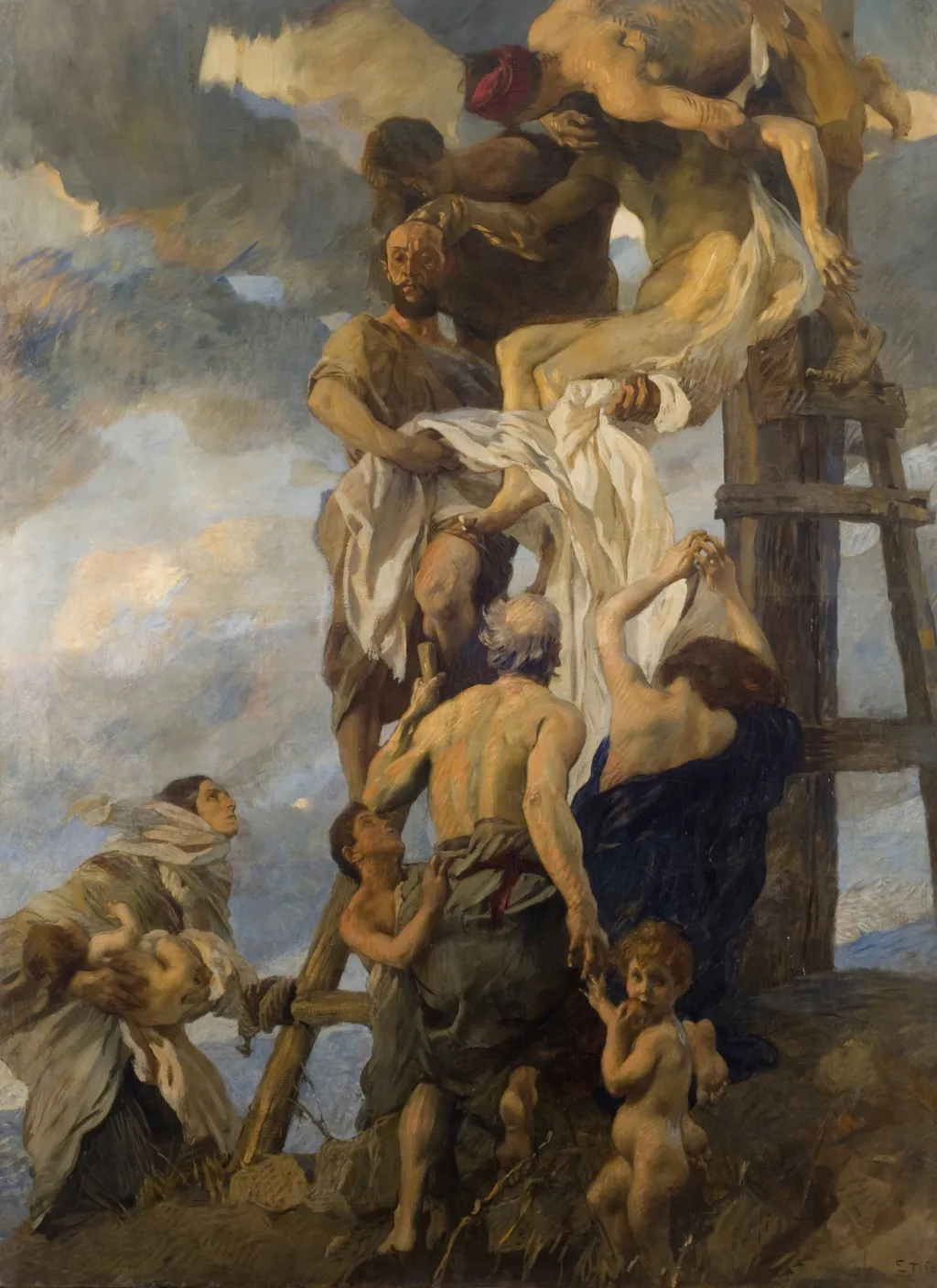
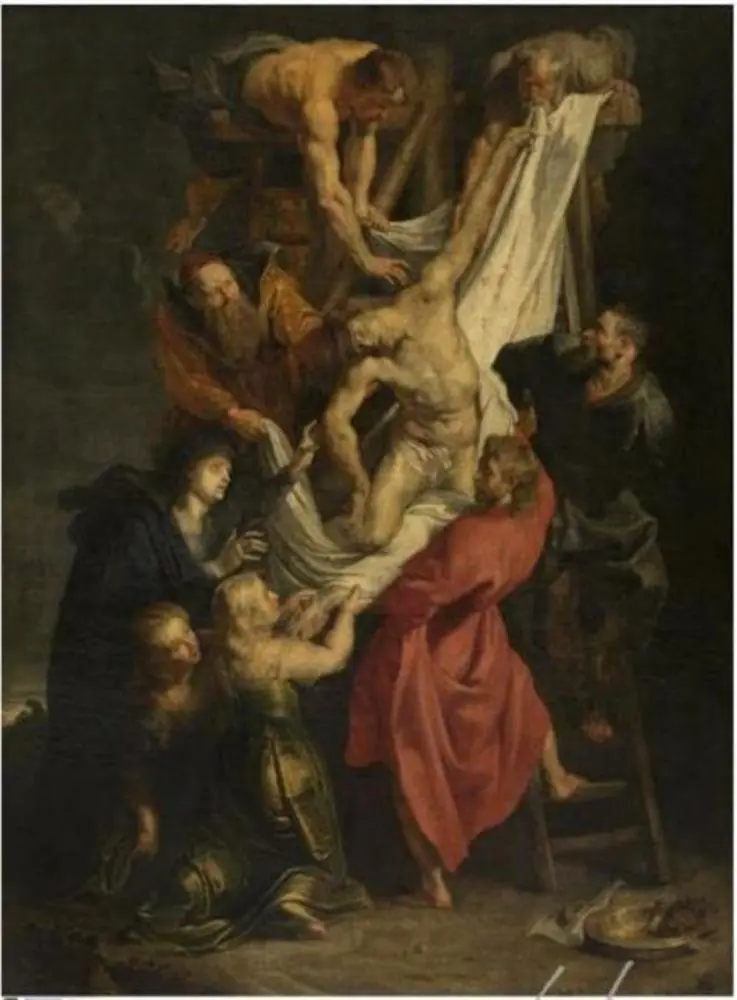
Descent from the cross is an oil painting by the Symbolist artist Ettore Tito. It dates from 1911 and is held in the collection of the National Museum of Fine Arts, Argentina.
About this work
Overview
Ettore Tito painted Descent from the Cross in 1911 using oil on canvas. Though best known for Venetian landscapes and scenes of modern life, this work departs from his usual subjects to engage with a traditional Christian narrative. Executed in a Symbolist idiom, the painting reflects Tito’s academic training and his interest in emotional resonance over literal representation.
Subject & Meaning
The painting portrays the moment Christ’s body is carefully lowered from the cross by a group of mourners. Figures are arranged in a quiet, ritualistic composition, their gestures and expressions conveying grief and solemnity. The absence of divine light or overt miracle emphasizes human sorrow, aligning the scene with Symbolist tendencies to evoke inner states rather than narrate doctrine.
Technique & Style
Tito employed a restrained palette of browns, grays, and muted earth tones to reinforce the painting’s somber tone. Forms are rendered with soft edges and subtle modeling, avoiding dramatic chiaroscuro. The figures’ flowing robes and elongated postures suggest a stylized, almost sculptural quality, characteristic of Symbolist approaches that prioritize mood over naturalism.
History & Provenance
Created during Tito’s tenure as a professor at the Accademia di Belle Arti in Venice, the painting was acquired by the National Museum of Fine Arts in Buenos Aires in the early 20th century. Its presence in Argentina reflects broader patterns of European art circulation during that period, though little documentation exists regarding its immediate reception or exhibition history.
Context
In early 20th-century Italy, religious themes were increasingly treated with psychological depth rather than devotional grandeur. Tito’s approach aligns with a broader shift among Symbolist and post-Romantic artists who sought to convey spiritual gravity through subdued emotion and atmospheric composition, distancing themselves from academic historicism.
Legacy
While Tito’s secular works remain more widely studied, Descent from the Cross stands as a rare, introspective religious statement in his oeuvre. It illustrates his capacity to adapt Symbolist principles to sacred subject matter, offering a quiet counterpoint to the more theatrical religious paintings of his contemporaries.
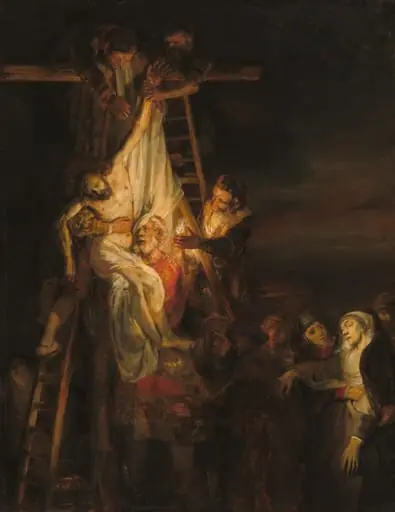
Own this work as a print
Artist & collection
Artist
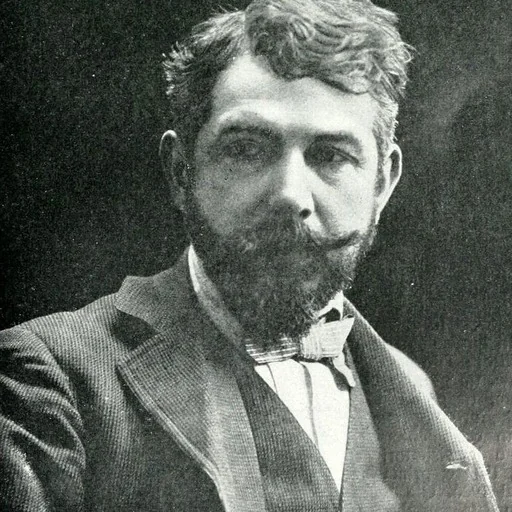
Ettore Tito (17 December 1859 – 26 June 1941) was an Italian artist particularly known for his paintings of contemporary life and landscapes in Venice and the surrounding region.

Museum
National Museum of Fine Arts, Argentina
Continue through works from the same source collection.
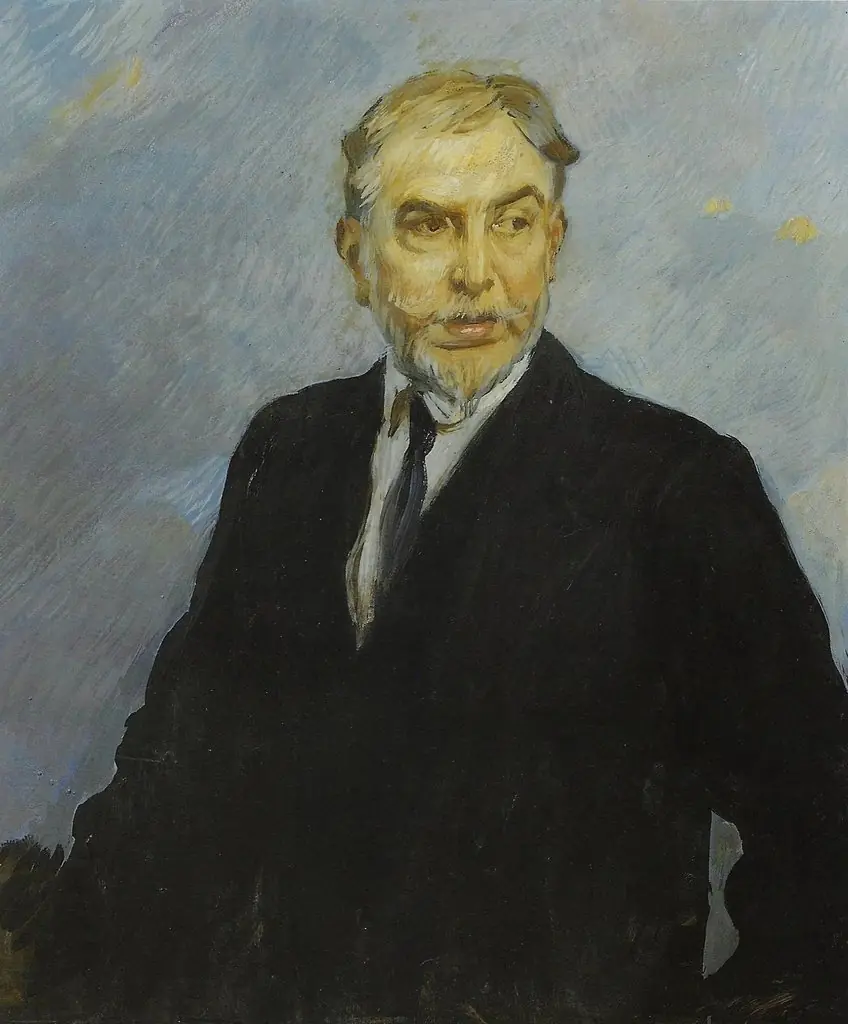

- The Descent from the Cross
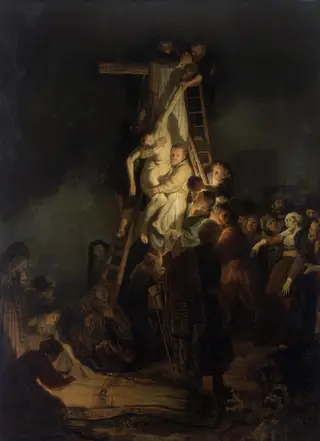 The Descent from the Cross
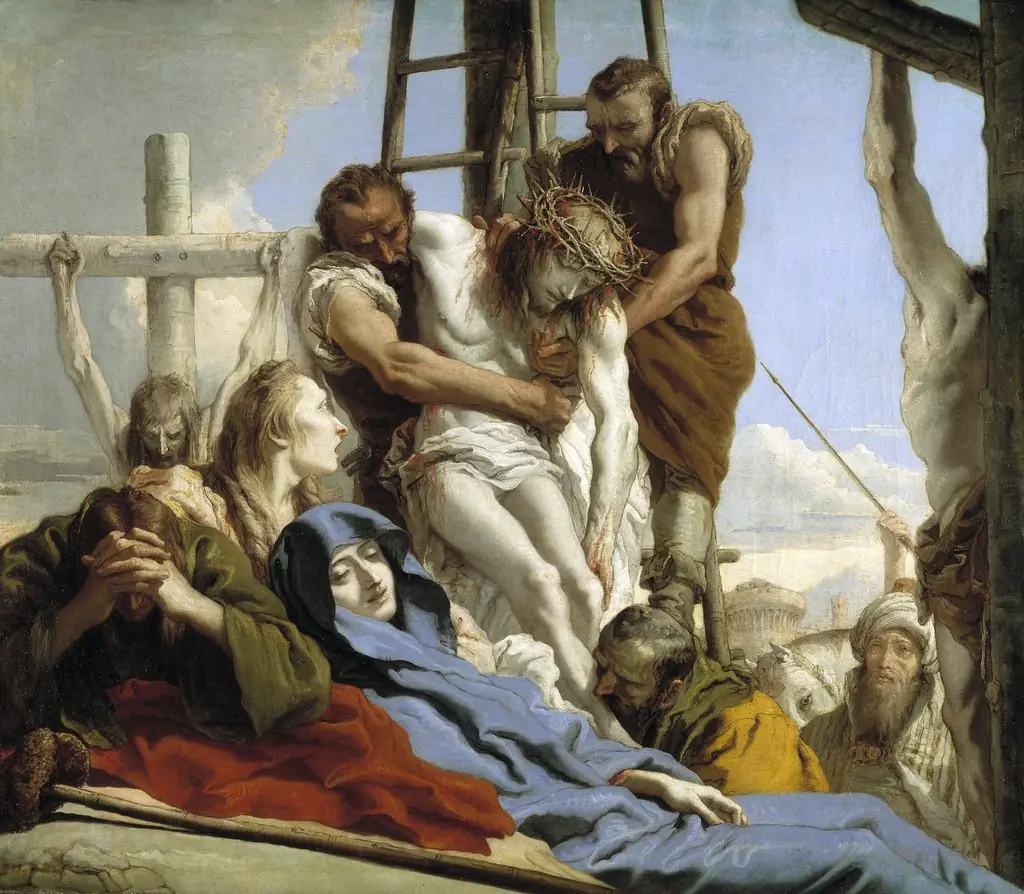 The Descent from the Cross
 Scene from the Martyrdom of St. Andrew
 Al abismo
 Christ on the Cross between the two criminals
 The Good Samaritan
 The Sacrifice of Isaac
 The Sacrifice of Isaac
 Eneas, fugitivo con su familia
 The Sacrifice of Isaac, Tobias and the Angel, The Angels Appearing to Abraham, Abraham Welcoming the Three Angels (painting series)
 Descent from the Cross