Artwork
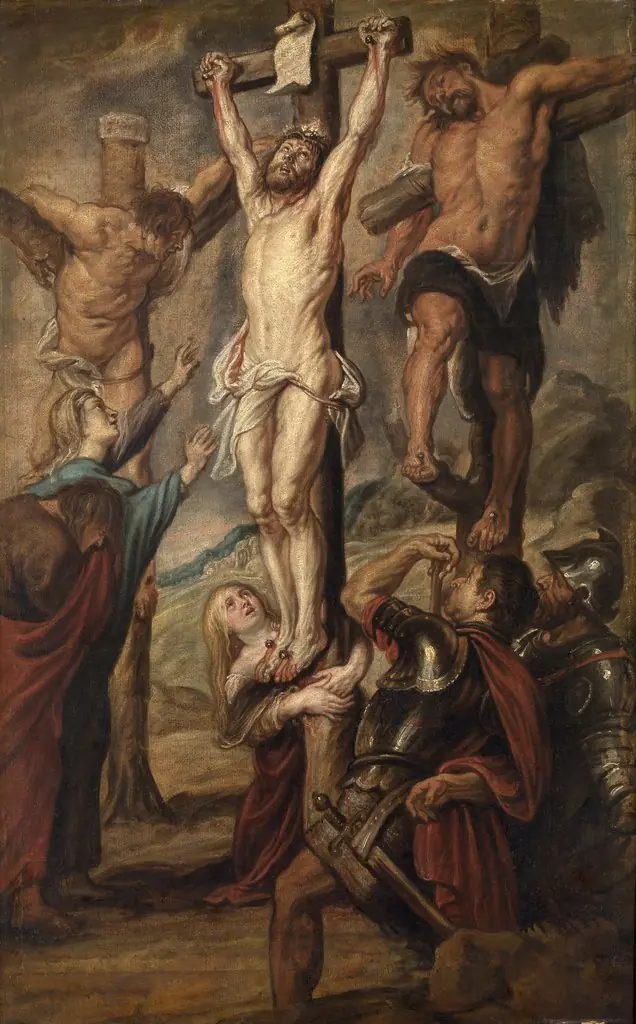
Christ on the Cross between the two criminals
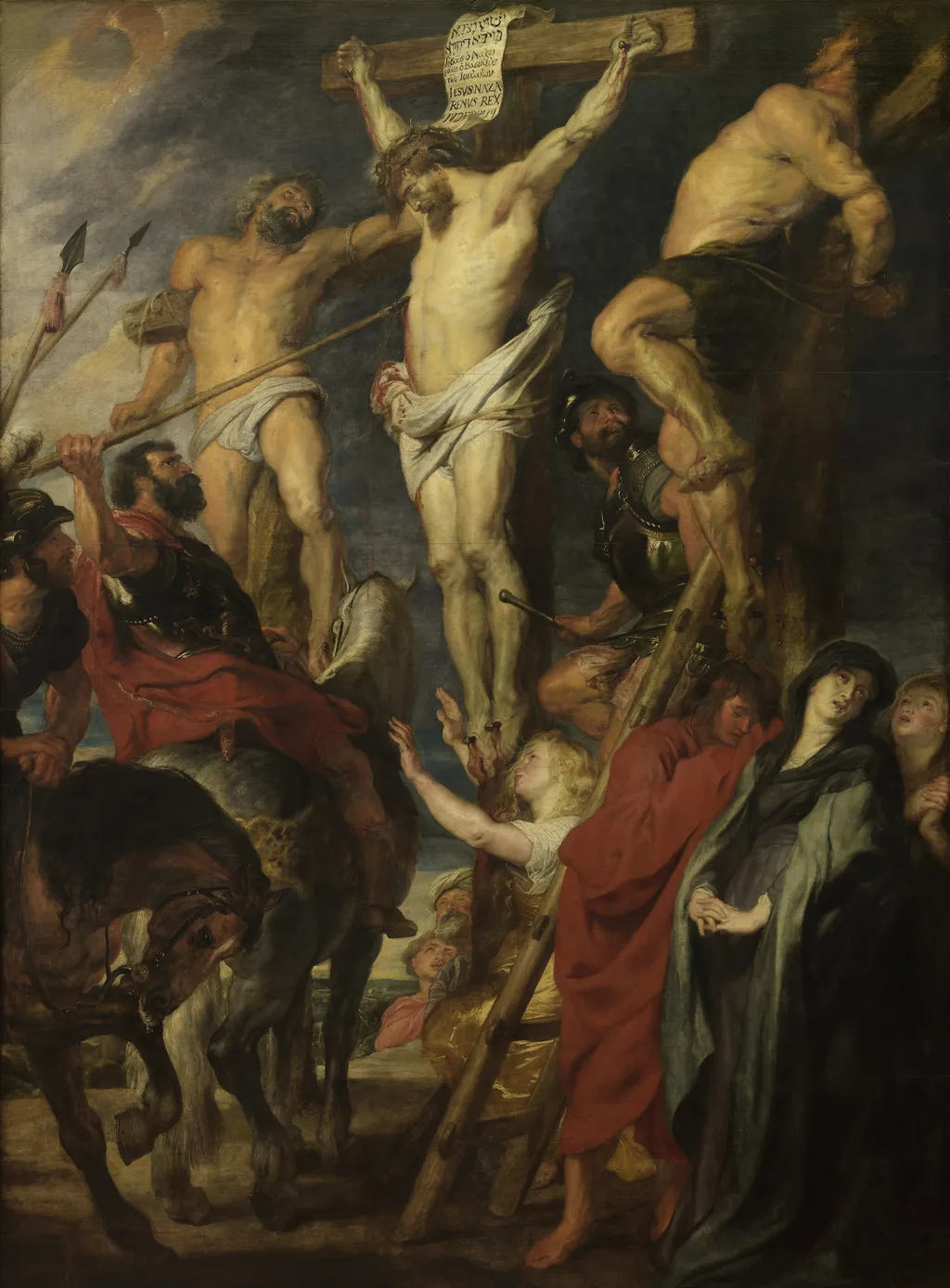
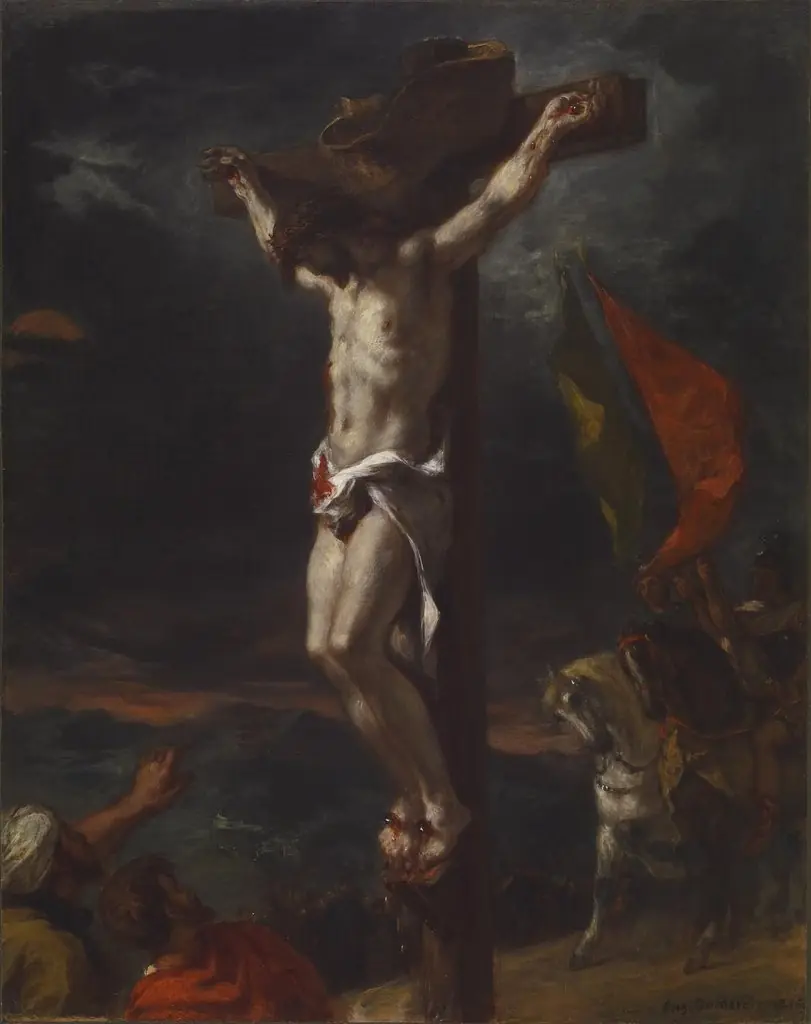
Christ on the Cross between the two criminals is an oil painting by the Flemish Baroque painting artist Anthony van Dyck. It dates from 1620 and is held in the collection of the Royal Museum of Fine Arts Antwerp.
About this work
Subject & Meaning
It was commissioned by Nicolaas Rockox for the Convent of the Friars Minor Recollect in Antwerp, reflecting Counter-Reformation devotional priorities.
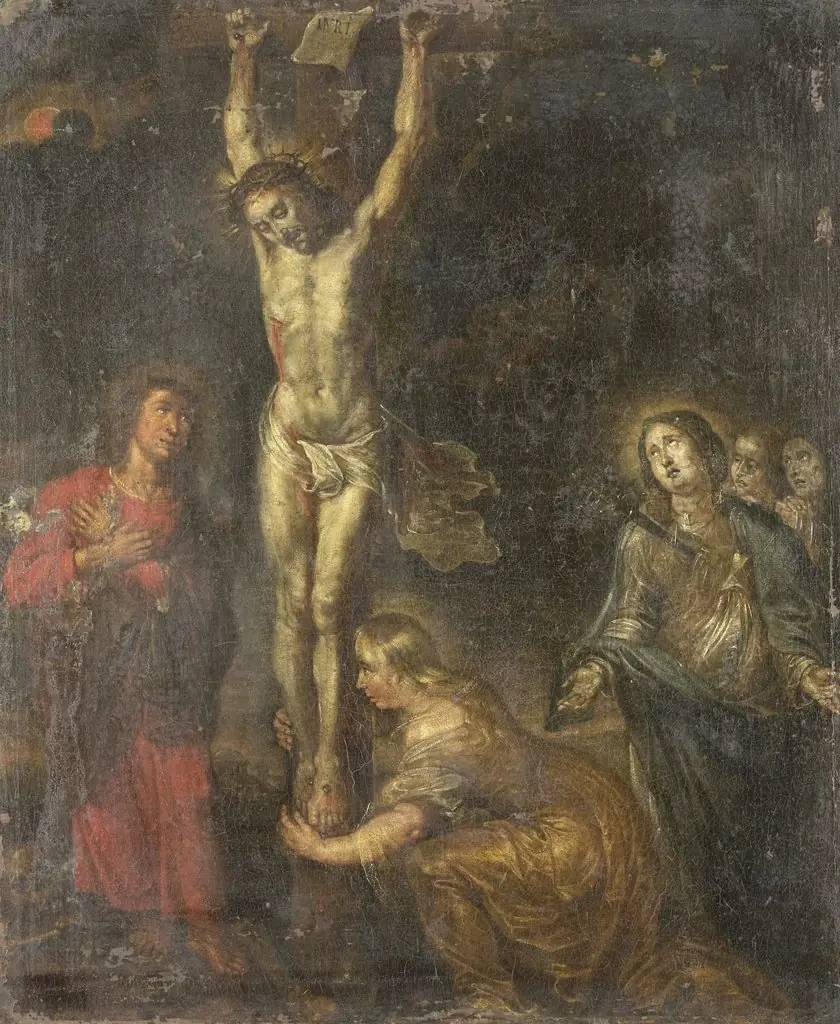
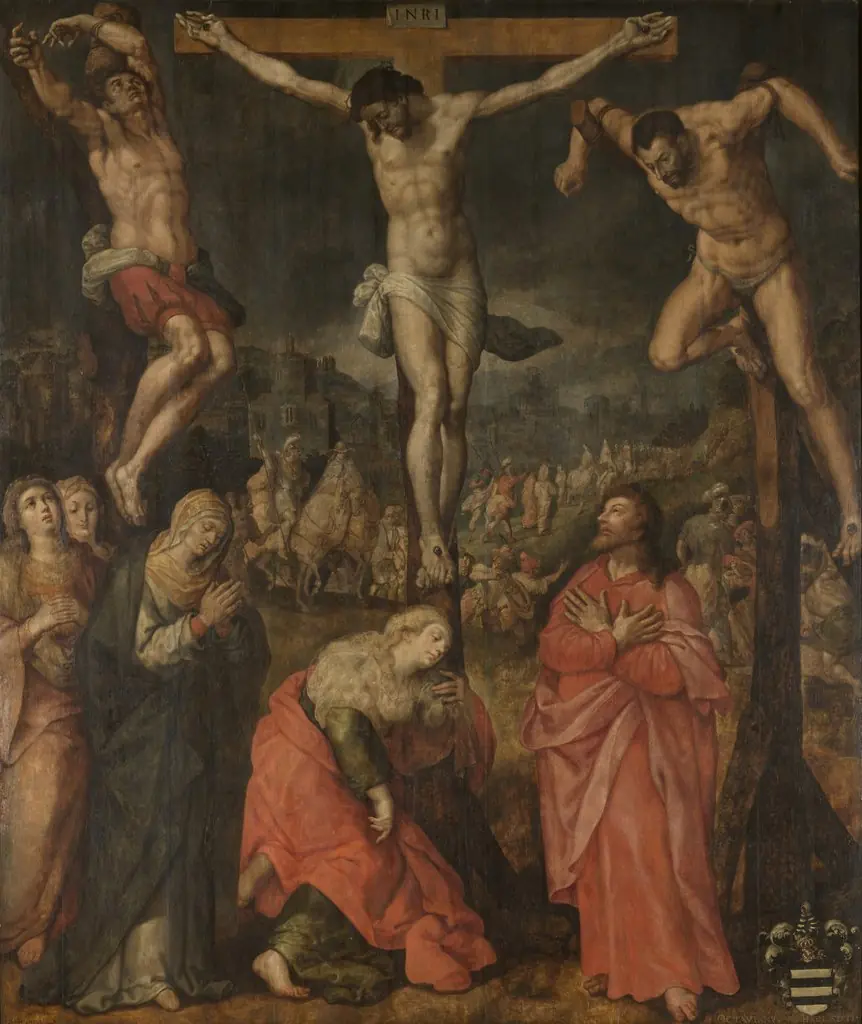
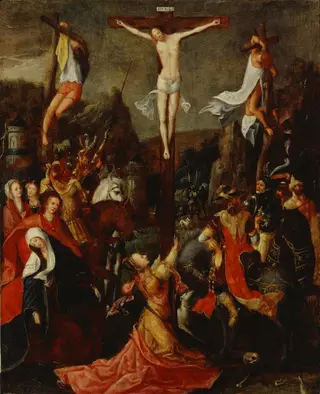
The painting depicts the moment of the Crucifixion when a Roman soldier pierces Christ's side with a lance to confirm his death, a scene recorded in the Gospel of John (19:34). The composition centers on the crucified Christ flanked by the two thieves, Dismas and Gestas. Below the cross stand the Virgin Mary, Mary of Clopas, Mary Magdalene, Joseph of Arimathea, and Nicodemus, their anguished poses underscoring the gravity of the event.
Traditionally attributed to Peter Paul Rubens, the work has been reassigned by recent scholarship to Anthony van Dyck, who worked in Rubens's Antwerp workshop around 1619–1620. It was commissioned by Nicolaas Rockox for the Convent of the Friars Minor Recollect in Antwerp, reflecting Counter-Reformation devotional priorities.
Technique & Style
The work is executed in oil paint on a canvas support, measuring approximately 429.6 cm in height and 311 cm in width. Although some sources list the support as wood panel with slightly different dimensions, the Royal Museum of Fine Arts Antwerp identifies the medium as oil on canvas. The painting depicts the moment a Roman soldier pierces Christ's side with a spear, a scene traditionally associated with Rubens but now attributed to Anthony van Dyck working within the master's workshop.
The attribution to van Dyck is supported by the handling of paint, with thin, nervous brushstrokes that distinguish it from Rubens's typical method and align with van Dyck's later oil sketches.
History & Provenance
The painting was commissioned around 1619–1620 by Nicolaas Rockox for the Church of the Friars Minor Recollect in Antwerp, where it was produced in Rubens's workshop with evident involvement by Anthony van Dyck. It is executed in oil on canvas measuring approximately 429.6 × 311 cm and depicts the crucifixion of Christ between the two criminals, with the canonical dating recorded as 1620. The work is held by the Royal Museum of Fine Arts Antwerp as part of the Vlaamse Kunstcollectie, which has reattributed the painting from Rubens to van Dyck on the basis of stylistic analysis and preparatory sketches.
Context
Long admired as a masterpiece by Peter Paul Rubens, the painting underwent a major re-evaluation beginning in the 19th century, when art historians Max Rooses, Rudolf Oldenbourg, and Gustav Glück questioned the Rubens attribution and proposed assigning it to Anthony van Dyck. The work was commissioned around 1619 by Nicolaas Rockox, Rubens's close friend, at a time when van Dyck was an active collaborator in Rubens's workshop. Scholarship supporting the reattribution draws on preparatory studies that reflect van Dyck's working method, including a chalk sketch in the Museum Boijmans van Beuningen in Rotterdam, a sketch of Christ and the imploring Mary Magdalene at the Courtauld Institute in London, and a grisaille oil sketch in the Victoria and Albert Museum.
The thin, nervous brushwork of the latter differs markedly from Rubens's preparatory technique. On this basis the Royal Museum of Fine Arts Antwerp has formally reattributed the painting to Anthony van Dyck working within Rubens's workshop.
Overview
Christ on the Cross between the Two Criminals, also known as The Thrust of the Spear, is an oil painting from 1620, now attributed to Anthony van Dyck. This dramatic work depicts a critical moment of the Crucifixion, focusing on the suffering of Christ and the two criminals alongside him. It is housed in the collection of the Royal Museum of Fine Arts Antwerp.
Own this work as a print
Artist & collection
Artist
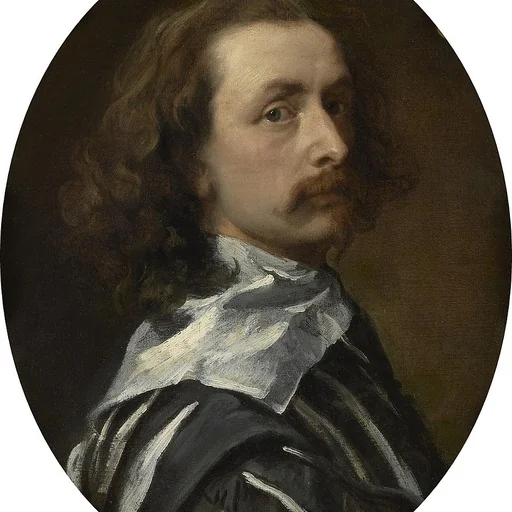
Sir Anthony van Dyck (; Dutch: Antoon van Dijck; 22 March 1599 – 9 December 1641) was a Flemish Baroque artist, who became the leading court painter in England after success in the Spanish Netherlands and Italy.