Artwork
Eneas, fugitivo con su familia
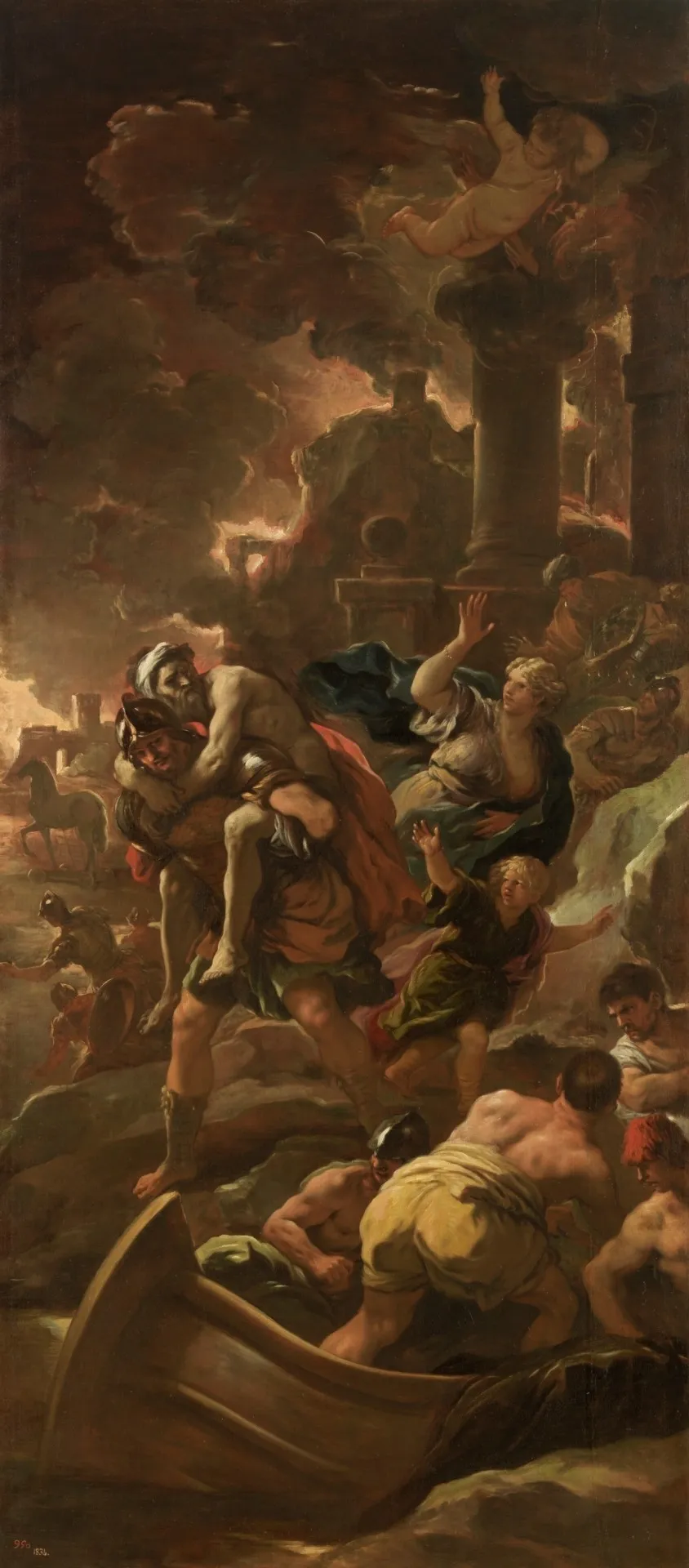
Eneas, fugitivo con su familia is an oil painting by the High Baroque Italian artist Luca Giordano. It dates from 1700 and is held in the collection of the Museo del Prado.
About this work
Subject & Meaning
The painting depicts the Trojan hero Aeneas fleeing the fall of Troy with his immediate family.
The painting depicts the Trojan hero Aeneas fleeing the fall of Troy with his immediate family. According to the catalogue record, the figures portrayed are Aeneas himself, his young son Ascanius, and his wife Creusa, the family group that anchors the foundational legend of Roman origins. Also identified within the scene is the Trojan Horse, the ruse through which the Greeks overcame the city, situating the moment of flight within the broader narrative of Troy's destruction.
The composition thus operates on two symbolic levels. The family triad embodies the pietas, familial duty and devotion, that Roman tradition celebrated as Aeneas's defining virtue, while the presence of the Trojan Horse signals the catastrophic end of the city that Aeneas is leaving behind. Together these elements frame the work as a meditation on loss, survival, and the transmission of a lineage from a doomed homeland toward the founding of a new one.
Technique & Style
Executed in 1700, this work is an oil painting on canvas. The composition features a tall, narrow format, measuring 282.3 cm in height and 125.3 cm in width. Visually, the piece depicts the mythological figures of Aeneas, his son Ascanius, and his wife Creusa, alongside an representation of the Trojan Horse.
The handling of the oil medium allows for the narrative grouping of these figures within the vertical support.
History & Provenance
The painting was created in 1700 as an oil on canvas work by Luca Giordano. It entered the collection of Ferdinand VII of Spain shortly after its execution and has remained in the Museo del Prado in Madrid since that time. The composition portrays Aeneas, his father Ascanius, his wife Creusa, and the Trojan Horse, reflecting the mythological subject described in contemporary records.
The painting Eneas, fugitivo con su familia is housed at the Museo del Prado in Madrid. It entered the collection of Ferdinand VII of Spain and remains part of the museum's permanent holdings. The work was created in 1700 by Luca Giordano using oil paint on canvas, measuring 282.3 cm in height and 125.3 cm in width.
It has been part of exhibitions at the Museo del Prado, including displays of the royal collection and Spanish Baroque art.
The provenance of the piece traces back to its acquisition by Ferdinand VII, who incorporated it into the royal collection. The painting is cataloged in the museum's inventory under standard accession records for works acquired by the monarch.
Overview
Luca Giordano’s oil on canvas, executed around 1700, portrays the legendary Trojan hero Aeneas together with his son Ascanius and his wife Creusa in a moment of urgent flight. The work is part of the Prado Museum’s collection, where it is displayed among the museum’s Baroque holdings.
Context
Giordano, a prolific Neapolitan painter, was known for his rapid execution and ability to synthesize influences from both Italian and Spanish courts. This work reflects the period’s fascination with classical subjects rendered in a theatrical, emotionally charged manner.
Artist & collection

Artist
Luca Giordano was an Italian late-Baroque painter and printmaker in etching. Giordano was one of the most celebrated artists of the Neapolitan Baroque, whose vast output included altarpieces, mythological paintings and…

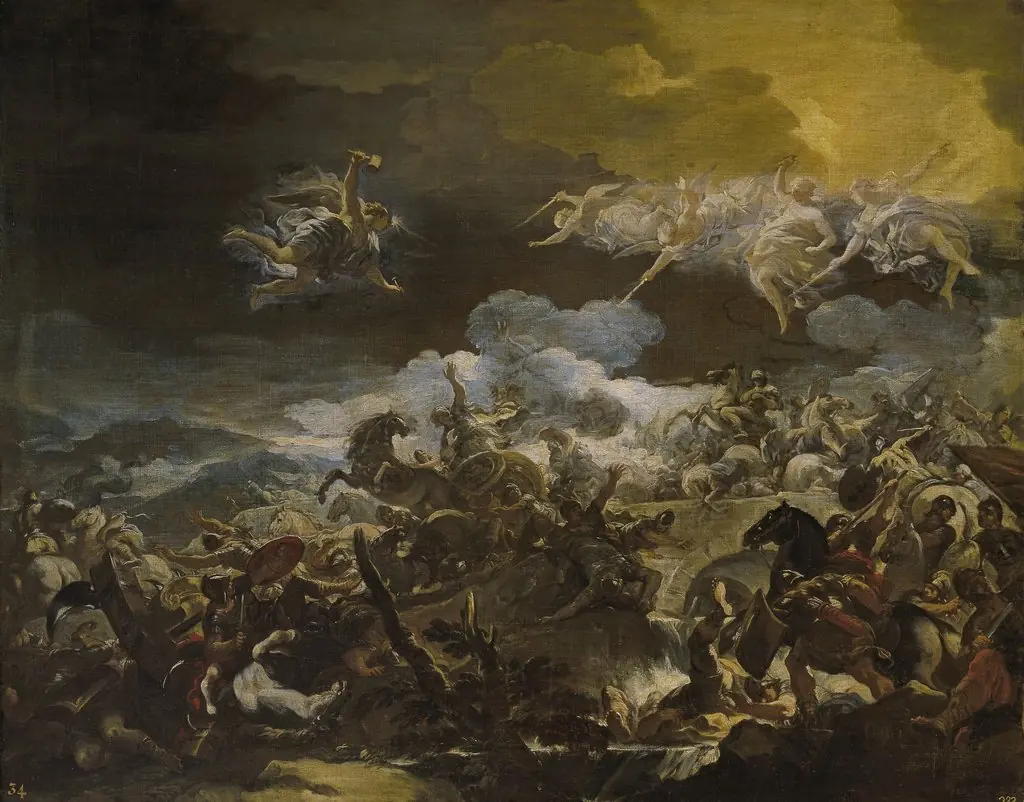
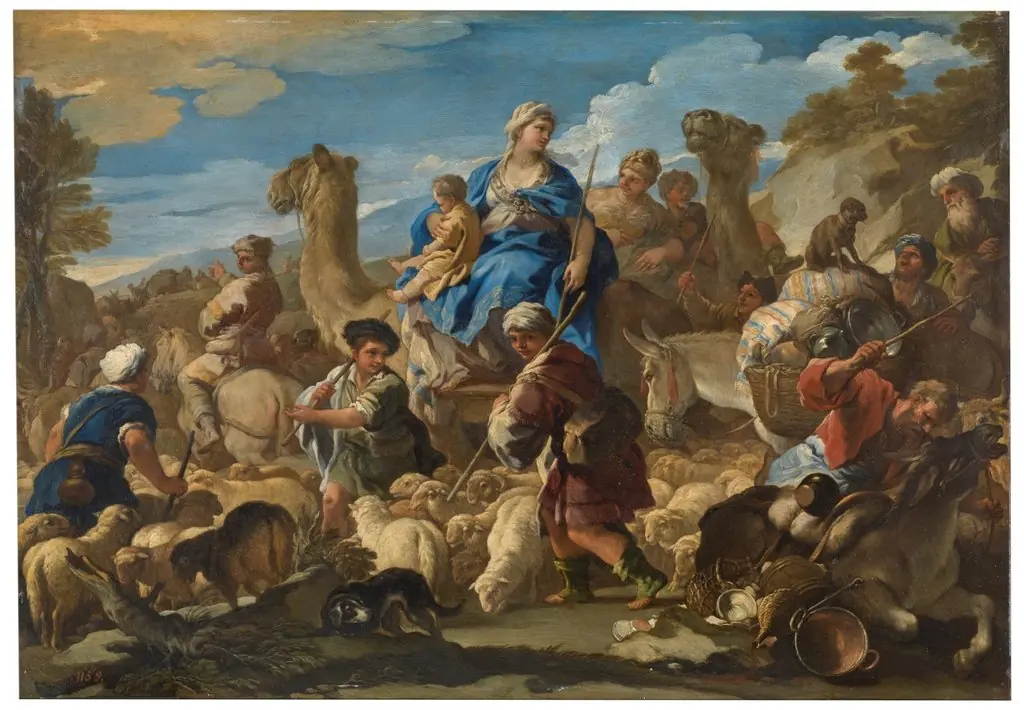
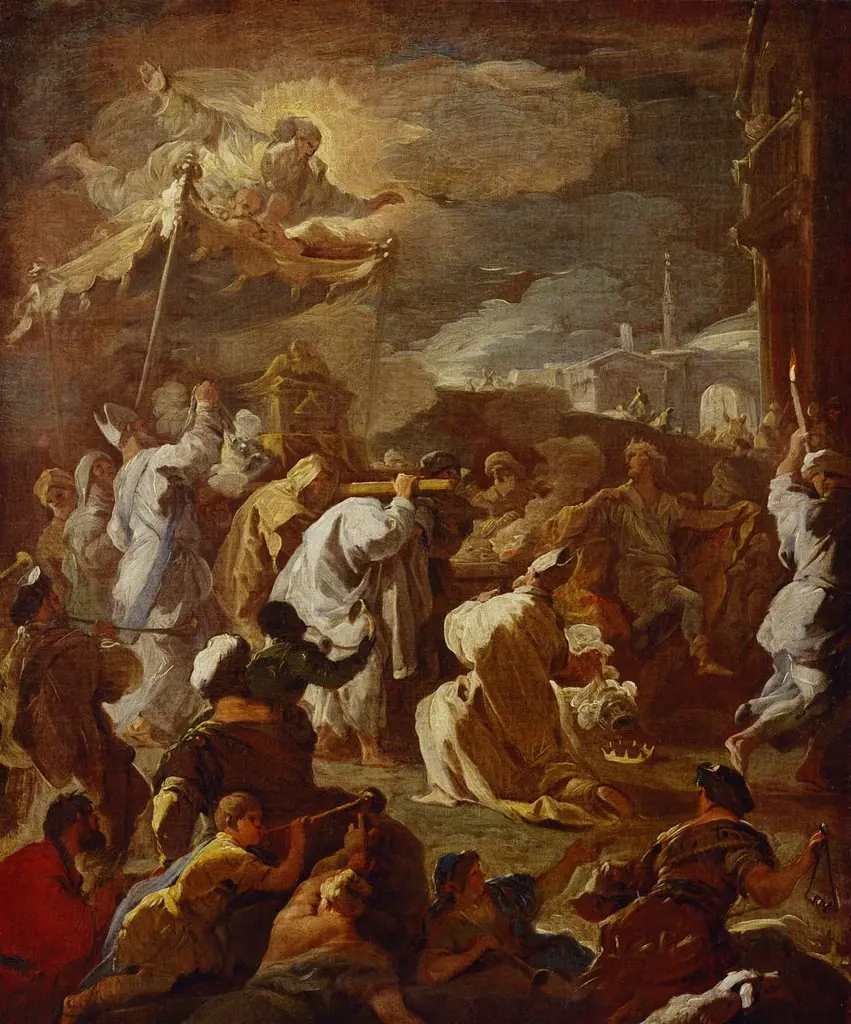 Transfer of the Ark of the Covenant by David
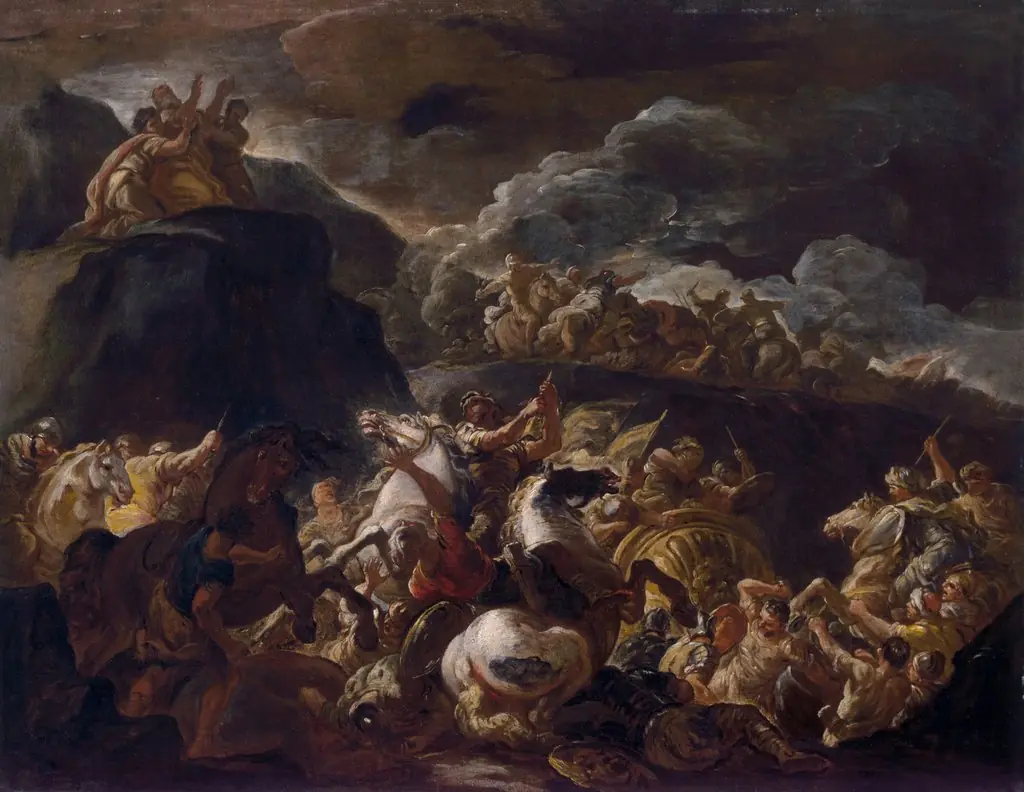 The Battle of Israel and Amalek
 Scene from the Martyrdom of St. Andrew
 Enea purtându-l pe tatăl său Anchise
 Saint John the Baptist Preaching in the Desert
 Sacrifice of Isaac
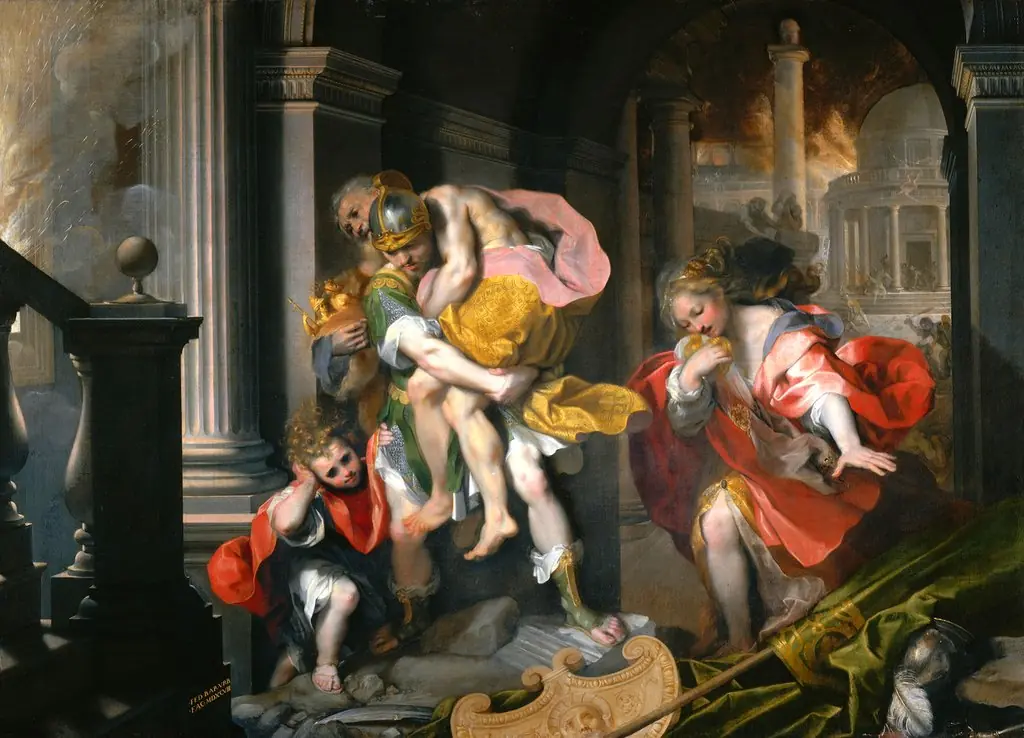 Escape of Aeneas from Troy
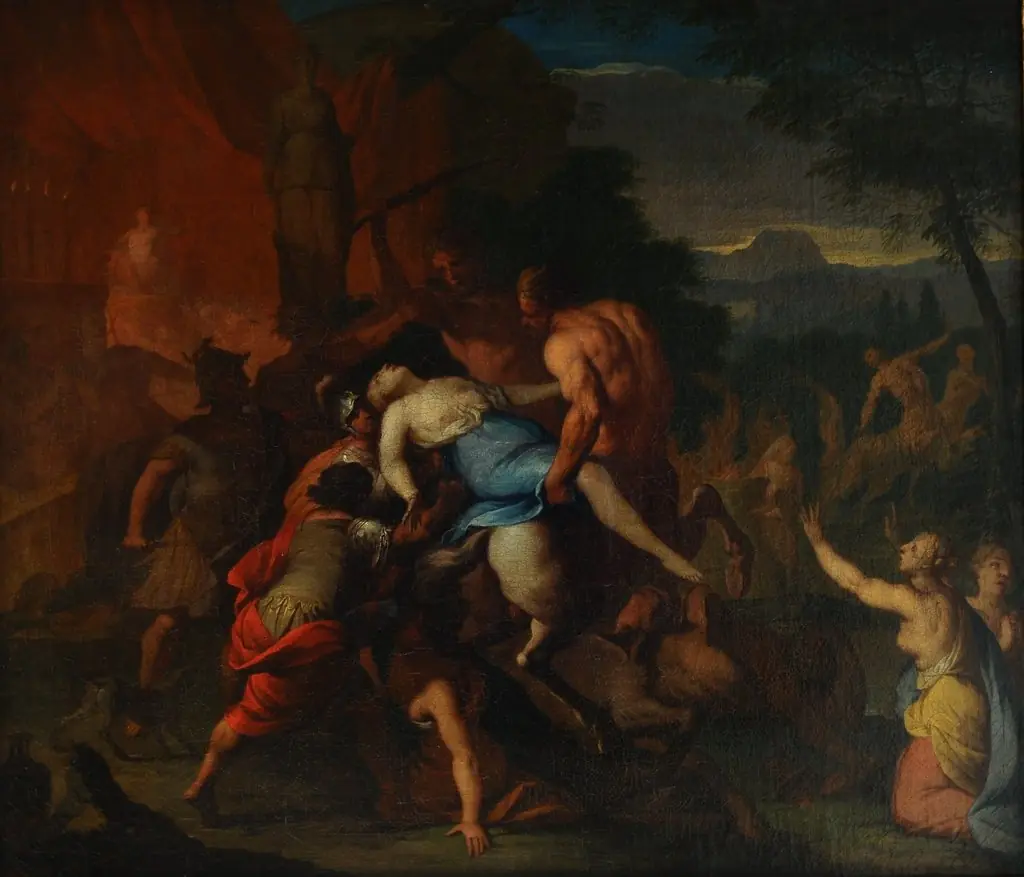 Combate de centauros y lapitas. (Tit. Ant.: Centauros e ilotas)
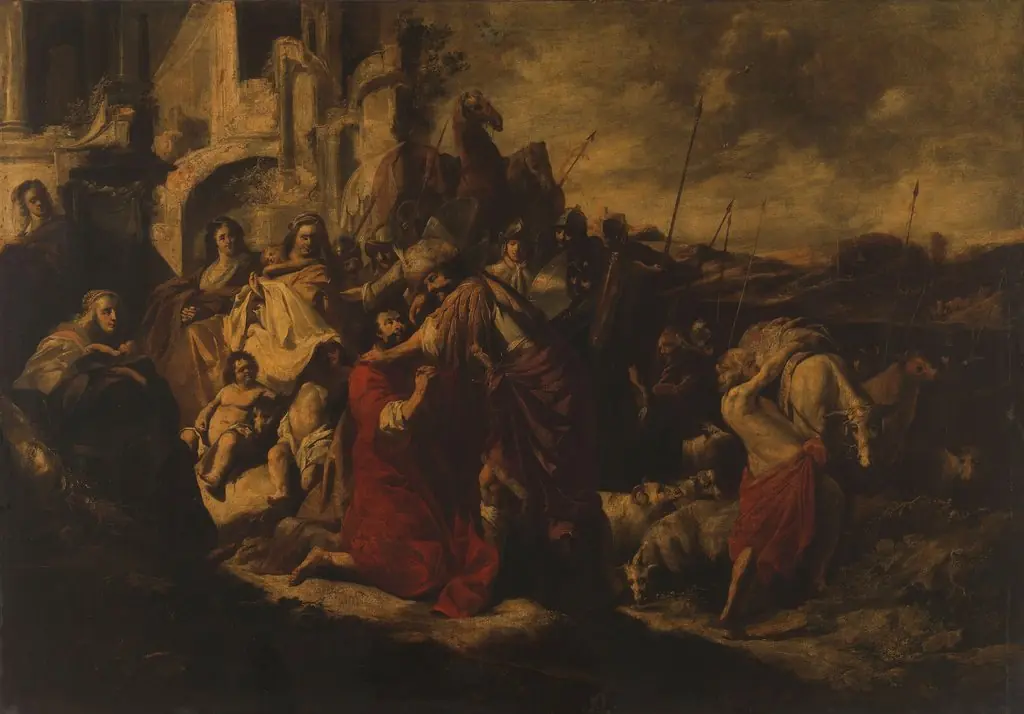 The meeting of Jacob and Esau
 Conversion of St. Paul (Acts 9:3-6)
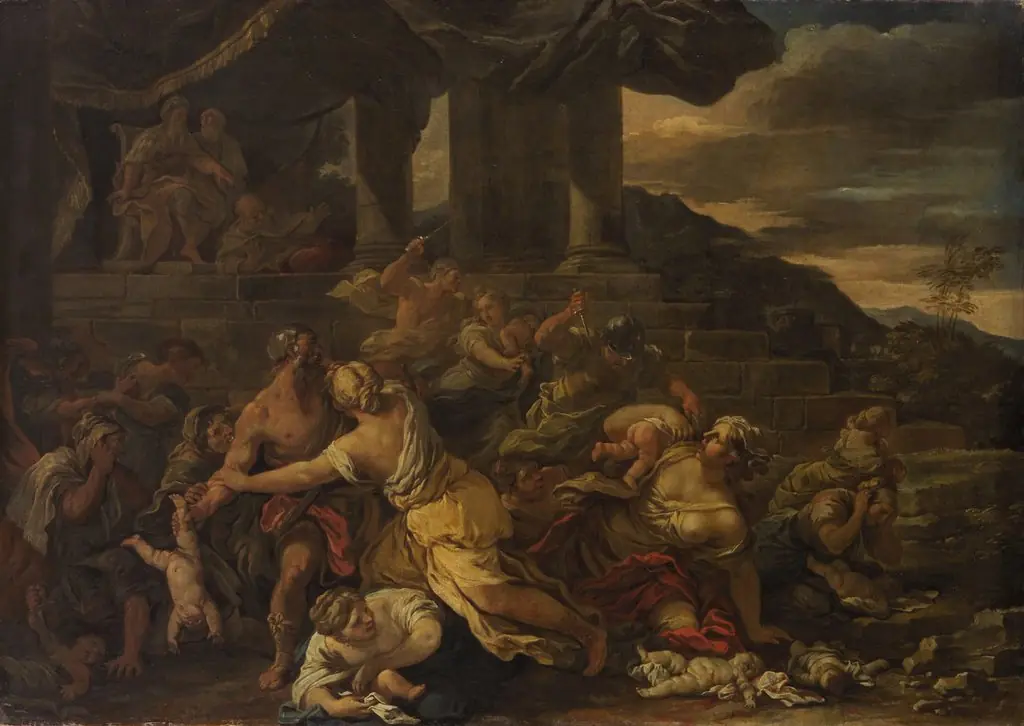 Killing of the Children in Bethlehem
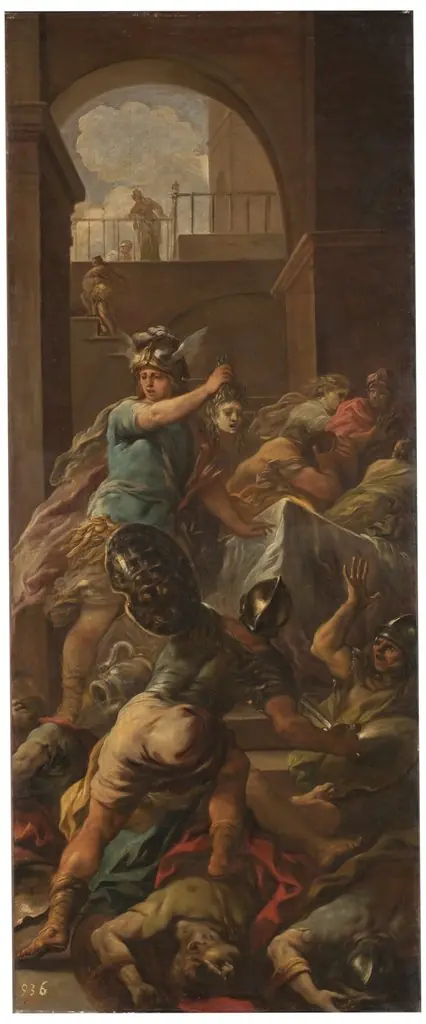
- Perseo vencedor de Medusa