Artwork
The Descent from the Cross
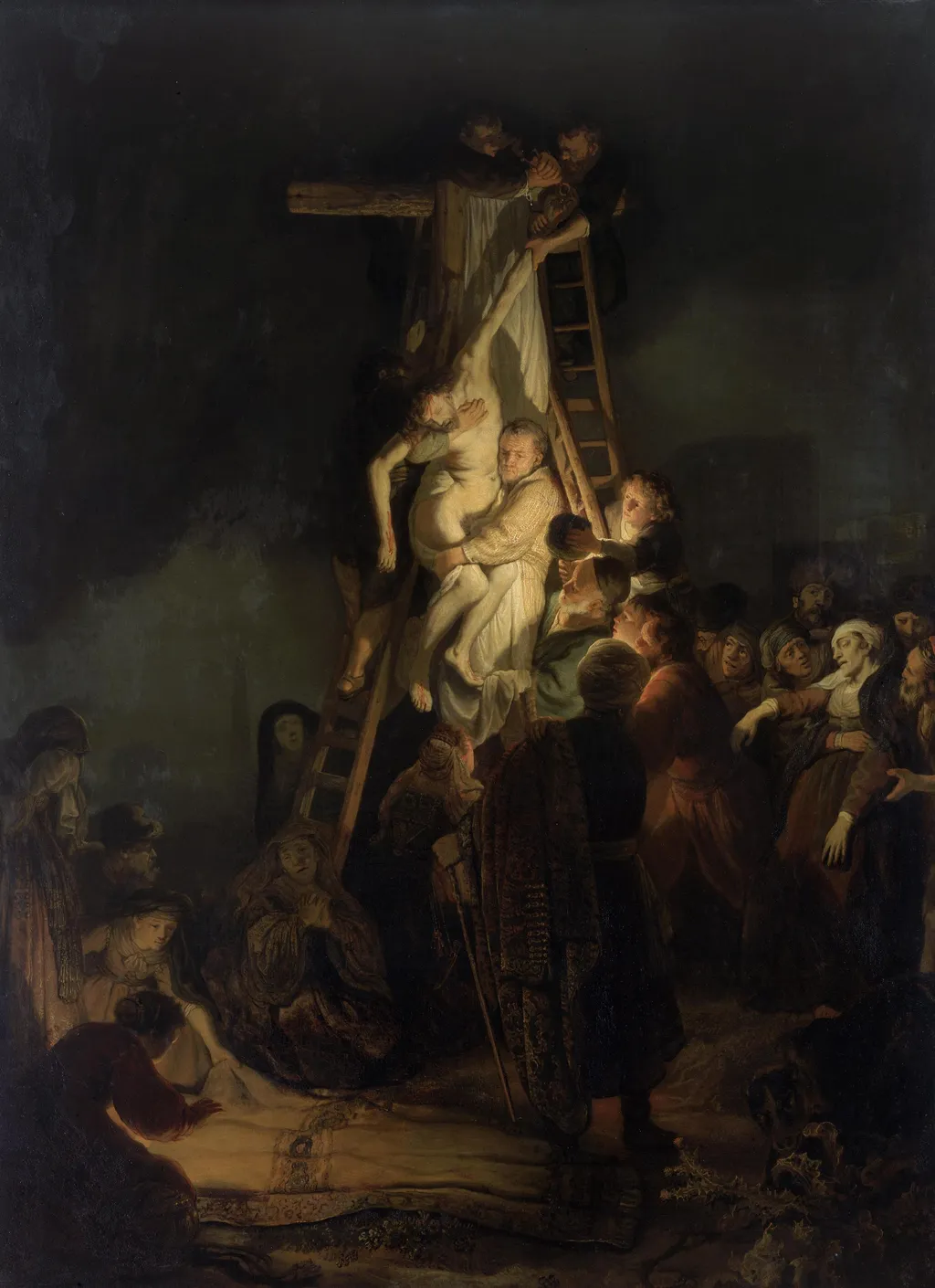
The Descent from the Cross is an oil painting by the Dutch Golden Age artist Rembrandt van Rijn. It dates from 1634 and is held in the collection of the Hermitage Museum. Created in 1634, Rembrandt’s oil on canvas titled Descent from the Cross resides in the Hermitage Museum, St.
About this work
Subject & Meaning
Three groupings emerge through the lighting: Christ and the men lowering him, women spreading what appears to be a burial shroud, and Mary with her supporters.
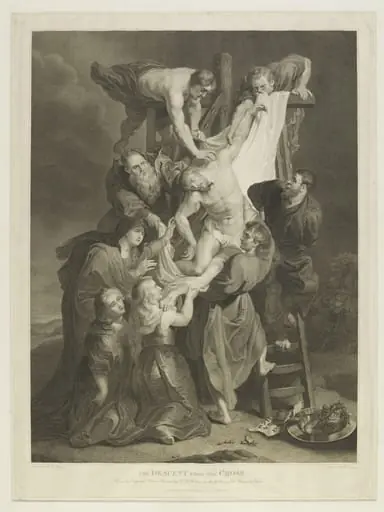
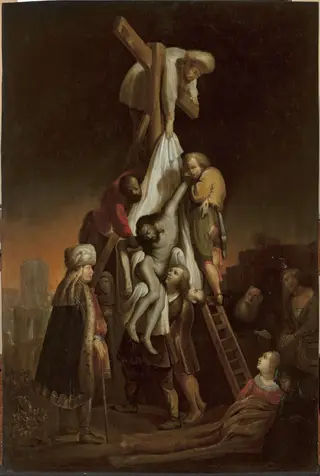
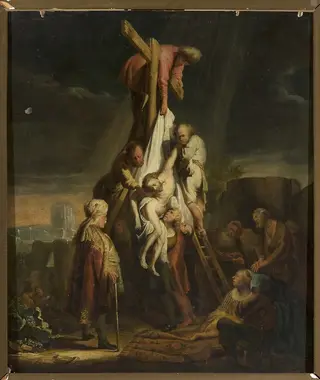
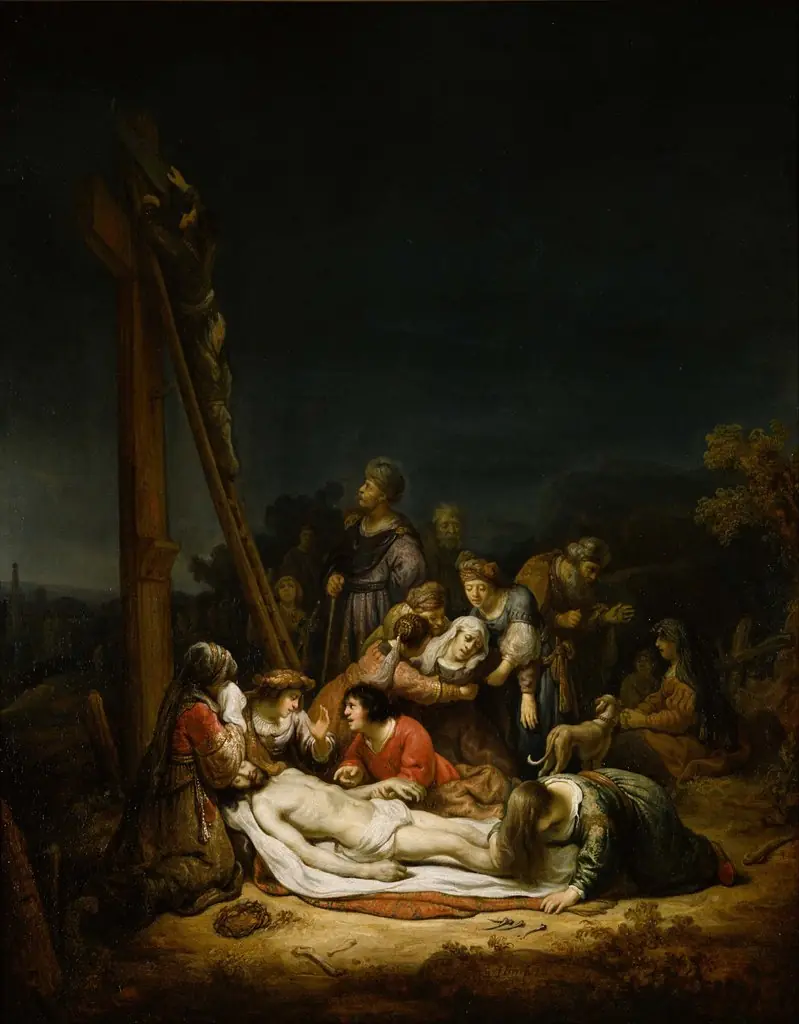
The painting depicts the Descent from the Cross, a classic episode in Christian religious art in which the body of Jesus Christ is taken down from the cross after the Crucifixion. The scene is crowded with figures, yet each face carries a distinct emotional register: the women weep openly, while the men display a more restrained, inwardly tense grief. Jesus is shown with a slumped, twisted body that conveys lifelessness, and his form is rendered with rounded, voluminous contours reminiscent of Rubens. The marks of the crown of thorns and the stigmata on his hands and feet are visible. Mary, Jesus's mother, has fainted under the weight of her sorrow and is physically supported by bystanders.
The action takes place at night, illuminated by torches and candles that cast varying intensities of light. Christ's body is the brightest area, marking it as the focal point, while the background recedes into near-black darkness. Three groupings emerge through the lighting: Christ and the men lowering him, women spreading what appears to be a burial shroud, and Mary with her supporters. This deliberate illumination organizes the narrative, clarifying what has occurred, what will follow, and the emotional effect on those present.
The Descent from the Cross is a subject shared by both Roman Catholic and Protestant traditions, situating the work within a devotional theme accessible across confessions.
Technique & Style
The painting is executed in oil on canvas, a medium typical of Dutch 17th‑century art. The canvas support is stretched and primed, allowing the artist to render figures with layered brushwork that creates a Rubenesque modeling of flesh. Light falls dramatically on Christ’s body, which serves as the bright focal point against an inky, night‑time background, while torches and candles illuminate three distinct groups: the bearers of the body, the mourning women, and Mary with her supporters. The composition is densely packed yet each figure displays a particular emotional expression, from the open weeping of the women to the tense silence of the men, and the thorn crown and stigmata are clearly visible on Christ’s hands and feet. The work’s handling of light and chiaroscuro emphasizes the narrative progression from the moment of removal from the cross to the emotional aftermath, reflecting Rembrandt’s characteristic use of psychological depth in religious scenes.
The painting’s provenance records its evacuation during the Siege of Leningrad, when it was removed from its frame, packed, and stored in reinforced vaults before the museum reopened in 1945.
History & Provenance
The Descent from the Cross is an oil on canvas painting created by Rembrandt in 1634 in the Netherlands. The work is held in the collection of the Hermitage Museum in Saint Petersburg, Russia, where it remains located. During the Second World War, as the Hermitage faced the threat of the Siege of Leningrad, the painting was evacuated from public display. It was removed from its frame and packed into a crate for safekeeping, while works too large or fragile to pack were moved to reinforced vaults and cellars. After the siege ended, the Hermitage was repaired and restocked with its masterpieces, reopening in 1945 with the painting among the works returned to its collection.
The painting is held in the Hermitage Museum, Saint Petersburg. Its dimensions are 158 cm in height and 117 cm in width.
During World War II, the work was evacuated from the Hermitage as part of measures against the siege of Leningrad; after the war it was returned and the museum reopened in 1945.
Context
Rembrandt's 1634 painting The Descent from the Cross, housed in the Hermitage Museum, was created during a period of intense religious upheaval in the Dutch Republic, where Protestant Calvinism was rising alongside Catholic Jesuit efforts to rekindle faith. The work reflects this context as Rembrandt, raised in a family straddling Catholic and Reformed traditions, engaged with biblical themes common to both traditions. Contemporary scholarship highlights its complex emotional composition, with individualized expressions across the figures and strategic lighting that isolates Jesus' body as the focal point, illuminated by torches and candles against a dark background. The painting's survival during World War II, when it was evacuated from the Hermitage Museum amid the Siege of Leningrad and stored in reinforced cellars, underscores its cultural significance.
Own this work as a print
Artist & collection

Artist
Rembrandt Harmenszoon van Rijn, known mononymously as Rembrandt, was a Dutch Golden Age painter, printmaker, and draughtsman.