Artwork
The Abduction of Rebecca
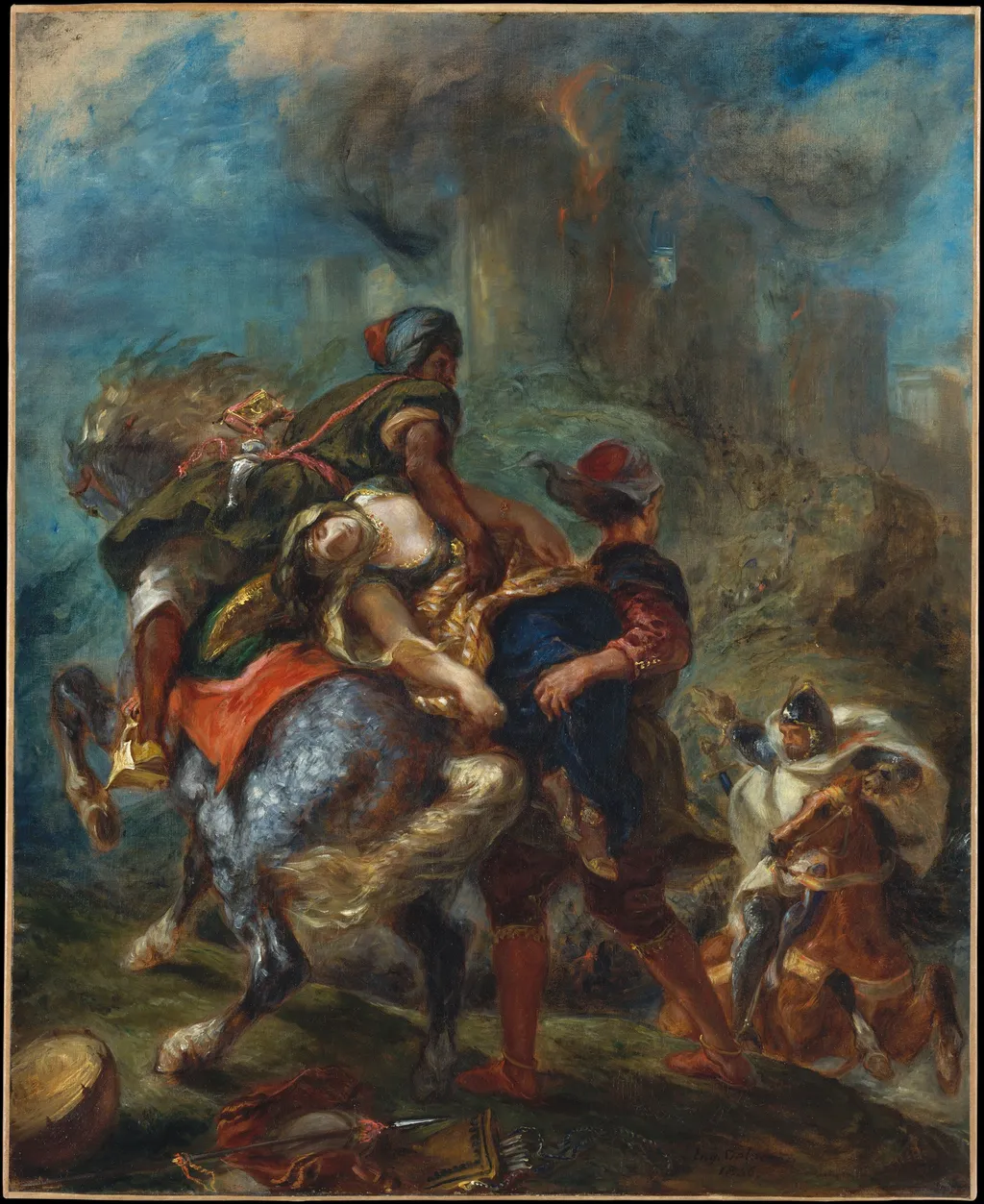
The Abduction of Rebecca is an oil painting by the Academic Art artist Eugène Delacroix. It dates from 1846 and is held in the collection of the Metropolitan Museum of Art.
About this work
The Abduction of Rebecca pulls a dramatic moment from Sir Walter Scott's Ivanhoe: the heroine carried off against her will. Delacroix painted it in 1846, at the height of Romanticism, when artists chased emotion and action over calm restraint. He built the scene with sharp contrasts of light and shadow.
Subject & Meaning
Contemporary critics, including Baudelaire, praised the masterful ordering of intense, logical tones that give the scene a striking immediacy.
The painting shows the moment of Rebecca’s abduction from Sir Walter Scott’s novel Ivanhoe, seized by two Saracen retainers under the crusader knight Bois‑Guilbert, set against the flames of the besieged castle of Front‑de‑Bœuf. The composition emphasizes dramatic tension through contorted poses, a compressed space, and a background of fire, symbolizing the clash of Christian and Muslim forces and the vulnerability of the Jewish heroine. Contemporary critics, including Baudelaire, praised the masterful ordering of intense, logical tones that give the scene a striking immediacy. The work thus embodies Romantic fascination with exotic conflict and heroic tragedy.
Technique & Style
Executed in 1846, The Abduction of Rebecca is an oil painting on canvas, measuring 100.3 by 81.9 cm. Delacroix employs a dynamic handling of paint characterized by rapid, airy brushstrokes in the sky, which are sometimes thin enough to reveal the underlying canvas weave. In contrast, areas such as the horse feature thicker, multi-layered applications of pigment to create a sense of material density. The composition relies on the juxtaposition of pure primary colors with their complements to generate intense luminosity within a dramatic, otherwise dark scene.
This approach, echoing Venetian traditions yet anticipating Impressionism, results in a tightly ordered tonal structure where colors are pressed together without empty gaps. The work depicts contorted, interlocking poses within a compact spatial arrangement, enhancing the narrative drama of the abduction against a backdrop of a burning castle.
History & Provenance
The painting titled The Abduction of Rebecca, also known as L'Enlèvement de Rebecca, is an oil on canvas work by Eugène Delacroix dated 1846. It was created as a Salon piece, as documented by contemporary records that place its first exhibition at the Paris Salon of 1846. The composition illustrates a scene from Sir Walter Scott's novel Ivanhoe, reflecting Delacroix's fascination with the author.
No evidence of a private commission exists; the work entered the Metropolitan Museum of Art's collection through the 1903 bequest of Catherine Lorillard Wolfe. The painting remains in the MET (accession 03.30) and is recognized as one of Delacroix's major outputs.
The painting is housed in the Metropolitan Museum of Art in New York. It entered the museum’s collection in 1903 through the bequest of Catherine Lorillard Wolfe, a legacy recorded in the museum’s records. The work was first shown publicly at the 1846 Paris Salon, where it attracted critical attention, and later appeared in the retrospective exhibition “Delacroix (1798‑1863)”. These details are documented in the museum’s catalog and contemporary accounts.
Context
Delacroix’s The Abduction of Rebecca (1846) was exhibited at the Paris Salon within the mainstream of French Romanticism, yet its chromatic density and compressed composition drew polarized responses. Critics censured its dramatic excesses, while Charles Baudelaire countered that the work’s orchestration of intense, closely related tones achieved a striking visual unity, rejecting accusations of empty theatricality common to non-colorist painters. Positioned between Delacroix’s earlier orientalist scenes and his later Shakespearean subjects, the painting crystallizes his engagement with Sir Walter Scott’s novels, a favored Romantic trope, and his technical dialogue with Théodore Géricault’s muscular figuration.
The 1846 Salon version, later joined by a near-replica sent to the 1859 Salon, underscores the artist’s sustained exploration of literary narrative and pictorial dynamism, securing its place among mid-nineteenth-century academic Romantic masterworks.
Legacy
The 1846 version of The Abduction of Rebecca is currently held by the Metropolitan Museum of Art, having entered the collection in 1903 via the Catharine Lorillard Wolfe bequest. While contemporary critics at the 1846 Paris Salon condemned its Romantic qualities, the work later gained significant acclaim; the museum describes it as "one of Delacroix’s greatest paintings." Charles Baudelaire notably praised the piece for its logical and intense tonal arrangement, contrasting it with the compositional voids found in non-colorist works.
The painting's legacy is further evidenced by Delacroix's creation of an almost identical version in 1858 for the 1859 Salon, now housed in the Louvre. Additionally, art historians identify the work's vigorous brushwork and use of pure primary colors as a technique that anticipates the Impressionists, bridging the gap between Romanticism and later modern movements.
Overview
Eugène Delacroix's painting, The Abduction of Rebecca, created in 1846, is an oil on canvas work. It captures a dramatic episode from Sir Walter Scott's popular novel Ivanhoe. The artwork depicts the heroine Rebecca being forcibly taken, a scene characteristic of the intense emotional narratives favored during the mid-19th century.
This painting exemplifies the artist's engagement with literary sources and his signature approach to historical and dramatic subjects.
Own this work as a print
Artist & collection
Artist
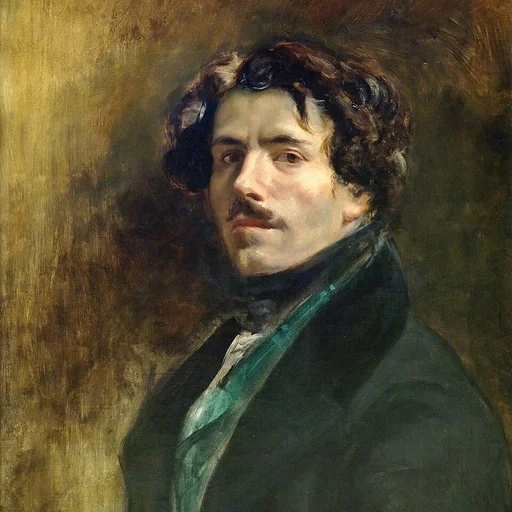
Ferdinand Victor Eugène Delacroix ( DEL-ə-krwah, -KRWAH; French:; 26 April 1798 – 13 August 1863) was a French Romantic artist who was regarded as the leader of the French Romantic school.