Artwork
The Natchez
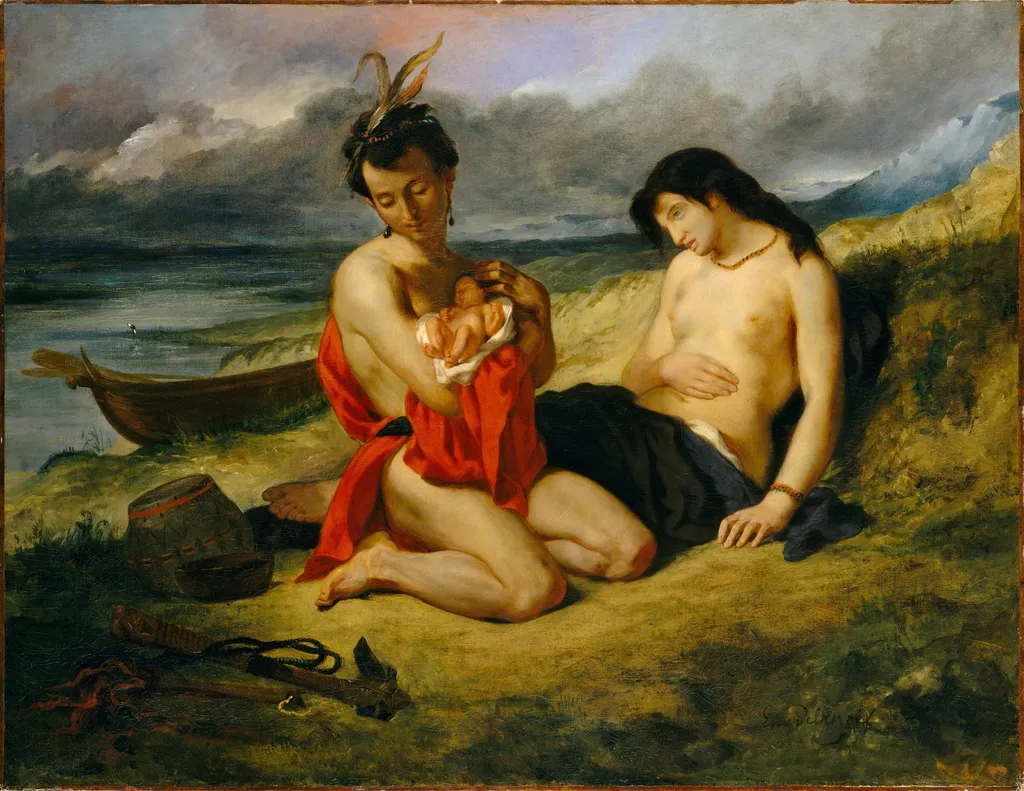
The Natchez is an oil painting by the Academic Art artist Eugène Delacroix. It dates from 1835 and is held in the collection of the Metropolitan Museum of Art.
About this work
Subject & Meaning
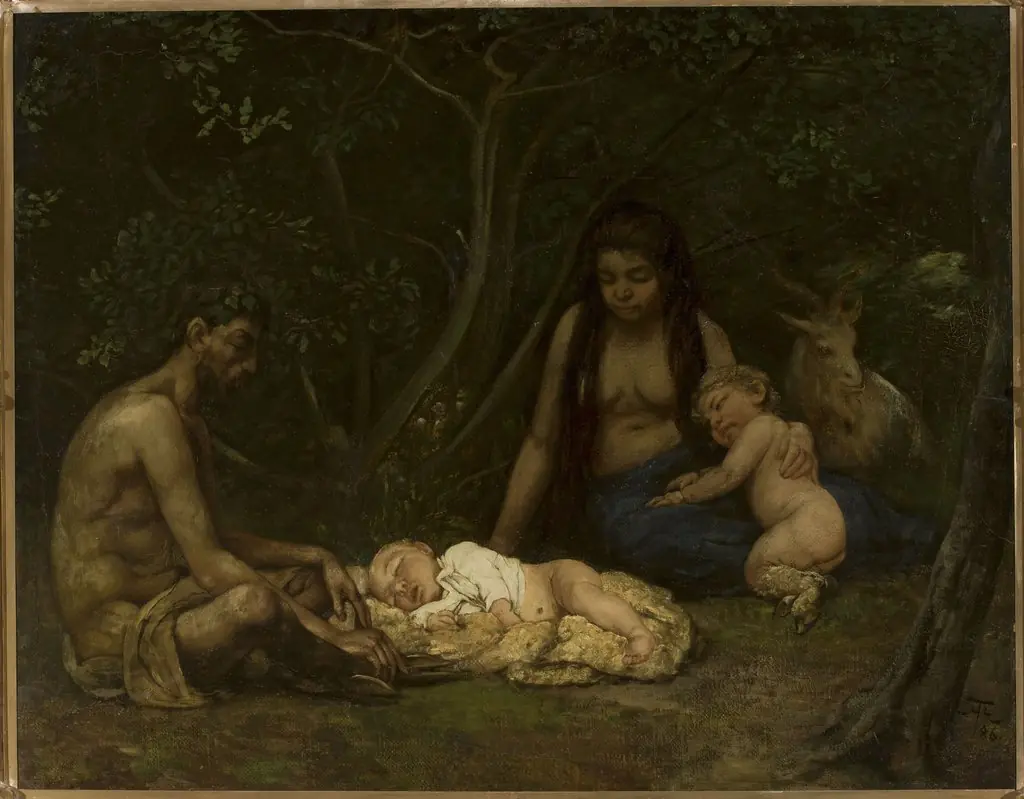
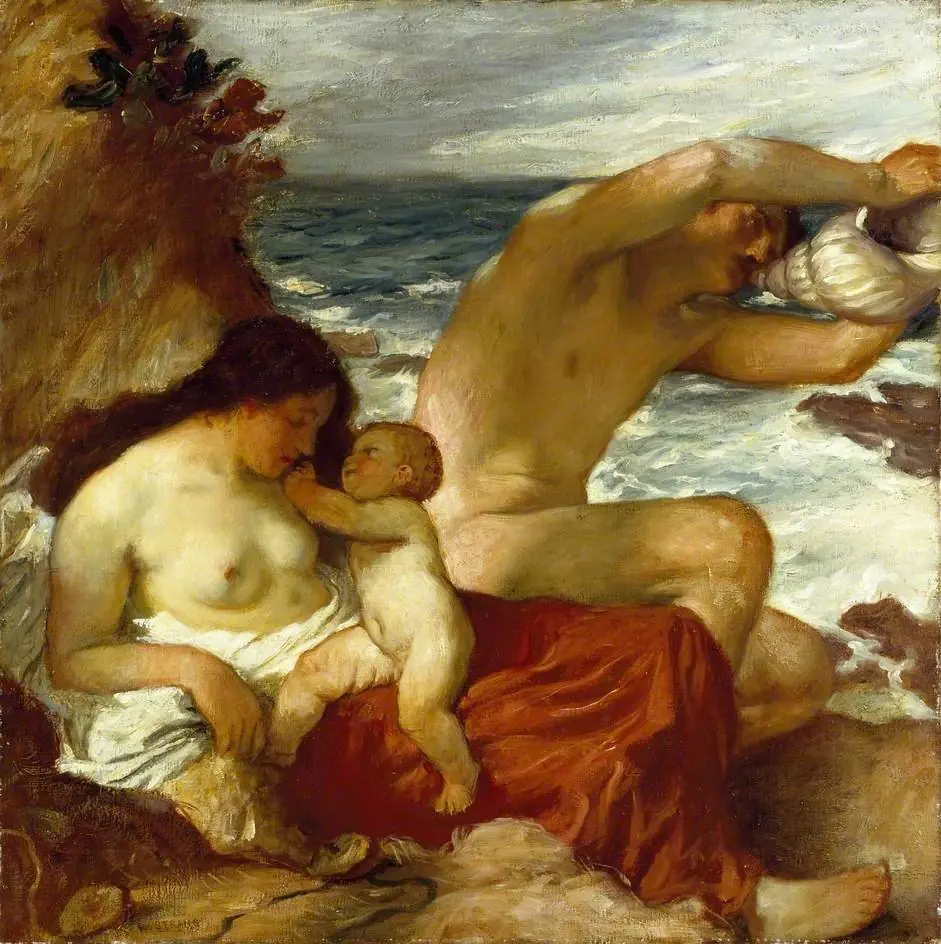
La peinture montre une famille amérindienne des Natchez sur les rives du Mississippi: le père tient dans ses bras un nouveau-né fraîchement né, tandis que la mère, épuisée par l’accouchement, regarde avec un regard attristé. L’ensemble évoque, par la composition et l’expression, le groupe de la Sainte Famille, mais il renvoie aussi à un épisode du roman Atala de Chateaubriand, où deux membres de la tribu fuient après un massacre et s’arrêtent pour que la femme accouche. Cette référence mythique sert à souligner le thème de l’oppression des innocents et la prémonition du destin tragique de l’enfant, renforcé par le climat mélancolique du tableau.
Technique & Style
The handling of the oil medium allows for rich coloration and dramatic chiaroscuro, contributing to the painting’s expressive, emotive quality.
The Natchez is executed in oil paint on canvas, a medium and support consistently noted across sources. The work is classified as an academic art painting, reflecting Delacroix’s adherence to contemporary academic conventions. Its composition recalls the artistic motif of the Rest on the Flight into Egypt, with the father holding the newborn and the mother’s weary gaze evoking a sense of impending tragedy, a detail highlighted in both the French and Italian discussions.
The handling of the oil medium allows for rich coloration and dramatic chiaroscuro, contributing to the painting’s expressive, emotive quality.
History & Provenance
The Natchez, an oil on canvas painting by Eugène Delacroix, was begun in December 1823 and completed in 1835; the artist paused work in early 1824 to finish the larger Le Massacre de Scio before returning to the Natchez and exhibiting it at the 1835 Salon de peinture et de sculpture in Paris. The work remained in private hands throughout the 19th and most of the 20th century before entering the collection of the Metropolitan Museum of Art in New York in 1989. Its iconography draws on the novel Atala, reflecting Delacroix’s interest in the tragic fate of the Natchez people.
The Natchez is held in the collection of the Metropolitan Museum of Art in New York, where it has resided since 1989. The painting debuted at the Paris Salon of 1835, after which it passed through a succession of private owners throughout the nineteenth and much of the twentieth centuries before entering the Met’s holdings. Its long‑term stewardship by the museum marks the culmination of a provenance that includes the 1835 Salon exhibition and subsequent private sales.
Context
The Natchez, inspired by François‑René de Chateaubriand’s novel Atala, was exhibited at the Paris Salon of 1835 and entered the Metropolitan Museum of Art’s collection in 1989. Curator Asher Miller has noted that the composition can evoke a Holy Family, linking the work to the Christian undertones of Atala, while the mother’s weary gaze is read as a premonition of the child’s tragic fate foretold in the novel. Scholars also compare the scene to the Rest during the Flight into Egypt and connect it to Delacroix’s study for The Massacre of Chios, observing a shared theme of the oppression of innocents, whether Greek or Native American.
These interpretations place the painting within Delacroix’s Romantic engagement with literary subjects and exotic themes, highlighting its role in 19th‑century French art history.
Legacy
The Natchez was first shown at the 1835 Salon de peinture et de sculpture in Paris, where it attracted attention for its dramatic rendering of a Native American family. After changing hands throughout the 19th and early 20th centuries, the painting entered the Metropolitan Museum of Art in 1989 and has remained on public view there. Art historians have highlighted its Christian symbolism, noting that the exhausted mother’s gaze was interpreted by Met curator Asher Miller as a prefiguration of tragedy, linking the scene to the Holy Family motif.
The work is frequently cited in studies of Delacroix’s engagement with Romantic literature and 19th‑century representations of indigenous peoples, underscoring its enduring scholarly relevance.
Overview
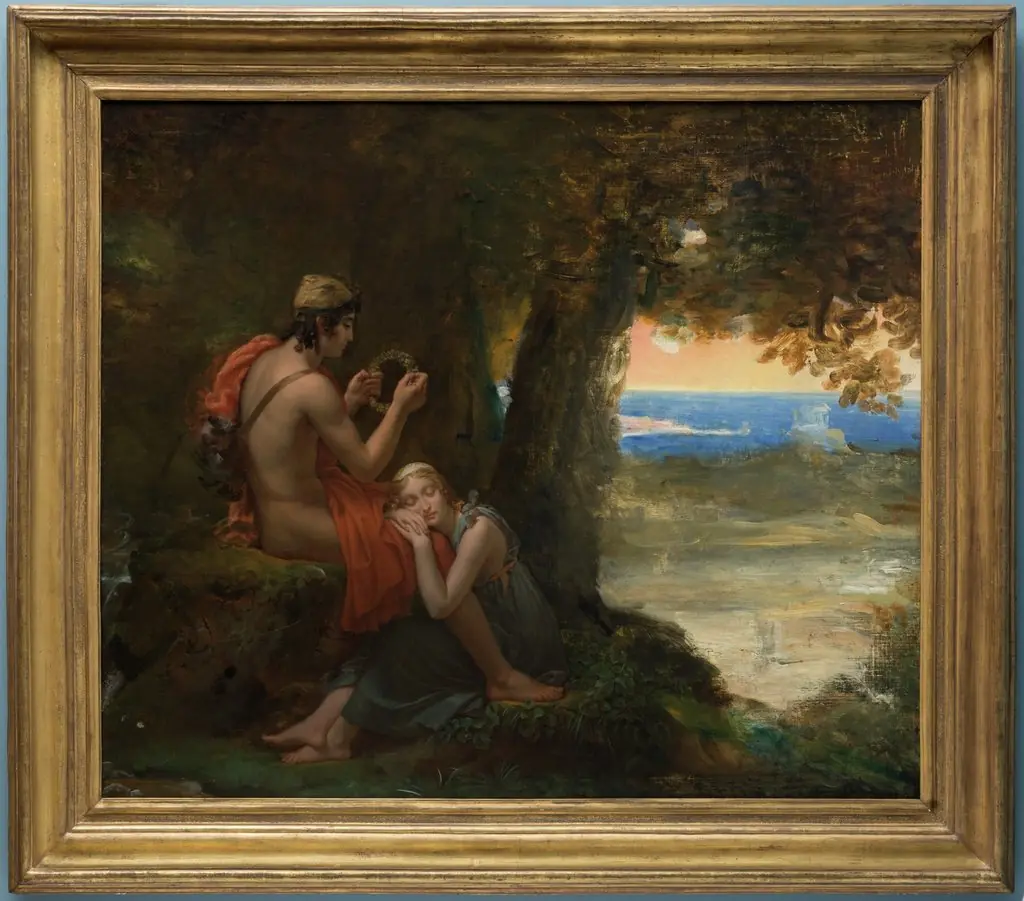
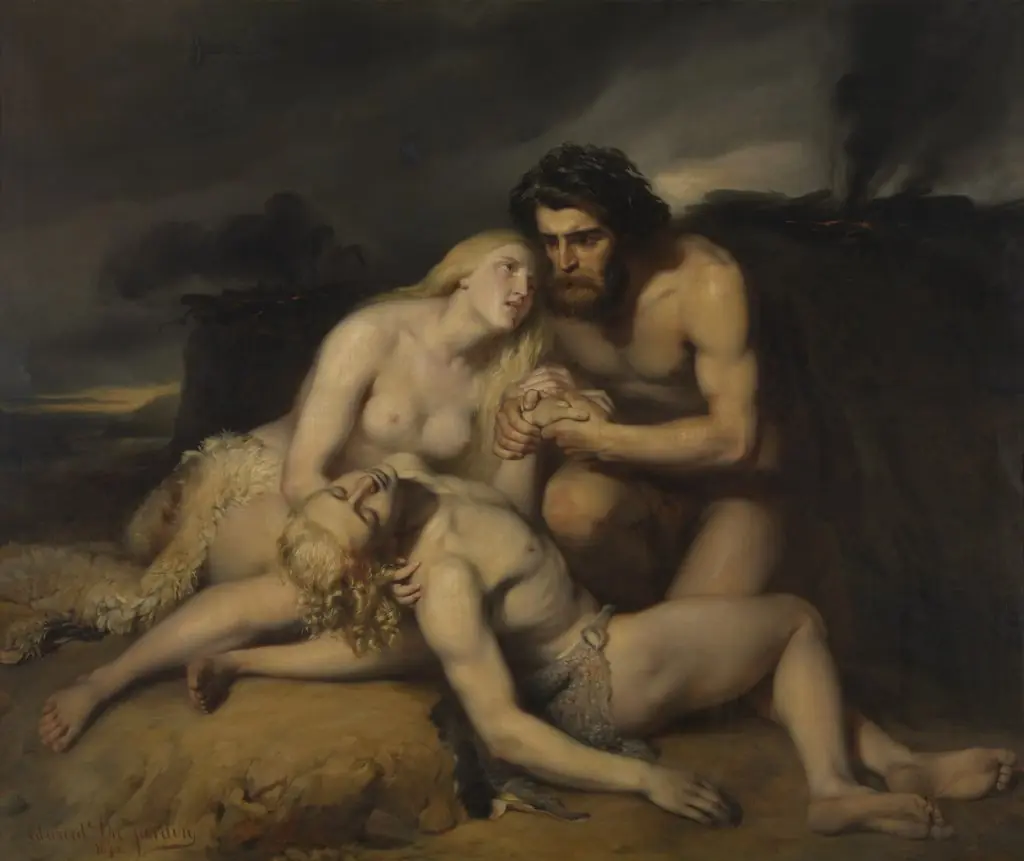
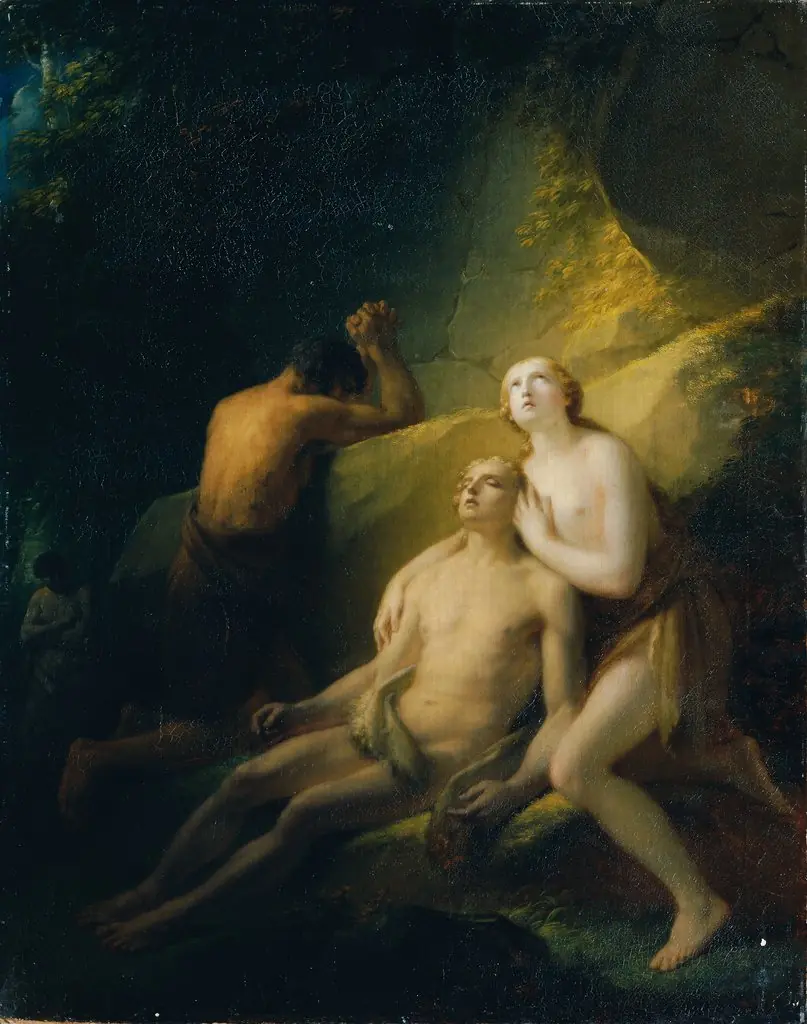
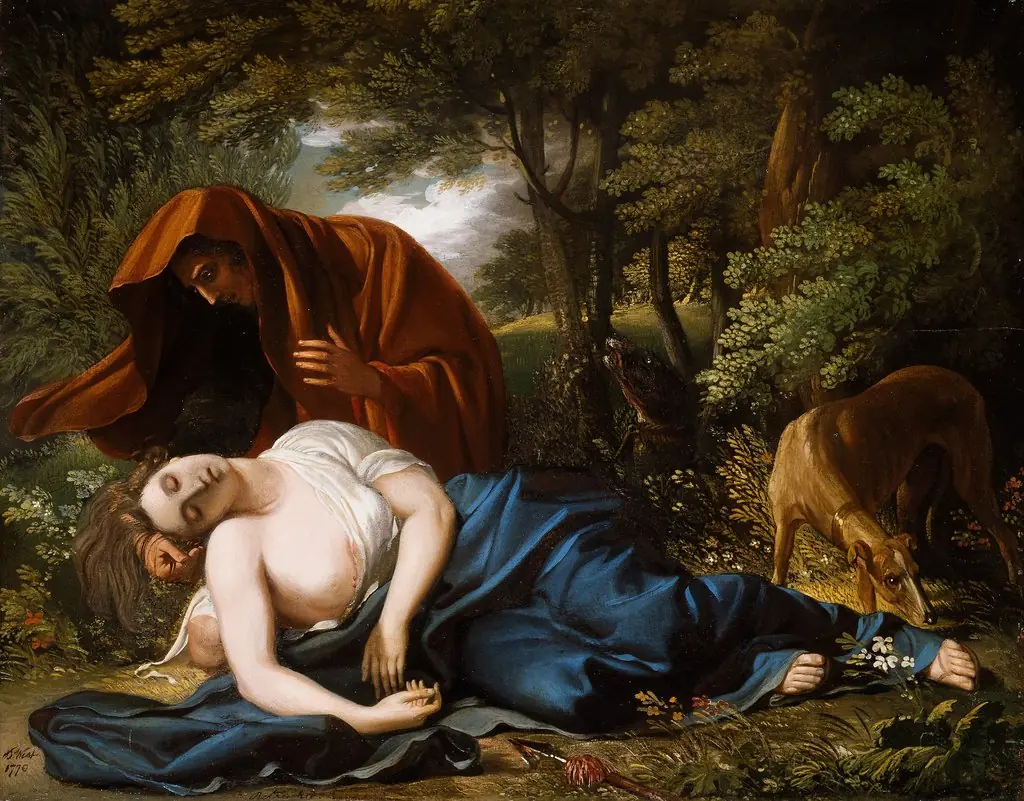
Titled "The Natchez," this oil painting portrays two individuals situated by a body of water beneath a dramatic sky. The composition focuses on a pair of figures, one of whom cradles an infant, suggesting an intimate or familial interaction. Executed in oil paint, the artwork captures a serene yet emotionally resonant moment, framed by a natural environment that implies both tranquility and the potential for change in the weather.
Own this work as a print
Artist & collection

Artist
Ferdinand Victor Eugène Delacroix ( DEL-ə-krwah, -KRWAH; French:; 26 April 1798 – 13 August 1863) was a French Romantic artist who was regarded as the leader of the French Romantic school.