Artwork
Rebecca and the Wounded Ivanhoe
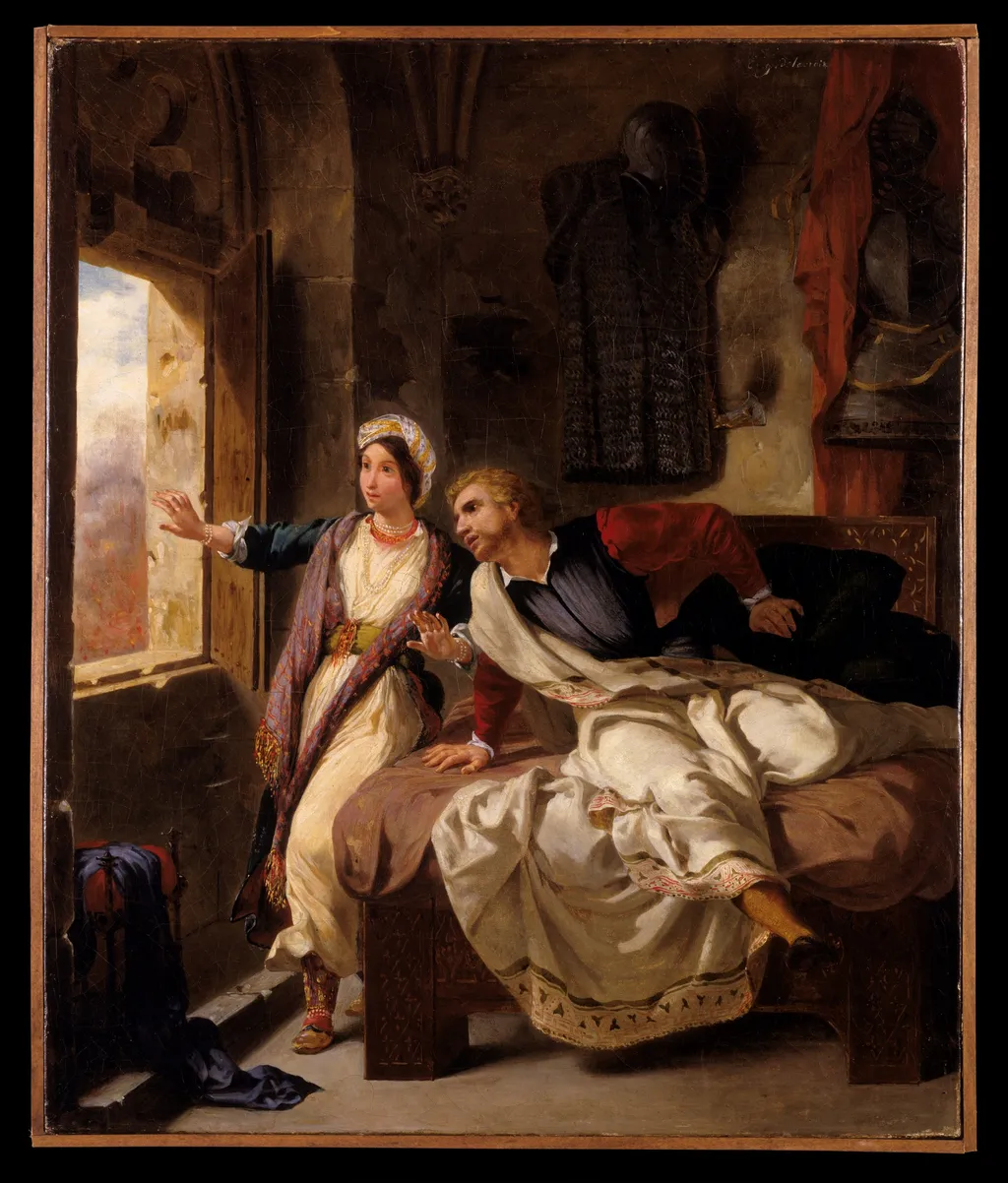
Rebecca and the Wounded Ivanhoe is an oil painting by the French Romanticist artist Eugène Delacroix. It dates from 1823 and is held in the collection of the Metropolitan Museum of Art.
About this work
Subject & Meaning
The painting depicts a dramatic moment from Chapter 29 of Walter Scott's 1819 novel Ivanhoe, set within the prison castle of Torquilstone.
The painting depicts a dramatic moment from Chapter 29 of Walter Scott's 1819 novel Ivanhoe, set within the prison castle of Torquilstone. The scene captures the wounded knight Ivanhoe struggling to rise from his sickbed while Rebecca, a Jewish woman, describes the raging battle occurring outside to him. This subject matter represents Delacroix's initial engagement with Scott's literature, a popular source for French Romantic artists alongside Byron and Shakespeare.
The composition highlights the emotional intensity and physical confinement of the characters, contrasting the knight's martial desperation with Rebecca's narrative role. By selecting this specific episode, the work embodies Romantic ideals of chivalry, suffering, and the tension between internal confinement and external conflict, establishing a precedent for the artist's future literary-inspired masterpieces.
Technique & Style
The work is an oil painting executed on canvas, measuring approximately 64.5 × 53.7 cm and dated 1823, and is classified as a Romantic history painting. Its material comprises oil pigments applied to a stretched canvas support, a technique typical of Delacroix’s approach that emphasizes vivid color and dynamic brushwork. The composition illustrates a scene from Walter Scott’s novel Ivanhoe, showing a wounded Ivanhoe in a bed while Rebecca attends him, reflecting the narrative focus of early Romantic literary subjects.
Documentation does not specify the painting’s current condition, and handling details are not recorded in the cited references.
History & Provenance
Rebecca and the Wounded Ivanhoe was painted by Eugène Delacroix in 1823, as documented in the work’s catalogue entry and confirmed by the Metropolitan Museum of Art’s acquisition records. The oil on canvas measures 64.5 × 53.7 cm and illustrates a scene from Chapter 29 of Walter Scott’s novel Ivanhoe, showing the injured knight struggling from his sickbed while Rebecca tends to him in the fortress of Torquilstone. This composition represents Delacroix’s initial exploration of Scott’s literary themes, a subject popular among French Romantic artists.
The painting remained in private hands until it entered the Metropolitan Museum of Art’s collection in 2019, where it is presently exhibited.
Rebecca and the Wounded Ivanhoe is currently held in the collection of the Metropolitan Museum of Art in New York City. The museum acquired the 1823 oil painting in 2019. While the work is part of the museum's permanent holdings, the provided sources do not specify a unique inventory or accession number for the piece.
Furthermore, the available documentation does not record a specific exhibition history, such as past showings or loan dates, prior to or following its acquisition by the institution. The painting remains in the museum's collection as a significant example of Eugène Delacroix's early Romantic work depicting a scene from Walter Scott's novel.
Context
Created in 1823, Eugène Delacroix's Rebecca and the Wounded Ivanhoe marks a pivotal moment in the artist's career as his first depiction of a subject drawn from Sir Walter Scott's 1819 novel Ivanhoe. This choice aligns Delacroix with other French Romantics who frequently looked to Scott, Lord Byron, and William Shakespeare for inspiration. The work exemplifies the Romantic movement's focus on dramatic emotion and literary narrative, situating the painting alongside major contemporaries like The Barque of Dante.
Although the Metropolitan Museum of Art did not acquire the canvas until 2019, the piece remains a significant early example of Delacroix's engagement with English literature. Scholarship, including critical catalogues by Lee Johnson and exhibition publications by the Met, recognizes this oil painting as a foundational work that bridges Delacroix's early style with his later masterpieces.
Overview
Eugène Delacroix's 1823 oil painting, Rebecca and the Wounded Ivanhoe, captures a dramatic moment from Walter Scott's popular novel. This early work by the French Romantic artist depicts the titular characters within their prison at Torquilstone castle. The piece is now part of the collection at the Metropolitan Museum of Art in New York City.
Own this work as a print
Artist & collection
Artist
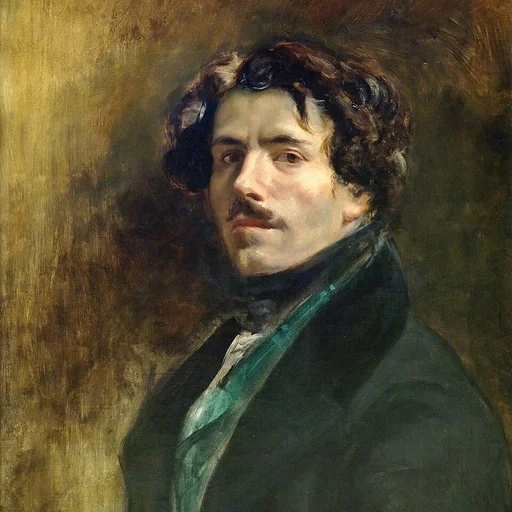
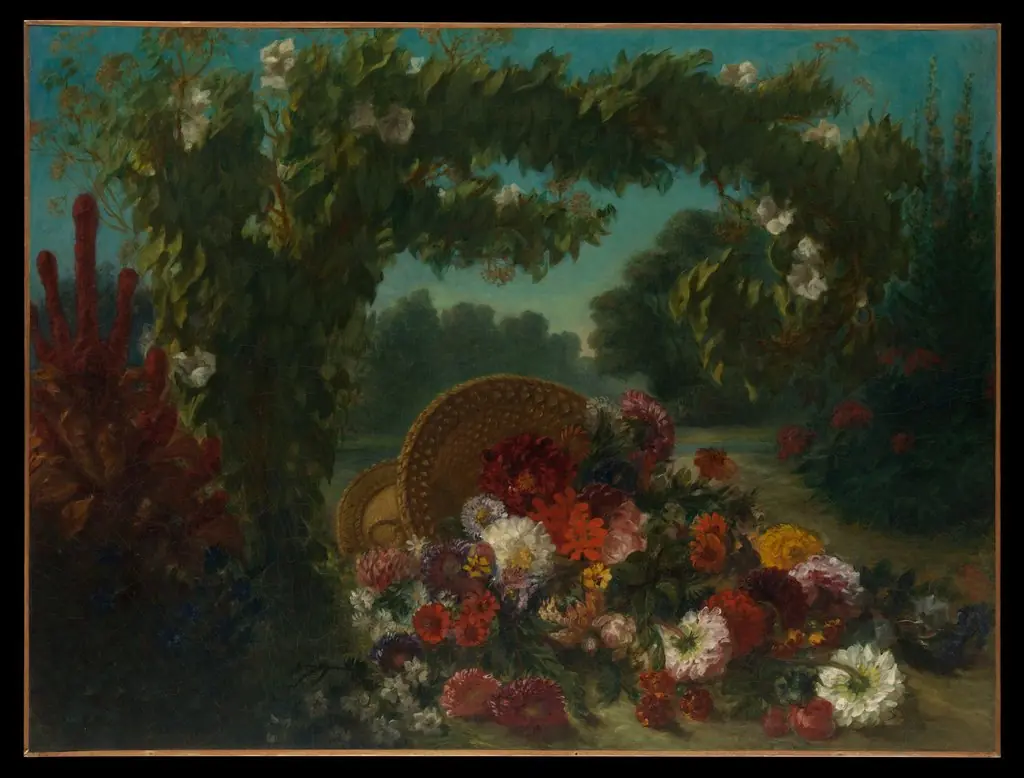
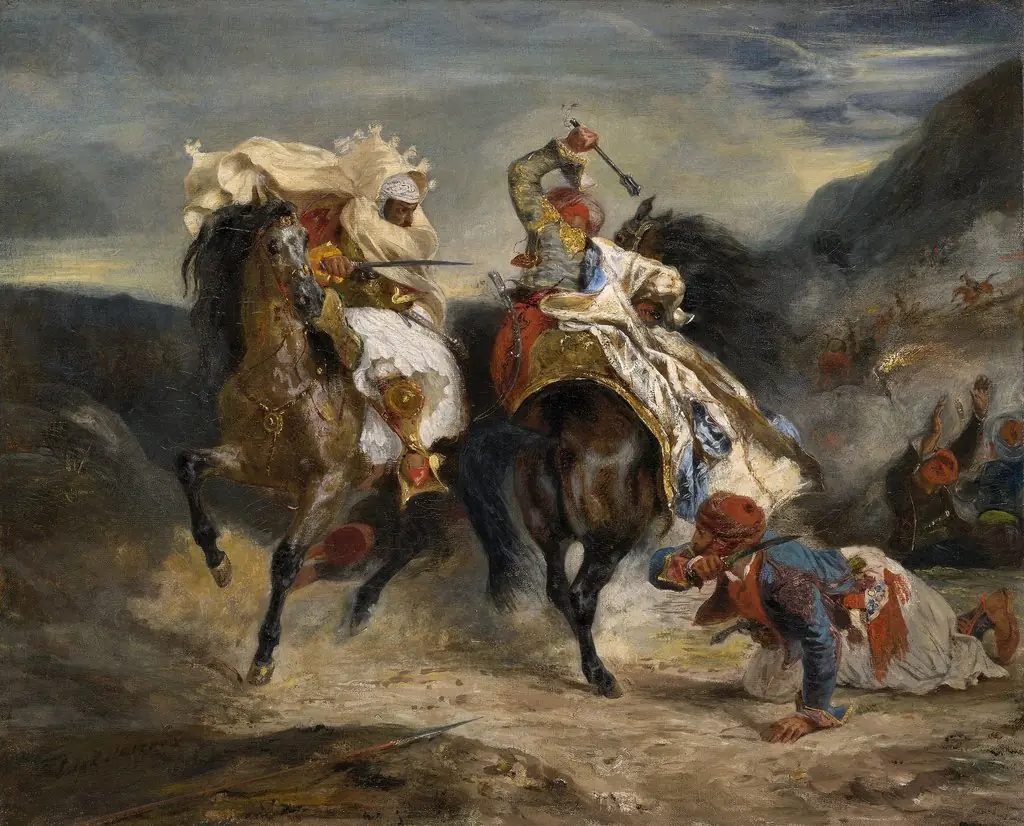
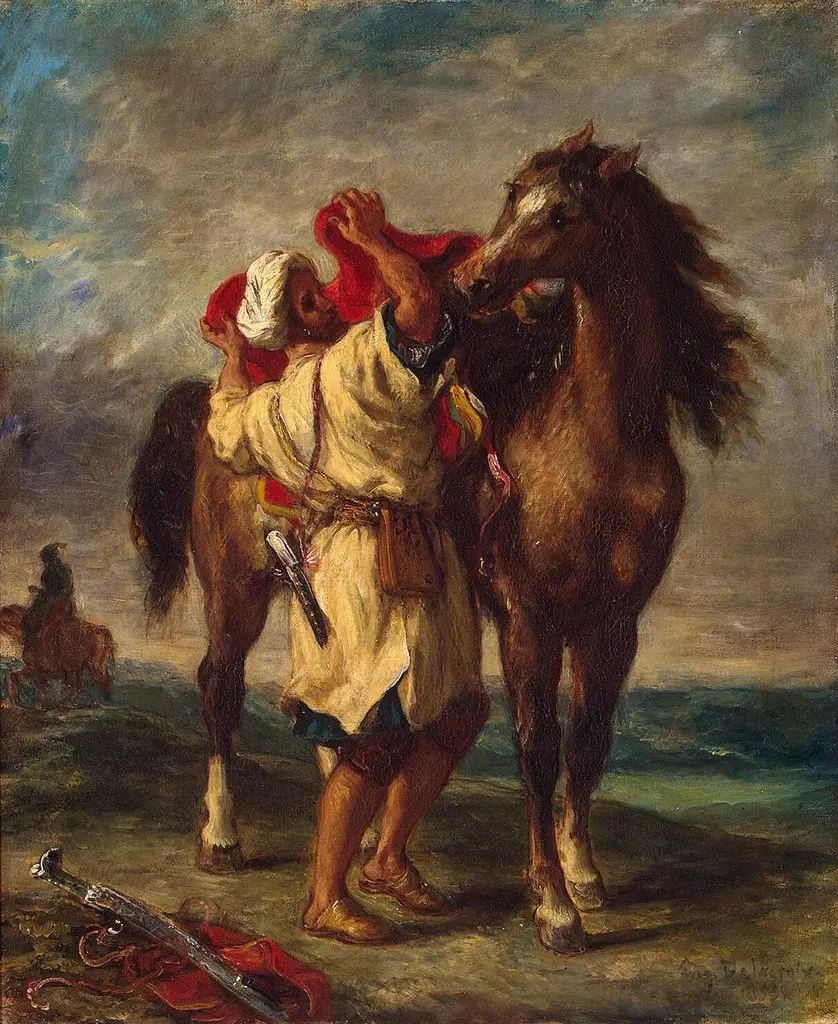
Ferdinand Victor Eugène Delacroix ( DEL-ə-krwah, -KRWAH; French:; 26 April 1798 – 13 August 1863) was a French Romantic artist who was regarded as the leader of the French Romantic school.

- Radbot, Graf von Habsburg zeigt seinem Bruder Bischof Werner seine bewaffneten Getreuen
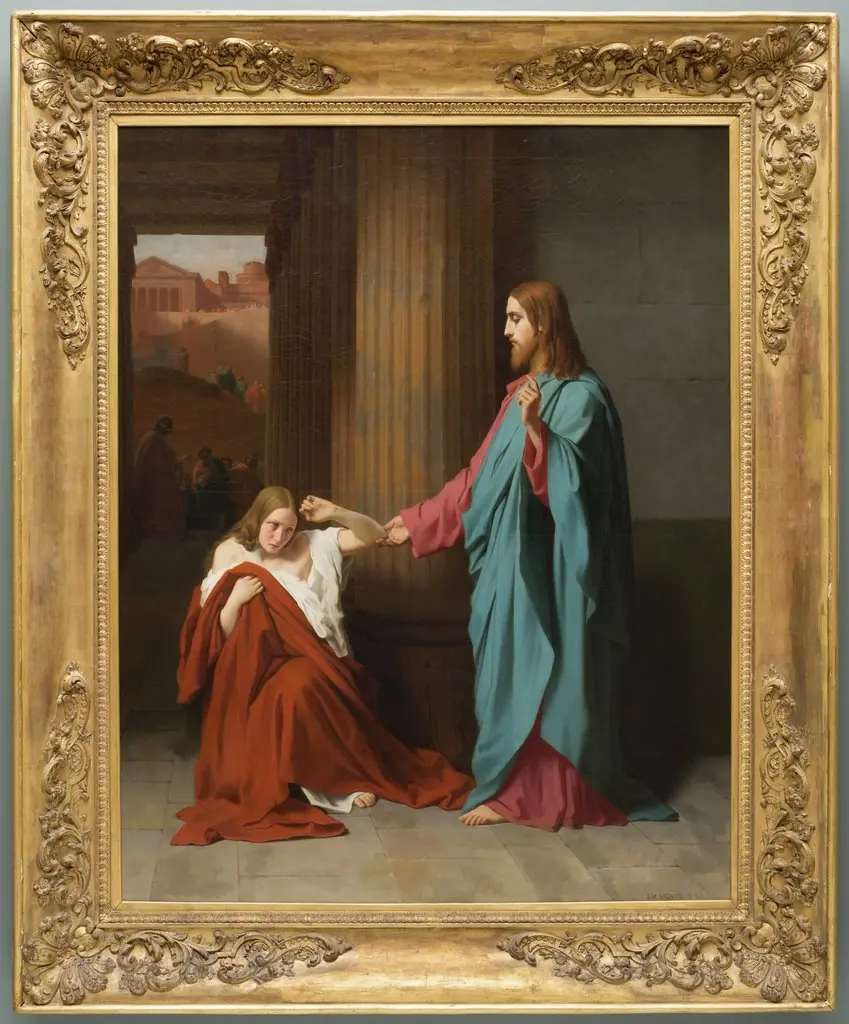 Christ and the Woman Taken in Adultery
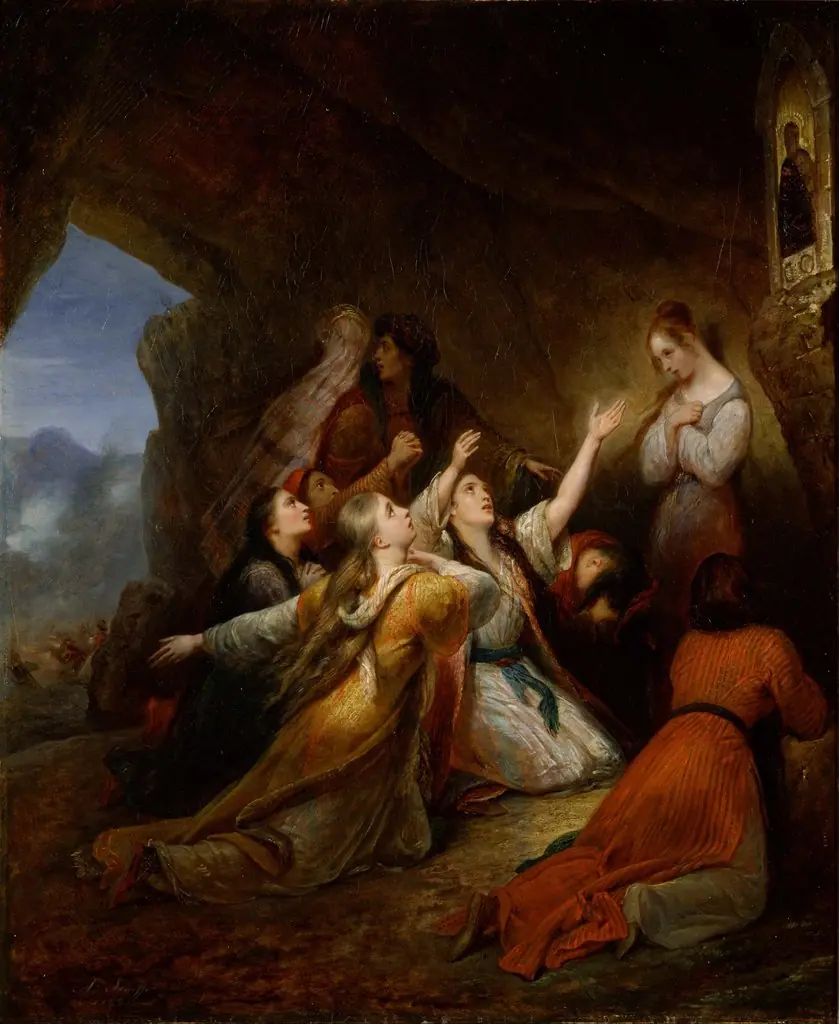 Greek Women Plead for the Virgin's Help
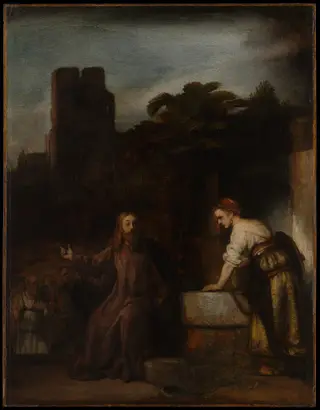 Christ and the Woman of Samaria
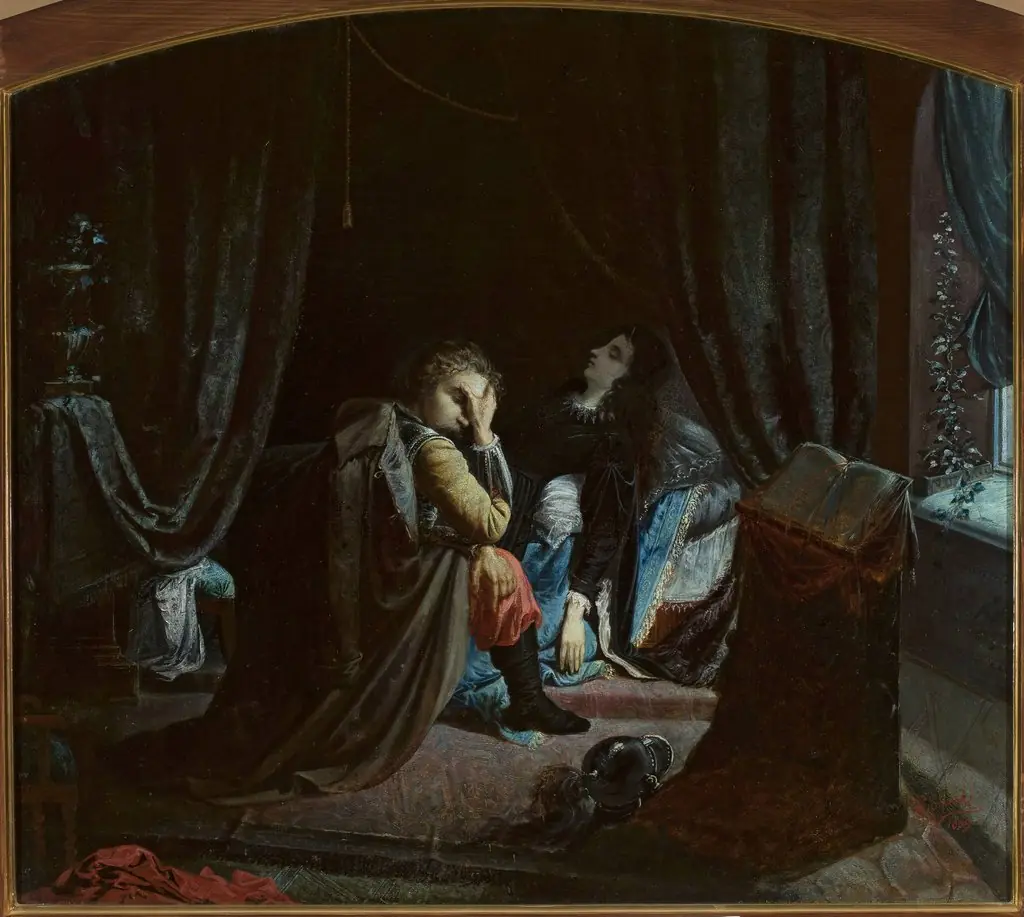 Death of Maria, illustriation to the poem by A. Malczewski
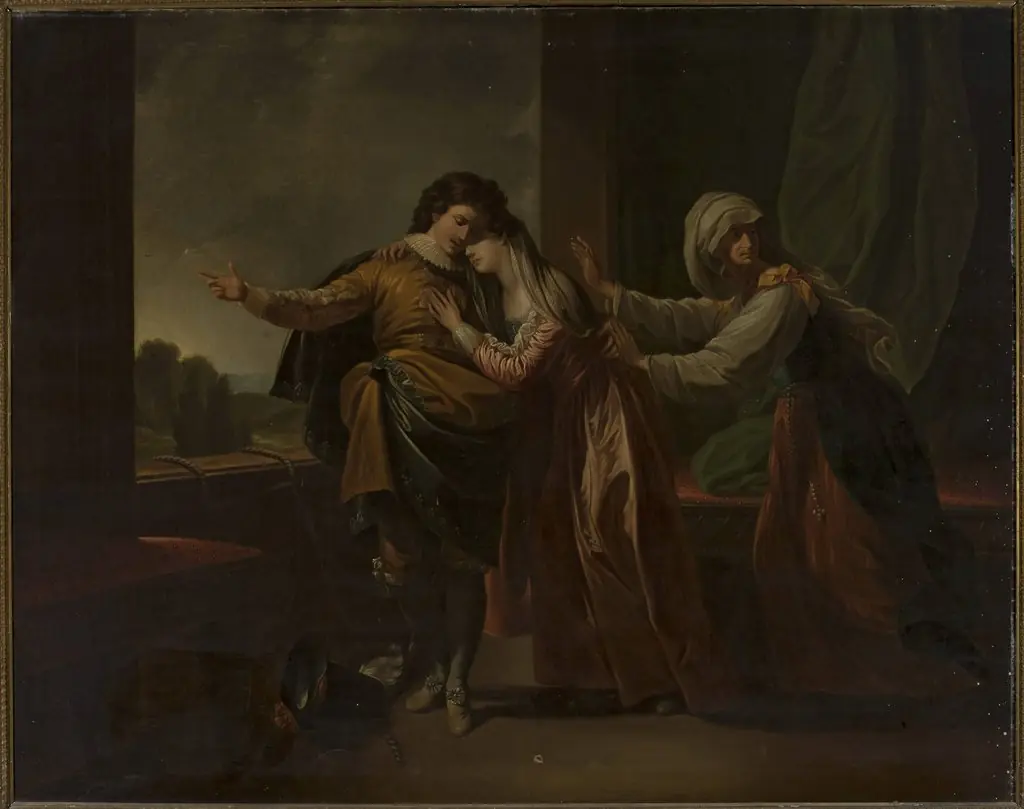 Romeo and Juliet
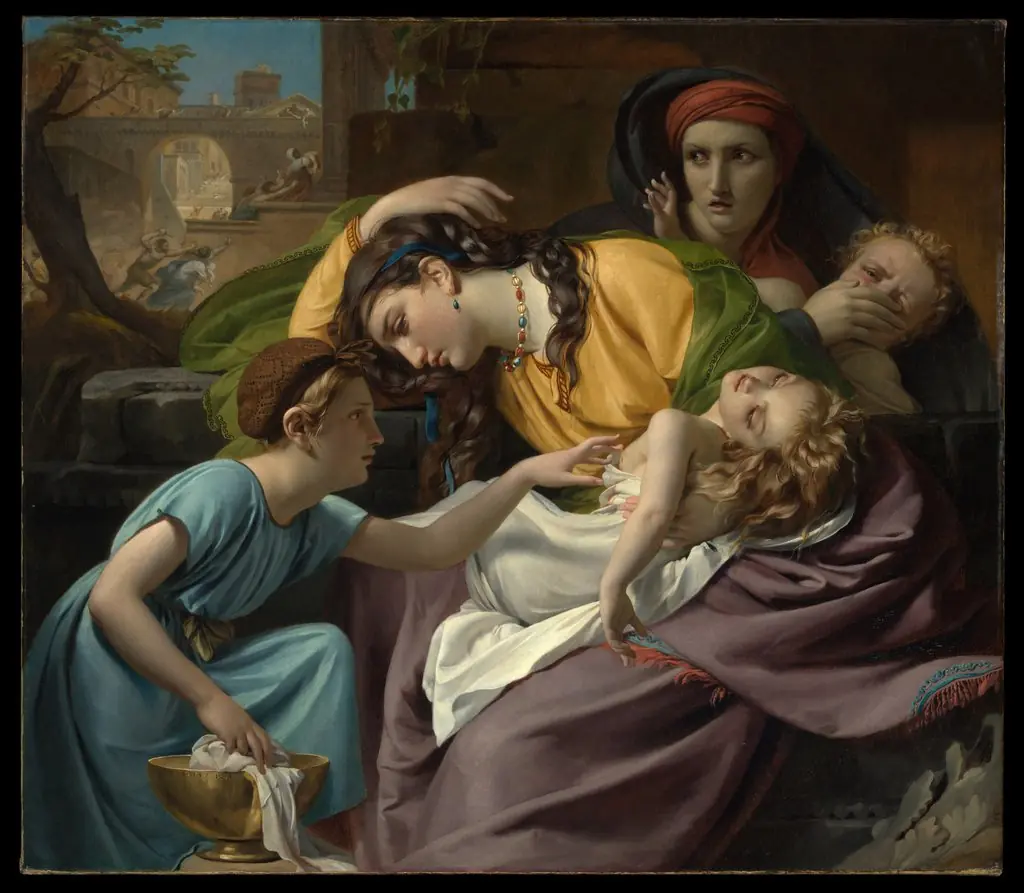 The Massacre of the Innocents
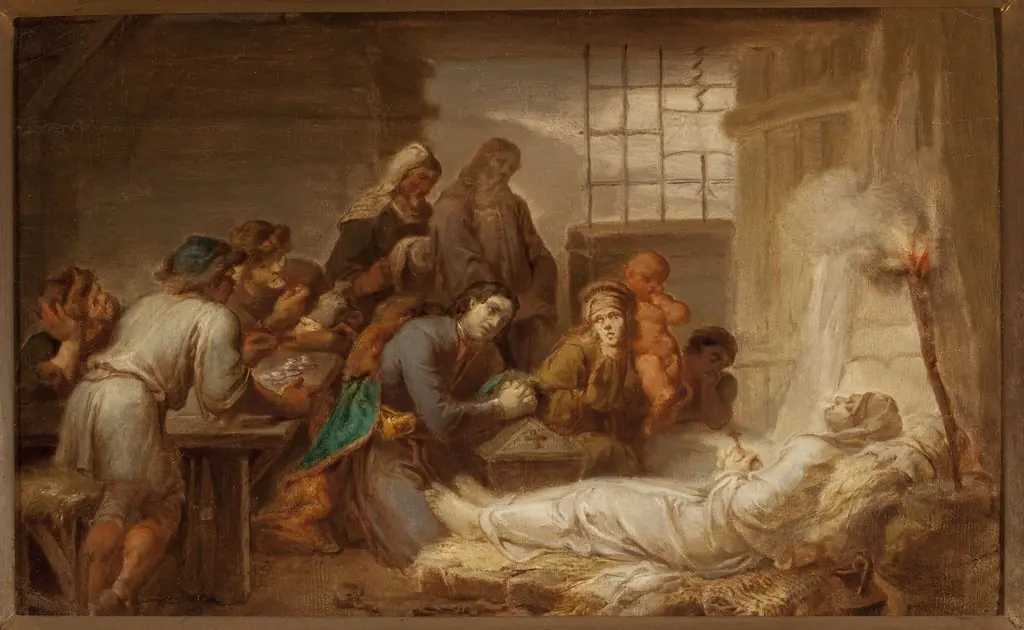 Death in exile
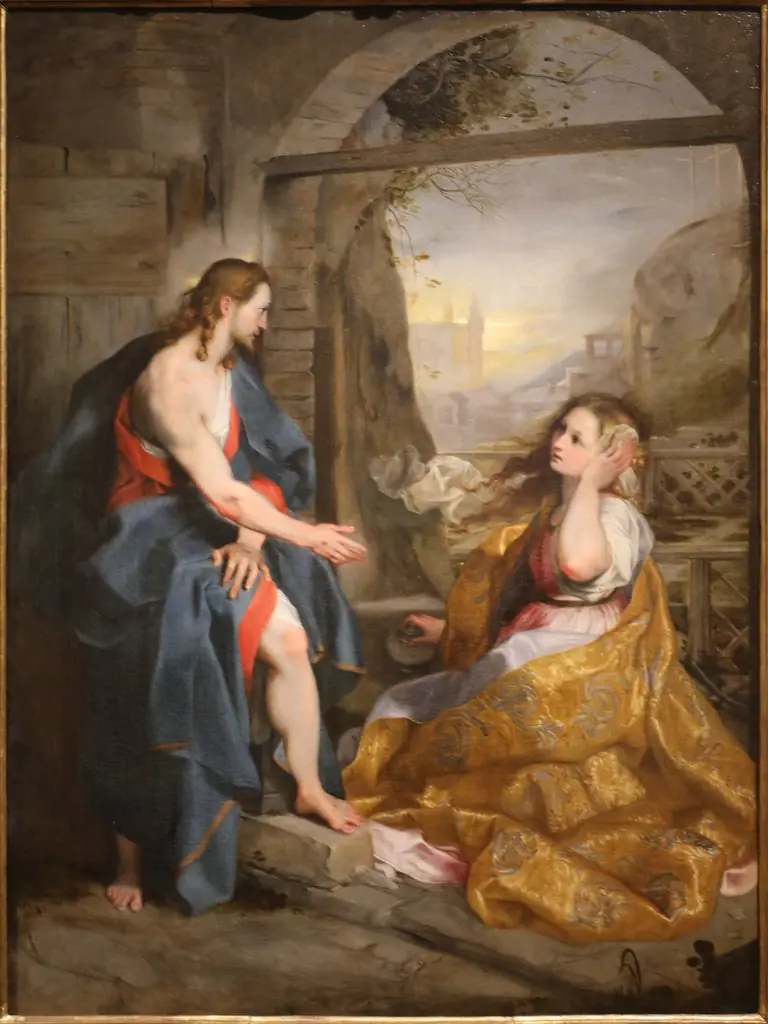 Noli me tangere
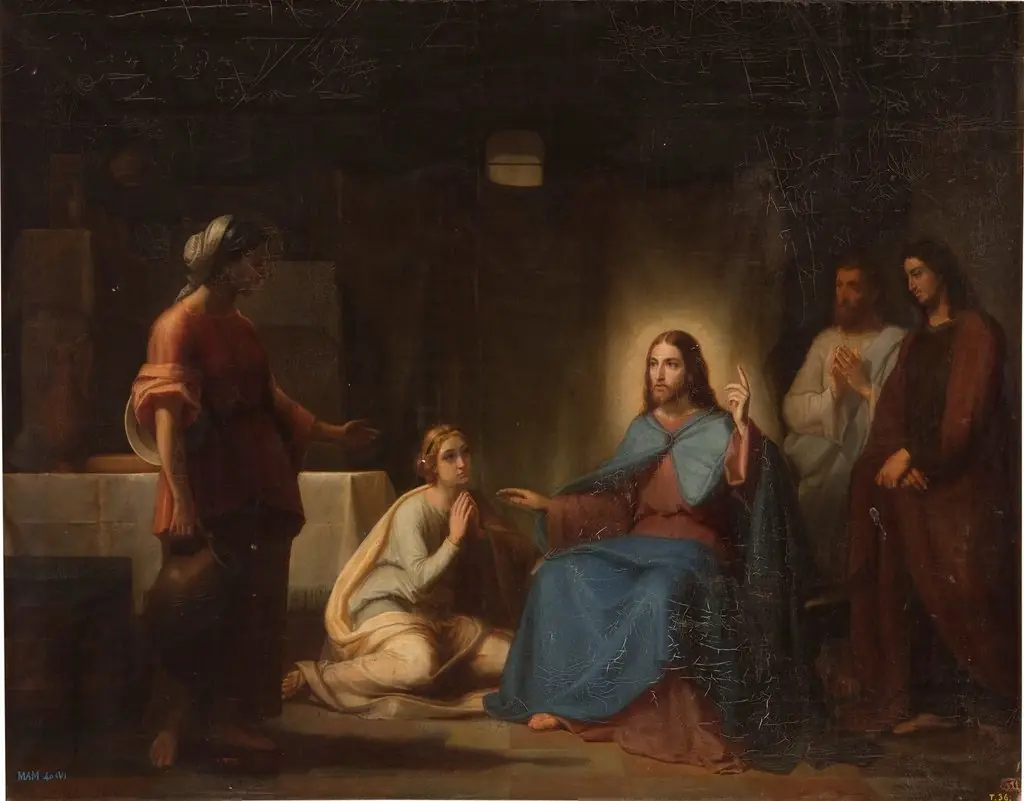 Jesús en casa de Marta y María
 The Young François I of France Goes out Hunting
 Donna Mencia in the Robber's Cavern