Artwork
The Combat of the Giaour and Hassan
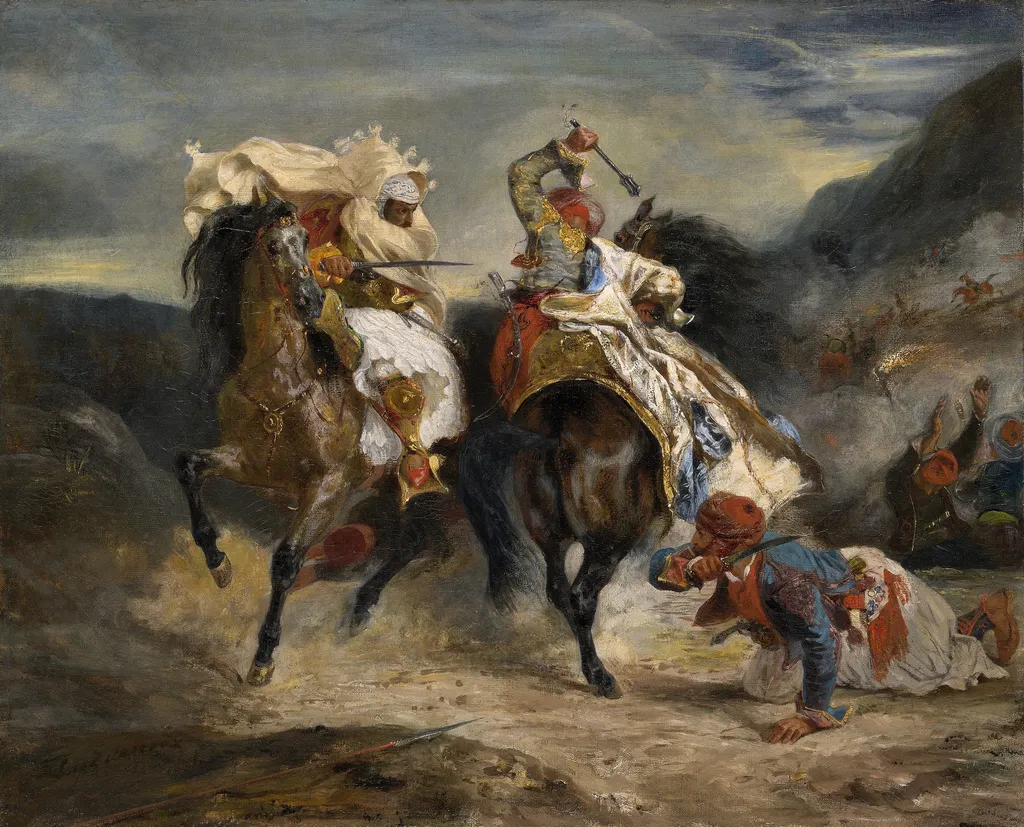
The Combat of the Giaour and Hassan is an oil painting by the Orientalist artist Eugène Delacroix. It dates from 1826 and is held in the collection of the Art Institute of Chicago.
About this work
Subject & Meaning
" The swirling sky and raw physicality of the combat amplify the emotional intensity characteristic of Delacroix's history painting.
The painting depicts a dramatic horse-mounted battle between two men, set against a turbulent sky in a rural landscape. The combatants are the Giaour and Hassan, locked in mortal equestrian combat.
The subject derives from Lord Byron's 1813 poem The Giaour, a tale of love, revenge, and fatal rivalry in the Ottoman world, in which the Giaour, a Venetian, avenges his enslaved beloved by killing the Turkish lord Hassan. Delacroix's treatment belongs to the Orientalist movement, which represented Eastern cultures through a European lens. The painting thus carries layered meanings: it dramatizes Romantic themes of passion, violence, and individual destiny, while also participating in the broader 19th-century European fascination with the exotic "Orient."
The swirling sky and raw physicality of the combat amplify the emotional intensity characteristic of Delacroix's history painting.
Technique & Style
The Combat of the Giaour and Hassan is an oil painting on canvas, measuring 59.6 cm by 73.4 cm, created in 1826 by Eugène Delacroix. It belongs to the history painting genre and is associated with the Orientalist movement, depicting a dramatic equestrian battle between a European and an Ottoman figure. The composition emphasizes motion and tension through dynamic arrangement and stark contrasts, reflecting Delacroix's characteristic handling of light and color. The work is part of the permanent collection of the Art Institute of Chicago.
History & Provenance
Eugène Delacroix's 1826 oil painting, The Combat of the Giaour and Hassan, is currently held in the permanent collection of the Art Institute of Chicago. The work, executed on canvas, measures 59.6 by 73.4 centimeters and remains a key example of the artist's Orientalist history painting.
Regarding its public display, the artwork has been featured in the exhibition titled Delacroix (1798-1863). This presentation highlighted the creator's career and included this battle scene among other significant works from the period.
Legacy
The Combat of the Giaour and Hassan is regarded as a notable example of Eugène Delacroix's Orientalist period, reflecting his fascination with exotic subjects drawn from Lord Byron's poem The Giaour. After its completion in 1826 the work entered the collection of the Art Institute of Chicago, where it continues to be displayed as part of the museum's holdings of 19th-century French painting. Its association with Byron's narrative and its vivid depiction of Eastern combat have contributed to its lasting reputation within Delacroix's oeuvre and in studies of Orientalist art.
Overview
Eugène Delacroix, a prominent figure in French Romanticism, created The Combat of the Giaour and Hassan in 1826. This oil painting exemplifies the era's fascination with dramatic narratives and exotic locales. It depicts an intense battle, characteristic of the Orientalist genre, and is recognized for its dynamic composition and vivid portrayal of conflict. The work is now part of the collection at the Art Institute of Chicago.
Context
Created during the height of the Romantic movement in France, The Combat of the Giaour and Hassan reflects the period's departure from Neoclassical restraint. Delacroix was a leading proponent of this shift, advocating for emotional expression and vibrant color. The painting also aligns with Orientalism, a trend that romanticized and often exoticized cultures of the Middle East and North Africa, providing artists with rich material for dramatic and visually compelling narratives.
Own this work as a print
Artist & collection
Artist
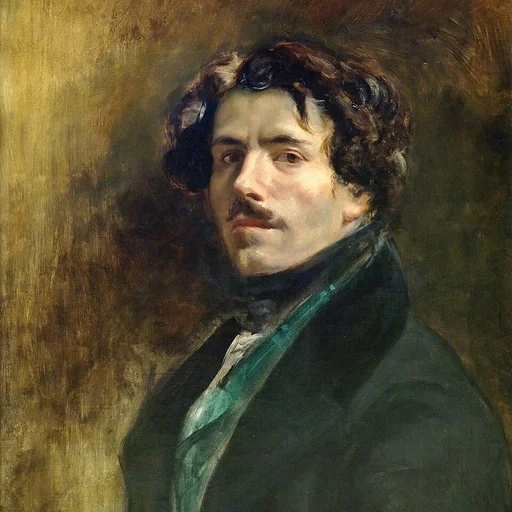
Ferdinand Victor Eugène Delacroix ( DEL-ə-krwah, -KRWAH; French:; 26 April 1798 – 13 August 1863) was a French Romantic artist who was regarded as the leader of the French Romantic school.

 Battle Scene: Arabs Making a Detour
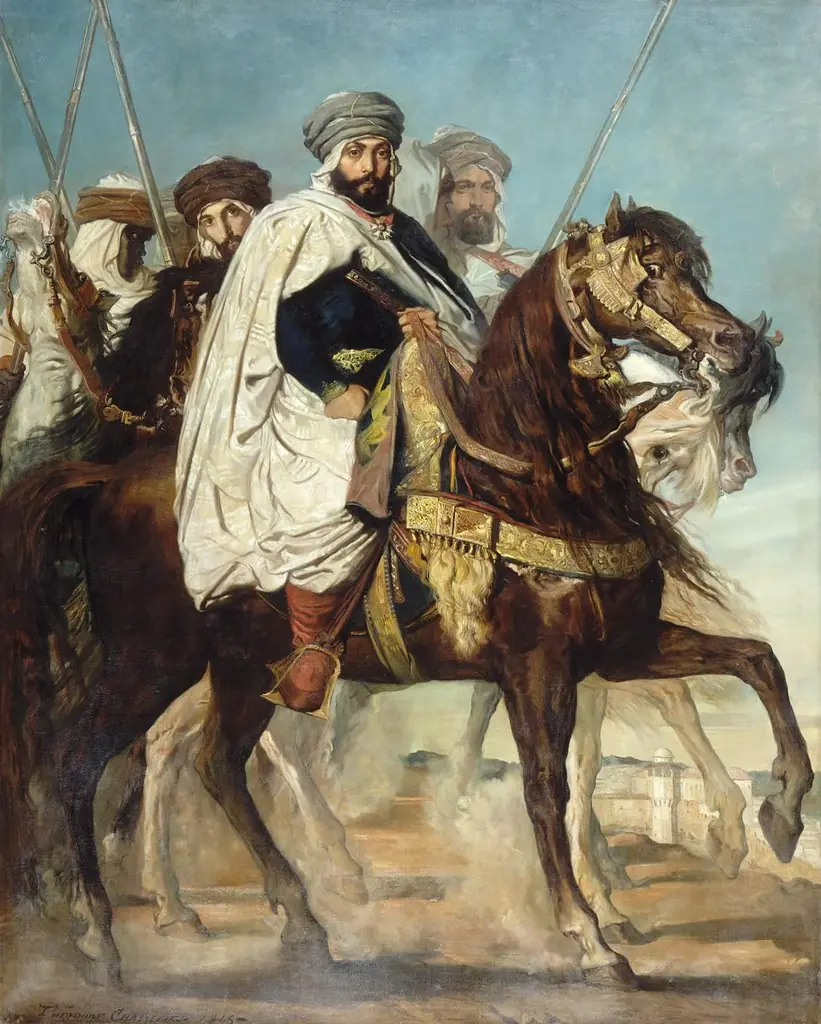 The Caliph of Constantine
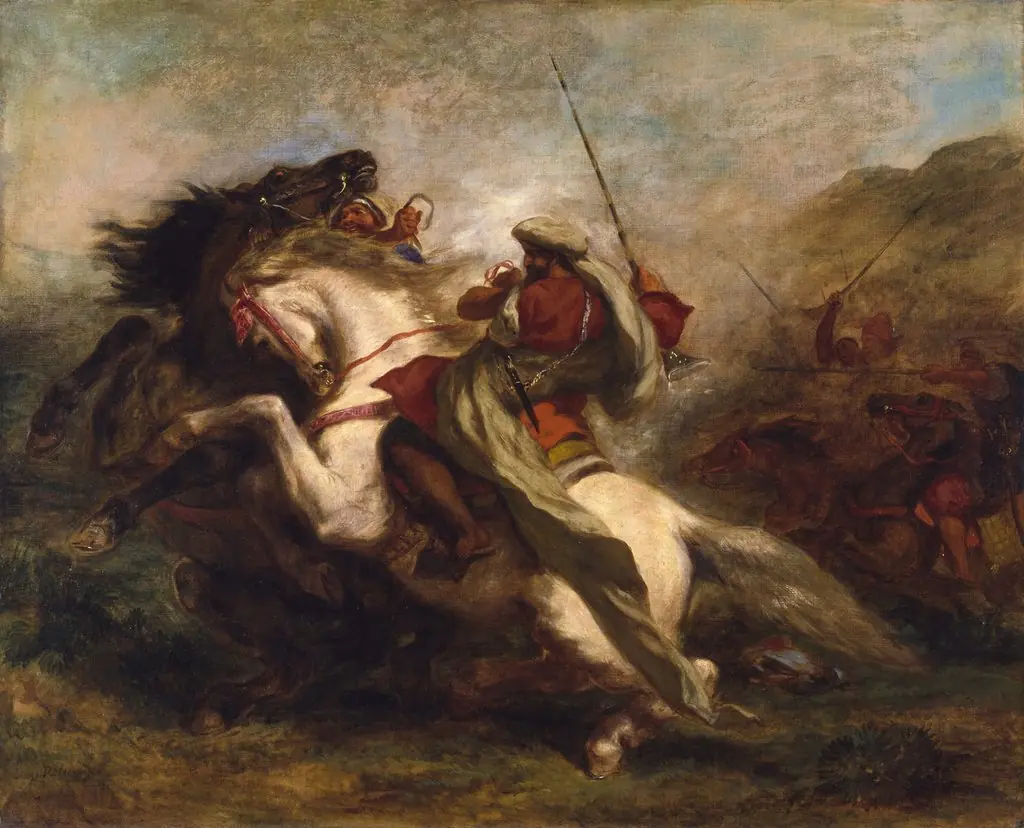 Collision of Moorish Horsemen
 Arab Horsemen
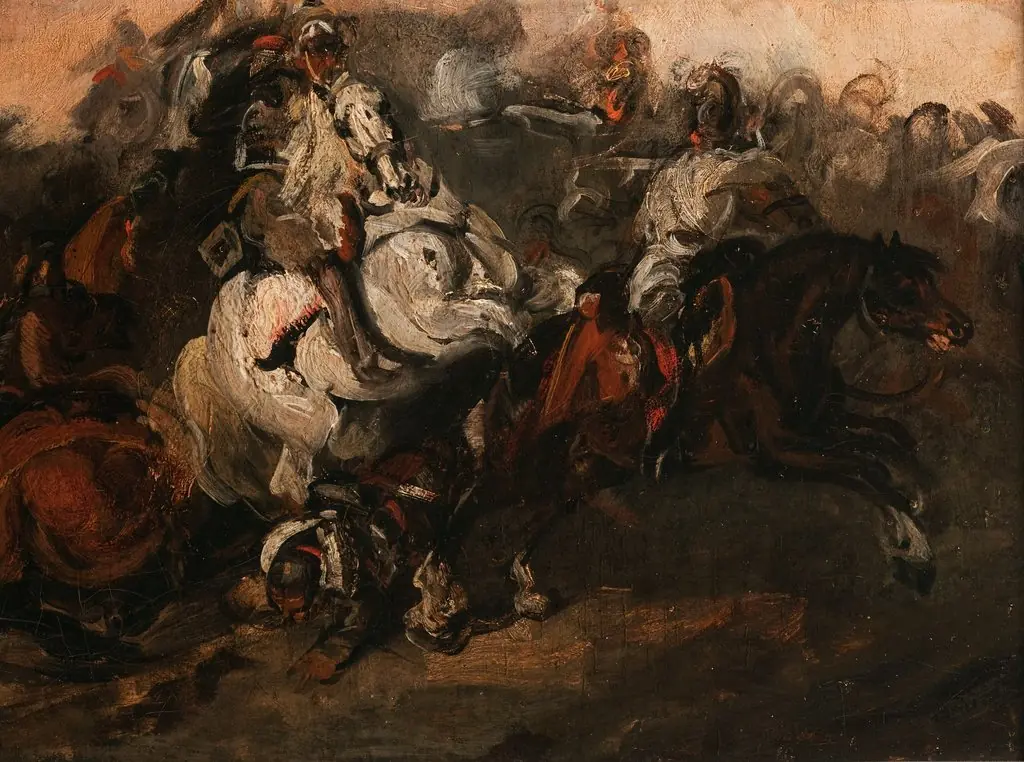 Encounter of Cuirassiers
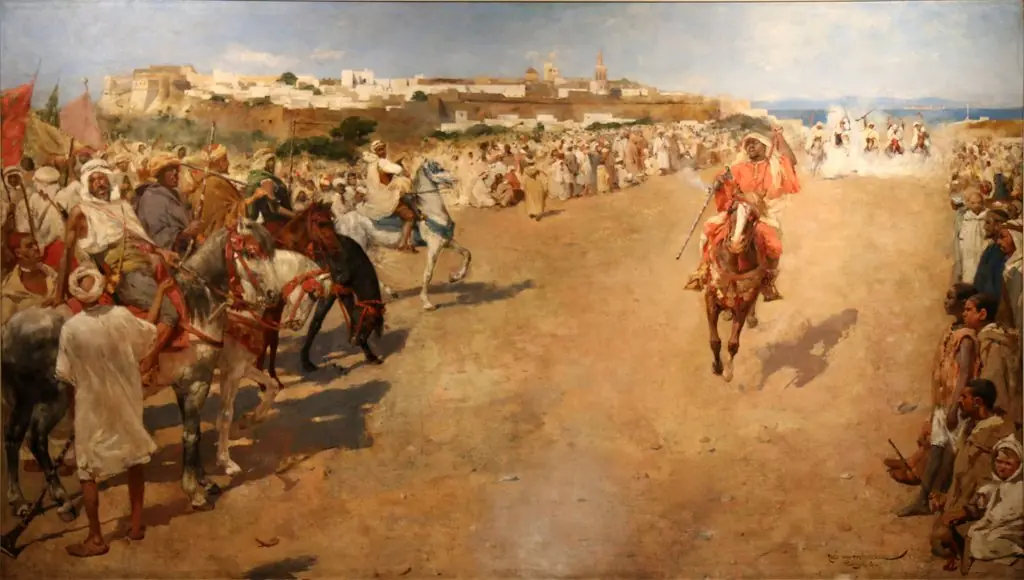 Arabian fantasia
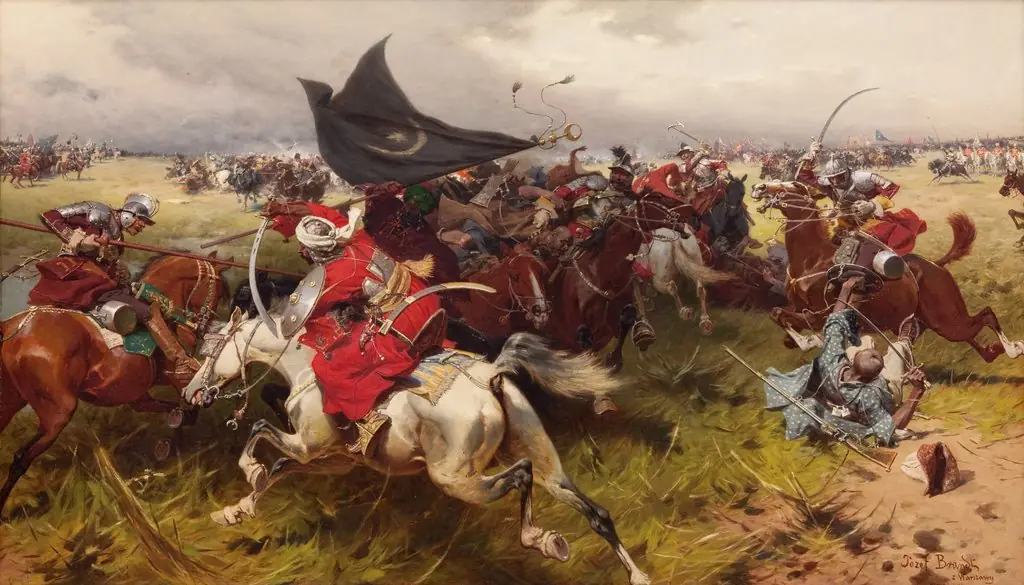 Fight for a Turkish Standard
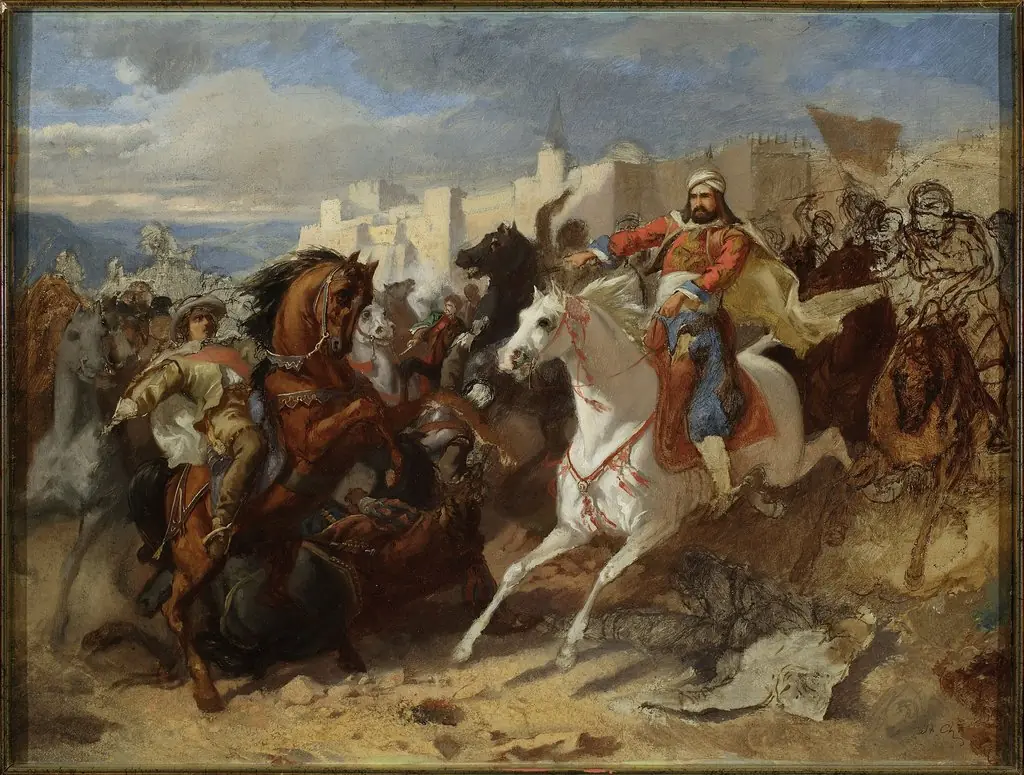 Episode from Austro-Turkish wars, sketch
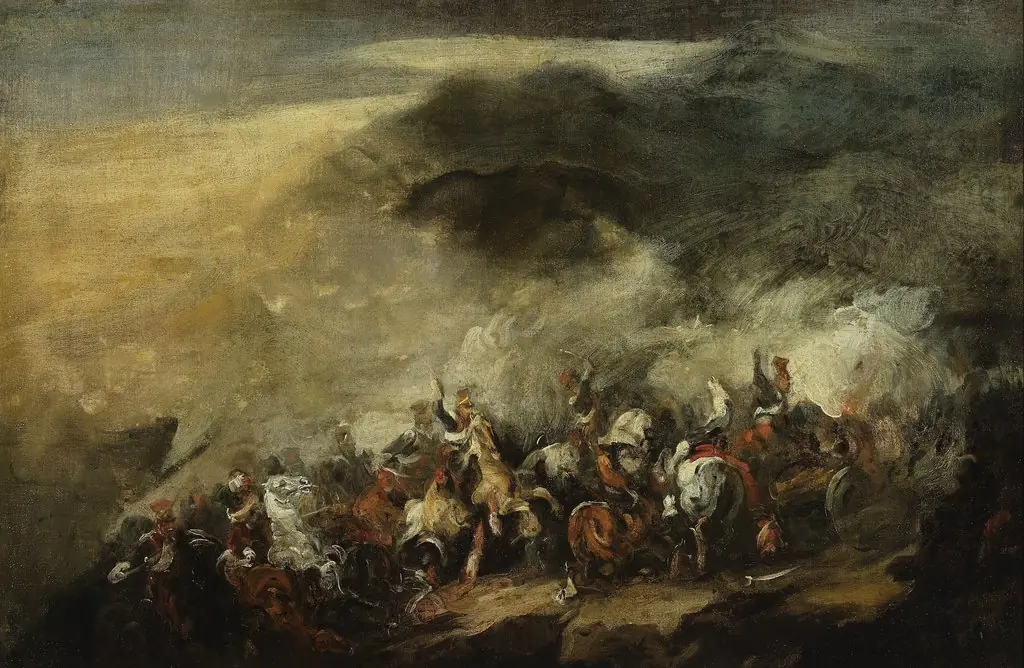 Battle of Somosierra
 Battle of Lithuanians with the Teutonic knights
 Portrait du sultan du Maroc
- The Combat of the Giaour and Hassan