Artwork
The Guest
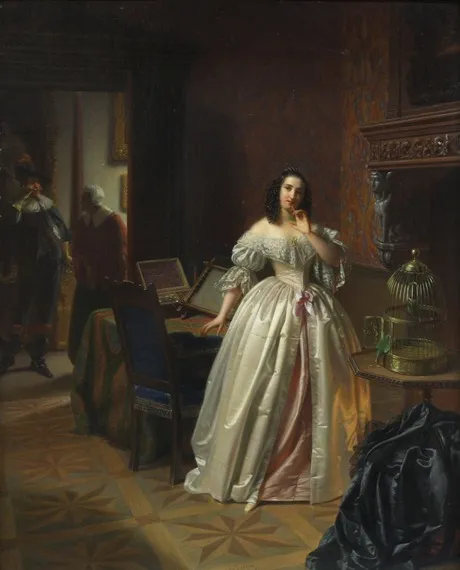
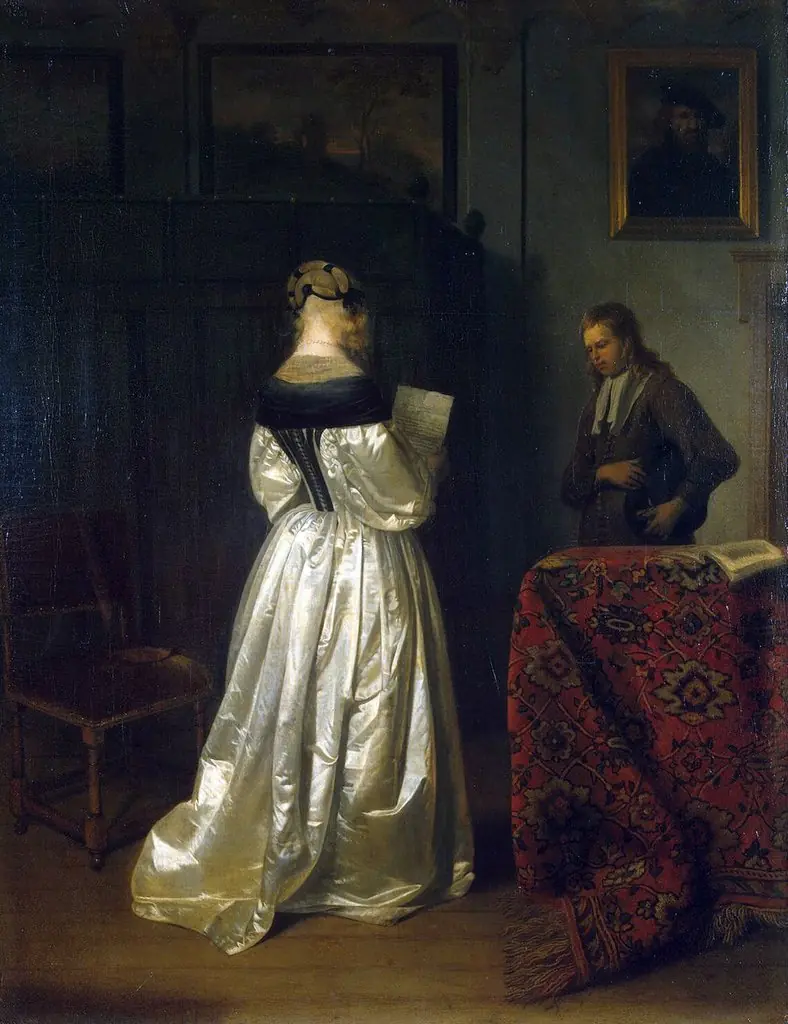
The Guest is an oil painting by the French Romanticist artist Eugène Delacroix. It dates from 1847 and is held in the collection of the National Gallery of Armenia.
About this work
Overview
Painted in 1847 on wood, The Guest is a work by Eugène Delacroix that exemplifies his Romantic approach to subject and form. Unlike the rigid clarity of Neoclassical tradition, the painting embraces emotional nuance and atmospheric depth. Its intimate scale and quiet composition reflect Delacroix’s shift toward personal, introspective themes in his later years.
Subject & Meaning
The absence of narrative action invites interpretation: the cage may symbolize restraint, or the woman’s stillness may evoke solitude.
The painting portrays a solitary woman in a white dress, standing still in a modest interior. A birdcage rests on the table beside her, and her gaze turns away from the viewer, suggesting inward reflection. The absence of narrative action invites interpretation: the cage may symbolize restraint, or the woman’s stillness may evoke solitude. The scene resists clear storytelling, favoring mood over event.
Technique & Style
Delacroix employed chiaroscuro to model form and deepen spatial illusion, with soft transitions between light and shadow. The woman’s dress, detailed with a red sash, contrasts subtly against the dim room, drawing attention without dominance. Brushwork is loose yet deliberate, emphasizing texture and volume over fine detail, echoing influences from Rubens and Venetian colorism.
History & Provenance
Created in 1847, the painting entered the collection of the National Gallery of Armenia at an unknown date, likely through acquisition or donation in the 20th century. Its presence there reflects broader Soviet-era efforts to assemble international art collections. No record of prior ownership or exhibition history is widely documented, and the work remained relatively obscure outside institutional circles.
Context
In the mid-1840s, Delacroix moved away from grand historical subjects toward quieter, domestic scenes. This shift aligned with his growing interest in psychological depth and the expressive potential of color. The Guest emerges from this period of introspection, coinciding with his studies of Eastern motifs and literary themes, though this work remains grounded in a European interior setting.
Legacy
Though not among Delacroix’s most widely reproduced works, The Guest illustrates his enduring engagement with light, emotion, and the quiet dignity of solitary figures. Its presence in the National Gallery of Armenia underscores its role as a bridge between Western Romanticism and Eastern European collections. The painting continues to be studied for its subtle interplay of atmosphere and restraint.
Artist & collection
Artist
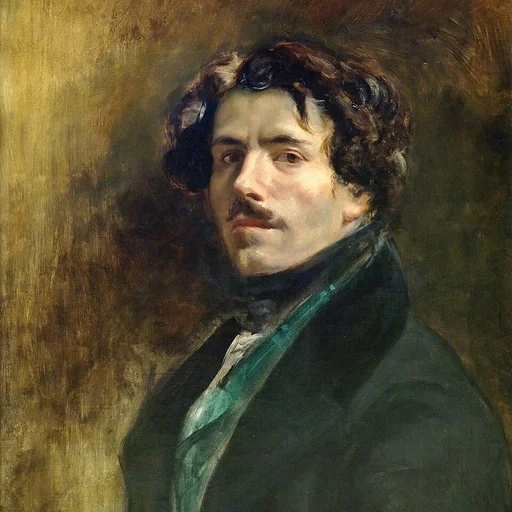
Ferdinand Victor Eugène Delacroix ( DEL-ə-krwah, -KRWAH; French:; 26 April 1798 – 13 August 1863) was a French Romantic artist who was regarded as the leader of the French Romantic school.

- The Dance
 Messenger
 The Young Savant Mother
 Portrait of Grand Princess Olga Nikolayevna (1822-1892)
 The Important Response
 Les Femmes Savantes
 Portret van Beatrix van Herreweghe
 Gerard van Honthorst Shows Amalia van Solms the Drawings by his Pupil Louise of Bohemia
 Portrait of Princess Ye. Golenishcheva-Kutuzova
 Josefa del Águila y Ceballos, later Marchioness of Espeja
 The Confession
 Vrouw met spiegel