Artwork
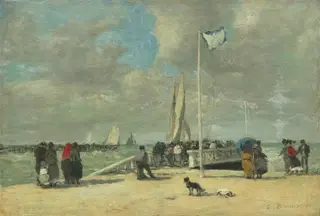
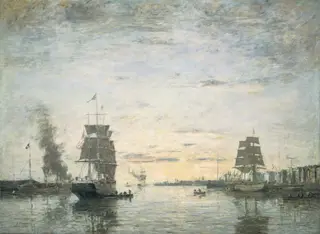
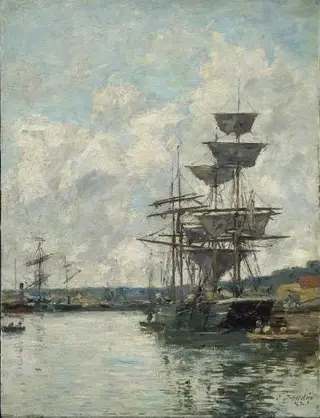
The dock at Le Havre
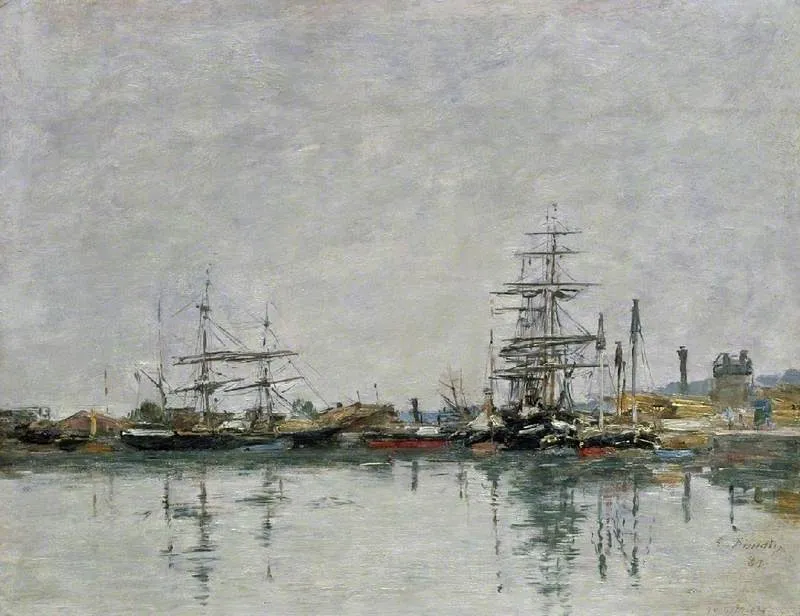
The dock at Le Havre is an oil painting by the Impressionist artist Eugène Louis Boudin. It dates from 1894 and is held in the collection of the Fitzwilliam Museum.
About this work
Overview
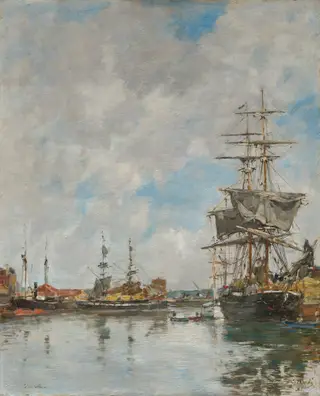
The dock at Le Havre is an 1894 oil painting by Eugène Louis Boudin, depicting a serene harbor scene in Le Havre, characterized by moored boats, surrounding buildings, trees, and an overcast sky casting diffused light.
Subject & Meaning
The painting focuses on the everyday beauty of maritime life, capturing the tranquility of a harbor at rest. The serene atmosphere and reflected water invite the viewer to appreciate the calmness of the scene.
Technique & Style
Boudin employed muted colors (blues, grays, browns) to enhance the tranquil mood. His Impressionist approach is evident in the soft, diffused lighting and the reflection of boats and sky on the water's surface.
History & Provenance
Created in 1894 during the Impressionist movement, the painting is now part of the Fitzwilliam Museum's collection.
Context
As an Impressionist painter known for coastal scenes, Boudin's work here reflects his skill in depicting skies and maritime life, typical of his outdoor genre paintings.
Artist & collection

Artist
Eugène Louis Boudin (French: ; 12 July 1824 – 8 August 1898) was one of the first French landscape painters to paint outdoors.