Artwork
Nativity
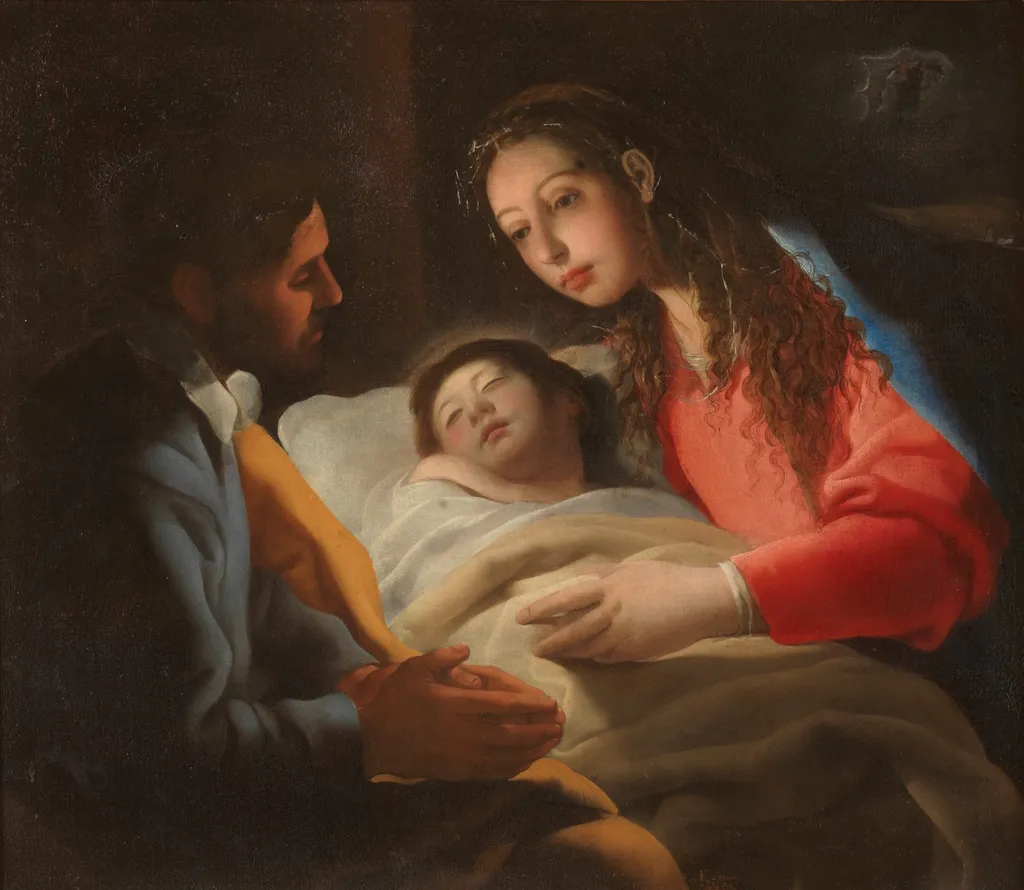
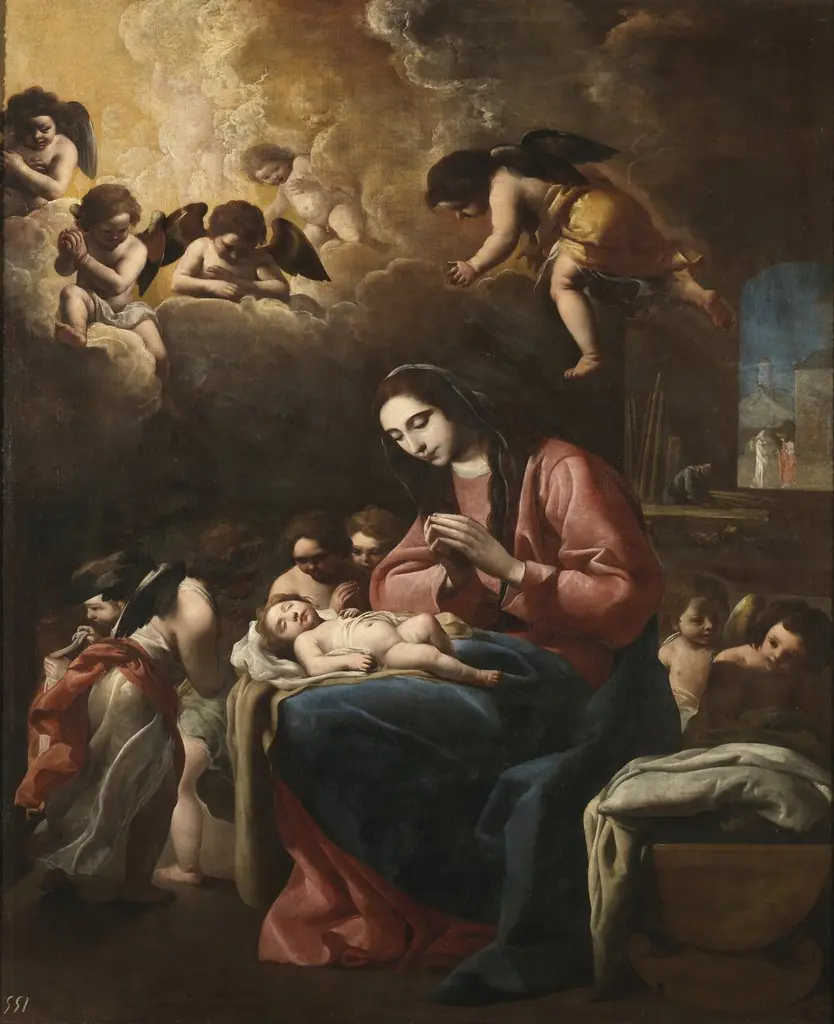
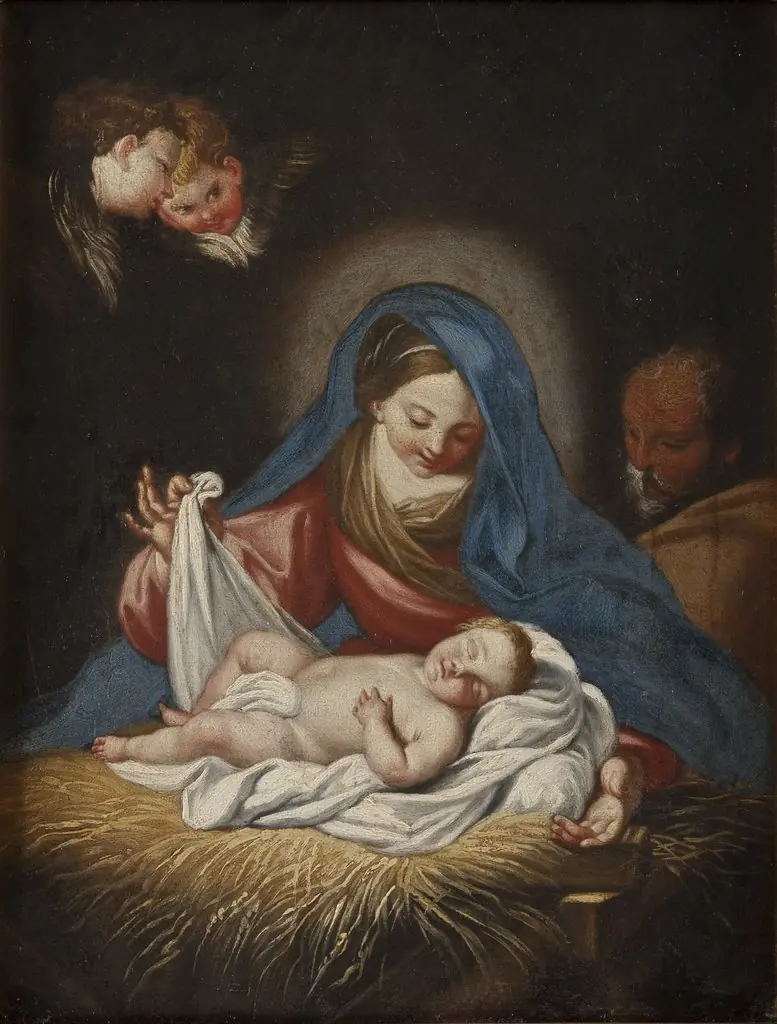
Nativity is an oil painting by the Early Baroque Italian artist Eugenio Caxés. It dates from 1610 and is held in the collection of the Museo del Prado.
About this work
Subject & Meaning
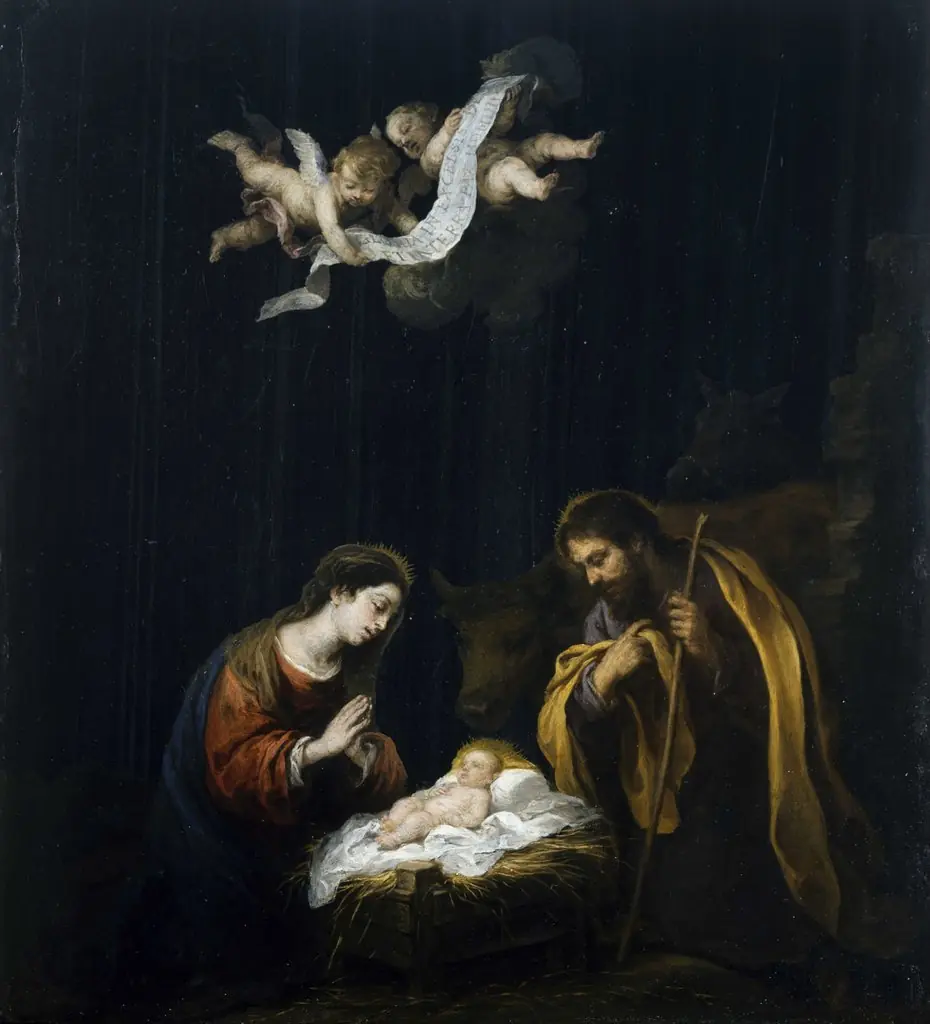
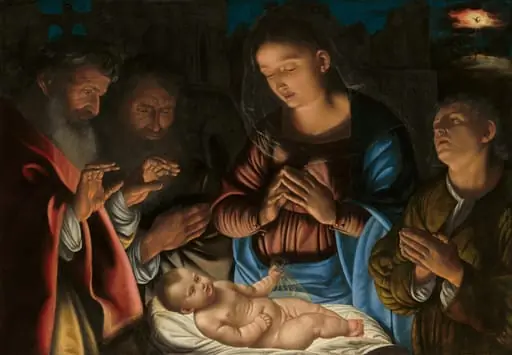
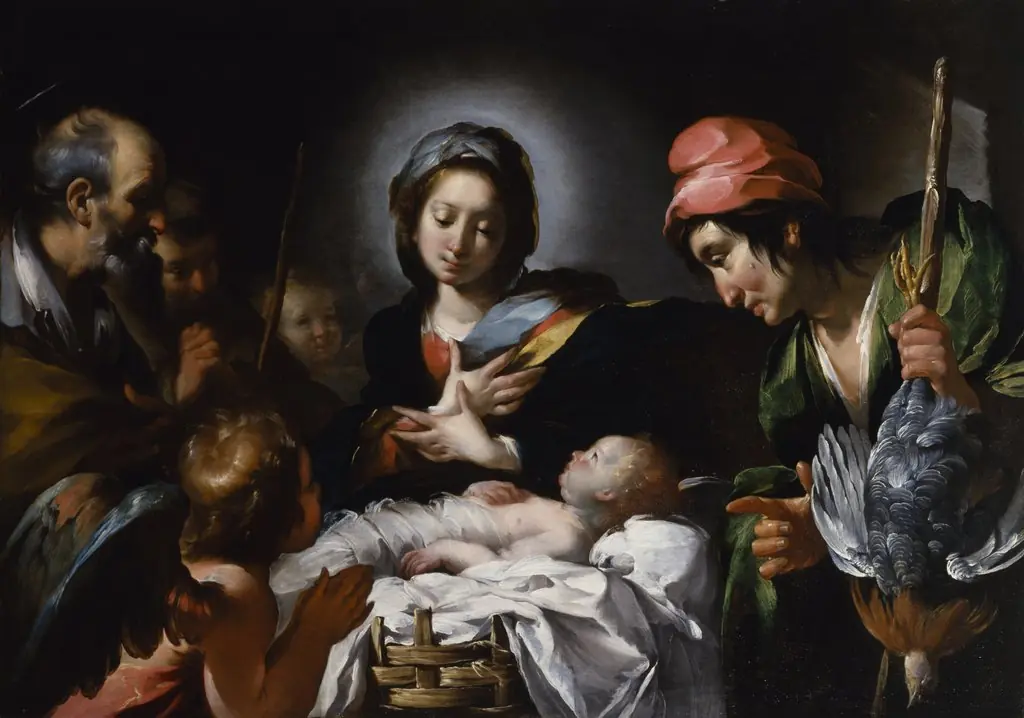
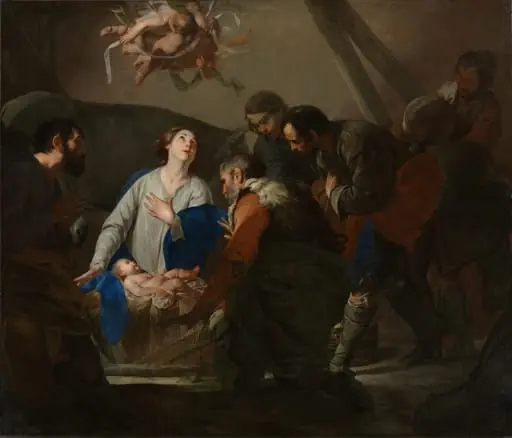
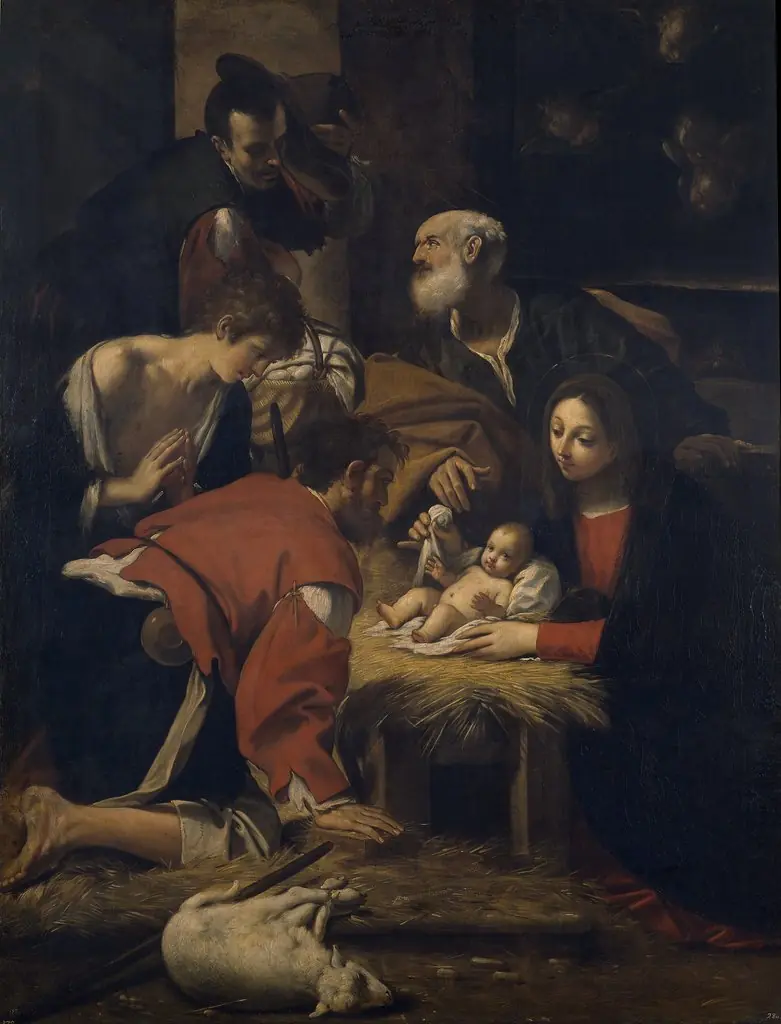
The painting depicts the Nativity of Jesus, showing the Christ Child in a manger surrounded by figures traditionally associated with the scene.
The painting depicts the Nativity of Jesus, showing the Christ Child in a manger surrounded by figures traditionally associated with the scene. Mary and Joseph are present, alongside shepherds and animals, while angels appear above, often interpreted as heralding the birth. The iconography aligns with Counter-Reformation religious art, emphasizing the humanity and divinity of Christ within a humble setting.
Symbolism includes the use of light and shadow to highlight sacred figures, reinforcing the spiritual significance of the event. The presence of angels underscores the divine announcement of the birth, while the manger itself symbolizes both humility and the Eucharist, themes resonant with contemporary Catholic theology.
Technique & Style
The work depicts the Nativity of Jesus, showing the infant Christ Child in a religious composition. Executed in oil paint on canvas, it measures 70.2 cm in height and 80.5 cm in width. The piece is housed in the Museo del Prado, where it remains on display.
The painting demonstrates the formal qualities of early 17th-century Spanish religious art, with careful handling of light and devotional subject matter.
History & Provenance
The painting Nativity was created by the Spanish Baroque artist Eugenio Caxés in 1610 as an oil on canvas work measuring 70.2 cm by 80.5 cm. It depicts the Christ Child in a religious scene and was painted for devotional purposes, though specific commission details are not documented. The artwork entered the collection of the Museo del Prado, where it remains part of the museum's holdings.
The painting has been continuously owned by the Museo del Prado since its creation, establishing a straightforward provenance rooted in institutional acquisition rather than private sales or multiple ownership transfers.
The painting is housed in the Museo del Prado, where it is catalogued under the inventory number P00968. It has been part of the museum’s collection since its acquisition and was featured in the 2010 exhibition "Masterpieces of Spanish Baroque Painting," which showcased works from the museum’s 17th‑century religious paintings.
Legacy
Eugenio Caxés' 1610 Nativity, housed in the Museo del Prado, contributed to the religious painting tradition of early 17th-century Spain. Its composition and devotional focus influenced later artists in the Iberian Baroque movement, particularly in their treatment of the Christ Child. The work remains part of the Prado's collection and is recognized as an example of Spanish Counter-Reformation art.
Overview
Eugenio Caxés’ Nativity, executed in oil around 1610, presents a nocturnal scene centered on the infant Jesus. The composition is confined to three figures illuminated by a subdued light source, set against a predominantly dark backdrop that hints at a faint blue horizon. The work resides in the collection of the Museo del Prado, where it is displayed as part of the early‑17th‑century Spanish religious repertoire.
Context
The work aligns with the Counter‑Reformation emphasis on emotionally resonant religious imagery, intended to inspire piety through intimate, accessible scenes. Caxés, active in Madrid, absorbed influences from Italian tenebrism while adapting them to Spanish tastes, contributing to a broader movement that favored stark lighting and focused narrative clarity in sacred art.
Own this work as a print
Artist & collection