Artwork
The Adoration of the Magi
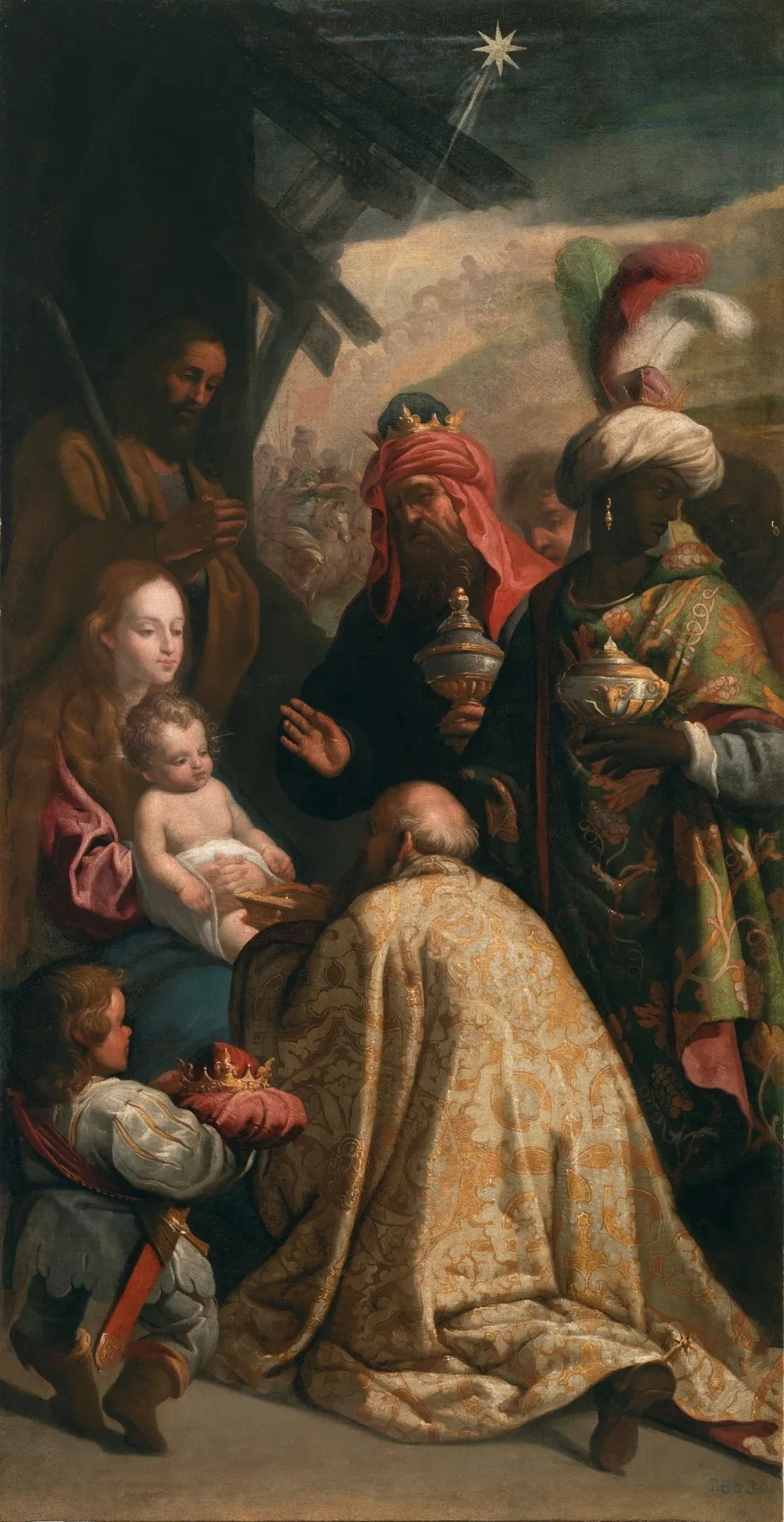
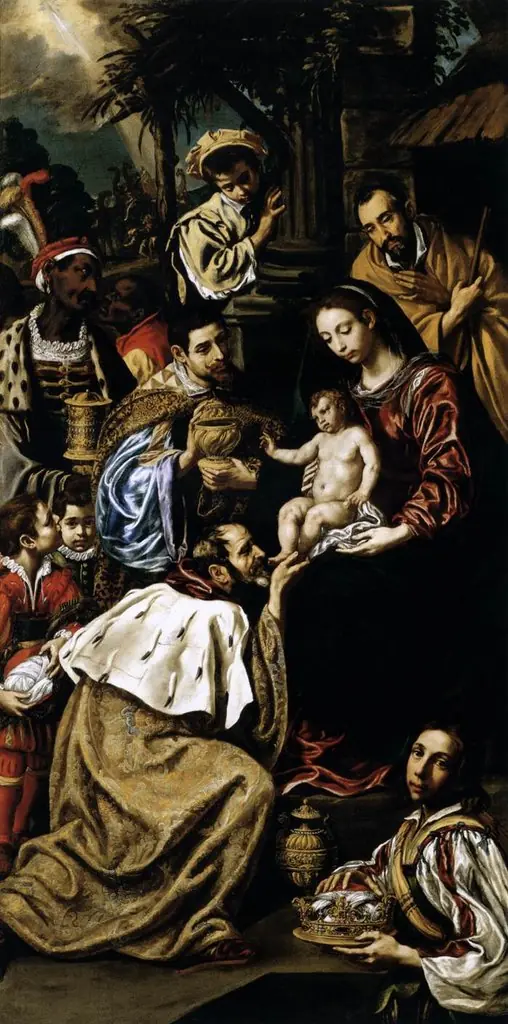
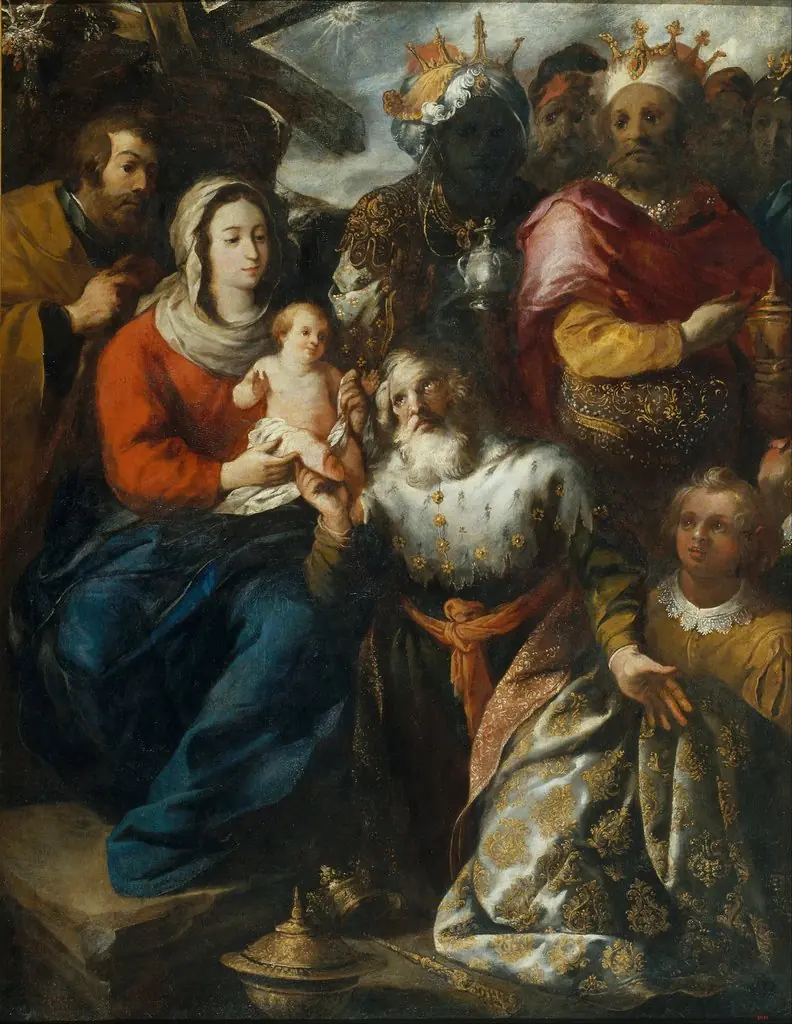
The Adoration of the Magi is an oil painting by the Early Baroque Italian artist Eugenio Caxés. It is held in the collection of the Museo del Prado.
About this work
Subject & Meaning
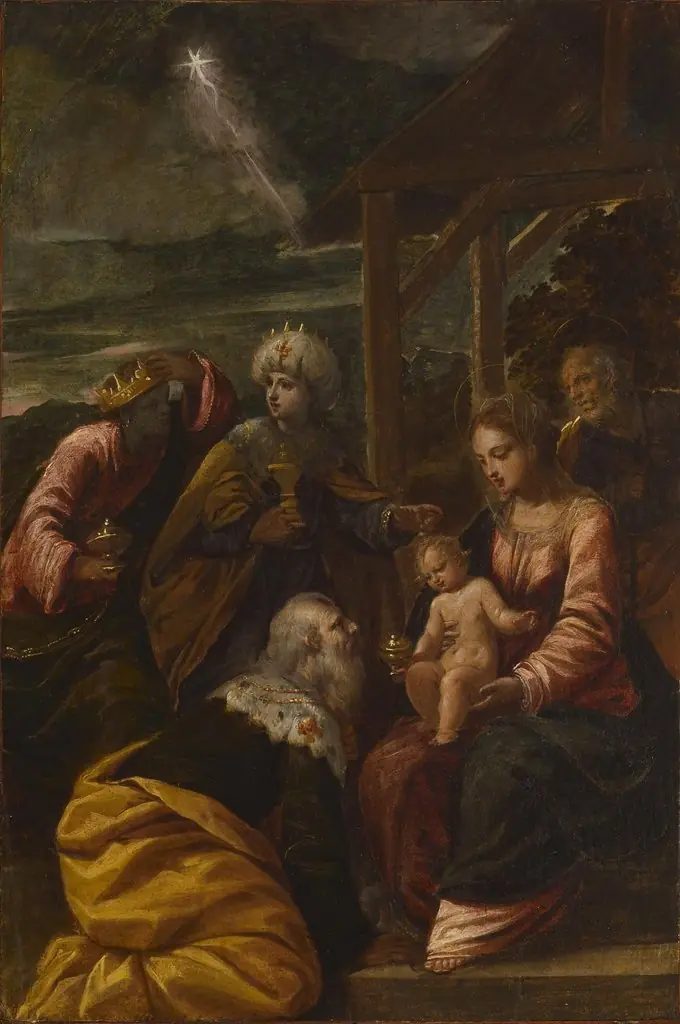
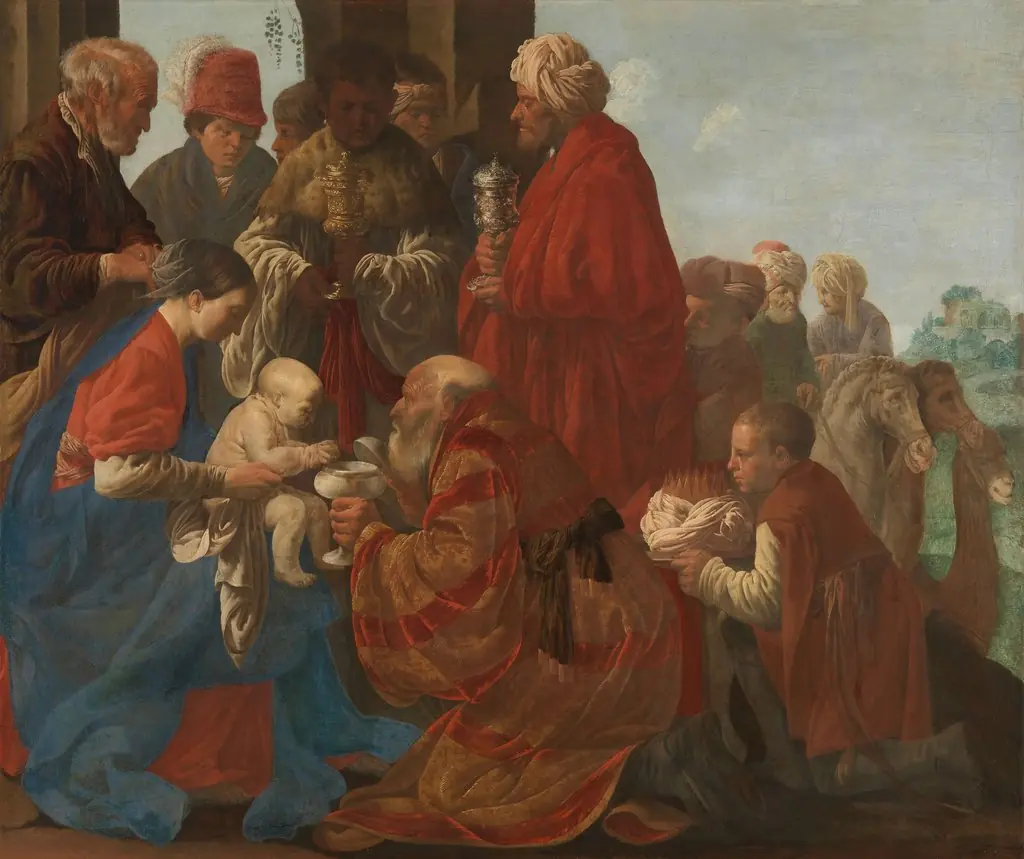
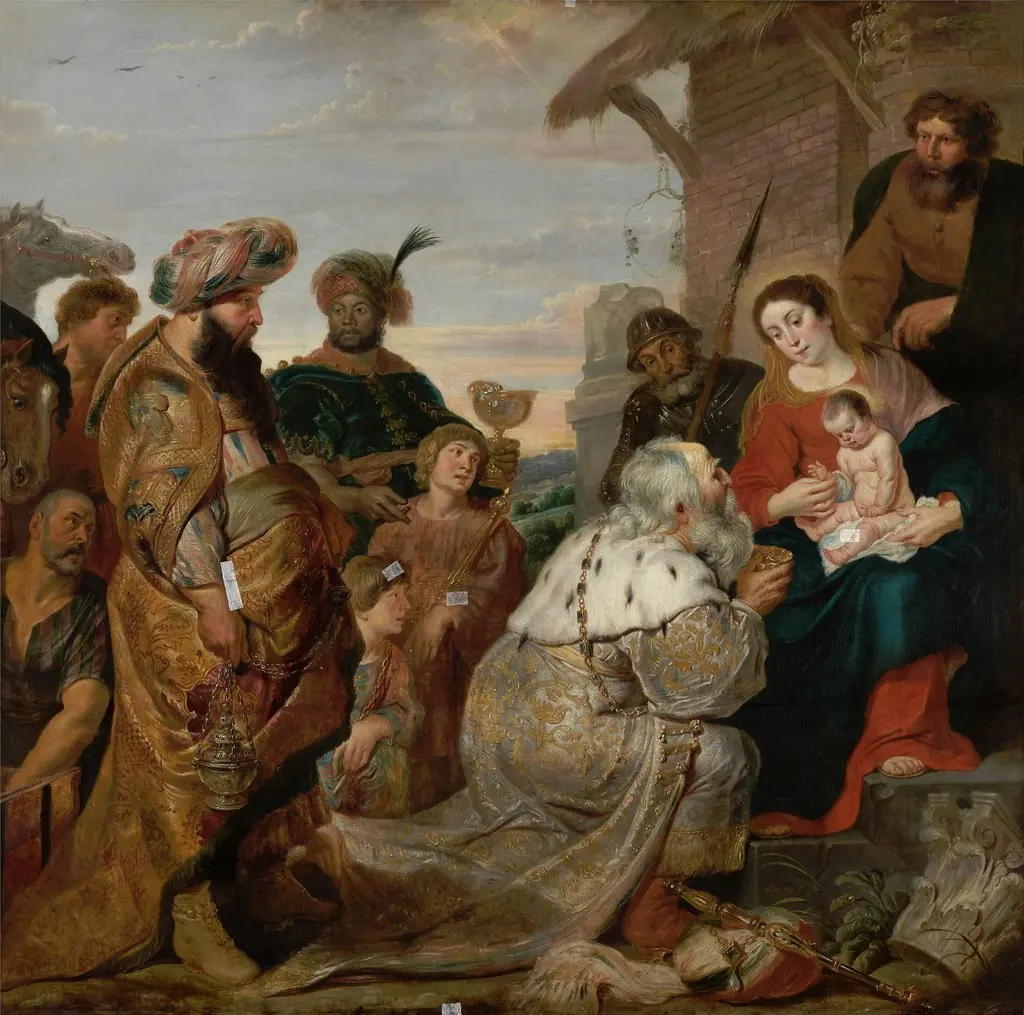
The scene centers on the infant Jesus seated on Mary’s lap, receiving homage from the eldest magus kneeling in richly colored garments.
The work depicts the biblical episode of the Adoration of the Magi, in which three wise men present gifts to the Christ Child. The scene centers on the infant Jesus seated on Mary’s lap, receiving homage from the eldest magus kneeling in richly colored garments. The two other magi stand nearby, one holding a gold vessel, the other presenting frankincense, while a retinue of attendants and a draped horse occupy the background.
The composition emphasizes reverence and majesty, with the magi’s varied costumes and the presence of gifts underscoring themes of revelation, worship, and the global recognition of Christ’s sovereignty.
Symbolically, the gold, frankincense, and myrrh offered by the magi prefigure Christ’s roles as king, deity, and sacrificial victim, while the inclusion of diverse figures and exotic details reflects the recognition of Jesus beyond the Jewish community.
Technique & Style
Eugenio Caxés executed The Adoration of the Magi in 1650 using oil paint applied to a canvas support. The work measures 195 cm in height and 100 cm in width, presenting a vertical format typical for religious altarpieces of the period. As a religious painting depicting the adoration of the Magi and the Christ Child, the composition utilizes the medium to render the figures and the crown with the characteristic handling of 17th-century Spanish Baroque art. The piece remains part of the collection at the Museo del Prado.
History & Provenance
The Adoration of the Magi was created by Eugenio Caxés in 1650, executed in oil paint on canvas. The work is classified within the religious genre and centers on the Adoration of the Magi as its main subject, depicting the Christ Child and a crown among its iconographic elements. The painting is held in the collection of the Museo del Prado, where it remains located.
The painting is housed in the Museo del Prado, where it is catalogued under inventory number P003180. It was created in 1650 and has remained in the museum's collection since its acquisition, forming part of the permanent display of European religious art.
Overview
The Adoration of the Magi is a 17th-century oil painting by Eugenio Caxés, dated to circa 1650, now in the collection of the Museo del Prado.
Context
Painted during the Baroque period, the work reflects the era's artistic tendencies, including the use of chiaroscuro and emotionally charged scenes, common in religious artworks of the time.
Legacy
As part of the Museo del Prado's collection, The Adoration of the Magi contributes to the museum's extensive holdings of European religious art, offering insights into 17th-century Spanish Baroque painting practices.
Artist & collection