Artwork
Leda and the swan
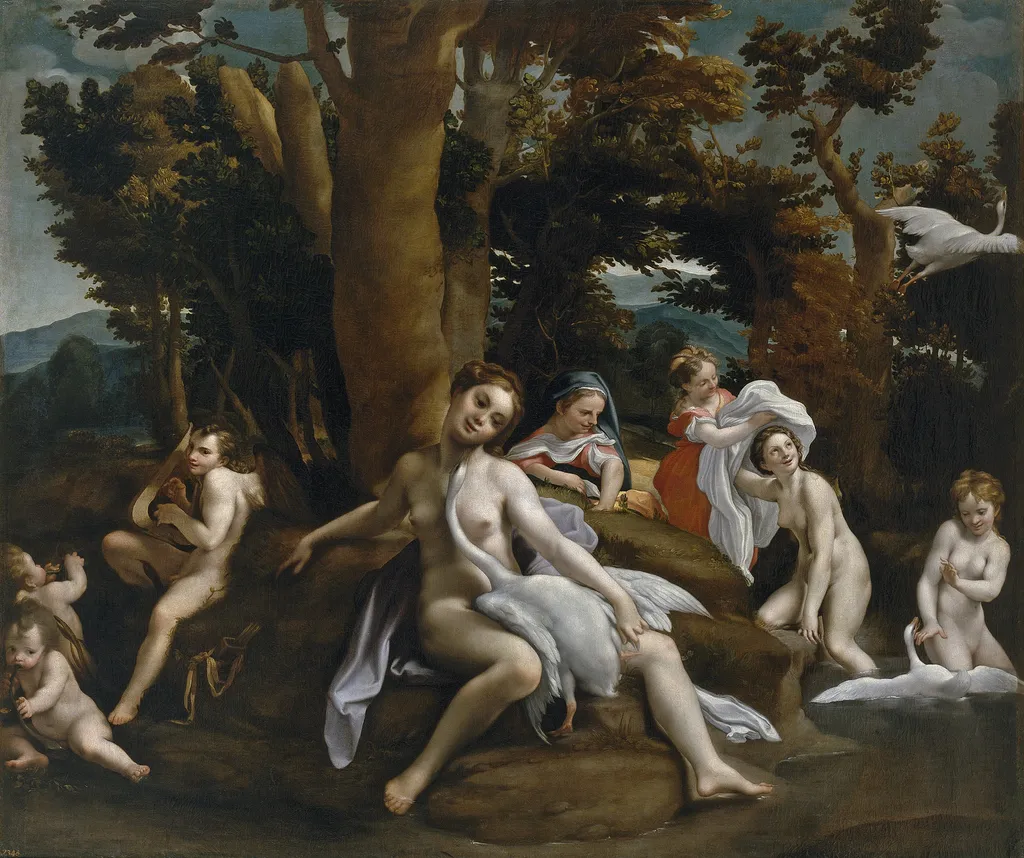
Leda and the swan is an oil painting by the Early Baroque Italian artist Eugenio Caxés. It dates from 1604 and is held in the collection of the Museo del Prado.
About this work
Subject & Meaning
Leda and the Swan depicts the mythological encounter between Leda, a queen of Sparta, and the god Zeus, who approached her in the form of a swan.
Leda and the Swan depicts the mythological encounter between Leda, a queen of Sparta, and the god Zeus, who approached her in the form of a swan. The subject, drawn from Greek mythology and famously treated by ancient sources, gave artists an opportunity to explore themes of transformation, divine seduction, and erotic power. In Caxés's treatment, the narrative is rendered as a mythological painting, situating the work within the broader tradition of Ovidian and Ledean iconography that flourished in early modern European art.
The pairing of a mortal woman with a swan carried layered symbolic meaning: the swan signified Zeus's disguise, while the union was said to produce offspring including Helen of Troy and the Dioscuri, linking the image to narratives of beauty, destiny, and the origins of mythic heroism. As a mythological subject, the composition belongs to a long visual tradition that used the Leda story to engage with classical learning and to stage the body at the intersection of the human and the divine.
Technique & Style
The painting is executed in oil on canvas and measures 165 cm in height by 193 cm in width. Executed in 1604, the work employs a fluid handling characteristic of early seventeenth-century Spanish oil technique, with smooth blending of flesh tones and delicate modeling of drapery to articulate form. The composition emphasizes the mythological subject’s dramatic moment through dynamic figure arrangement and a restrained palette dominated by warm ochers and muted earth tones.
Stylistically, the handling aligns with Counter-Reformation taste, favoring clarity and decorum while preserving a naturalistic approach to anatomy and the swan’s plumage.
History & Provenance
The painting Leda and the Swan was created by Eugenio Caxés in 1604. Executed in oil on canvas, the work measures 165 cm in height and 193 cm in width. Historical records indicate that the piece was once owned by Ferdinand VII of Spain.
It is currently held in the collection of the Museo del Prado. The artwork depicts the mythological subject of Leda and the Swan.
The painting Leda and the Swan by Eugenio Caxés (1604) is housed in the Museo del Prado in Madrid, where it remains part of the museum's collection. It entered the collection of the Spanish monarchy through King Ferdinand VII and has been displayed within the museum's galleries as part of its permanent display of Spanish Renaissance works.
Context
Eugenio Caxés painted Leda and the Swan in 1604, a mythological oil work now housed in the Museo del Prado, where it remains part of the Spanish royal collection originally assembled by Ferdinand VII. The painting depicts the classical legend of Leda's union with a swan, rendered in the Baroque style characteristic of early Spanish Golden Age art. Its subject aligns with mythological themes popular in Counter-Reformation Iberia, emphasizing sensuality and divine transformation.
Art historians regard Caxés' treatment of the theme as a significant example of mythological narrative in Spanish painting of the period, situating his work within broader European interpretations of the Leda motif while highlighting the influence of Italian artistic models on Iberian artists of his generation. The composition's dynamic movement and chiaroscuro reflect stylistic developments in late Renaissance art across the Mediterranean.
Overview
Leda and the swan is a 1604 oil painting by Eugenio Caxés, held at the Museo del Prado. It is a representation of a figure from mythology.

Own this work as a print
Artist & collection