Artwork
St. Stephen the Martyr
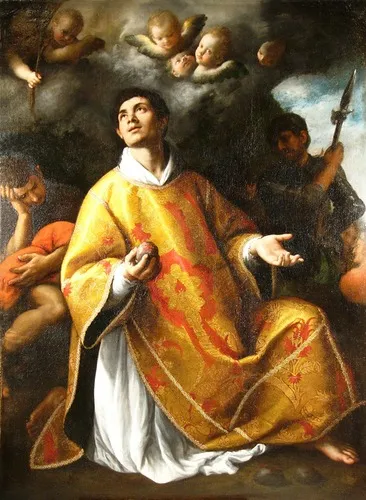
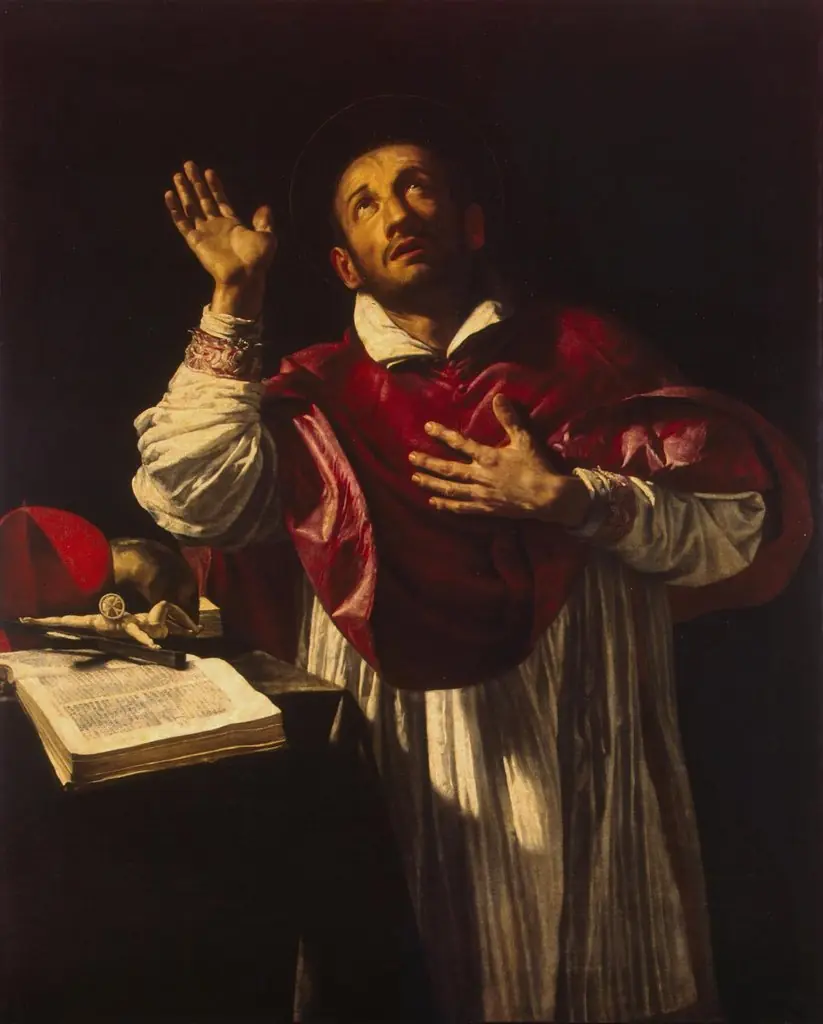
St. Stephen the Martyr is an oil painting by the Early Baroque Italian artist Fabrizio Santafede. It dates from 1607 and is held in the collection of the Museum of Fine Arts, Budapest.
About this work
Overview
Created circa 1607 by the Neapolitan artist Fabrizio Santafede, this oil painting portrays the early Christian martyr Saint Stephen. The work is part of the Museum of Fine Arts in Budapest’s collection and exemplifies Santafede’s religious commissions, particularly altarpieces, produced during the transition from late Mannerism to early Baroque in southern Italy.
Subject & Meaning
The composition shows a kneeling figure in a yellow robe trimmed with red, clasping a stone in his right hand while his left palm is extended upward. The gesture and the stone allude to Stephen’s role as the first deacon and his martyrdom by stoning, conveying a sense of pious surrender and spiritual resolve.
Technique & Style
Executed in oil on canvas, the painting employs strong chiaroscuro, contrasting the illuminated figure against a dark, cloud‑filled sky.
Executed in oil on canvas, the painting employs strong chiaroscuro, contrasting the illuminated figure against a dark, cloud‑filled sky. Angelic cherubs and a secondary figure bearing a spear populate the background, adding narrative depth. Santafede’s handling of light and flesh tones reflects the early Baroque emphasis on realism and emotional immediacy, moving away from the artificiality of contemporary Mannerist works.
History & Provenance
Fabrizio Santafede, active in Naples during the late 16th and early 17th centuries, produced this work as part of his series of devotional images for churches. The painting entered the Museum of Fine Arts, Budapest, through acquisition in the 20th century, where it remains on display as a representative example of Santafede’s contribution to post‑Mannerist religious art.
Artist & collection
Artist
Fabrizio Santafede or Fabrizio Santaféde (c. 1560–1623/28) was an Italian painter known for his altarpieces. He painted in a style that rejected the Mannerism popular in the Naples of his time and evident in the works of Francesco Curia.

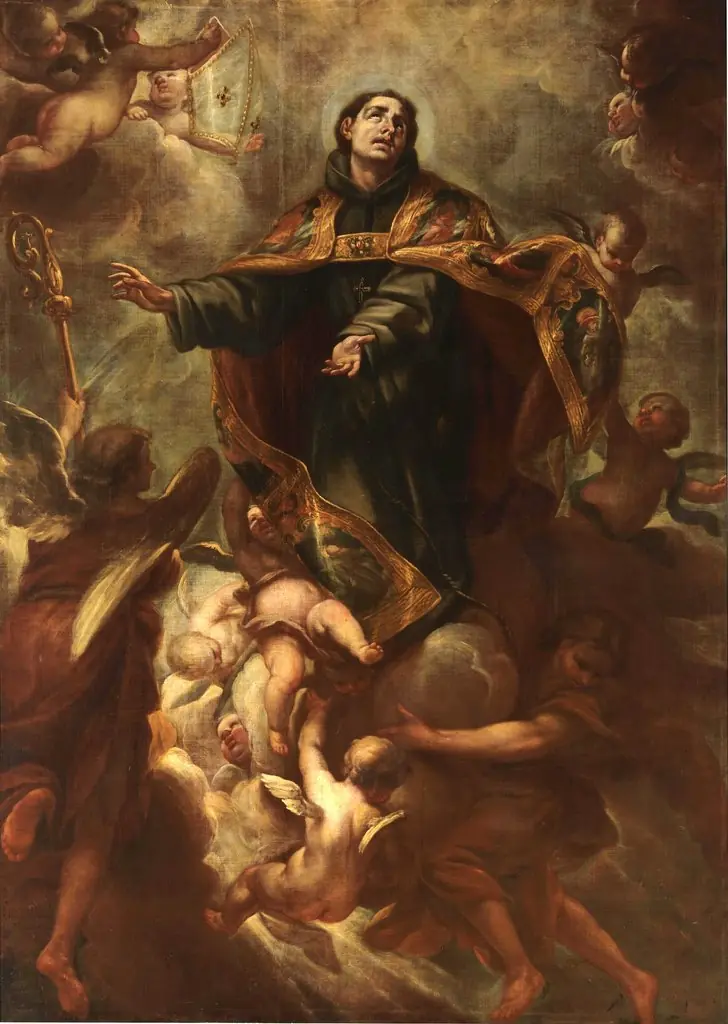
- Saint Louis Bishop in Glory
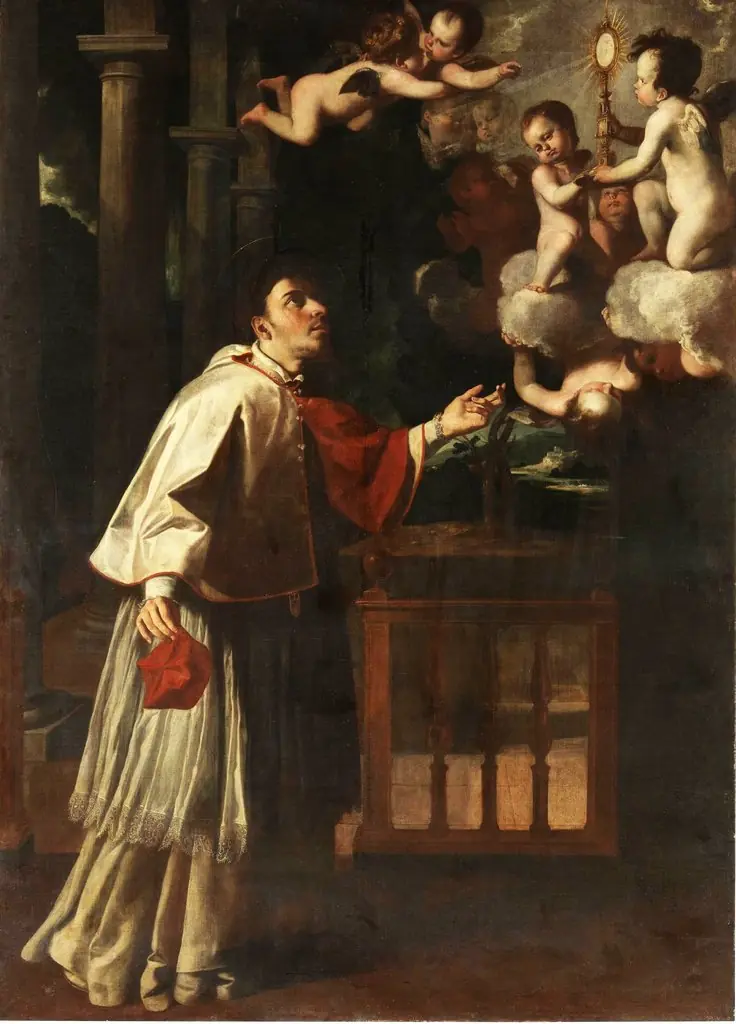 St. Raymond Nonnatus
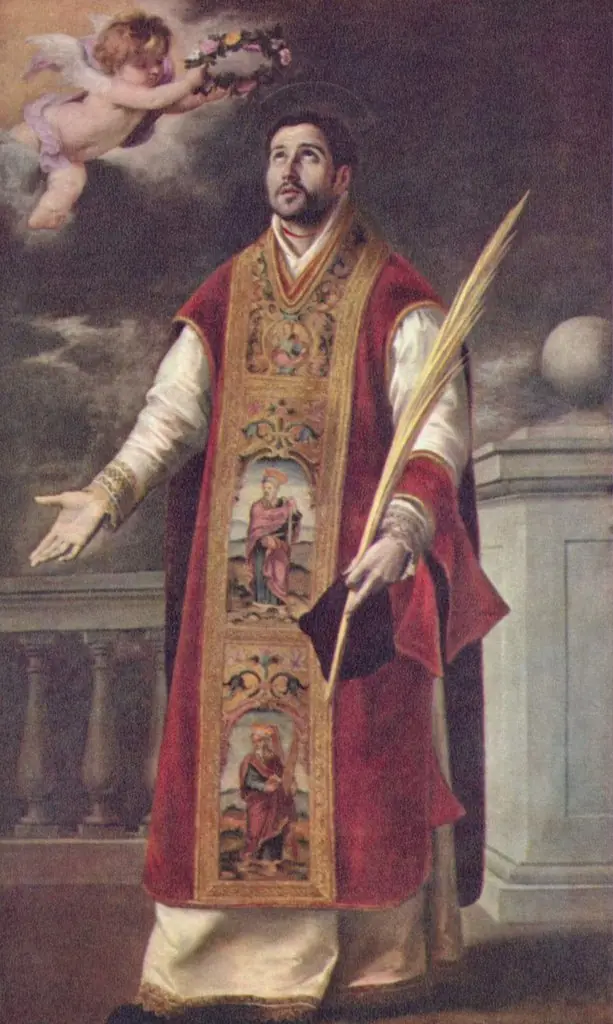 Saint Roderick
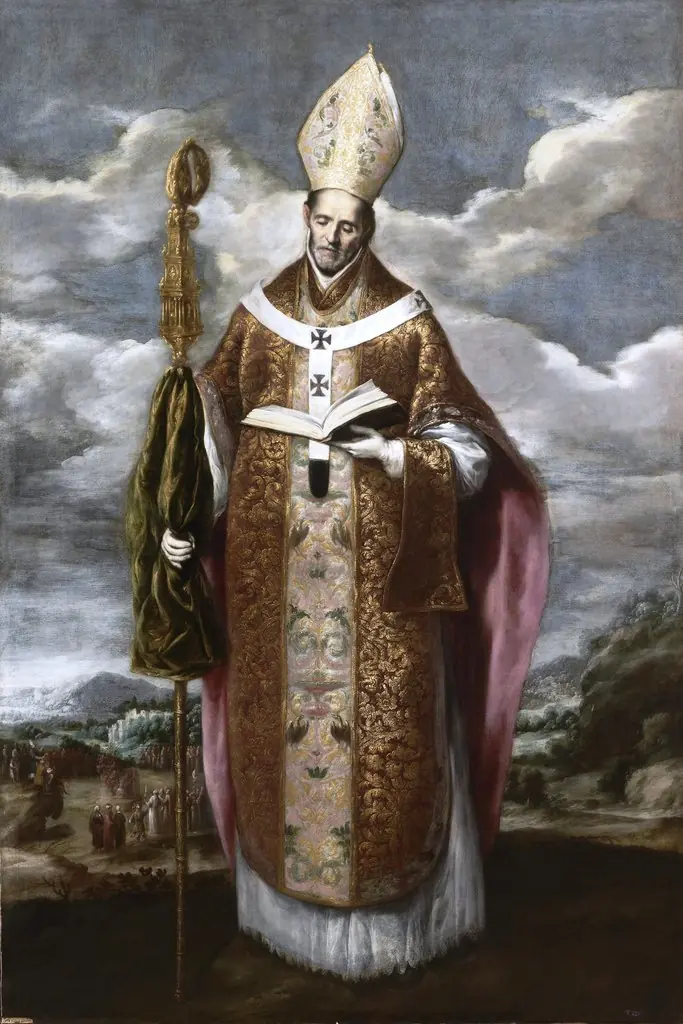 Saint Eugenius
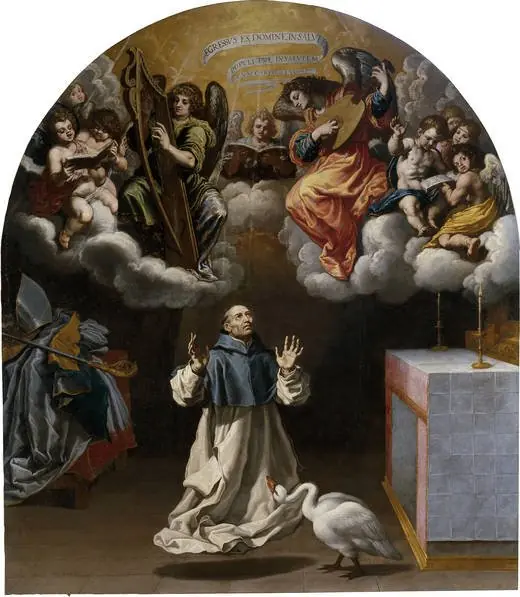 Musician Angels Appear to Saint Hugo of Lincoln
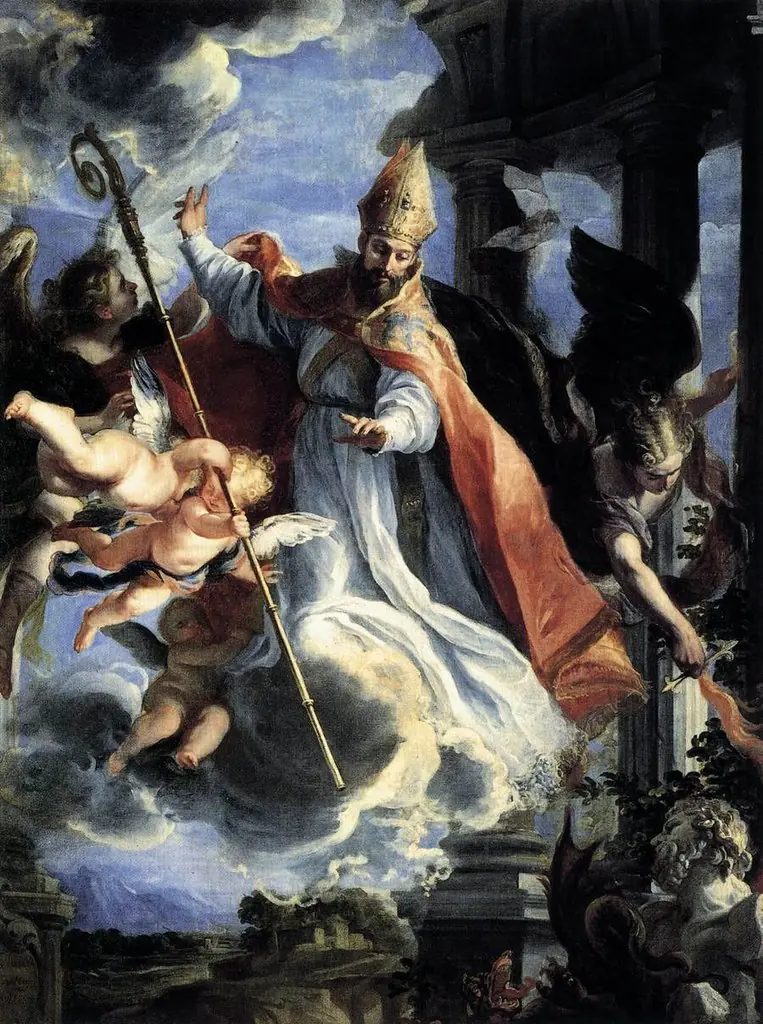 The Triumph of Saint Augustine
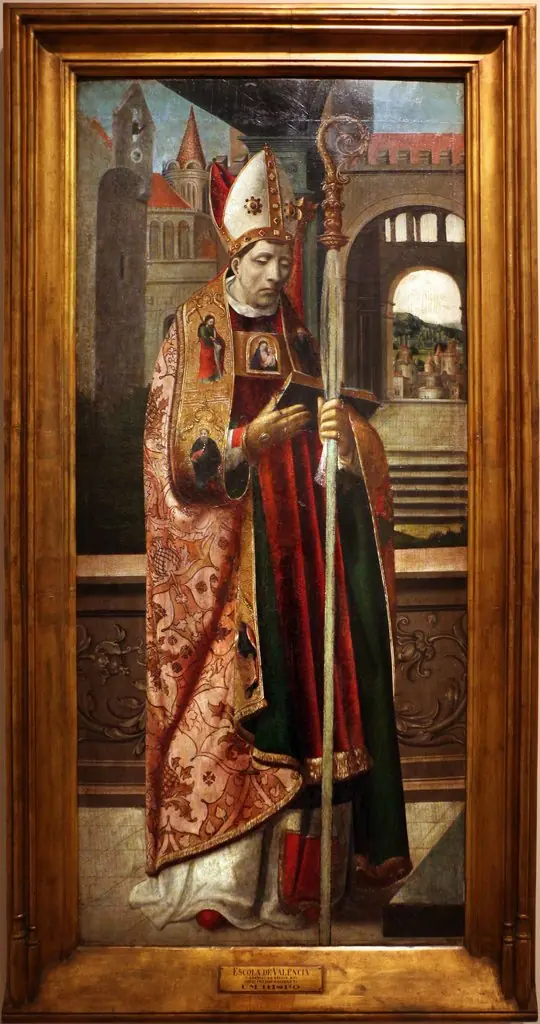 due vescovi
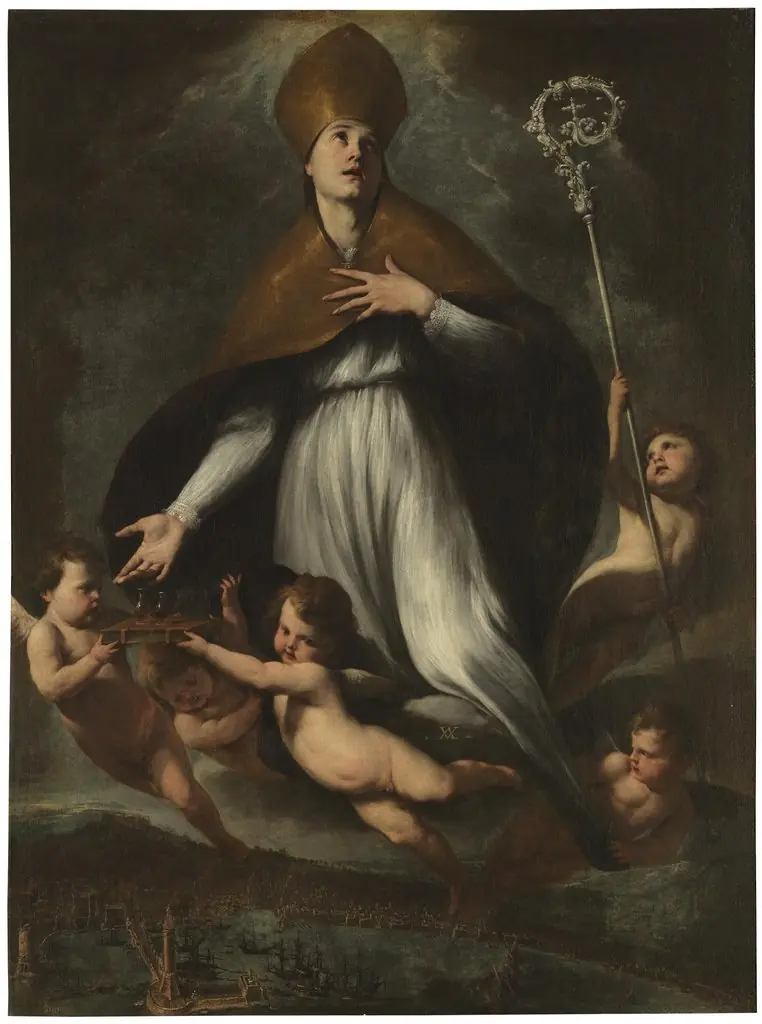 The ascension of Saint Gennaro
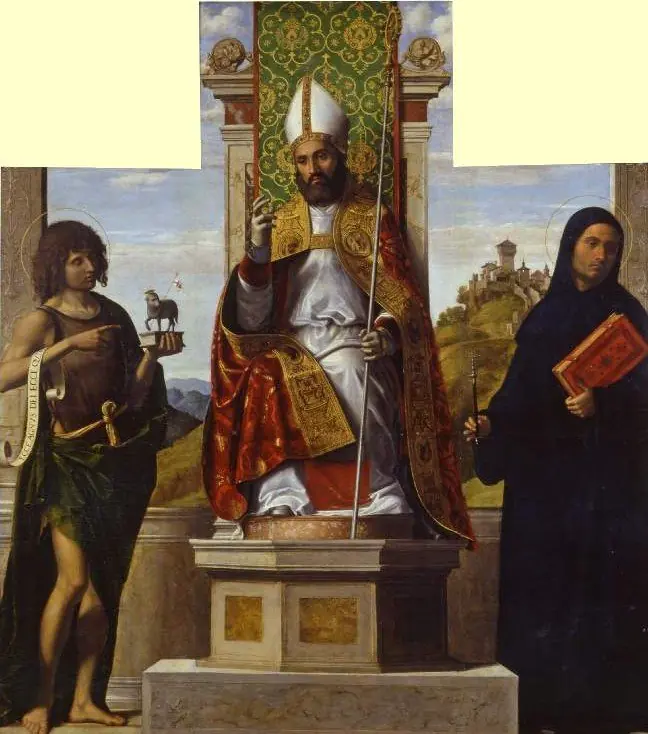 Saint Lanfranc Enthroned Between Saints John the Baptist and Liberius
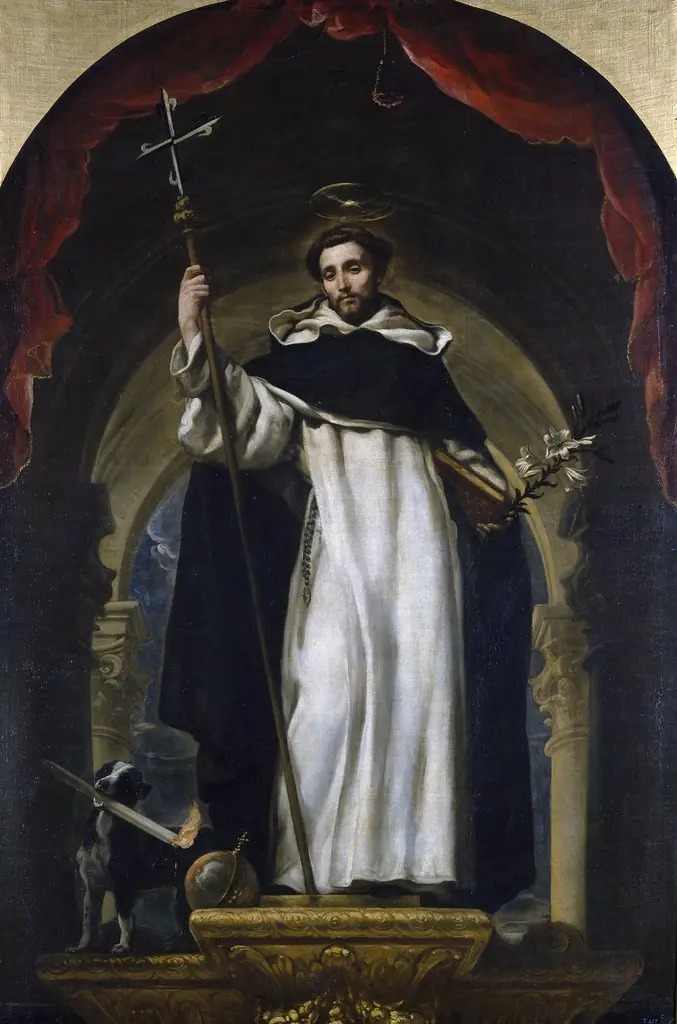 Saint Dominic of Guzmán
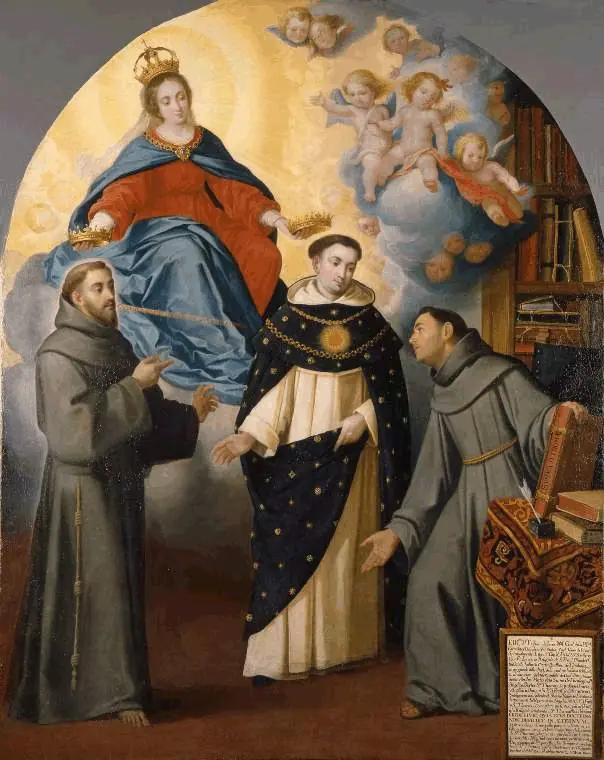 The Vision of Fray Lauterio
 St Carlo Borromeo