Artwork
Saint Eugenius
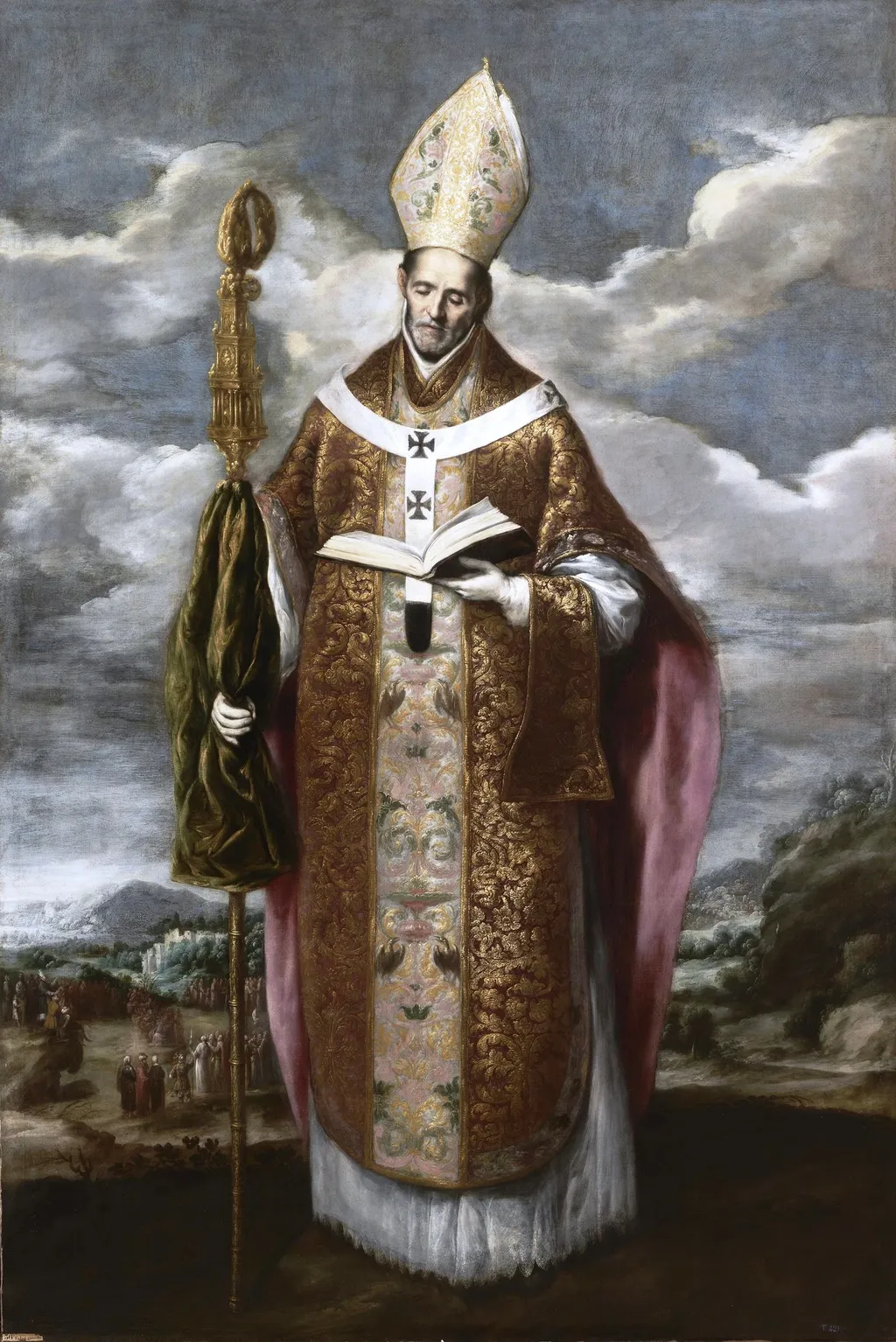
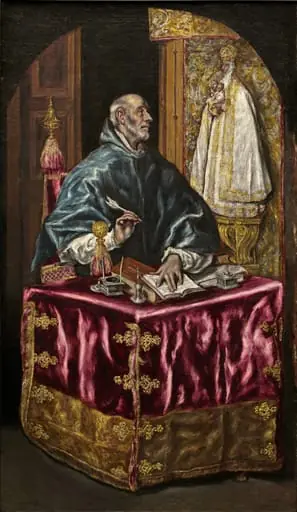
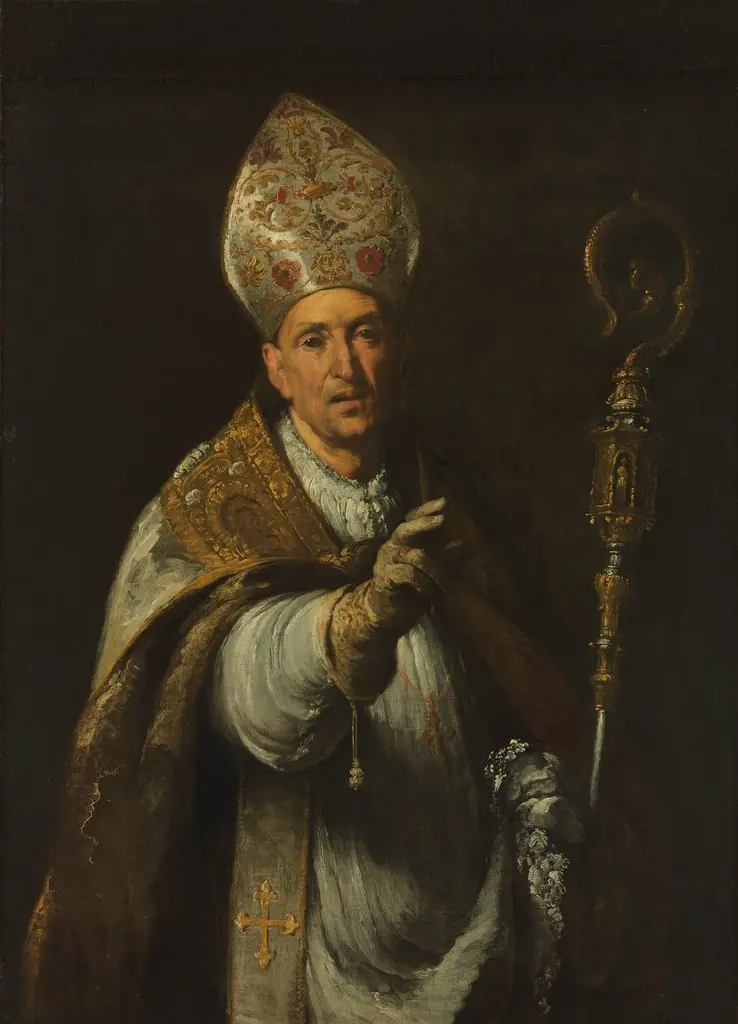
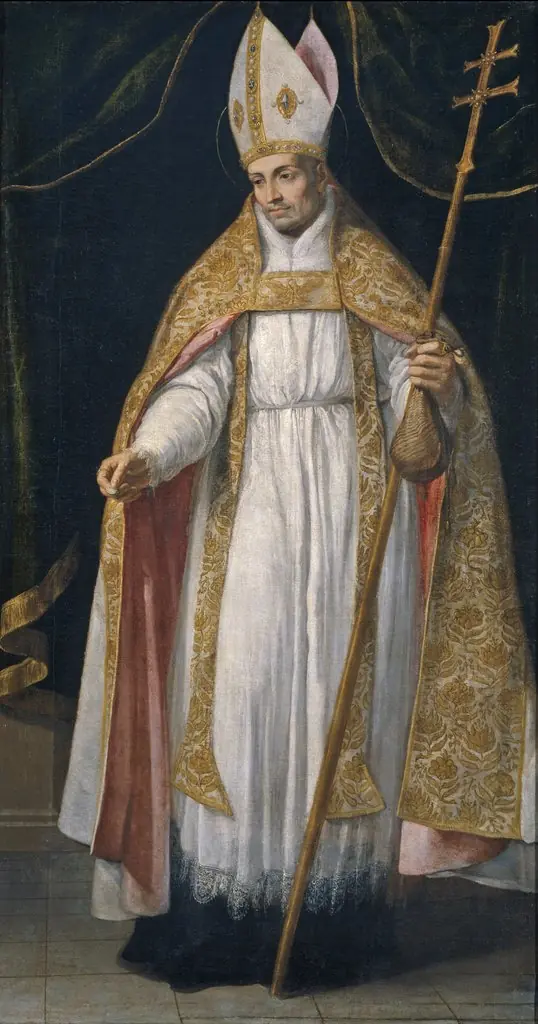
Saint Eugenius is an oil painting by the Early Baroque Italian artist El Greco. It is held in the collection of the Museo del Prado.
About this work
Subject & Meaning
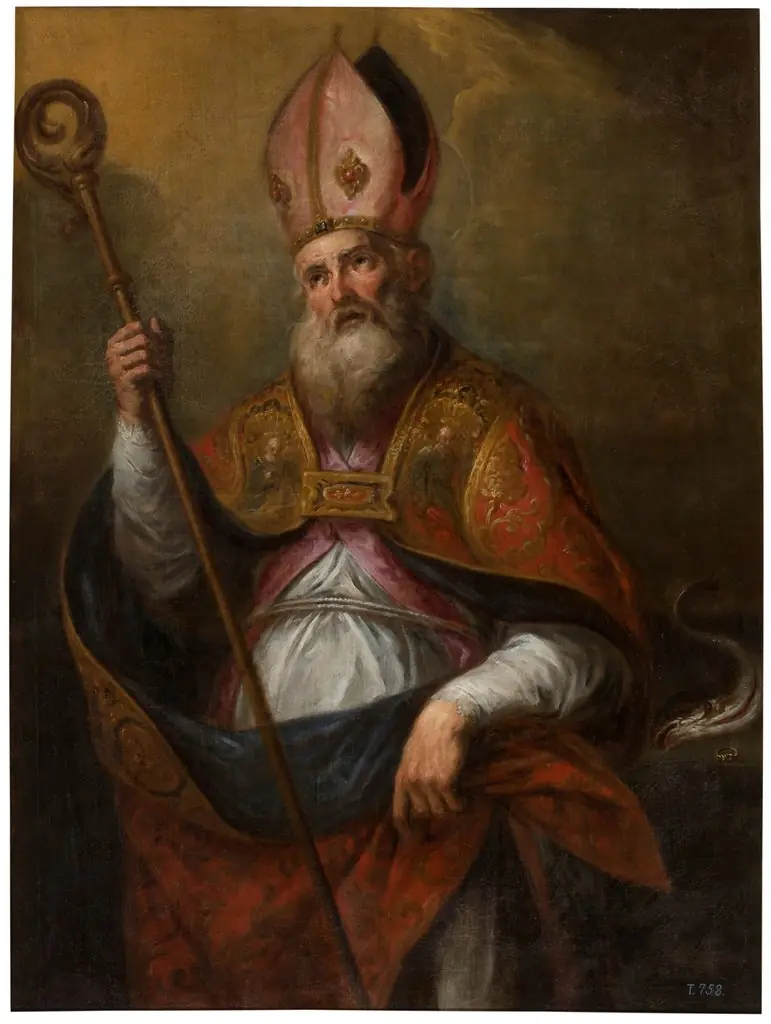
The painting depicts Saint Eugenius of Carthage, a Christian saint, shown in the conventions of Counter-Reformation religious portraiture.
The painting depicts Saint Eugenius of Carthage, a Christian saint, shown in the conventions of Counter-Reformation religious portraiture. According to the catalogue record, the work is based on El Greco's earlier composition of Saint Ildefonso of Toledo, indicating that the artist reused a devotional formula in which a standing cleric-saint is presented to the viewer in a frontal, hieratic pose.
Among the attributes recorded for the figure, a book appears in the imagery, functioning as a standard iconographic marker of a bishop-saint's learning, preaching, and defense of the faith. The work belongs to the religious genre and is executed in oil on canvas, a format El Greco repeatedly used for monumental single-saint commissions intended for devotional settings.
By adapting the Ildefonso prototype for Eugenius, El Greco transferred the visual rhetoric of episcopal authority and theological erudition from one Spanish church father to another, producing a portrait that represents both the saint's individual identity and the broader tradition of learned bishop-saints venerated in the Spanish Church.
Technique & Style
The work is an oil painting executed on canvas, measuring 241 cm in height by 162.5 cm in width. It depicts Saint Eugenius holding a book and draws on the iconography of Saint Ildefonso of Toledo. The composition features a dark-toned figure illuminated from the left, with a restrained palette of earth tones and subtle chiaroscuro that emphasizes the saint’s contemplative expression.
The brushwork is precise yet fluid, characteristic of El Greco’s late period, and the surface shows signs of careful handling consistent with its preservation in the Museo del Prado.
History & Provenance
The work dates to 1634 and was painted in oil on canvas with dimensions of 241 × 162.5 cm.
The painting depicts Saint Eugenius of Carthage and was recorded in the collections of the Museo de la Trinidad before entering the Museo del Prado. The Prado’s record identifies the composition as based on an earlier depiction of Saint Ildefonso of Toledo, situating it within El Greco’s late religious production.
Saint Eugenius is held in the Museo del Prado in Madrid. According to the collection record, the work is associated with both the Museo del Prado and the Museo de la Trinidad, with the Prado identified as its present location. The painting, executed in oil on canvas and dated 1634, entered the Prado's holdings as part of the transfer of works from the dissolved Museo de la Trinidad, a nineteenth-century Spanish institution whose collections were incorporated into the national museum.
No specific inventory or accession number is recorded in the available sources, and no exhibition history beyond its institutional custody is documented.
No specific inventory or accession number is recorded in the available sources, and no exhibition history beyond its institutional custody is documented.
Context
The painting Saint Eugenius by El Greco, completed in 1634, occupies a significant position within the artist's mature religious output and his broader Spanish Baroque context. It forms part of a series depicting Saint Ildefonso of Toledo, reflecting Counter-Reformation themes of divine authority and papal lineage. The work is housed in the Museo del Prado and was originally associated with the Museo de la Trinidad, underscoring its devotional function within ecclesiastical spaces.
Overview
Saint Eugenius is a 1634 oil-on-canvas painting by El Greco (Doménikos Theotokópoulos), created during the early Baroque period in Italy. The work is part of the Museo del Prado’s collection in Madrid.
Legacy
While specific influences of Saint Eugenius on later art are not highlighted, the painting contributes to El Greco’s reputation as a pivotal figure in the development of Baroque painting, notable for his distinctive spiritual and aesthetic approach.
Own this work as a print
Artist & collection
Artist
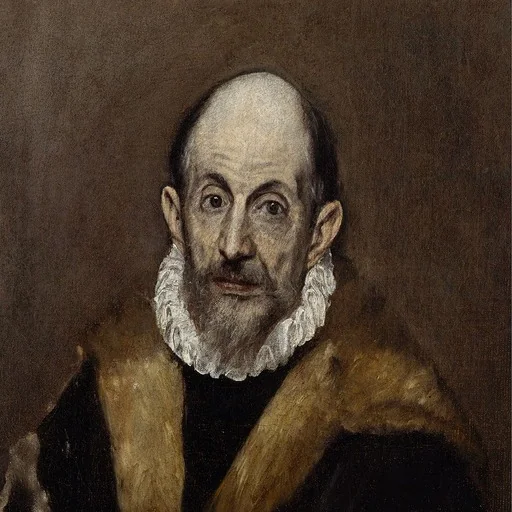
Doménikos Theotokópoulos was born in 1541 in Candia (modern Heraklion), the capital of Venetian-ruled Crete, where he was trained in the post-Byzantine tradition of icon painting.