Artwork
The Cantorist House, Childrey
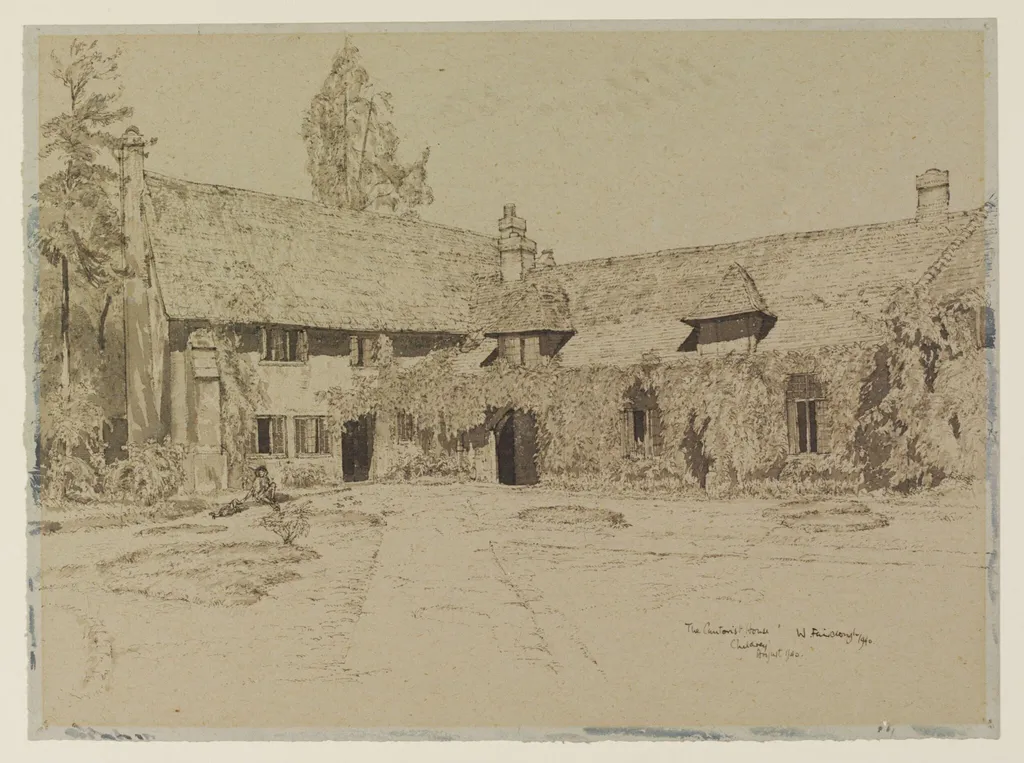
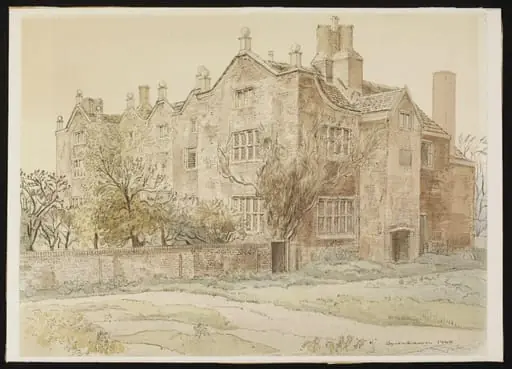
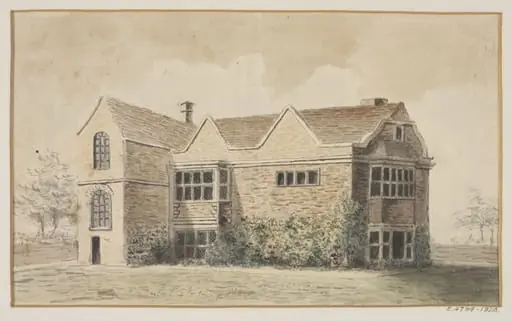
The Cantorist House, Childrey is a watercolor work on paper by the Social Realist artist Fairclough. It dates from 1940 and is held in the collection of the Victoria and Albert Museum.
About this work
The artist used soft watercolors to keep it light and sketchy, almost like a quick note of what they saw.
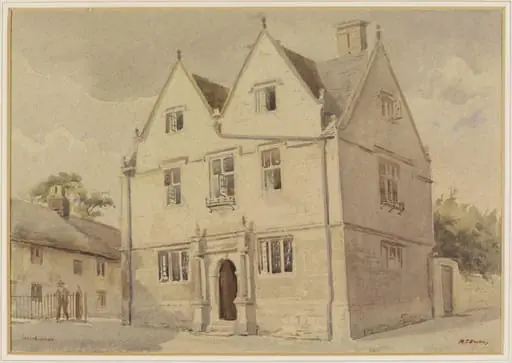
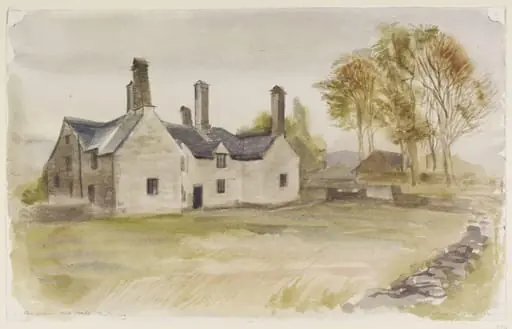
This sketch shows a simple stone house with a thatched roof. The walls are covered in creeping plants, and a small figure sits in the doorway. The ground is bare, with a few scattered sticks, and two tall trees stand near the house.
The artist used soft watercolors to keep it light and sketchy, almost like a quick note of what they saw. The title says it’s called The Cantorist House, Childrey, drawn in August 1940.
Want to see more by the artist? Check out Fairclough.
Overview
Painted in August 1940, this watercolour by Fairclough captures a modest 17th-century dwelling in Childrey, originally constructed to house chantry priests. Created as part of the Recording Britain project, the work reflects a wartime effort to visually archive rural architecture at risk from conflict and modernization. The piece is signed, dated, and titled, aligning with the project’s systematic documentation of England’s vernacular landscapes.
Subject & Meaning
The house, enveloped in creeping vegetation, stands isolated against a bare earth foreground with scattered twigs and two tall trees nearby. A solitary figure seated in the doorway suggests quiet habitation, reinforcing the theme of enduring, unassuming rural life. The title identifies it as a cantorist’s residence, linking the structure to medieval religious practice and its gradual obsolescence in modern England.
Technique & Style
Fairclough employed light, fluid watercolour washes to convey a sense of immediacy and transience. The sketchlike quality, with minimal detail and soft edges, mirrors the spontaneity of on-site observation. The restrained palette and loose brushwork emphasize atmosphere over precision, reflecting the project’s emphasis on evoking mood rather than architectural exactitude.
History & Provenance
Commissioned under the Ministry of Labour and National Service’s artist employment scheme during the Second World War, this work was produced for the Recording Britain initiative, funded by the Pilgrim Trust and overseen by Sir Kenneth Clark. It entered the project’s archival collection, preserved as part of a national effort to safeguard visual records of threatened heritage sites.
Context
The Recording Britain project emerged amid fears of cultural loss from aerial bombing and rural decline. Artists like Fairclough were dispatched to document structures embodying regional character, often in remote or neglected areas. This watercolour contributes to a broader archive that sought to affirm a shared national identity through its physical landscapes during a time of upheaval.
Legacy
The painting remains part of the Recording Britain collection, held in public archives as a historical record of England’s architectural vernacular. Its quiet composition continues to serve as a reference for studies on wartime cultural preservation, rural history, and the role of art in documenting societal change during crisis.
Artist & collection
Artist
Fairclough is a surname. A variant form is Faircloth. Notable people with the surname include:Adam Fairclough (historian), British historian of the United States Anna Fairclough, member of the Alaska House of…