Artwork
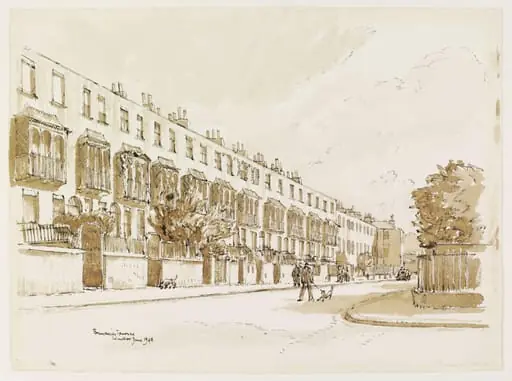
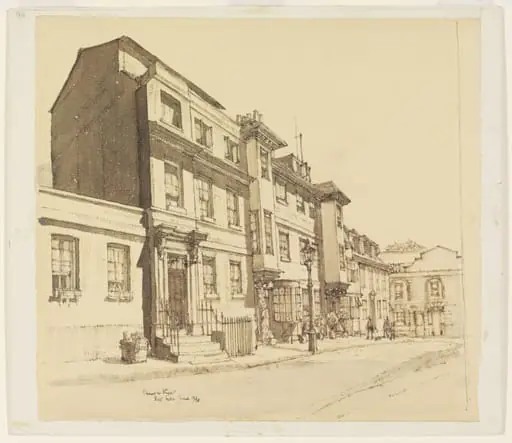
Church Street, (west side) Windsor
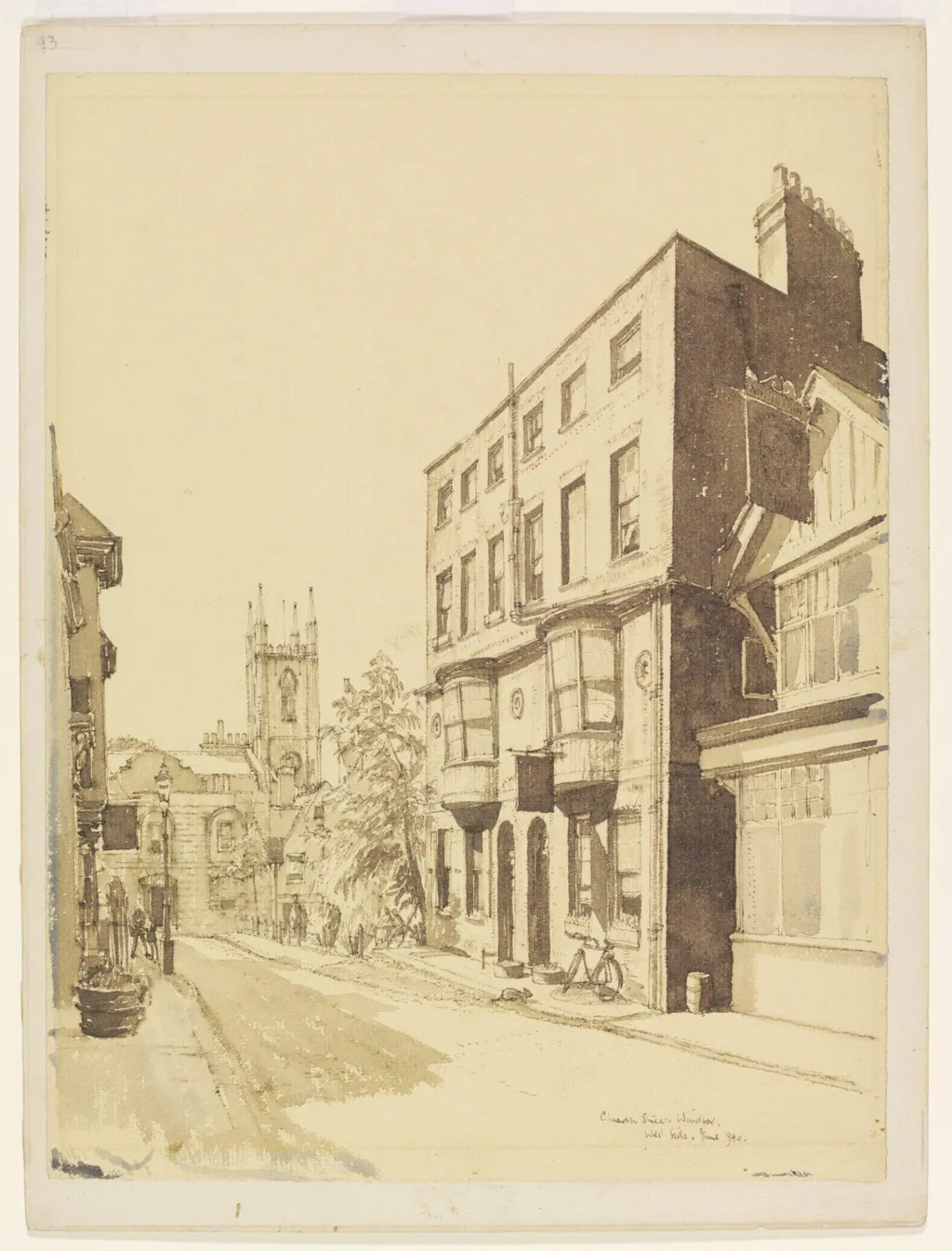
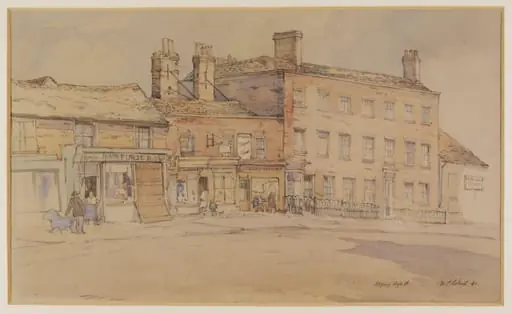
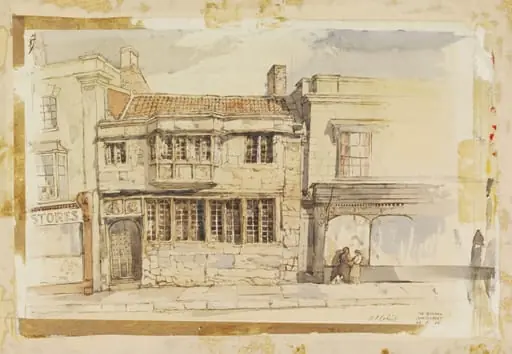
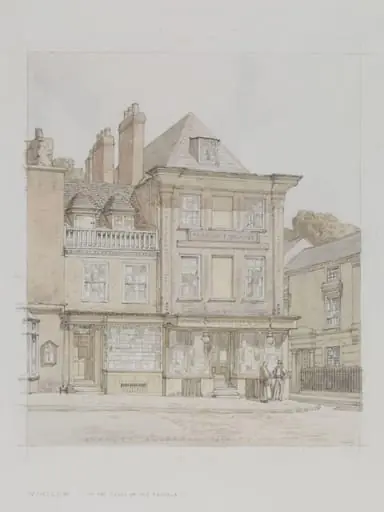
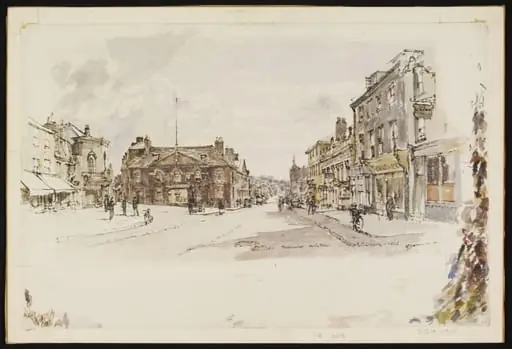
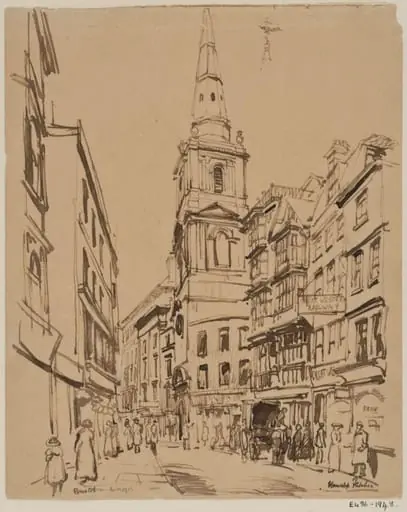
Church Street, (west side) Windsor is a watercolor work on paper by the Social Realist artist Fairclough. It dates from 1940 and is held in the collection of the Victoria and Albert Museum. Created in 1940, this watercolour portrays the western side of Church Street in Windsor.
About this work
Overview
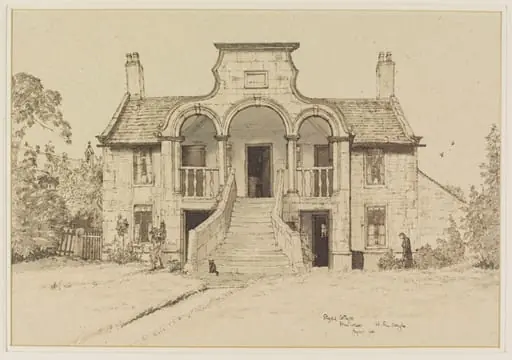
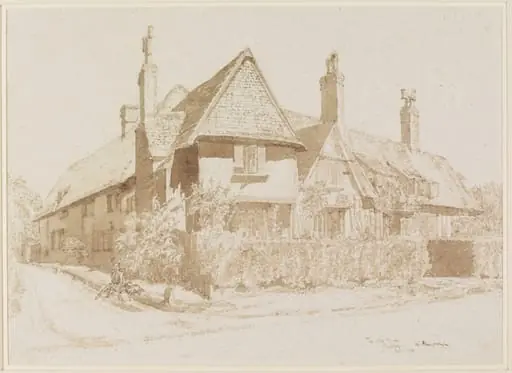
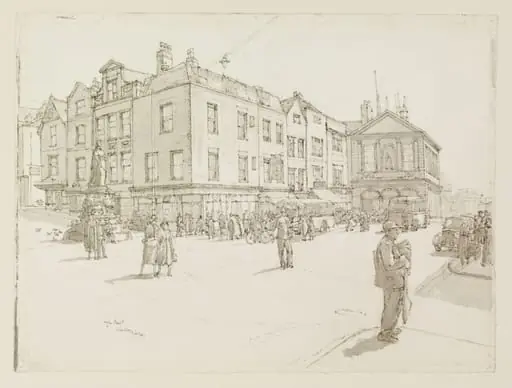
Created in 1940, this watercolour portrays the western side of Church Street in Windsor. The composition captures a modest urban corner, featuring a three‑storey residence, a streetlamp, and the spire of a nearby church, all rendered in muted tones that convey a tranquil, everyday atmosphere.
Subject & Meaning
The scene records a typical British street during the early wartime period, emphasizing ordinary architecture and street life. Details such as a bicycle propped against a wall, a solitary trash can, and an uneven pavement foreground the routine of daily existence, while the distant church spire hints at the community’s enduring presence.
Technique & Style
Executed in watercolour, the artist employs a restrained palette and loose washes to suggest form without excessive detail. Fine brushwork delineates windows and structural elements, while broader strokes convey the texture of the pavement and foliage, creating a balance between specificity and atmospheric impression.
History & Provenance
The work formed part of the Recording Britain initiative, a government‑sponsored project (1940‑43) that commissioned artists to document threatened historic sites. Funded by the Pilgrim Trust and administered by Sir Kenneth Clark, director of the National Gallery, the piece now resides within the collection assembled for that wartime recording effort.
Artist & collection
Artist
Fairclough is a surname. A variant form is Faircloth. Notable people with the surname include:Adam Fairclough (historian), British historian of the United States Anna Fairclough, member of the Alaska House of…