Artwork
清 方士庶 山水圖 軸|Landscape
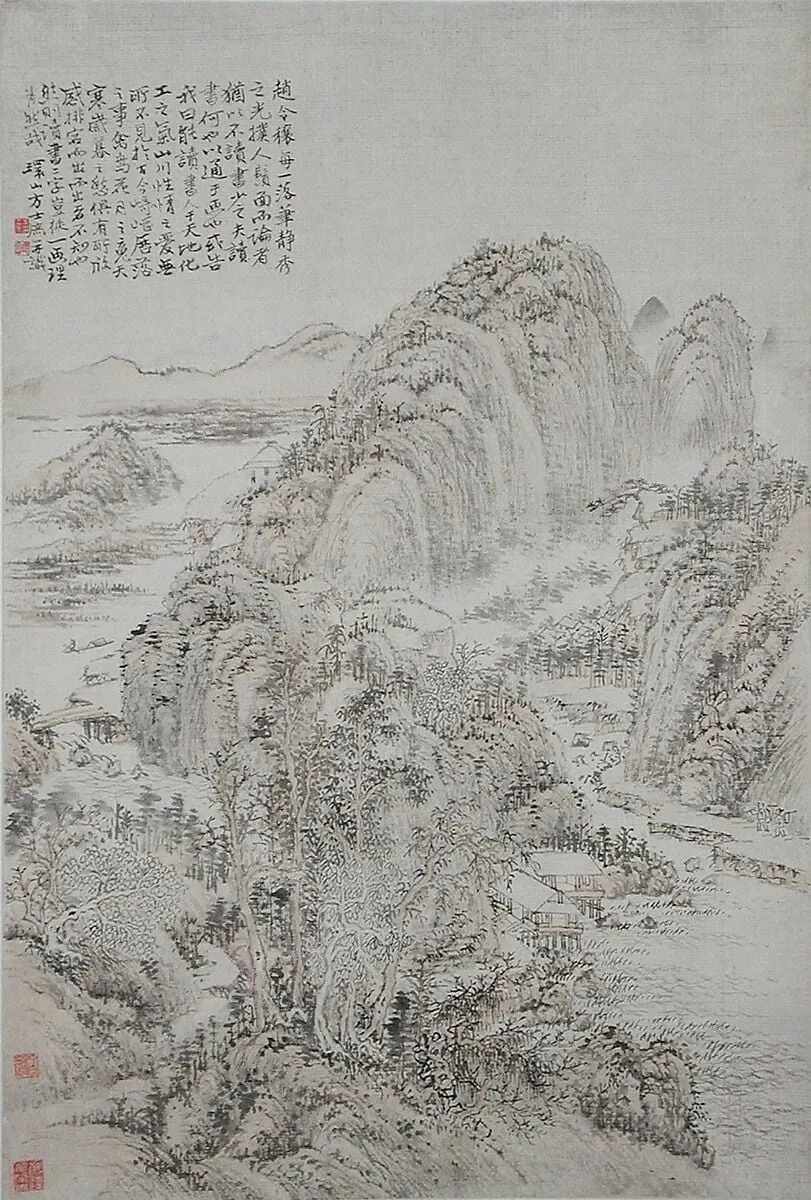
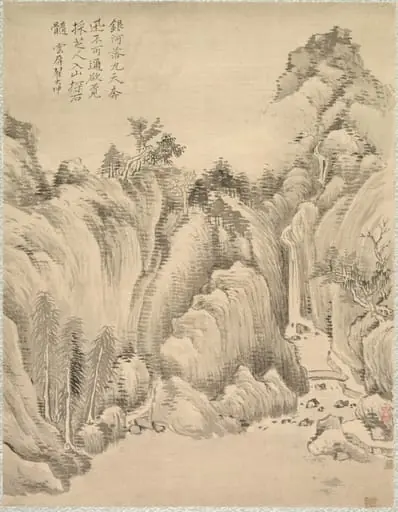
清 方士庶 山水圖 軸|Landscape is an ink painting by the Baroque artist Fang Shishu. It dates from 1721 and is held in the collection of the Metropolitan Museum of Art.
- Accession no.
- 1972.278.8
- Credit line
- Gift of Mr. and Mrs. Earl Morse, 1972
About this work
Technique & Style
The composition focuses on these natural elements, characteristic of Chinese painting traditions of the Qing dynasty.
Executed in 1721 by Fang Shishu, this landscape is realized as a hanging scroll. The artist employed ink and color applied directly onto paper as the primary medium and support. Stylistically, the work adheres to the landscape genre, specifically depicting mountainous terrain.
The composition focuses on these natural elements, characteristic of Chinese painting traditions of the Qing dynasty. While specific details regarding the brushwork handling or current physical condition are not explicitly detailed in the available records, the formal qualities are defined by the use of ink and color on a paper ground to render the scenic subject matter.
History & Provenance
The hanging scroll was created by Fang Shishu in 1721, during the Qing dynasty, and is identified as a Chinese landscape painting executed in ink and color on paper. The work is held in the collection of the Metropolitan Museum of Art in New York, where it is part of the museum's Chinese painting holdings. Beyond its documented inception date and present institutional custody, the available records do not provide an earlier ownership chain, commissioning circumstances, or intermediate provenance, and no accession number or exhibition history is published in the sources consulted.
Overview
Fang Shishu's Landscape (山水圖), painted in 1721, is an ink and color work presented as a hanging scroll. This piece exemplifies traditional Chinese landscape painting, offering a serene depiction of natural scenery. It invites contemplation through its carefully composed vista, which captures a tranquil mountain environment characteristic of the Qing dynasty's artistic sensibilities.
Subject & Meaning
The painting features a majestic mountain range partially obscured by mist, creating an impression of depth and atmosphere. A small temple is subtly nestled among the peaks, while a lone scholar can be observed traversing a narrow path. Such elements typically convey themes of human introspection within the grandeur of nature, and the pursuit of spiritual harmony amidst the natural world.
Context
Created in the early 18th century, this painting reflects the artistic preferences prevalent during the Qing dynasty. At this time, there was a significant imperial appreciation for intimate and understated landscape compositions. Fang Shishu's work aligns with this taste for quiet, contemplative scenes, which were often intended to offer viewers a meditative experience through art.
Artist & collection


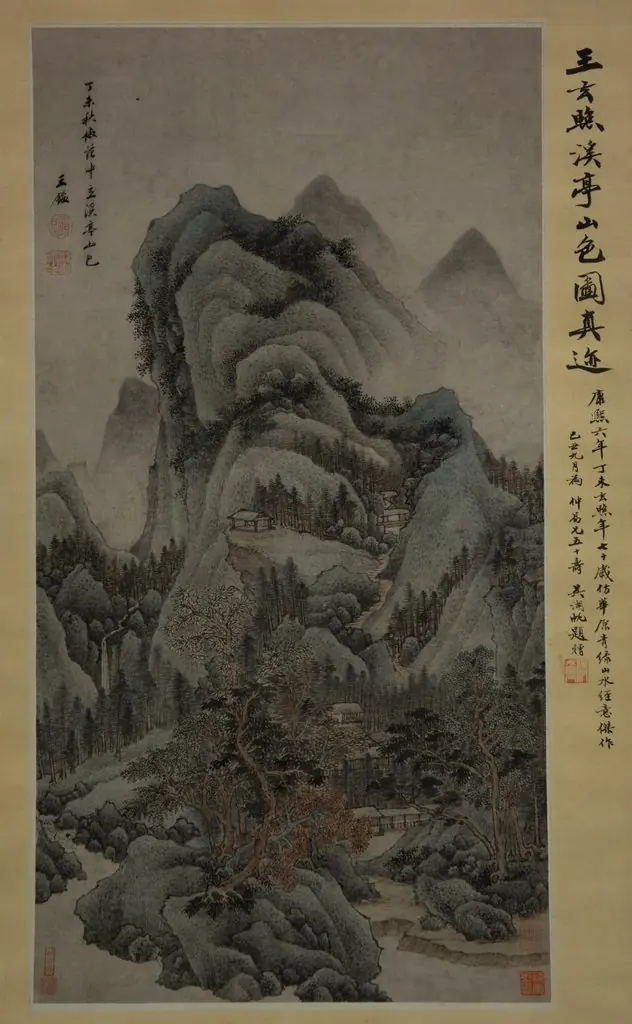 Mountain Scenery with Streams and Pavilions in the Style of Fan Kuan
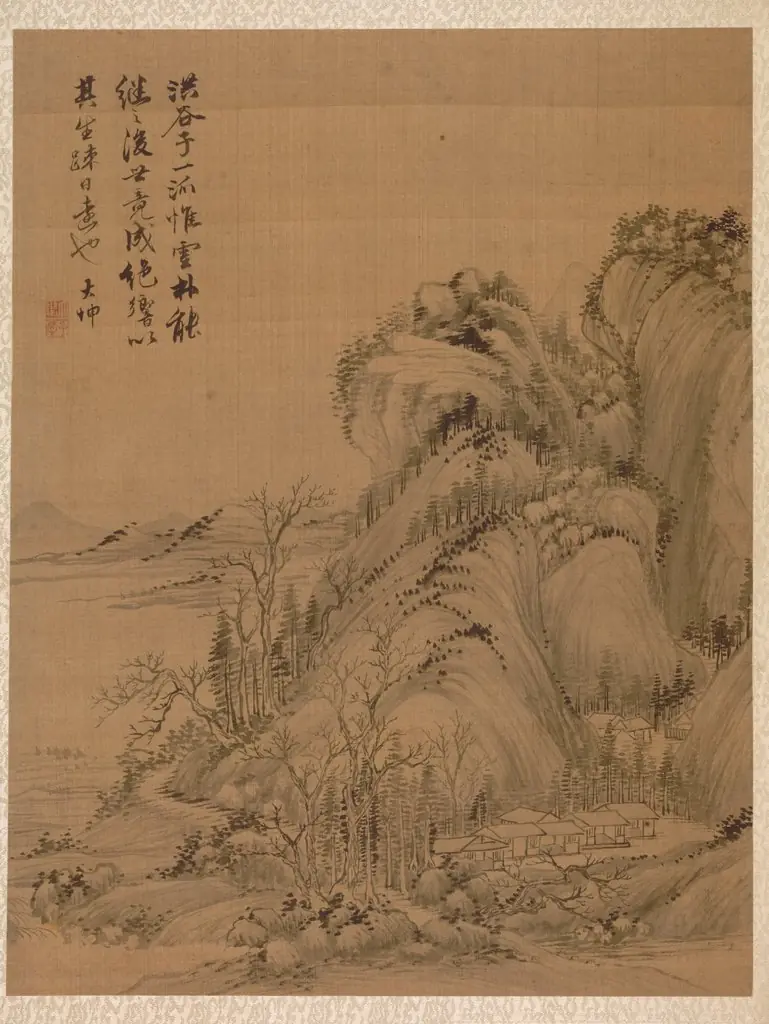 Landscape in the Style of Ching Hao
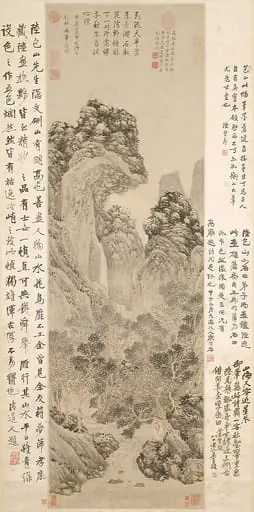 明 陸治 枚乘獨坐圖 軸|Mei Cheng Sitting Alone
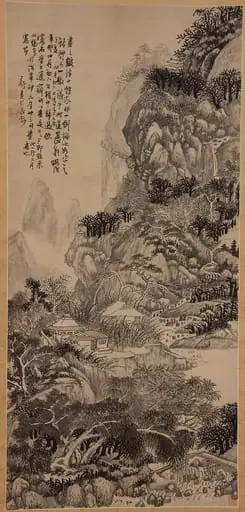 明/清 王鐸 山水圖 軸|Mountain Landscape
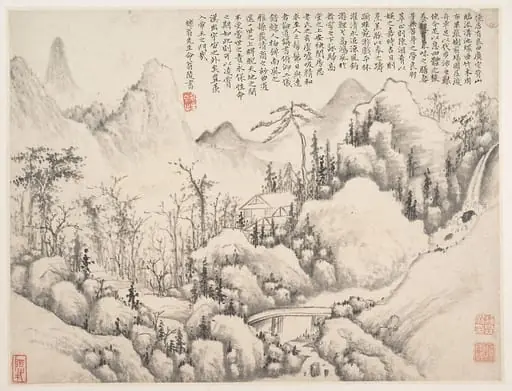 清 施霖 山莊圖 冊頁|Mountain Retreat, leaf from Album for Zhou Lianggong
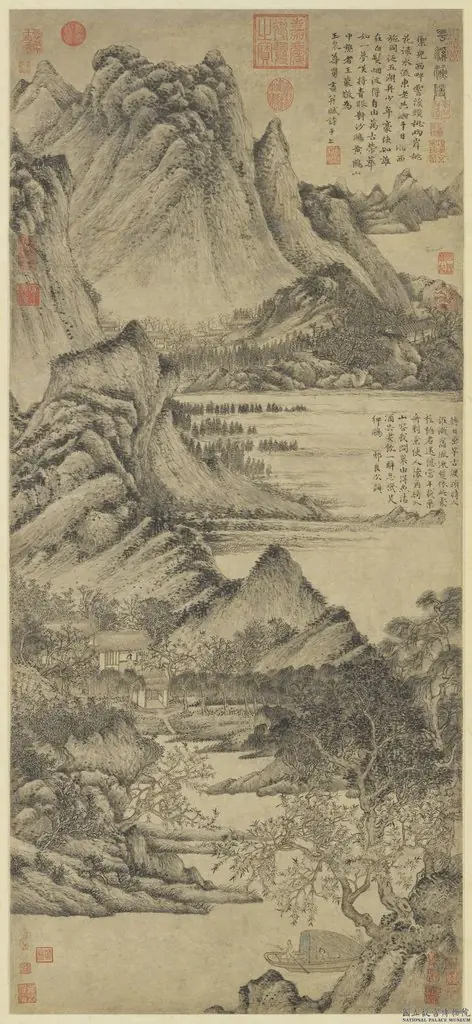 Recluse on a Flowering Stream
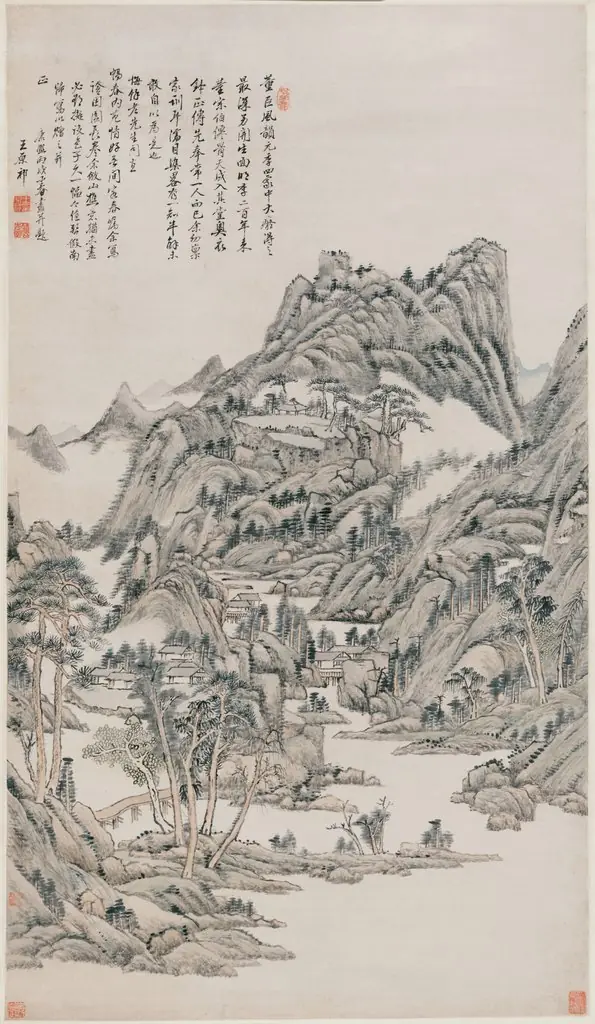 Landscape
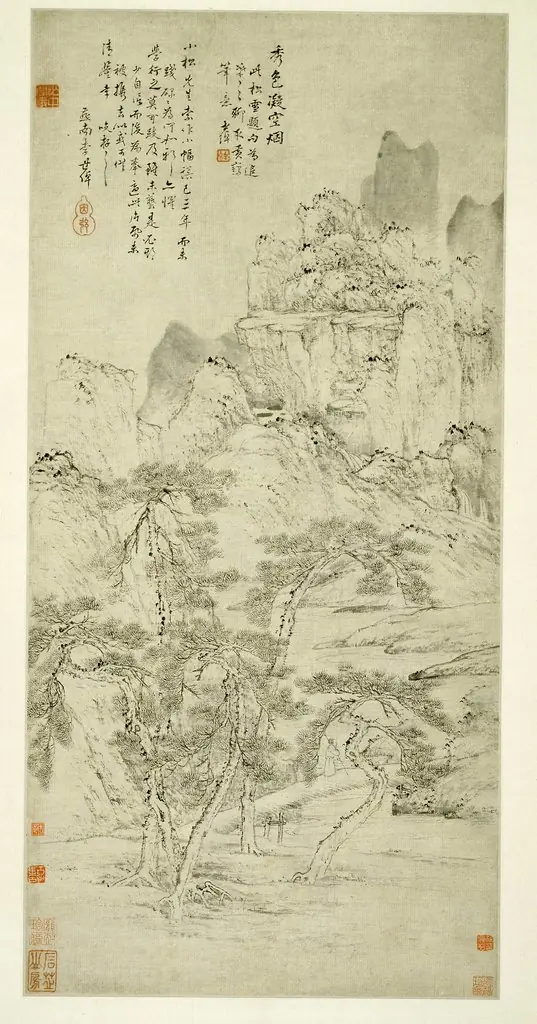 Landscape: Beautiful Scenery Frozen in Mist
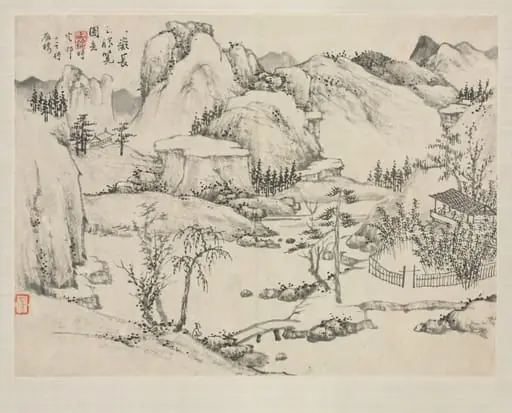 Landscape Album in Various Styles: Scenery of Mt. Changbai after Huang Gongwang
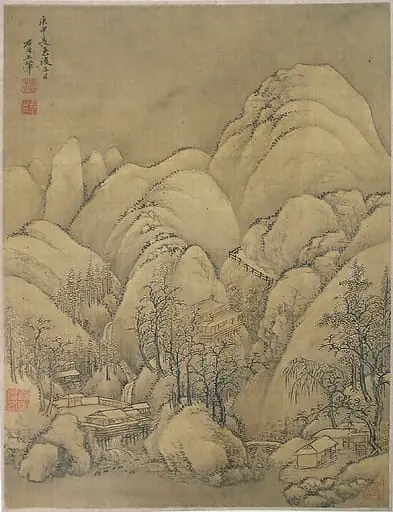 清 佚名 倣王翬 倣李成山水圖 軸|Landscape after Li Cheng
 Waterfall and Rocks
- 清 惲壽平 山水 軸|Landscape