Artwork
清 佚名 倣王翬 倣李成山水圖 軸|Landscape after Li Cheng
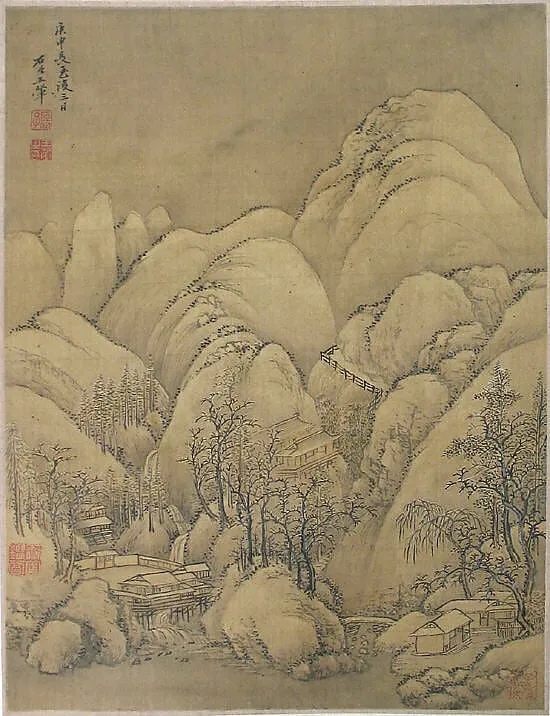
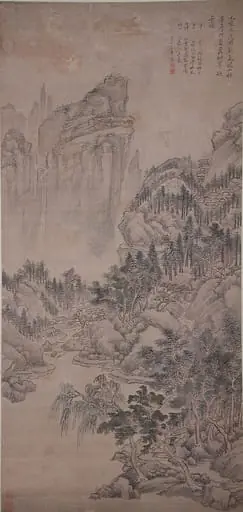
清 佚名 倣王翬 倣李成山水圖 軸|Landscape after Li Cheng is an ink painting by the Baroque artist Wang Hui. It is held in the collection of the Metropolitan Museum of Art. This anonymous hanging scroll, rendered in ink on silk, presents a dramatic mountain landscape.
About this work
Subject & Meaning
The hanging scroll, executed in ink on silk in 1805, presents a rugged mountain landscape rendered in the manner of the Northern Song master Li Cheng.
The hanging scroll, executed in ink on silk in 1805, presents a rugged mountain landscape rendered in the manner of the Northern Song master Li Cheng. The composition features towering peaks and mist‑filled valleys, characteristic of the genre’s emphasis on natural grandeur. As recorded in the Metropolitan Museum of Art’s collection data, the piece belongs to the tradition of Chinese landscape painting and was created by an anonymous hand in China. Its subject, a mountain vista, embodies the enduring motif of elevated terrain within Qing‑era artistic practice.
Technique & Style
Created in 1805, this hanging scroll is executed in ink on silk, a traditional medium for Chinese landscape painting. The work measures 36.8 cm in height and 28.3 cm in width. Stylistically, it is an anonymous imitation of the Northern Song master Li Cheng, filtered through the aesthetic lens of the Qing dynasty painter Wang Hui.
The composition depicts mountainous terrain, adhering to the formal conventions of the landscape genre. As a hanging scroll, the support is designed for vertical display, typical of the period's artistic practices in China. The piece is currently held in the collection of the Metropolitan Museum of Art.
History & Provenance
The work titled Landscape after Li Cheng was created in 1805 in China, as documented in and. It is an ink-on-silk hanging scroll attributed to the painter Wang Hui in, while records the piece as produced by an anonymous hand. The painting entered the collection of the Metropolitan Museum of Art, which holds it in its current location, establishing the ownership chain from its place of creation to the museum. No specific commission or patronage details are mentioned in the available sources.
The hanging scroll titled Landscape after Li Cheng, attributed to an anonymous follower of Wang Hui, dates to 1805 and is housed in the Metropolitan Museum of Art in New York. The museum lists the work in its collection of Chinese paintings and records its medium as ink on silk, measuring approximately 36.8 × 28.3 cm. It is classified as a landscape painting depicting mountainous scenery. No accession number or specific exhibition record is documented in the available sources, but the piece has been part of the Met’s permanent holdings since its acquisition.
Overview
This anonymous hanging scroll, rendered in ink on silk, presents a dramatic mountain landscape. Created during the Qing dynasty, likely in the 1700s, the work intentionally emulates the styles of earlier masters. Its title indicates an artistic lineage, referencing both the tenth-century painter Li Cheng and the seventeenth-century artist Wang Hui, suggesting a layered act of artistic homage and continuation within a long tradition.
Context
This artwork exemplifies a significant practice in Chinese art history: the emulation of past masters. Rather than seeking novelty, artists often engaged in "fang" (仿) or "imitating" earlier styles to honor tradition and refine their skills. The anonymous nature of this scroll, combined with its clear stylistic references, underscores how artistic lineages and established aesthetic principles were preserved and transmitted across generations during the Qing dynasty.
Artist & collection


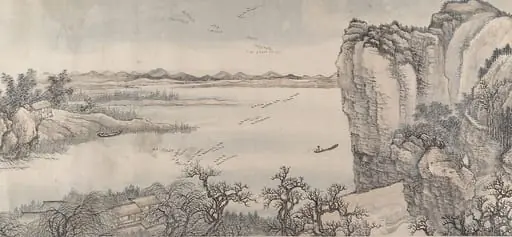 清 王翬 倣巨然燕文貴山水圖 卷|Landscape in the Style of Juran and Yan Wengui
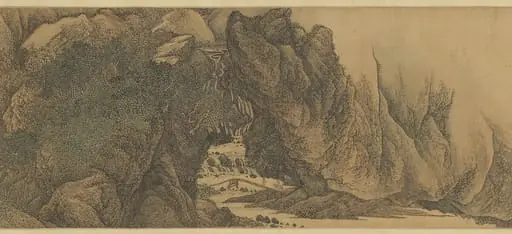 清 王翬 太行山色圖 卷|The Colors of Mount Taihang
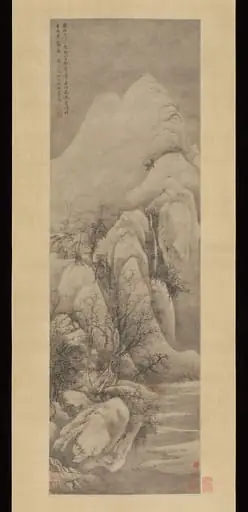 清 王翬 倣李成雪霽圖 軸|Snow Clearing: Landscape after Li Cheng
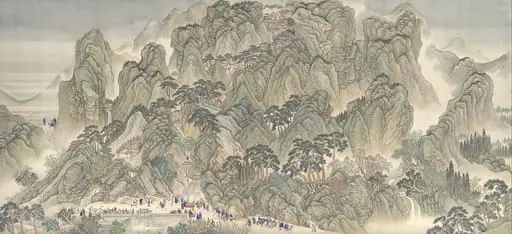 清 王翬等 康熙南巡圖 (卷三: 濟南至泰山) 卷|The Kangxi Emperor's Southern Inspection Tour, Scroll Three: Ji'nan to Mount Tai
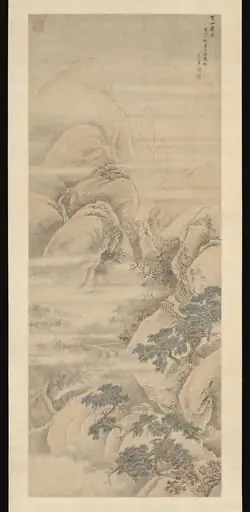 清 (傳)王翬 雪景山水圖 軸|Snowscape
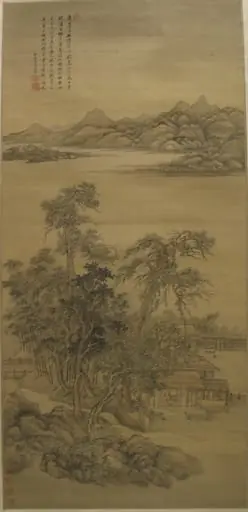 清 佚名 倣王翬 倣李公麟草堂圖 軸|Landscape in the Style of Li Gonglin
 清 佚名 倣王翬 倣仇實父採菱圖 扇|Gathering Water Chestnuts
 王翬、楊晉、顧昉、王雲、徐玫 仿古山水圖 冊 紙本|Landscapes after old masters
 明/清 王鐸 山水圖 軸|Mountain Landscape
 Untitled
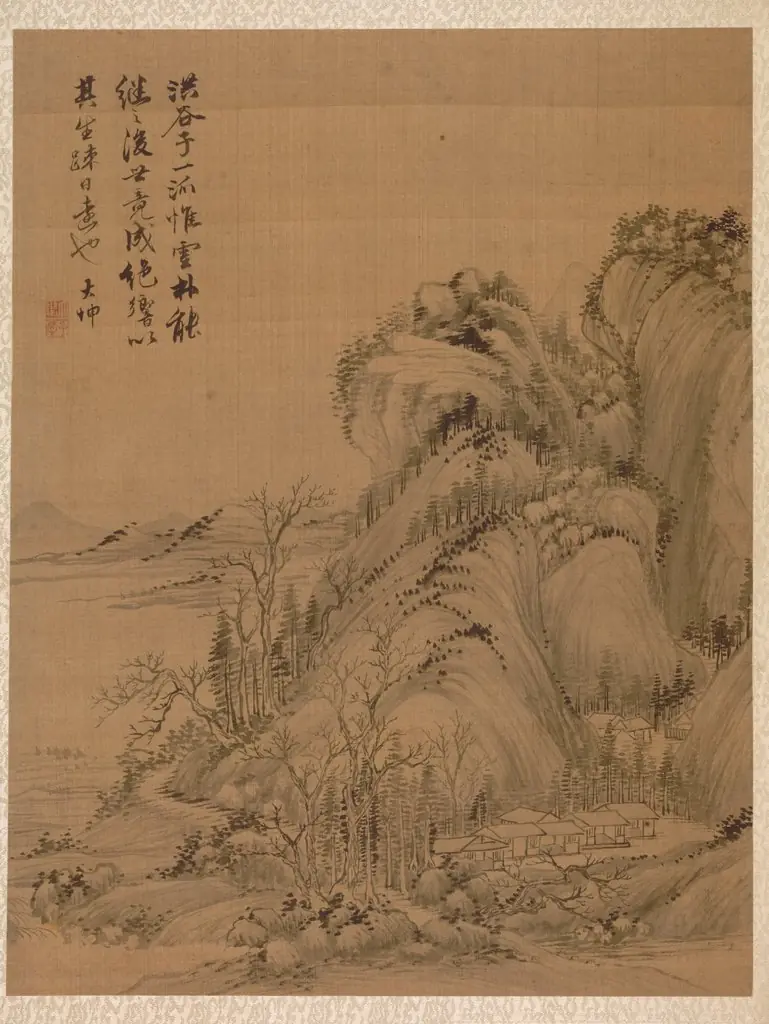 Landscape in the Style of Ching Hao
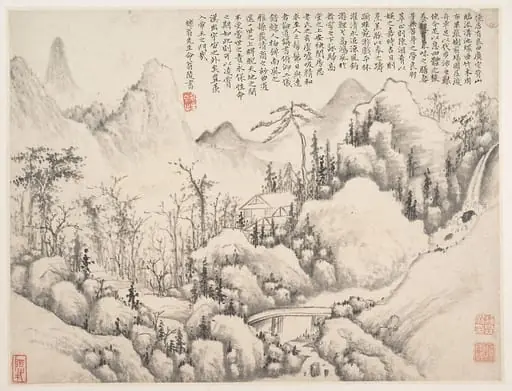 清 施霖 山莊圖 冊頁|Mountain Retreat, leaf from Album for Zhou Lianggong
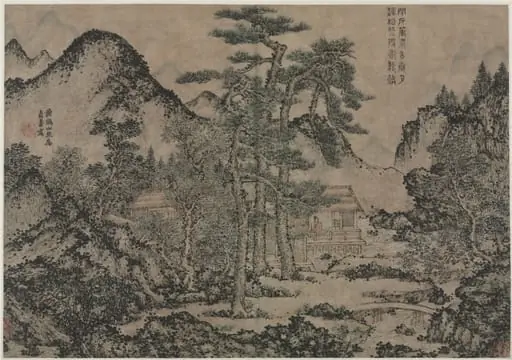 Writing Books under the Pine Trees
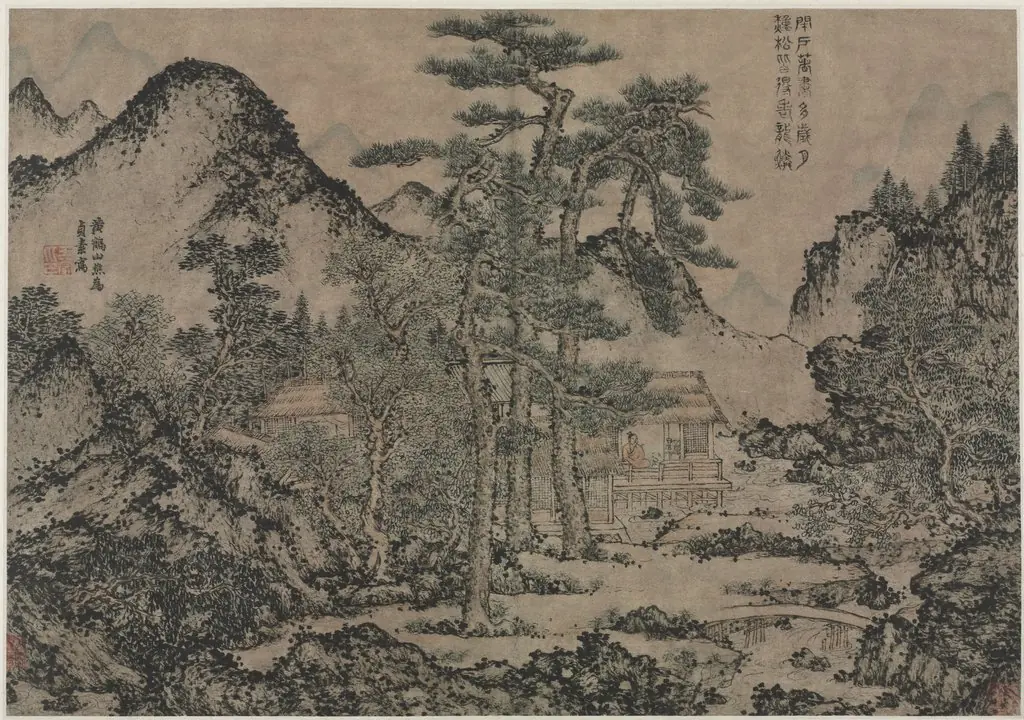 Writing Books under the Pine Trees
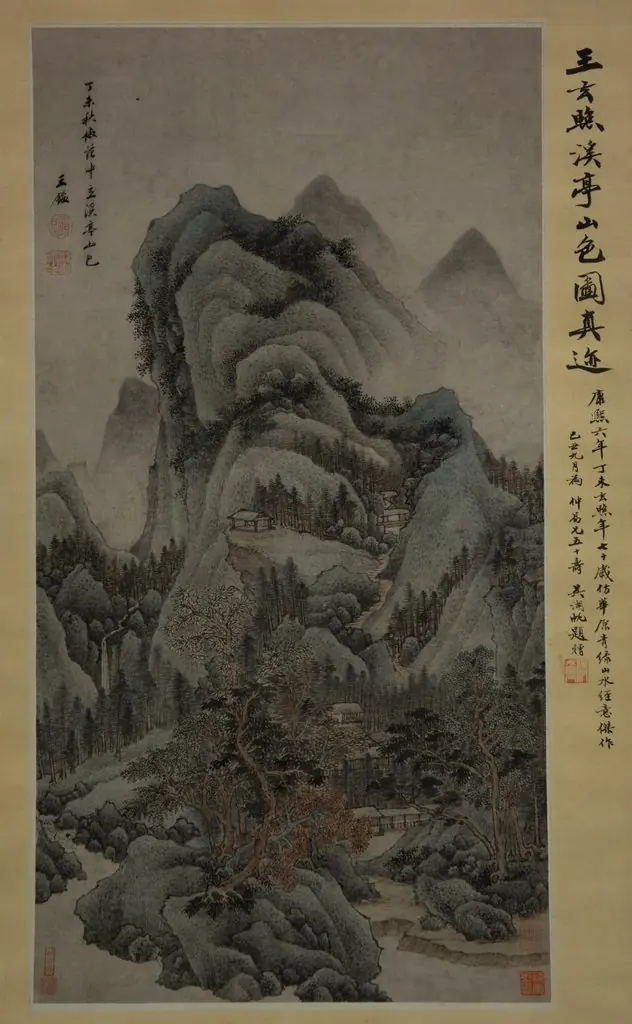 Mountain Scenery with Streams and Pavilions in the Style of Fan Kuan
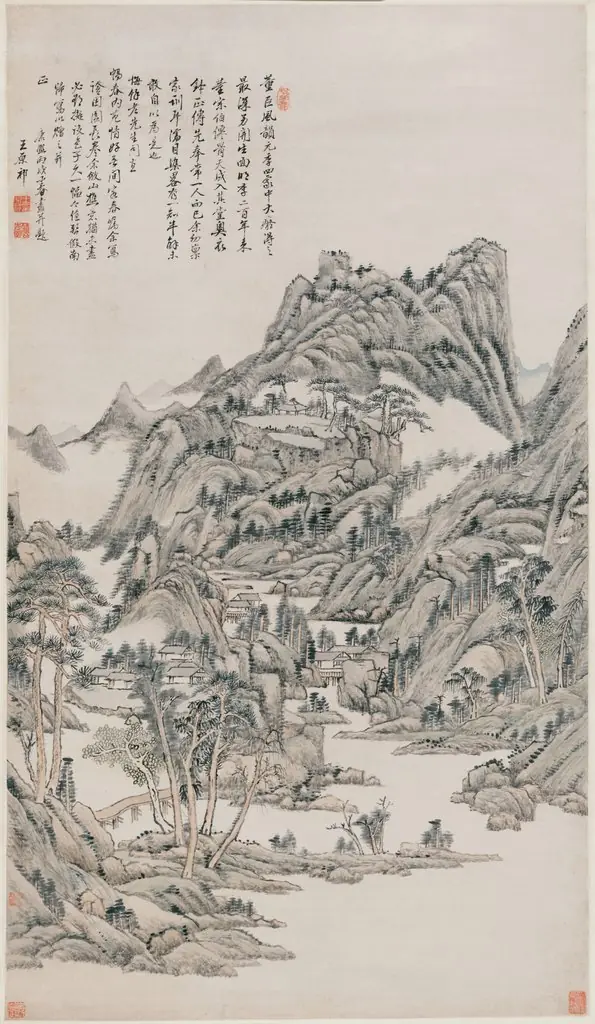 Landscape
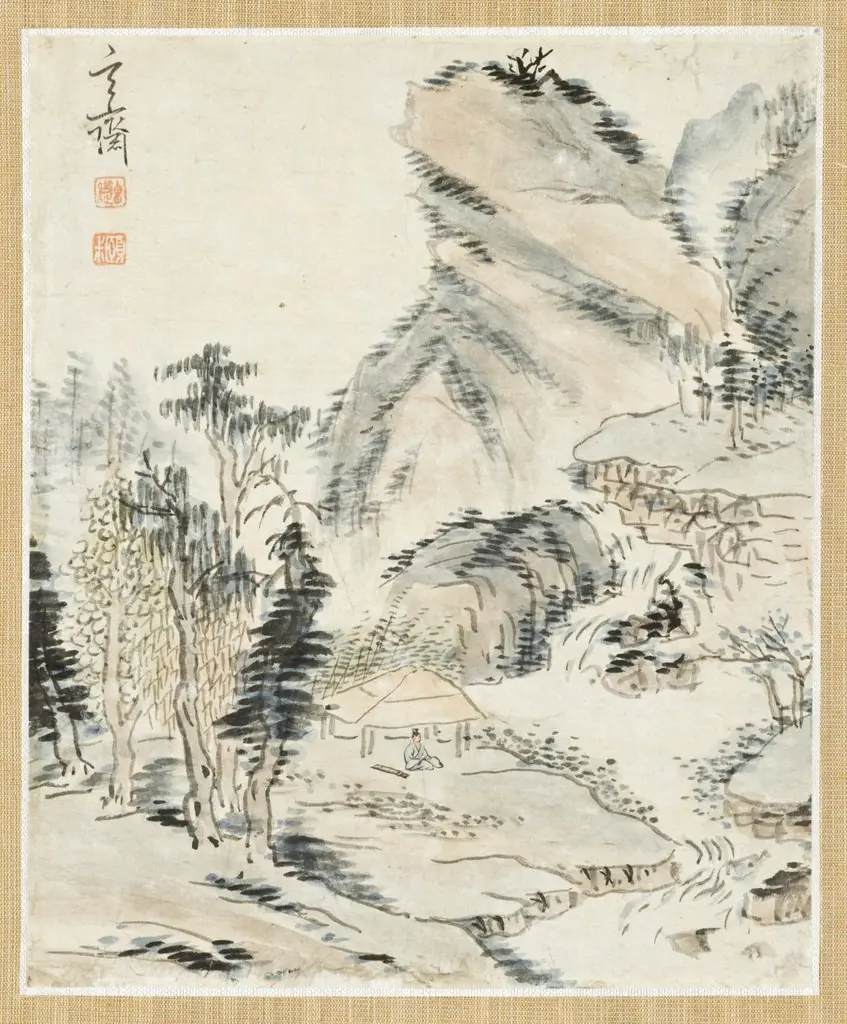 Landscape
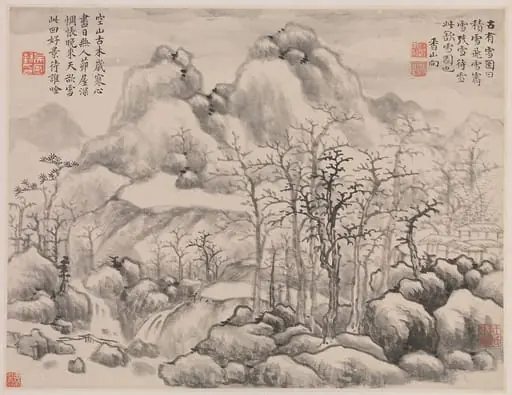 明/清 惲向 欲雪圖 冊頁|Snowscape, from Album for Zhou Lianggong