Artwork
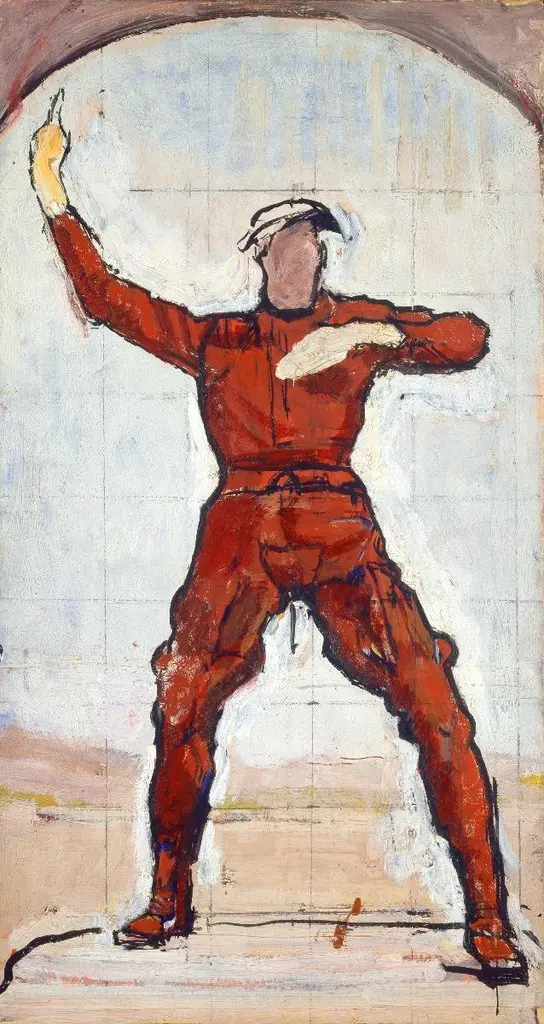
Blick ins Unendliche, Einzelfigur
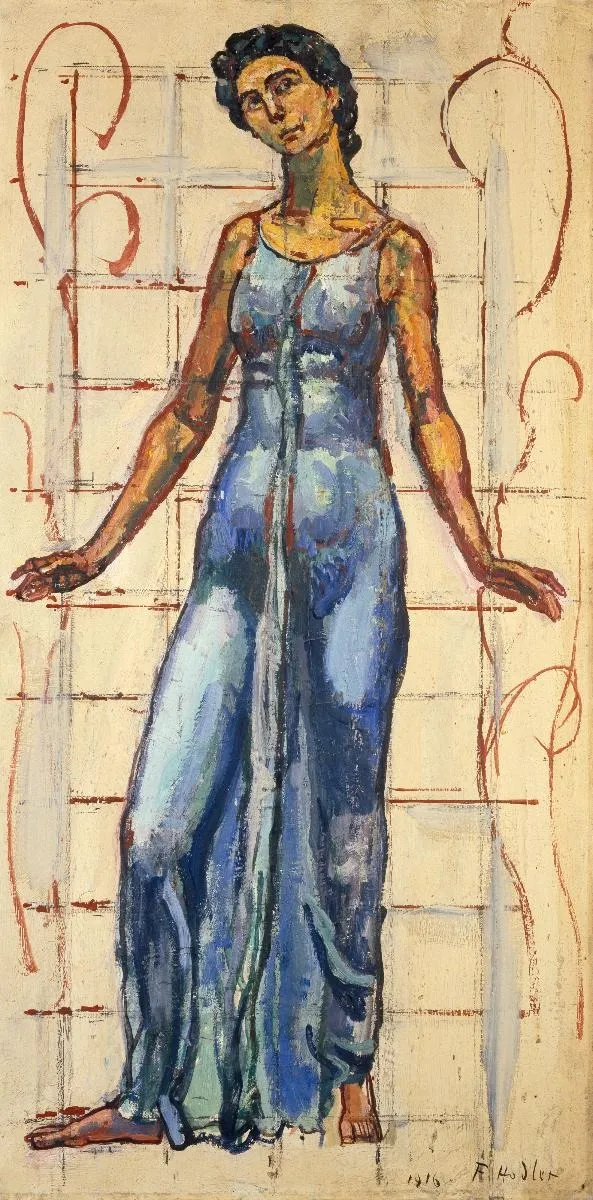
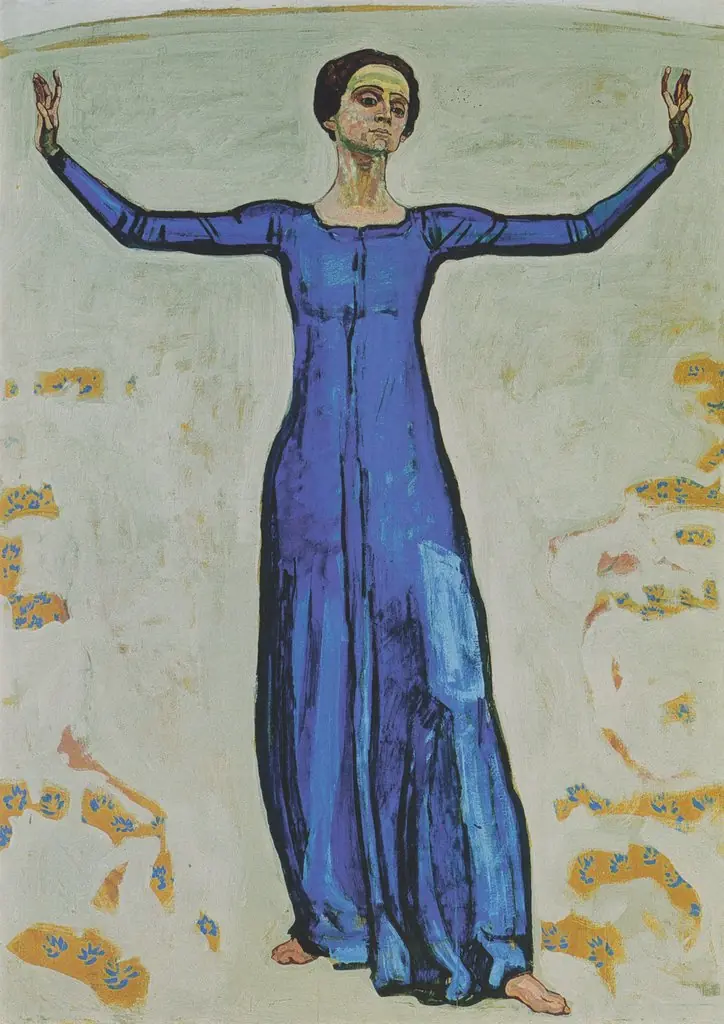
Blick ins Unendliche, Einzelfigur is an oil painting by the Art Nouveau artist Ferdinand Hodler. It dates from 1916 and is held in the collection of the Kunsthaus Zürich.
About this work
Overview
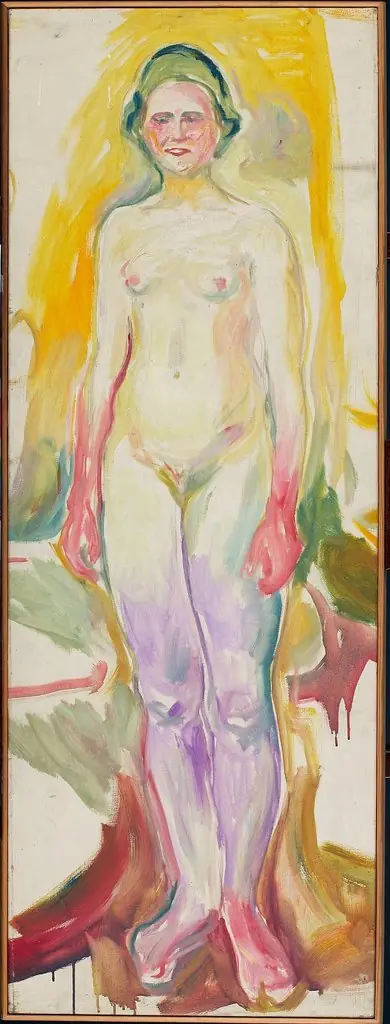
It features a solitary female figure positioned against a structured, abstracted backdrop, reflecting Hodler’s interest in rhythm and spiritual harmony.
Ferdinand Hodler painted Blick ins Unendliche, Einzelfigur in 1916 using oil on canvas. The work is part of the Kunsthaus Zürich’s permanent collection and represents a mature phase in the artist’s career, following his shift from realism toward a personal symbolic style. It features a solitary female figure positioned against a structured, abstracted backdrop, reflecting Hodler’s interest in rhythm and spiritual harmony.
Subject & Meaning
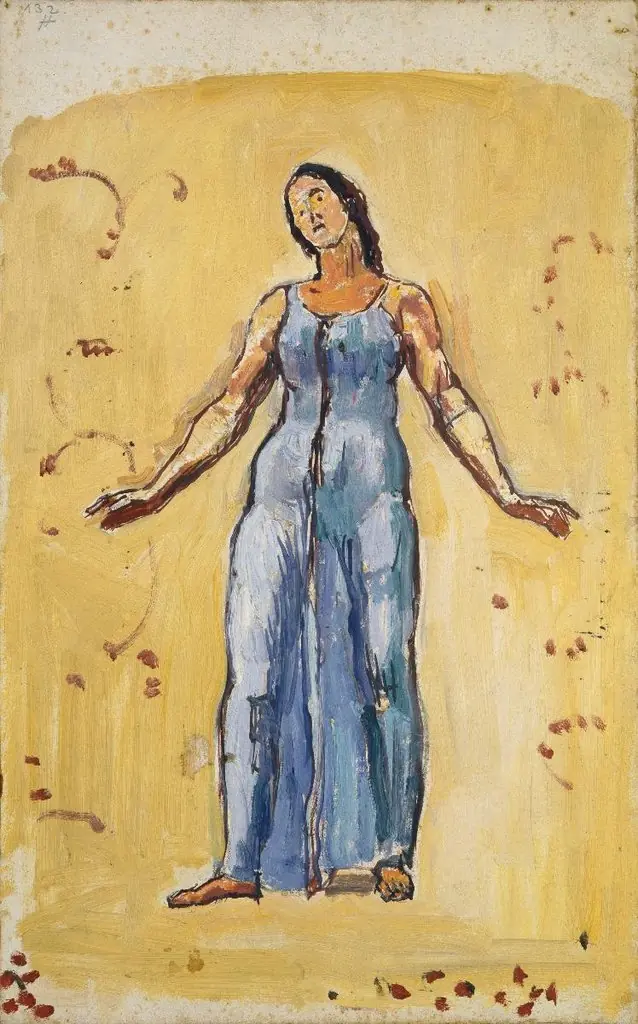
The painting presents a woman standing still, facing the viewer with quiet composure. Her stillness and direct gaze suggest introspection or transcendence. The absence of narrative detail and the simplified form invite contemplation rather than storytelling.
Hodler intended such figures to embody universal states of being, aligning with his belief in art as a conduit for inner experience and cosmic order.
Technique & Style
Hodler employed a restrained palette of deep blue, warm gold, and crimson accents to define form and space. The figure is rendered with soft modeling, while the background consists of precise horizontal and vertical lines, some interrupted by subtle red curves. This contrast between organic presence and geometric structure reflects his concept of 'parallelism', a system of repetition and symmetry meant to evoke underlying natural rhythms.
History & Provenance
Created in the final years of Hodler’s life, the painting emerged during a period of personal reflection amid the turmoil of World War I. It was acquired by the Kunsthaus Zürich shortly after its completion and has remained in their collection since. Unlike his earlier works, this piece avoids overt political or historical references, focusing instead on timeless, meditative form.
Context
Though often associated with Art Nouveau for its decorative lines, Hodler’s approach diverged from its ornamental tendencies. His 'parallelism' was rooted in Swiss intellectual traditions and philosophical ideas about unity and repetition in nature. This work reflects a broader European search for spiritual meaning in art during the early 20th century, distinct from emerging modernist fragmentation.
Legacy
Hodler’s synthesis of figuration and abstraction in this painting influenced later Swiss artists and contributed to the development of symbolic modernism in Central Europe. While not widely known outside Switzerland, Blick ins Unendliche, Einzelfigur remains a key example of his unique visual language, one that sought stillness and structure as expressions of inner truth.
Artist & collection
Artist
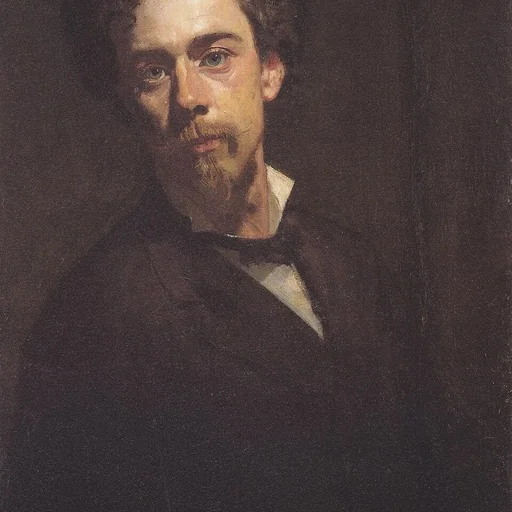
Ferdinand Hodler (March 14, 1853 – May 19, 1918) was a Swiss painter. He is one of the best-known Swiss painters of the nineteenth century. His early works were portraits, landscapes, and genre paintings in a realistic…