Artwork
The Dream of the Shepherd (Der Traum des Hirten)
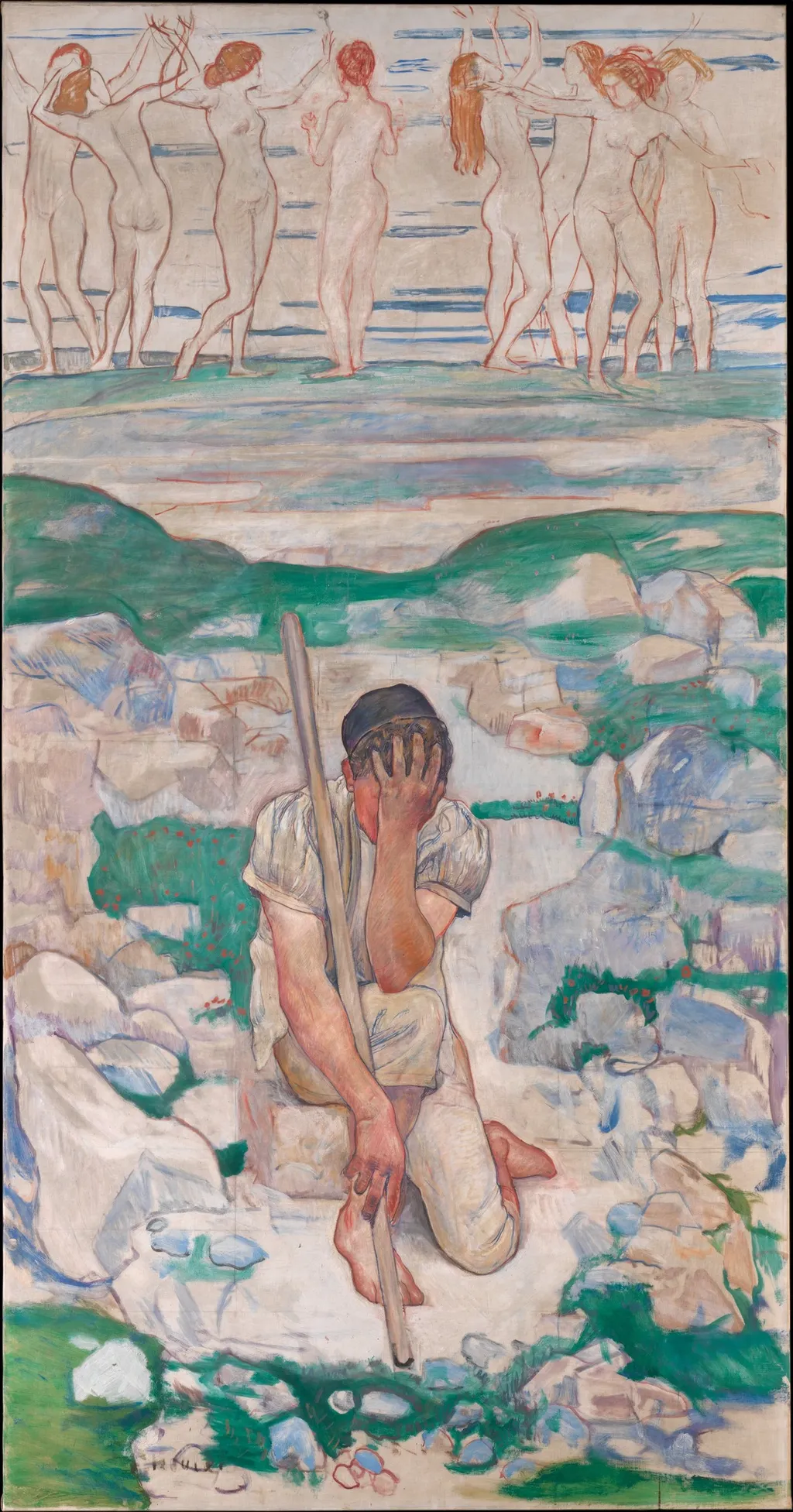
The Dream of the Shepherd (Der Traum des Hirten) is an oil painting by the Symbolist artist Ferdinand Hodler. It dates from 1898 and is held in the collection of the Metropolitan Museum of Art.
About this work
Technique & Style
Stylistically, the painting marks a departure from Ferdinand Hodler's earlier realist approach, demonstrating his engagement with Symbolism.
Created in 1896, The Dream of the Shepherd is executed in oil paint on a canvas support. The work measures 250.2 cm in height and 130.5 cm in width. Stylistically, the painting marks a departure from Ferdinand Hodler's earlier realist approach, demonstrating his engagement with Symbolism.
The composition features a kneeling shepherd situated in a field, surrounded by numerous nude female figures representing his dream. This handling of the human form, characterized by the depiction of copious nudes, was interpreted by contemporaries as a provocative gesture intended to challenge the Swiss art community.
History & Provenance
Ferdinand Hodler created The Dream of the Shepherd in 1896, marking a shift from his earlier realist style toward symbolism. The artist first exhibited the work at the Swiss national exhibition in Geneva and later debuted it at the Théâtre du Sapajou, a venue associated with satire; these actions generated significant notoriety, potentially intended to provoke the local art community regarding his depiction of nude figures.
Initially, the painting belonged to the Kunsthandlung Rath in Basel. It remained in private hands after being sold to a collector during the 1920s. The Metropolitan Museum of Art acquired the canvas in 2013, where it remains part of the permanent collection.
The Dream of the Shepherd is held by the Metropolitan Museum of Art, which lists the work in its collection as an oil on canvas. The painting was acquired by the Met in 2013, having previously passed through the Kunsthandlung Rath in Basel and then into the hands of a private collector in the 1920s.
The work's earliest documented public appearances were in Geneva, where Hodler debuted it at the Théâtre du Sapajou and showed it during the Swiss national exhibition in 1896, presentations that reportedly brought him considerable notoriety.
Context
Hodler’s The Dream of the Shepherd premiered at the 1896 Swiss national exhibition in Geneva, a context that framed its reception as deliberately provocative within conservative Swiss art circles. The work’s display at the satirical Théâtre du Sapajou further underscored its challenge to prevailing norms, drawing contemporary notice for its copious nudes and symbolic departure from Hodler’s earlier realism. Critics highlighted the painting’s Symbolist leanings, framing it as a response to earlier rejections of Hodler’s compositions as overly sensual, a strategy that secured him considerable notoriety.
The painting’s trajectory from Kunsthandlung Rath in Basel to a private collector in the 1920s, and its eventual acquisition by the Metropolitan Museum of Art in 2013, situates it within Hodler’s late-career Symbolist phase and the broader Swiss modernist canon. Its placement in the Met’s collection reflects a growing recognition of Hodler’s role in European Symbolism and the transnational currents shaping late nineteenth-century art.
Overview
Ferdinand Hodler's 1896 oil painting, The Dream of the Shepherd (Der Traum des Hirten), presents a solitary figure in a landscape. The Swiss artist depicted a shepherd in a meditative pose, seemingly lost in thought, while a vision of nude female figures emerges from the water behind him. This work exemplifies Hodler's engagement with symbolic themes and the human condition within nature.
Subject & Meaning
The composition centers on a kneeling shepherd, his form suggesting weariness or deep contemplation as he clutches a staff. Behind him, a group of seven unclad women stand in the water, their backs turned to the viewer, appearing as a spectral presence. This juxtaposition of the solitary, earthly man and the ethereal, idealized female forms suggests a subconscious vision or a longing for an unseen realm.
Artist & collection
Artist
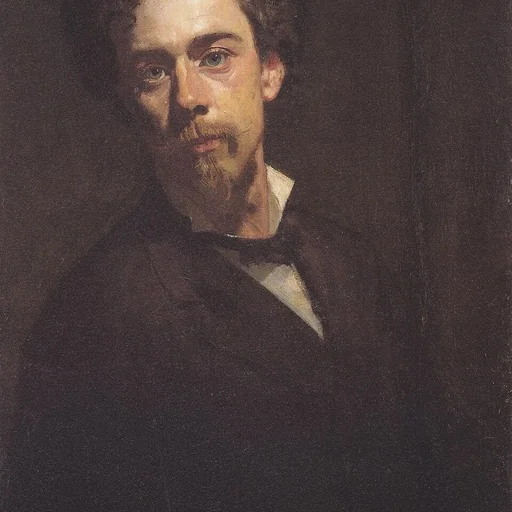
Ferdinand Hodler (March 14, 1853 – May 19, 1918) was a Swiss painter. He is one of the best-known Swiss painters of the nineteenth century. His early works were portraits, landscapes, and genre paintings in a realistic…