Artwork
The Typographer
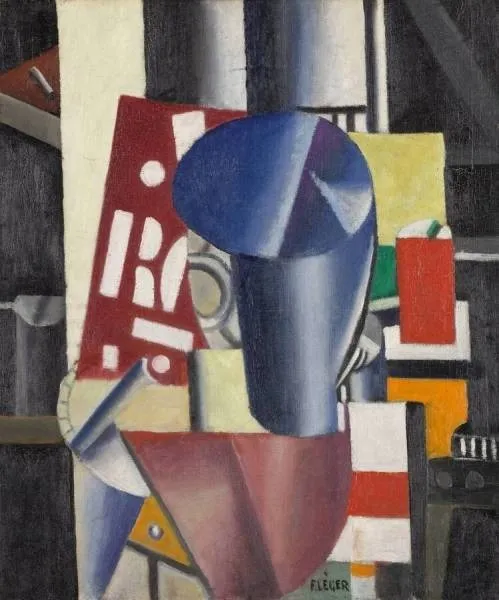
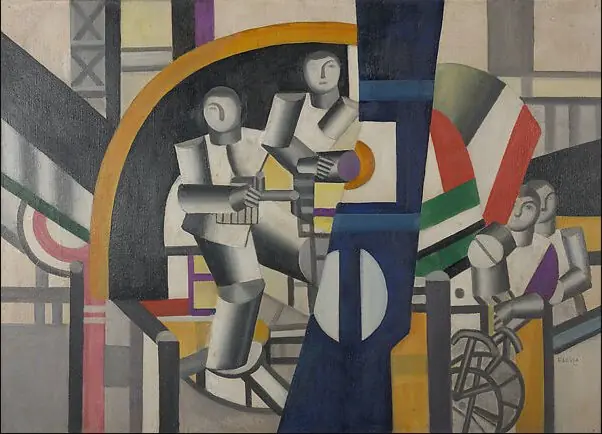
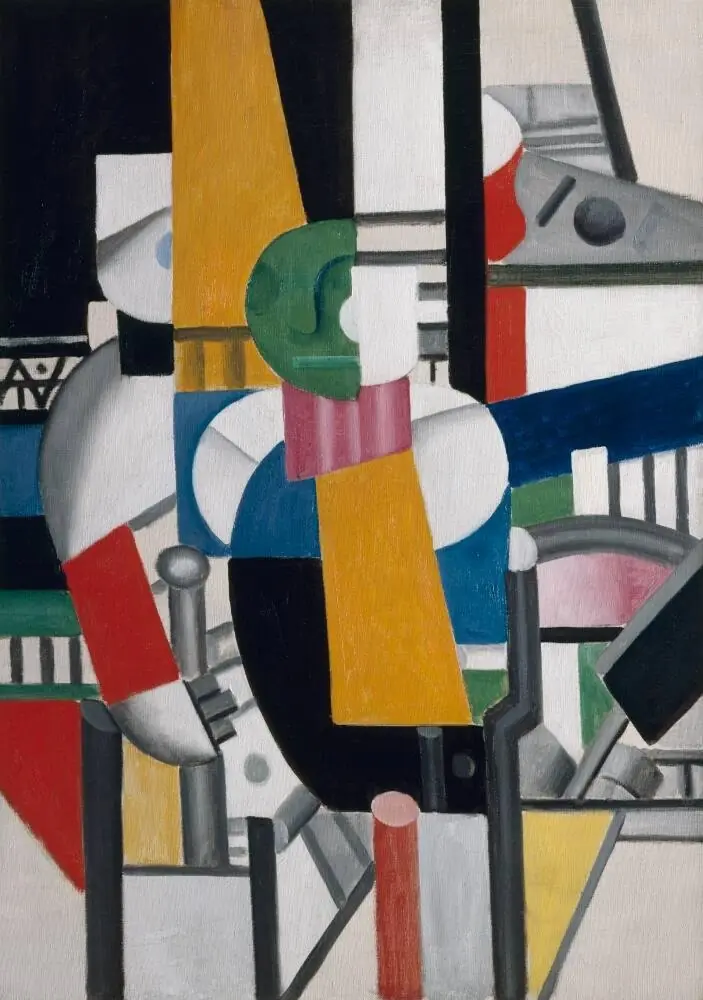
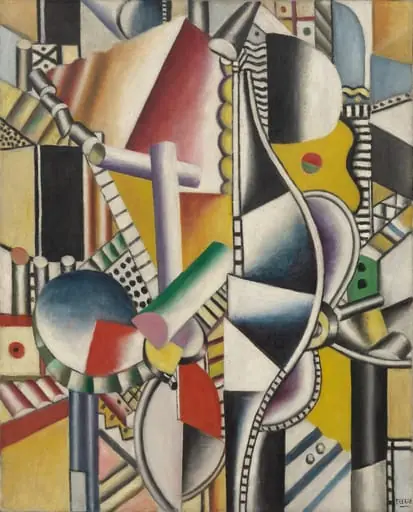
The Typographer is an oil painting by the Cubism Synthetic artist Fernand Léger. It dates from 1919 and is held in the collection of the Kröller-Müller Museum.
About this work
Overview
Fernand Léger’s 1919 oil work titled The Typographer presents a seated figure in a suit and hat, his visage partially concealed by a printed page. The composition juxtaposes a recognizable human presence with a backdrop of simplified, geometric forms rendered in subdued tones, creating a dialogue between representation and abstraction.
Subject & Meaning
The central figure suggests a typographer or printer, his identity hinted at by the overlay of newspaper or book material that masks part of his face. This interplay may reflect the early twentieth‑century fascination with mechanized communication, positioning the individual within the burgeoning world of mass media.
Technique & Style
Léger employs a realistic treatment for the man’s features, using careful modeling and naturalistic shading, while the surrounding space is reduced to flat, bold shapes and limited colour palettes. The contrast between detailed figuration and abstracted background underscores his interest in merging figurative and cubist tendencies.
History & Provenance
Created in the immediate post‑World War I period, The Typographer entered the collection of the Kröller‑Müller Museum in the Netherlands, where it remains on display. The museum’s acquisition reflects Léger’s growing reputation among European modernists during the early 1920s.
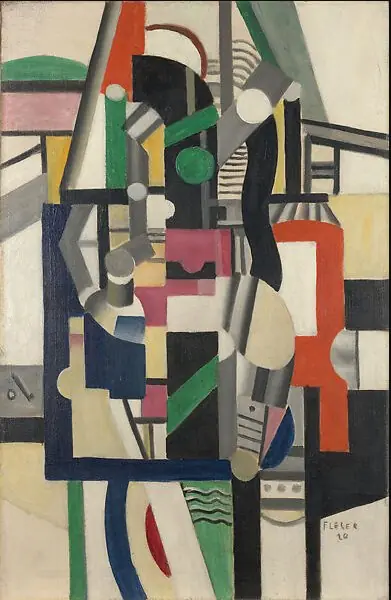
Artist & collection
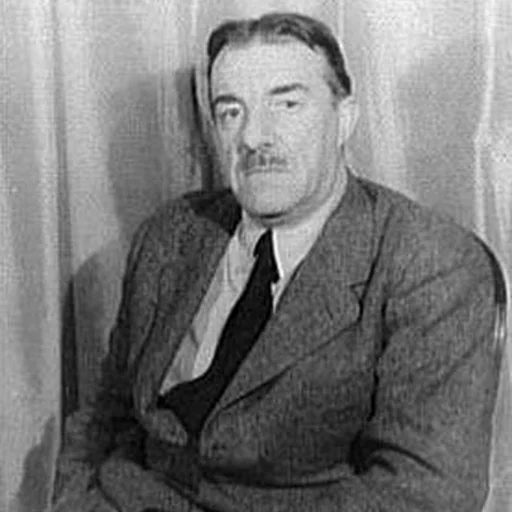
Artist
Joseph Fernand Henri Léger was a French painter, sculptor, and filmmaker. In his early works he created a personal form of cubism which he gradually modified into a more figurative, populist style. His boldly simplified…