Artwork
Mechanical Elements
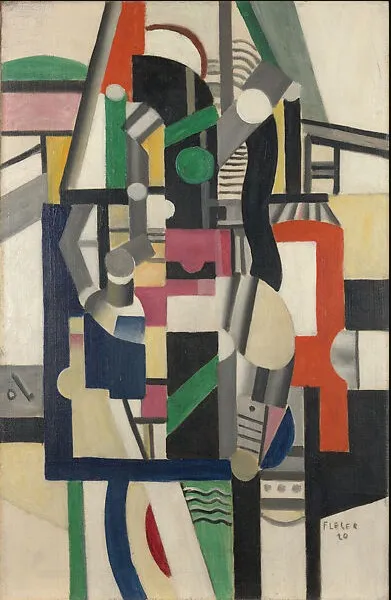
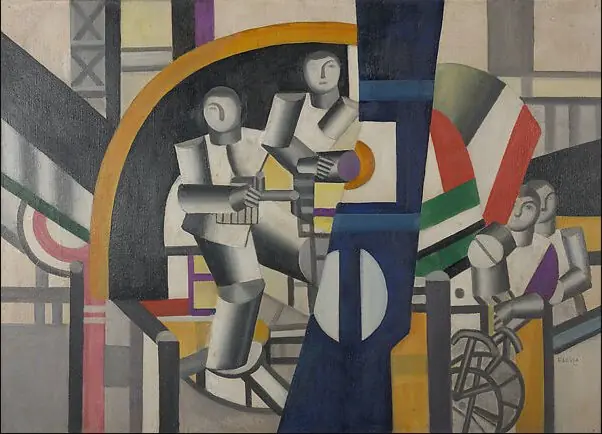
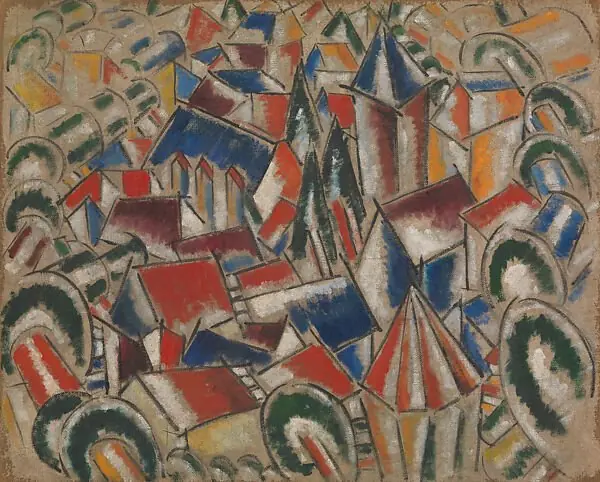
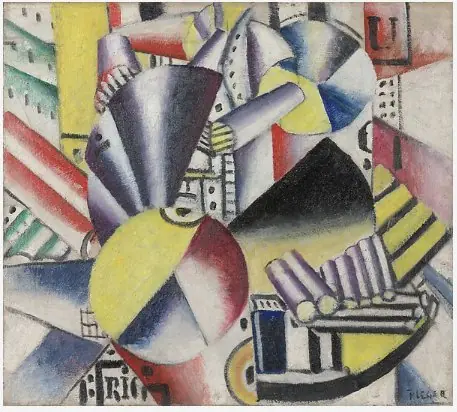
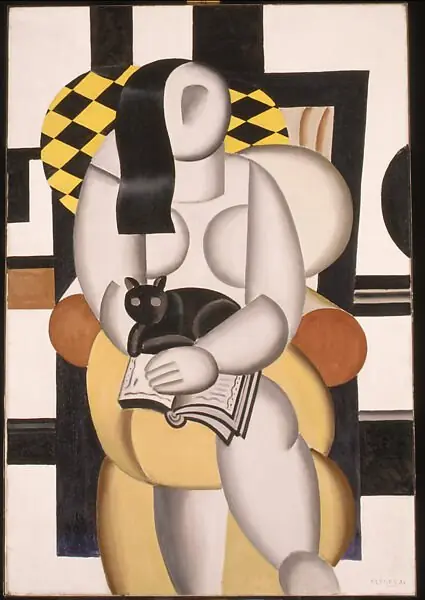
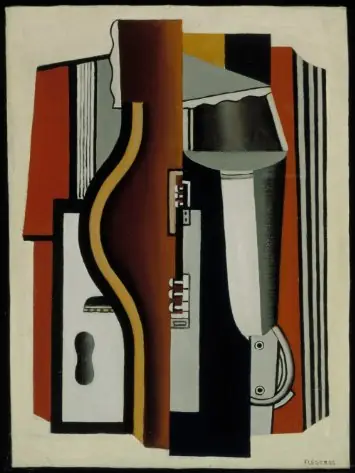
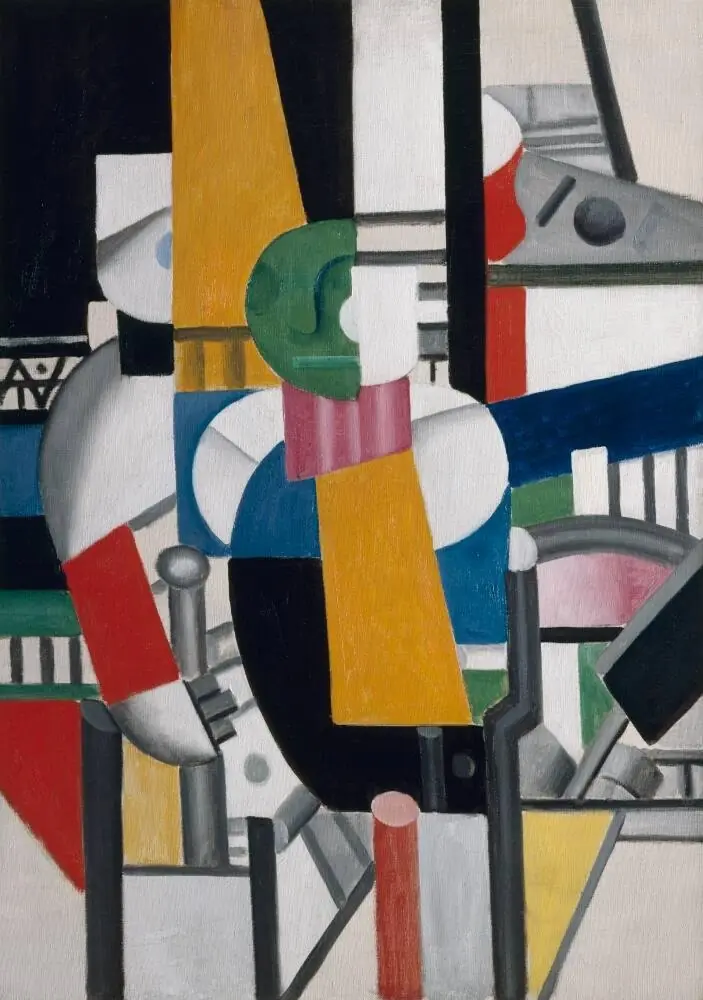
Mechanical Elements is an oil painting by the Cubism Synthetic artist Fernand Léger. It dates from 1920 and is held in the collection of the Metropolitan Museum of Art.
About this work
Technique & Style
Created in 1920, Mechanical Elements is an oil painting executed on canvas. The work measures 92.1 cm in height and 59.7 cm in width. Classified within the abstract genre and associated with the abstract art movement, the piece depicts non-representational forms.
The medium consists of oil paint applied to a canvas support, a standard technique for the period's avant-garde movements.
History & Provenance
It was subsequently acquired by a private collection, then by Eugene Thaw, and later by collectors Natasha Gelman and Jacques Gelman.
Fernand Léger painted Mechanical Elements in 1920. The work later entered the collection of Theodore Schempp before passing through the Sidney Janis Gallery. It was subsequently acquired by a private collection, then by Eugene Thaw, and later by collectors Natasha Gelman and Jacques Gelman.
The painting was ultimately transferred to the Metropolitan Museum of Art, where it remains. The work was included in the exhibition Twentieth-Century Modern Masters: The Jacques and Natasha Gelman Collection.
Overview
Painted in 1920, Mechanical Elements is a quintessential example of Fernand Léger's "Tubist" or "Mechanical" period, where the artist sought to harmonize the human figure with the industrial machine age. The composition abandons traditional perspective in favor of a flat, dynamic arrangement of geometric forms that evoke gears, pistons, pipes, and metallic components. Léger employs a restricted yet vibrant palette of primary reds, greens, blacks, and whites to define these hard-edged shapes, creating a sense of rhythmic movement and structural solidity.
The painting reflects the artist's fascination with the aesthetics of modern industry and mass production, treating mechanical parts with the same formal rigor previously reserved for the human body. This work marks a significant moment in Léger's career, solidifying his unique contribution to Cubism by moving beyond the fragmentation of form toward a celebration of the machine's clarity and order. It stands as a definitive statement of the interwar avant-garde's embrace of technology, distinguishing itself from the more analytical approach of early Cubism through its bold, graphic clarity and optimistic engagement with the modern world.
Subject & Meaning
The painting presents a complex arrangement of forms suggesting disassembled machinery. Viewers can discern sharp, geometric shapes reminiscent of gears, pipes, and various tools, intermingled with circles and cylinders. These elements appear both overlapping and disconnected, evoking the internal workings of a machine that has been taken apart and reconfigured into a new, abstract order.
Artist & collection

Artist
Joseph Fernand Henri Léger was a French painter, sculptor, and filmmaker. In his early works he created a personal form of cubism which he gradually modified into a more figurative, populist style. His boldly simplified…