Artwork
Decorative Panel ''Trophies and Cupids"
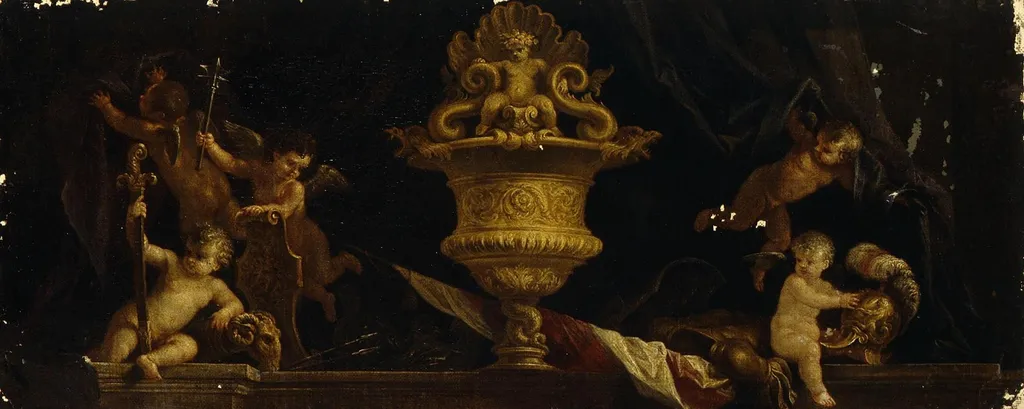
Decorative Panel ''Trophies and Cupids" is an oil painting by the High Baroque Italian artist Filippo Lauri. It dates from 1650 and is held in the collection of the Hermitage Museum.
About this work
Overview
Created around 1650 by Filippo Lauri, this oil-on-canvas panel is a decorative work featuring mythological figures in a dramatic, shadowed setting.
Created around 1650 by Filippo Lauri, this oil-on-canvas panel is a decorative work featuring mythological figures in a dramatic, shadowed setting. It is part of the collection at the State Hermitage Museum in Saint Petersburg. The composition centers on a gilded vase surrounded by putti, rendered with heightened contrast and tactile brushwork to emphasize volume and movement against a deep background.
Subject & Meaning
The painting depicts putti, cherubic, nude boys common in Baroque allegory, engaged in playful, almost ritualistic activity around a ornate vase. Their poses suggest guardianship or celebration, possibly symbolizing the arts, victory, or abundance. The inclusion of weapons and a discarded hat introduces a sense of transient triumph, blending classical motifs with lighthearted, theatrical energy typical of mid-17th-century Roman decorative art.
Technique & Style
Lauri employed thick impasto strokes on the vase and figures to create a sculptural effect, allowing light to catch raised surfaces and enhance three-dimensionality. The dark, near-black background isolates the golden forms, heightening their luminosity. Delicate detailing in the vase’s scrollwork contrasts with the loose, energetic handling of the putti’s skin and drapery, reflecting a blend of precision and expressive brushwork.
History & Provenance
The panel entered the Hermitage collection in the 19th century, likely acquired during a period of expanded European art acquisitions. Its origin as a decorative piece suggests it may have adorned a private Roman villa or aristocratic interior. While little is documented about its early ownership, its stylistic consistency with Lauri’s known works from the 1640s–1660s supports its dating and attribution.
Context
In mid-17th-century Rome, decorative panels featuring putti and mythological symbols were popular among elite patrons seeking refined, allegorical interiors. Lauri, trained in the circle of Pietro da Cortona, adapted classical themes with a lively, almost theatrical sensibility. This work reflects a trend toward ornamental elegance that bridged religious grandeur and secular delight in Roman artistic culture.
Legacy
Though not among Lauri’s most widely studied works, the panel exemplifies the Baroque fascination with illusionistic decoration and the expressive potential of putti. Its preservation in a major public collection ensures continued study of how mythological motifs were adapted for domestic spaces, offering insight into the intersection of fine and decorative arts in early modern Italy.
Artist & collection

- Still life with candlestick of the "Labours of Hercules" series and two ewers
 Obst- und Gemüsestillleben
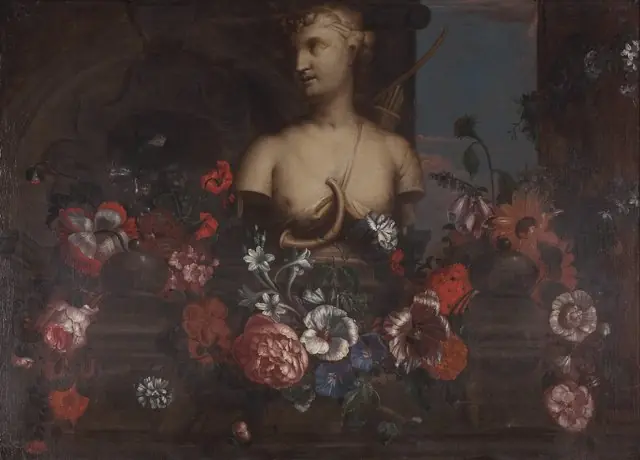 A Bust of Diana with a Garland
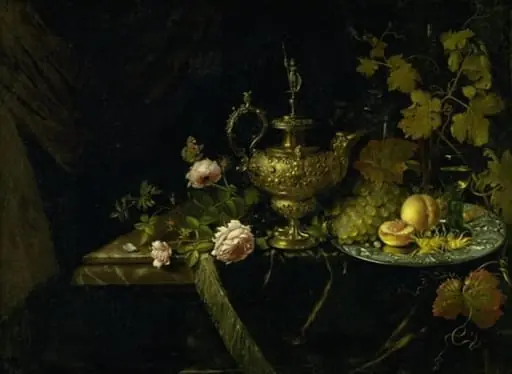 Still Life
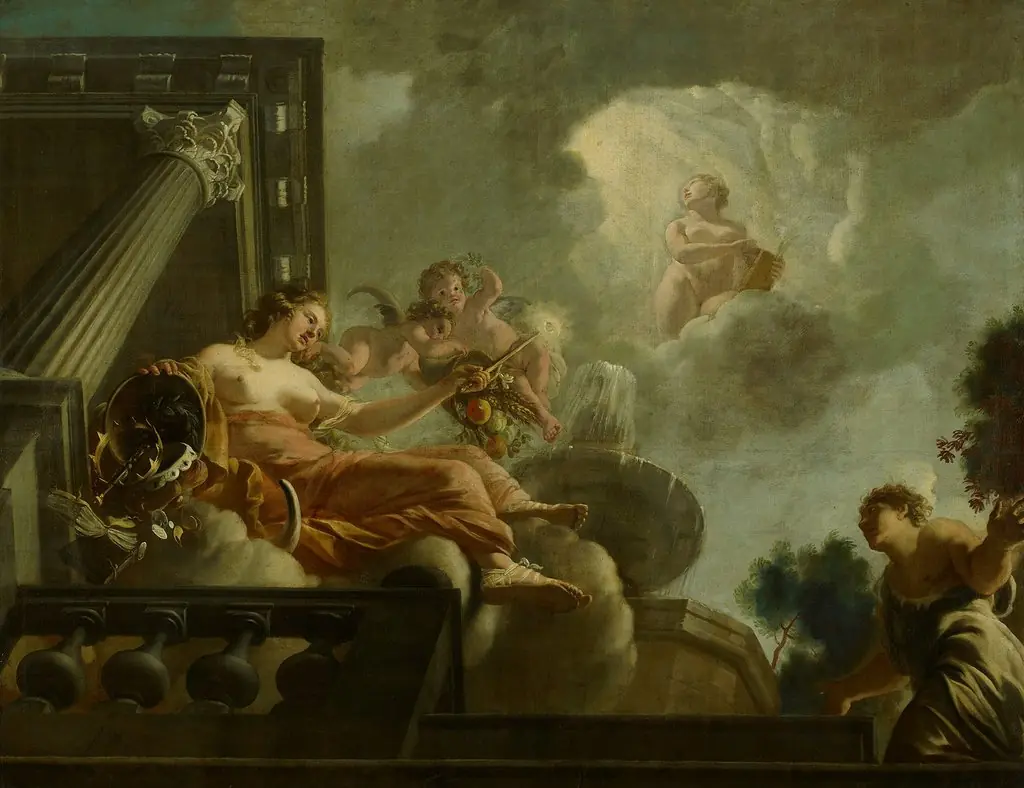 Religio begunstigt Abondantia : Allegorische voorstelling van de verzorging van leprozen en onnozelen
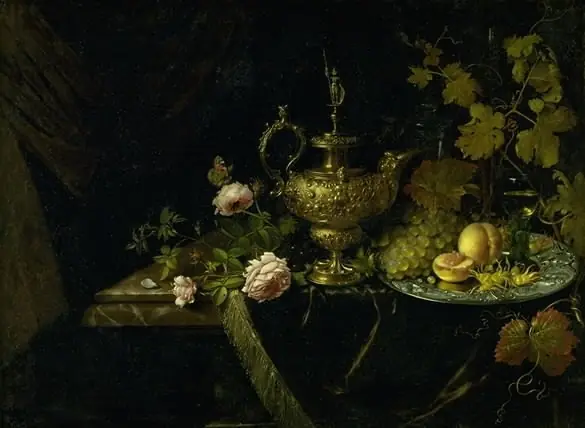 Still Life
 Still life with wine glass and stoneware jug
 Coving, the Nef of Louis XIV
 Flowers in a Stone Vase
 Arkitekturstykke
 Saint Georges delivering Saint Margaret
 Achilles and the Centaur Cheiron