Artwork
Portrait of a Young Woman
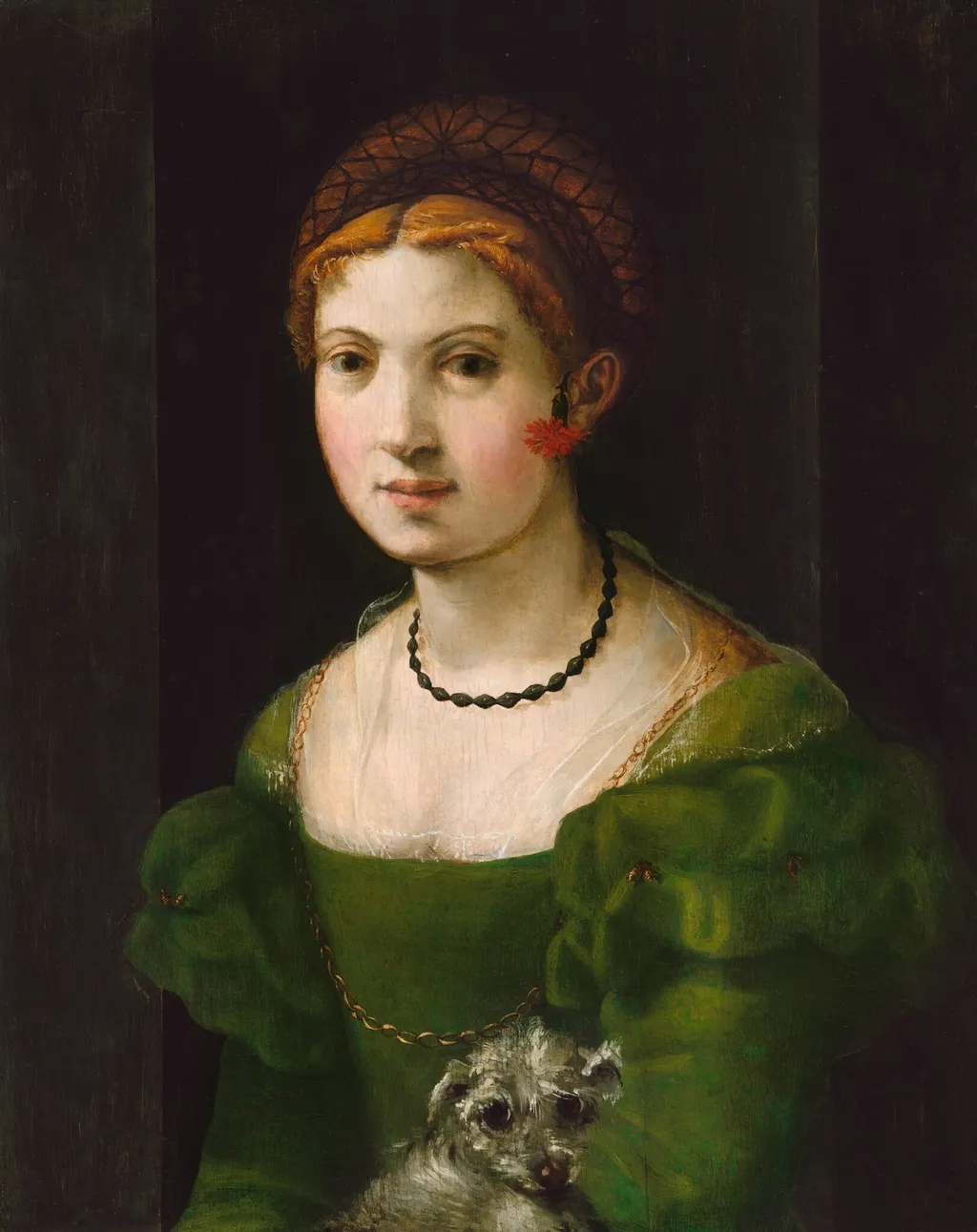
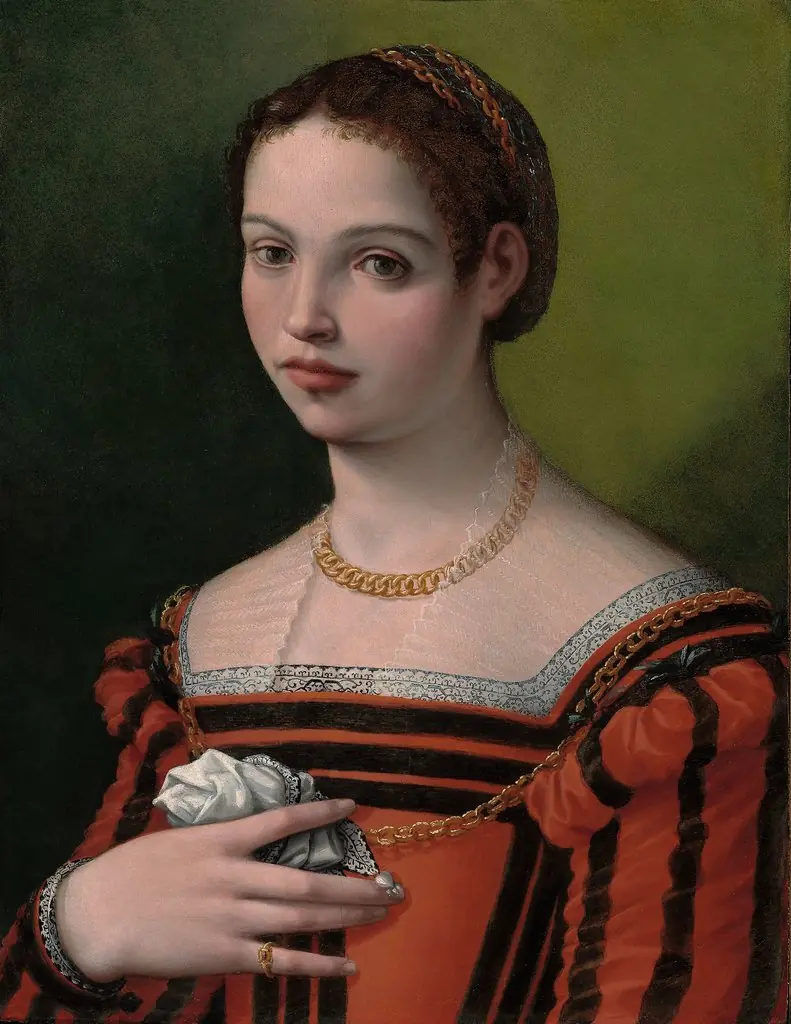
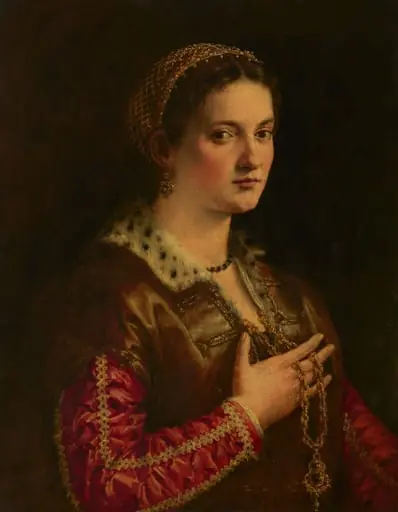
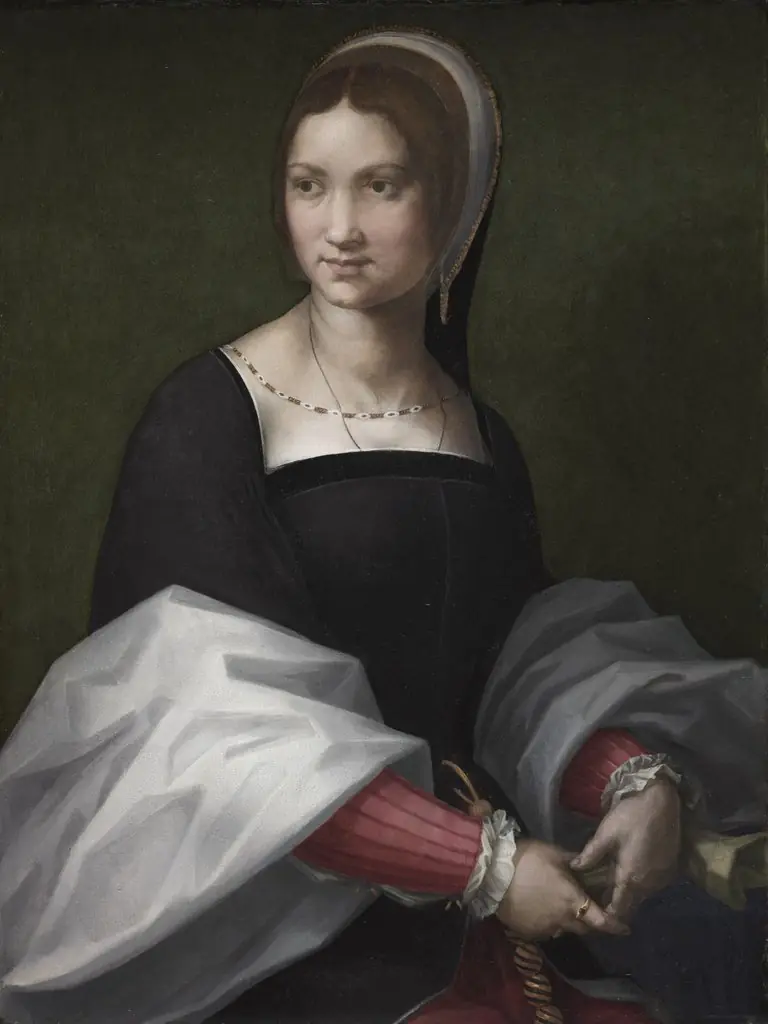
Portrait of a Young Woman is an oil painting. It dates from 1535 and is held in the collection of the National Gallery of Art. This oil on panel painting depicts a young woman seated alongside a dog, presenting a scene of quiet domesticity.
About this work
Subject & Meaning
The woman’s composed gaze and refined posture further emphasize virtues of chastity and poise, aligning with contemporary ideals of female virtue.
The Portrait of a Young Woman (1535) depicts an unidentified noblewoman, rendered with meticulous attention to aristocratic elegance. Her attire and adornments, particularly the delicate necklace, signal wealth and social standing, while the small dog resting on her lap serves as a conventional symbol of fidelity and marital loyalty in Renaissance portraiture. The woman’s composed gaze and refined posture further emphasize virtues of chastity and poise, aligning with contemporary ideals of female virtue.
Though the sitter’s identity remains unknown, the iconography reinforces a broader cultural meaning: the idealized representation of a virtuous, upper-class woman, merging personal likeness with allegorical ideals of domesticity and devotion.
Technique & Style
Created in 1535, the Portrait of a Young Woman is executed in oil paint on a wooden panel support. The work measures 55.9 cm in height and 44.5 cm in width. Stylistically attributed to a Florentine master of the 16th century, the painting presents a formal portrait of a young woman depicted alongside a dog and adorned with a necklace.
The medium of oil on panel was a standard practice for Florentine portraiture of this period, allowing for the detailed rendering of the sitter's features and accessories. The physical dimensions and material composition align with the classification of a 16th-century Italian panel painting held in the National Gallery of Art.
History & Provenance
The painting is dated to 1535 and executed in oil on panel. Its earliest documented owner was Duke Sigismund Franz at Schloss Ambras in Austria. The work subsequently passed to Leo Nardus (1868–1955) of Suresnes, France, and New York, who sold it in 1897 to Peter A.B. Widener of Lynnewood Hall, Elkins Park, Pennsylvania; at that point it was attributed to Bronzino.
It then entered the Estate of Peter A.B. Widener through inheritance via the power of appointment of Joseph E. Widener in Elkins Park, before being given to the National Gallery of Art in 1942. This provenance chain is recorded in curatorial notes by Edith Standen held in the NGA files.
The work is held by the National Gallery of Art, Washington, D.C., where it entered the collection as a gift from Joseph E. Widener in 1942 following inheritance from the Estate of Peter A.B. Widener. It carries National Gallery of Art accession number 1942.9.103. No exhibition history is documented in the cited sources.
Overview
This oil on panel painting depicts a young woman seated alongside a dog, presenting a scene of quiet domesticity. The subject's attire and the presence of the animal contribute to an impression of an ordinary moment. The artist's meticulous rendering of elements such as the woman's elaborate necklace and the dog's texture invites close observation, highlighting the detailed craftsmanship within the work.
Artist & collection