Artwork
Portrait of Isabella d'Este
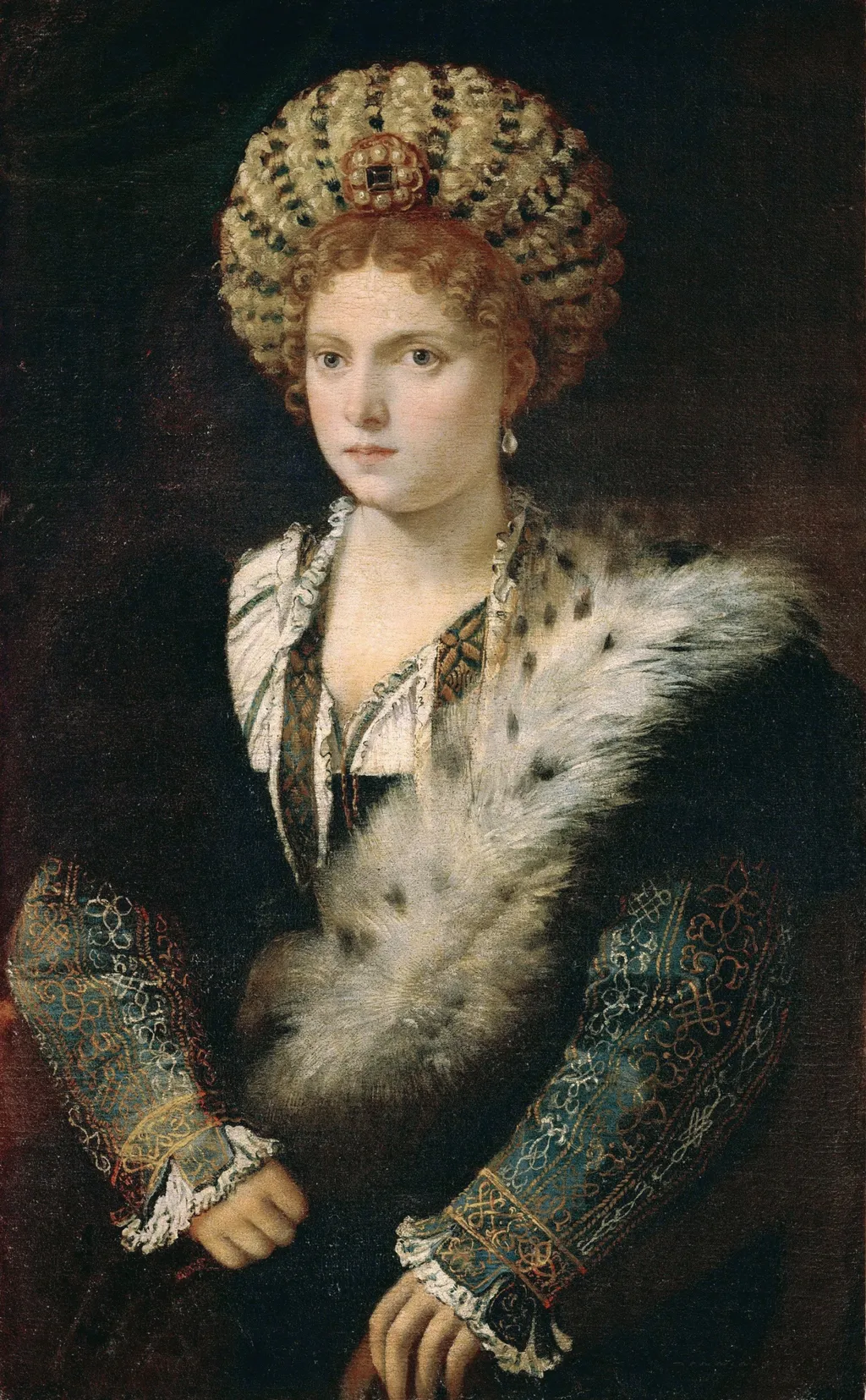
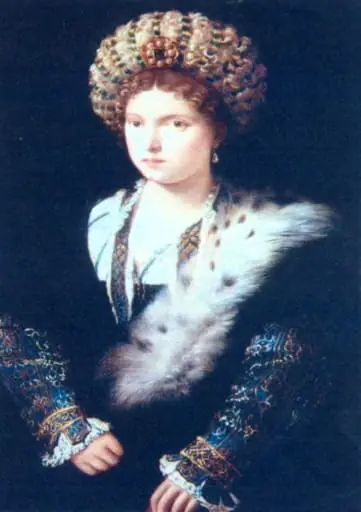
Portrait of Isabella d'Este is an oil painting by the Mannerist artist Titian. It dates from 1535 and is held in the collection of the Kunsthistorisches Museum.
About this work
Subject & Meaning
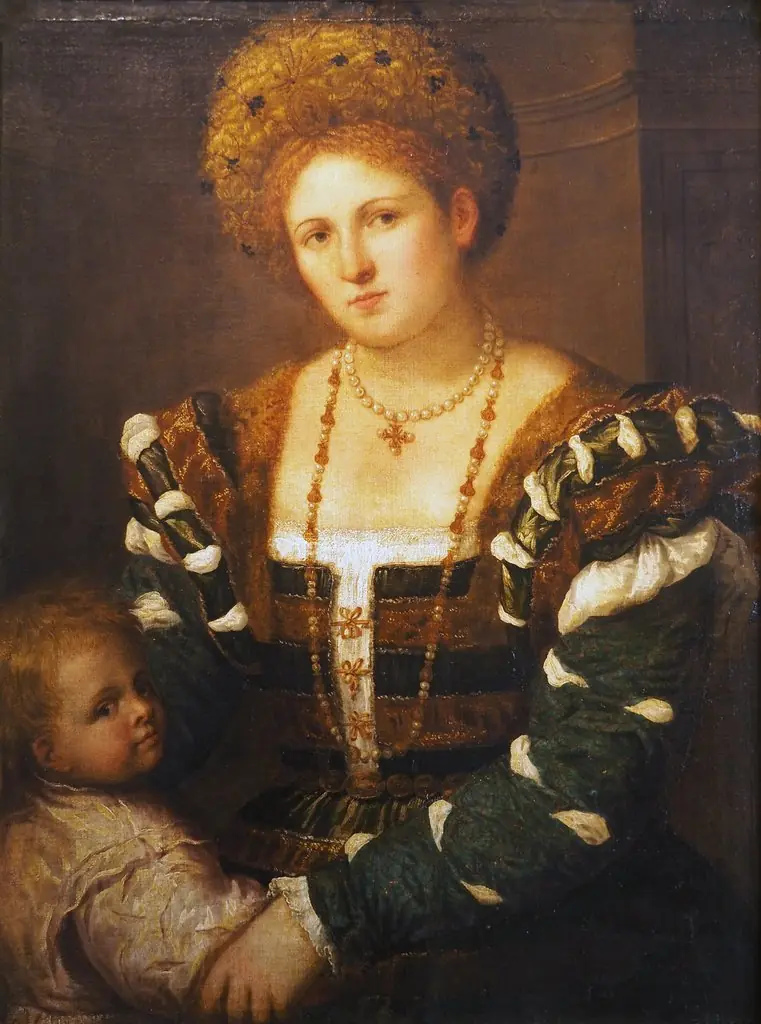
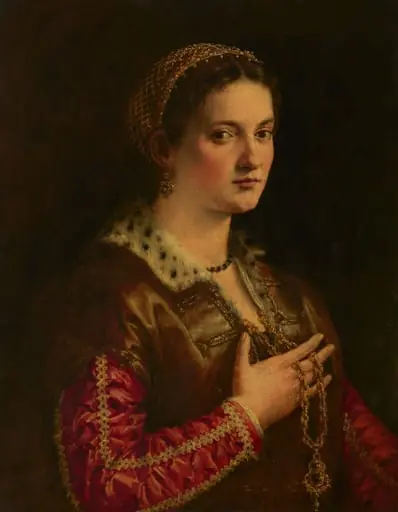
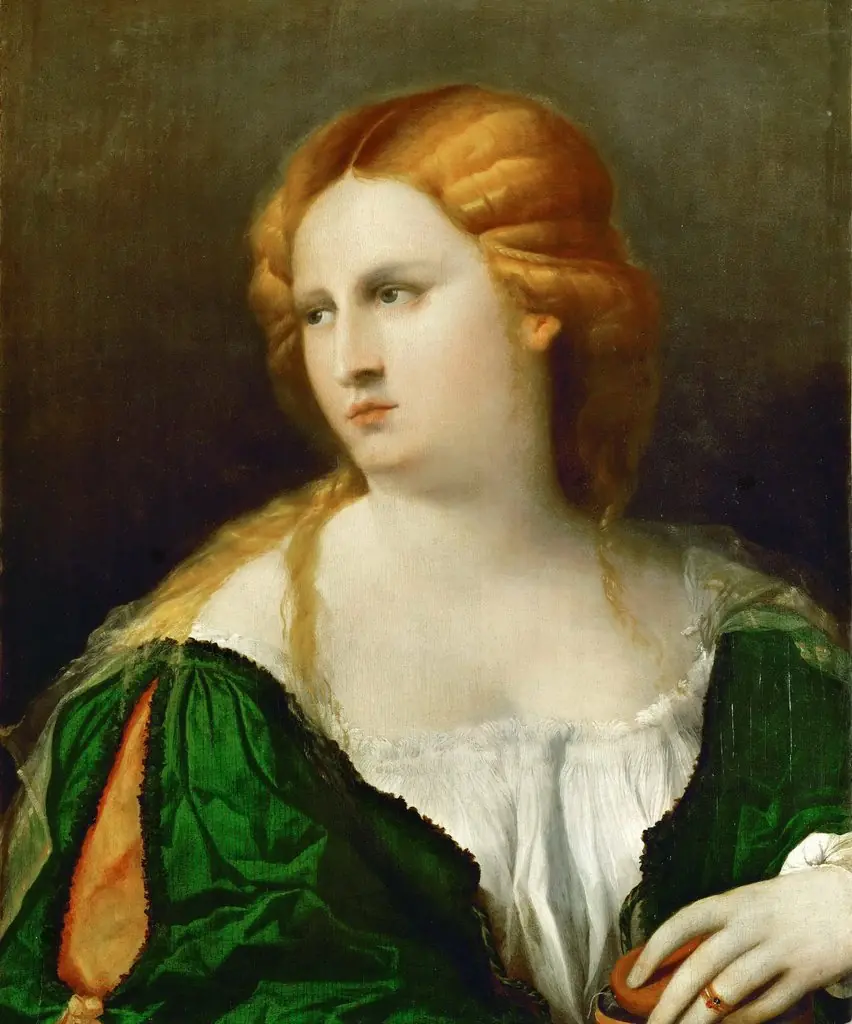
The work shows Isabella d'Este in three-quarter view, seated against a dark background and wearing a balzo headdress, a fashion innovation associated with her.
The work shows Isabella d'Este in three-quarter view, seated against a dark background and wearing a balzo headdress, a fashion innovation associated with her. Her attire includes green patterned sleeves, a gold shirt, and fur lining, while her expression combines soft features with a confident, upright posture that conveys intelligence and high social rank. The painting emphasizes her role as a cultural patron and fashion icon, presenting a realistic likeness marked by pale skin, rosy cheeks, and a dimpled chin rather than an idealized beauty.
The identification of the sitter as Isabella d'Este remains debated; scholars note the lack of resemblance to her known likenesses, with some suggesting the portrait may instead depict her successor as Marchioness of Mantua, Margherita Paleologa.
Technique & Style
Titian executed the Portrait of Isabella d'Este as an oil painting on canvas, measuring 102 cm in height and 64 cm in width. The work dates to the mid-1530s, around 1535, and is characterized by a dark, unadorned background that isolates the sitter. The canvas shows evidence of physical alteration, having been trimmed on both the left and right sides, likely to fit a specific frame or collection arrangement.
Stylistically, the painting adheres to the Venetian school, employing rich textures to depict the subject's lavish attire, including green patterned sleeves, gold embroidery, and a fur lining identified as possibly lynx. The sitter is rendered in a three-quarter view with a stiff, upright posture that conveys an imperious demeanor. Titian emphasizes specific physiognomic details, such as light grey eyes, flat eyebrows, and a snub nose, presenting a forceful personality rather than an idealized standard of beauty. The composition focuses on the voluminous balzo headdress, rendered with gold threads and jewels.
History & Provenance
The Portrait of Isabella d'Este is an oil on canvas by Titian, dated to the mid-1530s. It was commissioned by Isabella d'Este, who, then about sixty, requested that Titian create a youthful idealization based on a lost 1511 portrait by Francesco Francia. Titian completed the work around 1535, and the sitter's surviving correspondence praises the flattering result.
The painting likely originated in the Gonzaga collection in Mantua before passing to Archduke Leopold Wilhelm of Austria. In the Archduke's 1659 inventory, the work was misidentified as a portrait of Catherine Cornaro, Queen of Cyprus. A later engraving by Lucas Vorsterman attempted to reattribute the subject to Isabella, though that inscription was added generations after the fact. The canvas was subsequently trimmed on both sides before entering the Kunsthistorisches Museum in Vienna.
The painting is held by the Kunsthistorisches Museum in Vienna, where it is recorded under inventory number 367 in the 1659 collection inventory of Archduke Leopold Wilhelm. It has appeared in exhibitions and museum publications devoted to Isabella d'Este and to Titian, which reflect the ongoing scholarly debate over the sitter's identity.
Context
Scholarly debate has long centered on the identification of Titian's painting and its relationship to Isabella d'Este's self-fashioning as a cultural icon. Early twentieth-century critics such as Wilhelm Suida and Leandro Ozzola rejected the traditional ascription to the sixty-year-old marchioness in the mid-1530s, noting the sitter's lack of idealized beauty and the absence of physiognomic resemblance to documented likenesses. The later inscription on a Rubens engraving, citing Titian's work as a commission executed after a lost 1511 Francia portrait, has been questioned as unreliable, having been added three to four generations after the fact.
By the 1990s, the portrait's contested status persisted despite its inclusion in the Kunsthistorisches Museum's Isabella d'Este exhibition of 1994, where it was presented as a straightforward likeness. Today, the painting is recognized as emblematic of Titian's Venetian practice of negotiating courtly expectations, blending flattery with psychological acuity, yet its place in Isabella's iconography remains unresolved.
Legacy
The painting's legacy is defined by a persistent scholarly debate over the sitter's identity, despite its traditional attribution to Titian. While the Kunsthistorisches Museum long presented the piece as the definitive portrait of Isabella d'Este, referencing the 1659 inventory error that had misidentified it as Catherine Cornaro, modern criticism has challenged this certainty. Scholars such as Wilhelm Suida and Leandro Ozzola rejected the identification in the 1930s, citing the subject's lack of idealized beauty and physical resemblance to the elderly patron.
Consequently, the work is often cited as an example of how later attributions were applied to figures wearing the distinctive balzo headdress. It remains a focal point in discussions of Isabella's wish to be remembered as a youthful beauty, even as experts question whether it depicts her or her successor, Margherita Paleologa.
Overview
Titian’s oil painting, commonly known as the Portrait of Isabella d’Este, dates from the mid‑1530s and is part of the collection of the Kunsthistorisches Museum in Vienna. The work presents a young woman in a three‑quarter view, her gaze direct and assured, set against a subdued background that emphasizes the richness of her attire.
Own this work as a print
Artist & collection
Artist
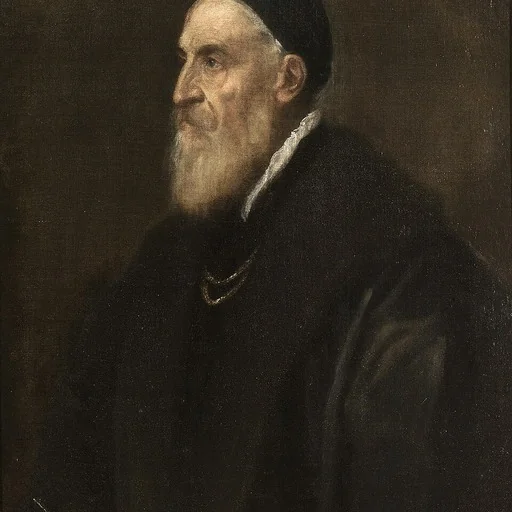
Tiziano Vecellio (Italian:; c. 1488/1490 – 27 August 1576), Latinized as Titianus, hence known in English as Titian ( TISH-ən), was an Italian Renaissance painter. The most important artist of Renaissance Venetian…