Artwork
Ugolino Martelli
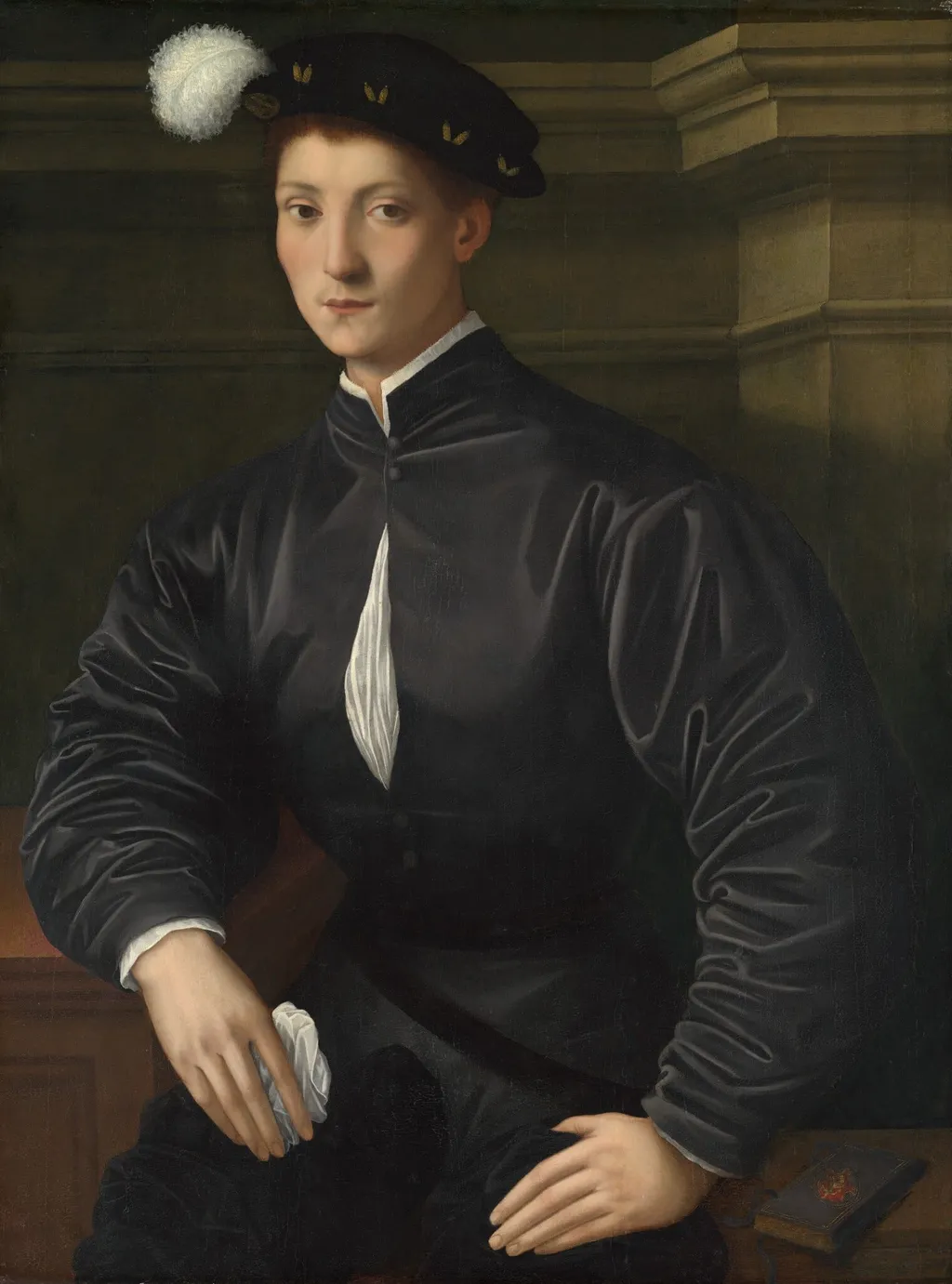
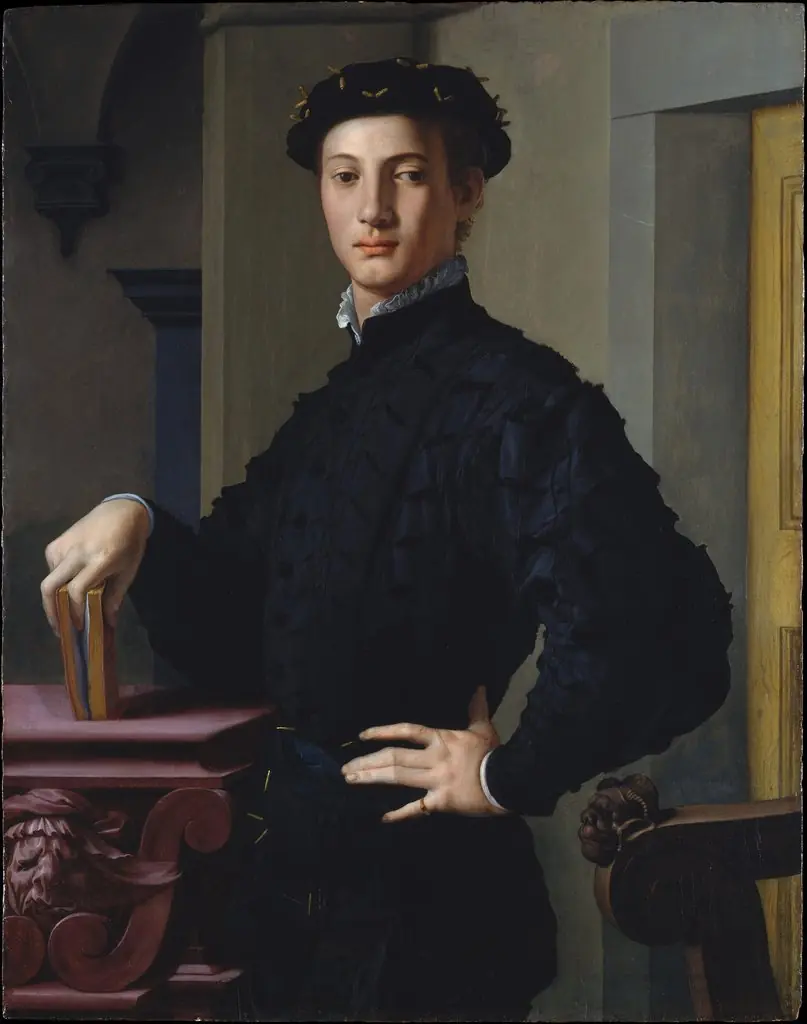
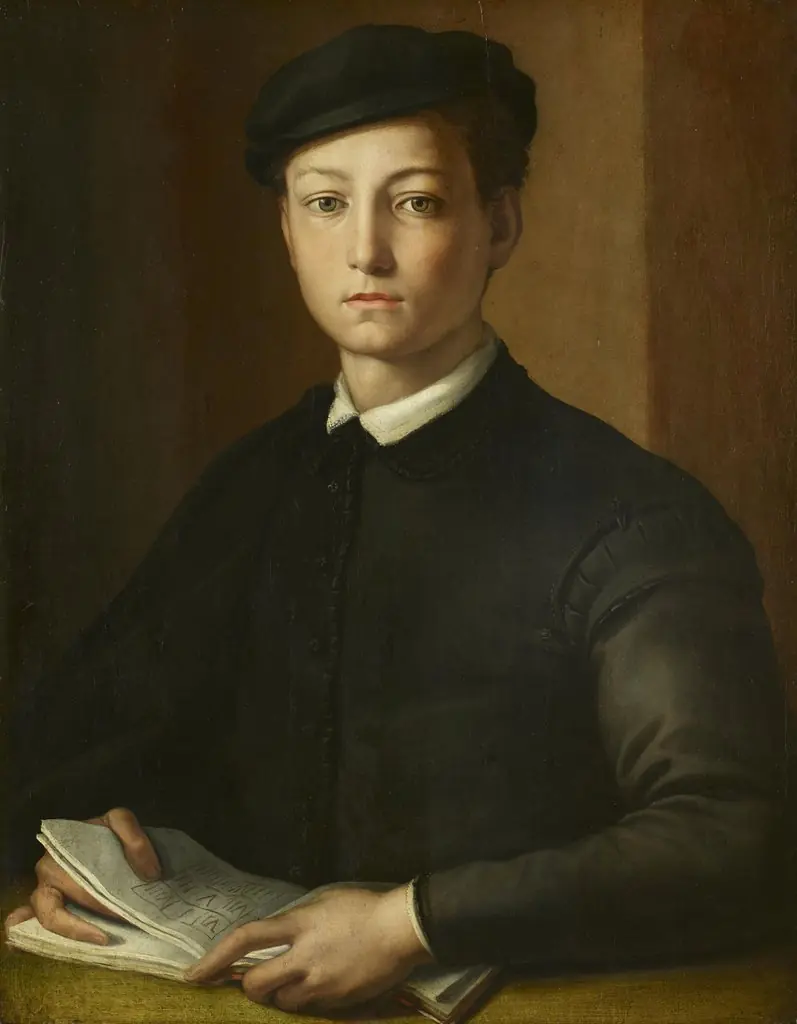
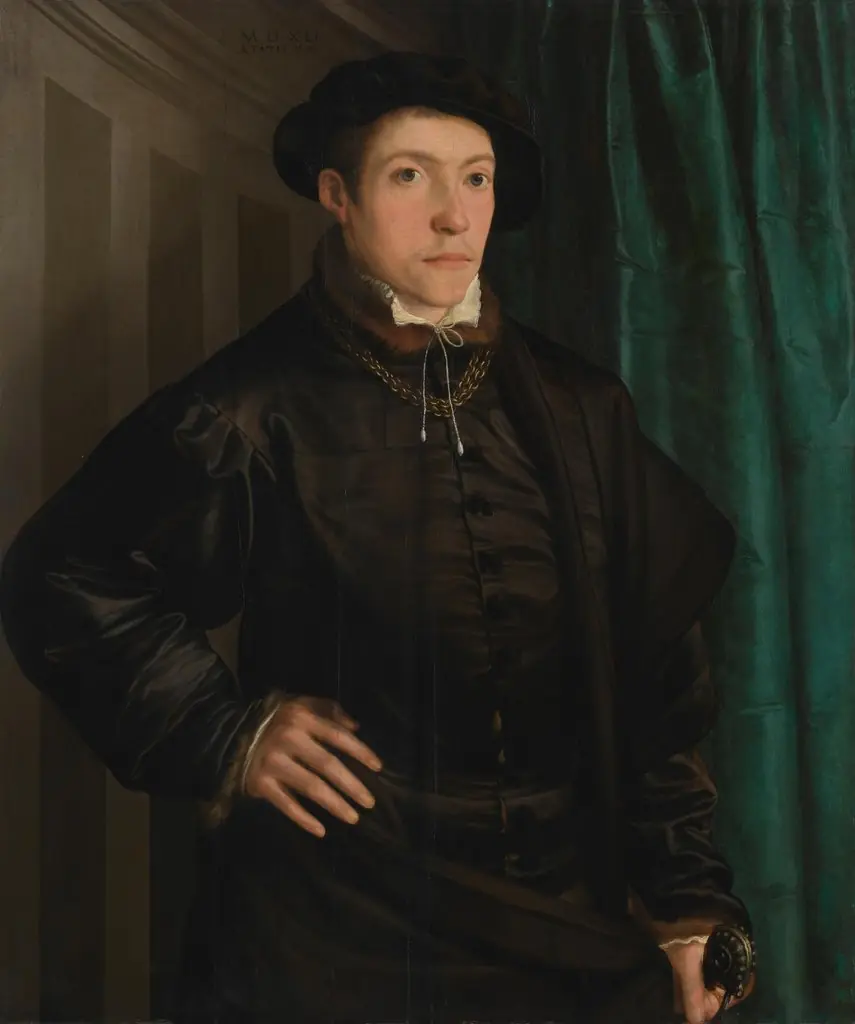
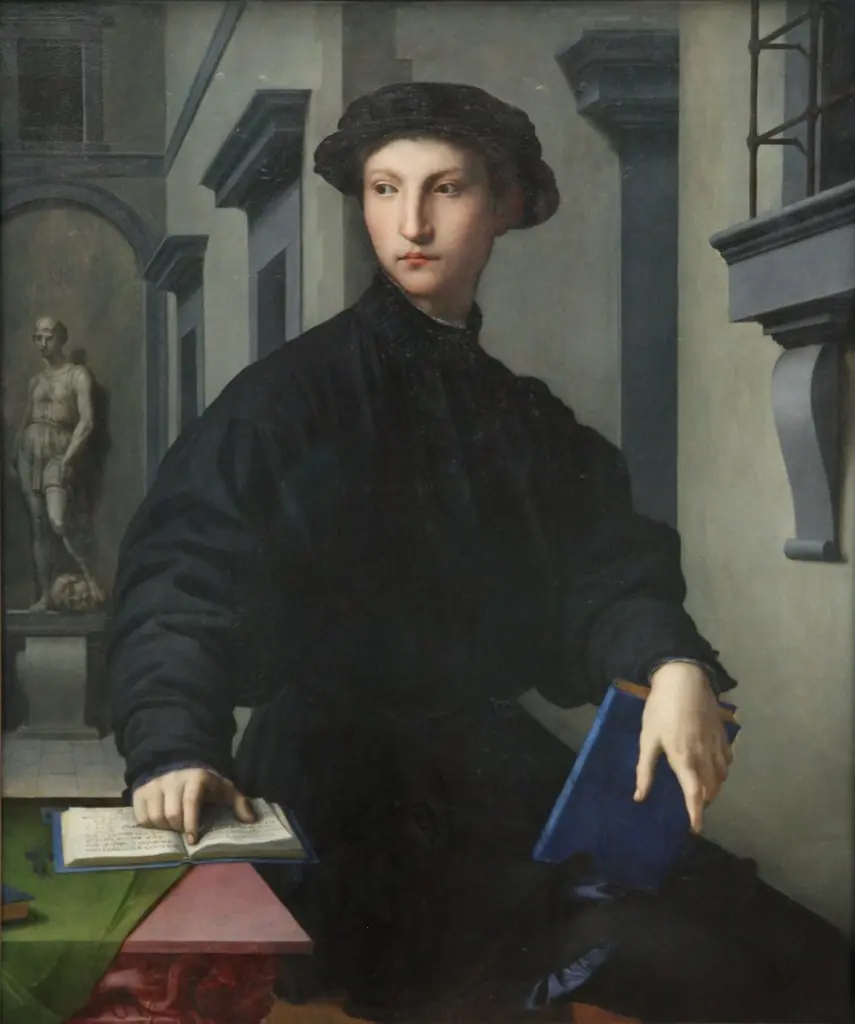
Ugolino Martelli is an oil painting. It dates from 1550 and is held in the collection of the National Gallery of Art. The work is an oil painting on panel depicting a young man dressed in a dark velvet doublet with a high white collar.
About this work
Technique & Style
The handling reflects the Florentine mid-sixteenth-century tradition, characterized by smooth transitions and careful modeling of the sitter's features.
The portrait is executed in oil on a wooden panel support, measuring 91.4 cm in height and 68 cm in width. The handling reflects the Florentine mid-sixteenth-century tradition, characterized by smooth transitions and careful modeling of the sitter's features. The composition centers on a three-quarter view of the figure, set against a neutral background that emphasizes the individual's presence and status.
The palette is restrained, with subdued earth tones and measured highlights on the face and hands, aligning with contemporary conventions for portraiture in central Italy.
History & Provenance
The portrait was painted around 1550 by a Florentine artist of the sixteenth century. It entered the collection of Count Alessandro Contini Bonacossi in Florence and later Rome. In 1931, the painting was sold by Contini Bonacossi to the Samuel H. Kress Foundation in New York.
The Kress Foundation gifted it to the National Gallery of Art, Washington, D.C., in 1939, where it remains in the Samuel H. Kress Collection under accession number 1939.1.178.
Overview
The work is an oil painting on panel depicting a young man dressed in a dark velvet doublet with a high white collar. He wears a black hat topped with a fluffy white pom‑pom and a modest gold emblem, and holds a small folded cloth in one hand while the other rests on a dark case bearing a crest. The background is uniformly dark, emphasizing the figure.
Subject & Meaning
The portrait presents an individual of apparent status, suggested by the fine fabrics, decorative hat, and the crested case, which may indicate a personal or familial emblem. The inclusion of the folded cloth and the case hints at a possible professional or ceremonial role, though the exact identity remains unspecified.
Context
Executed in oil on panel, the painting reflects a period when portraiture emphasized realism through controlled lighting and detailed rendering of clothing. The use of a dark, unadorned background aligns with contemporary conventions that isolate the subject for visual emphasis.
Artist & collection