Artwork
Portrait of a Man
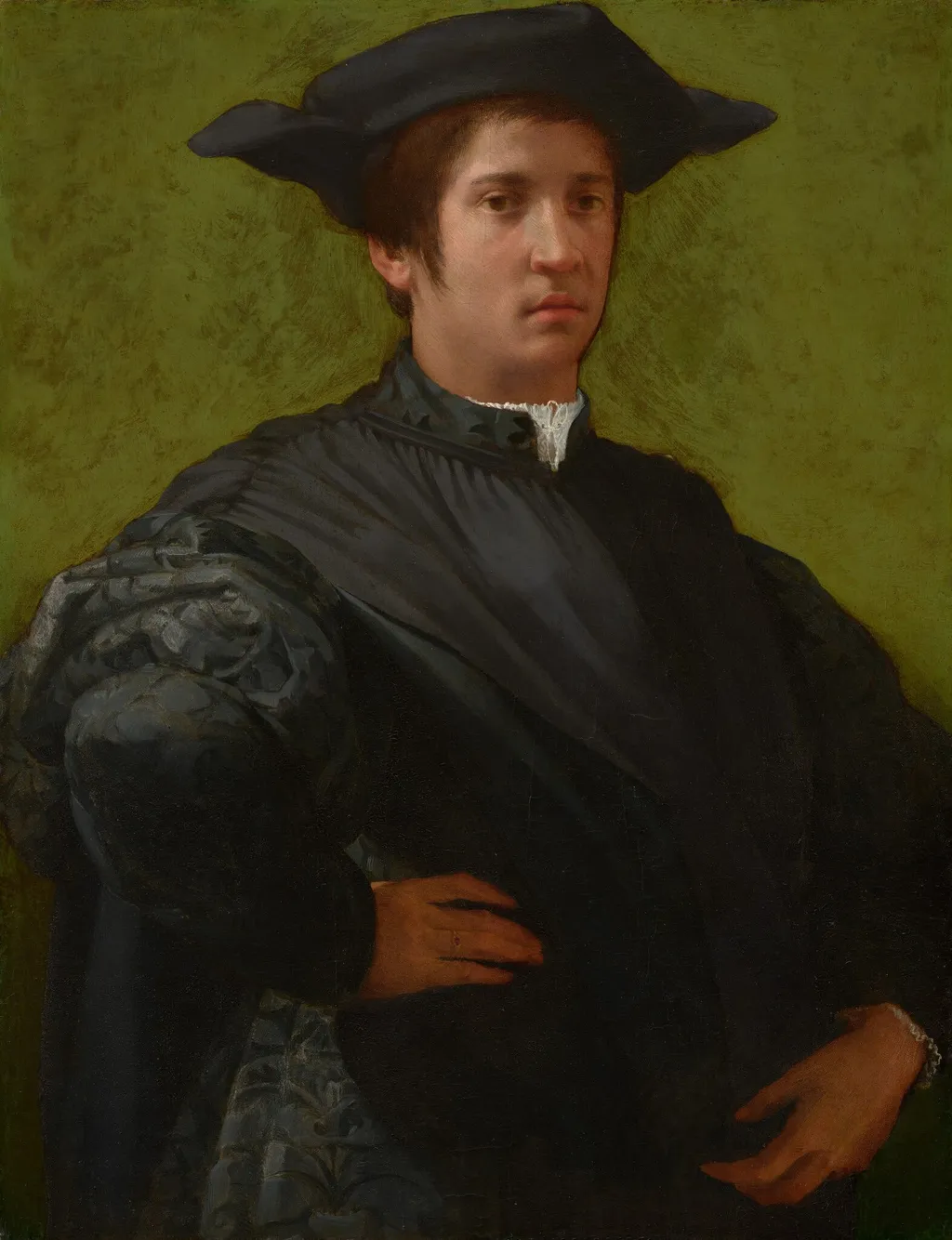
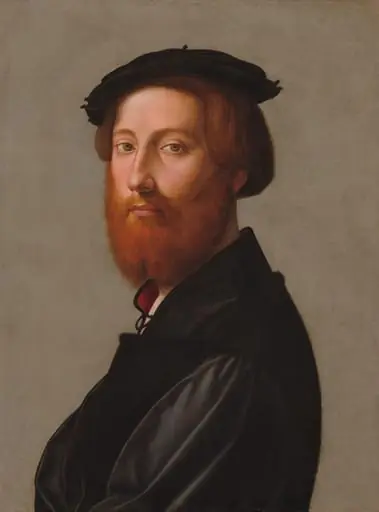
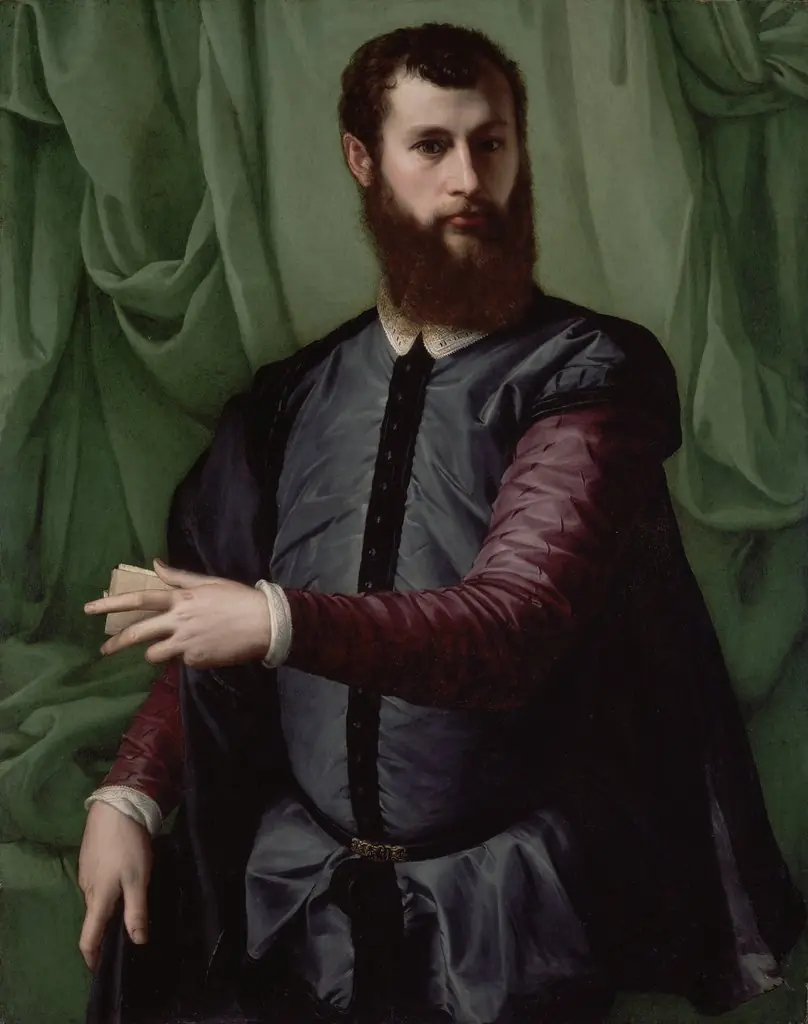
Portrait of a Man is an oil painting by the Mannerist artist Rosso Fiorentino. It dates from 1524 and is held in the collection of the National Gallery of Art.
About this work
Subject & Meaning
Technical analysis reveals that the wood panel was reused from an earlier altarpiece, indicating Rosso Fiorentino's practice of recycling materials.
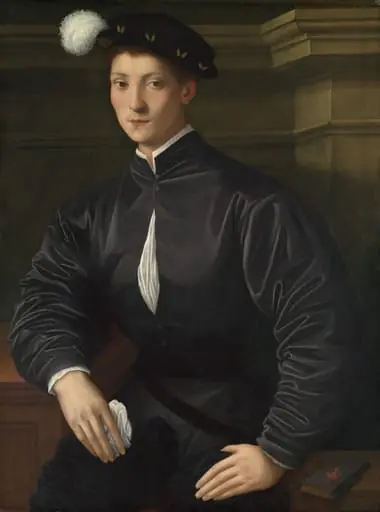
The painting shows a half-length portrait of a young man turned three-quarters to the right, his left hand resting at his waist and his right hand near his belt. He wears a black doublet and hat, while a white, pleated shirt emerges at the collar, signaling aristocratic dress. The composition emphasizes his expressive face and individual presence.
Technical analysis reveals that the wood panel was reused from an earlier altarpiece, indicating Rosso Fiorentino's practice of recycling materials. The sitter's identity is undocumented, but the portrait likely represents a contemporary elite figure, embodying Renaissance ideals of status and personal distinction.
Technique & Style
Executed in 1524, this work is an oil painting on a wooden panel measuring 88.7 by 67.9 centimeters. Technical analysis via X-ray reveals that the artist reused a pre-painted fragment of another composition, possibly a rejected altarpiece, which depicts a female saint in profile beneath the current portrait. Stylistically, the piece features a half-length figure of a young man set against a green background, dressed in black aristocratic attire with a white pleated shirt.
The composition is defined by a dynamic pose, with one arm akimbo and the elbow projecting diagonally in foreshortening. The application of paint is characterized by a rapid, somewhat frayed brushwork that leaves visible strokes, prioritizing expressive facial individuation over meticulous detail, a handling typical of Rosso Fiorentino's approach during this period.
History & Provenance
The Portrait of a Man is dated 1524 and is one of Rosso Fiorentino's early Florentine works, stylistically aligned with the Marriage of the Virgin (1523). Technical examination revealed that the panel reused a pre-painted fragment, possibly from a rejected altarpiece such as the Spedalingo Altarpiece, depicting a female saint in profile, later echoed in Rosso's Cherub Playing a Lute (1521). The painting first appears in records in 1857 as part of the collection of Sir Thomas Sebright at Beechwood Park, England.
By descent it passed to Sir Giles Edward Sebright and was sold in 1937 at Christie's, London, as a work by Andrea del Sarto. It then entered the holdings of Eugenio Ventura, Rome, and Count Alessandro Contini Bonacossi, Florence and Rome, who sold it in 1950 to the Samuel H. Kress Foundation; the Foundation donated the work to the National Gallery of Art, Washington, in 1961.
The painting is held at the National Gallery of Art, Washington, D.C., accessioned as part of the Samuel H. Kress Collection. It was first recorded in 1857 in the collection of Sir Thomas Sebright at Beechwood Park, England, later passing to Sir Giles Edward Sebright and sold in 1937 as Andrea del Sarto. Acquired by Alessandro Contini-Bonacossi in the 1930s, it was sold to the Samuel H. Kress Foundation in 1950 and donated to the museum in 1961.
Context
Scholarship on the Portrait of a Man has clarified Rosso Fiorentino's authorship, correcting earlier attributions to Andrea del Sarto that persisted in British collections until the 1930s. Technical analysis, specifically X-radiography, revealed the artist reused a painted panel fragment, likely from a rejected altarpiece such as the Spedalingo Altarpiece. This discovery links the work to Rosso's broader oeuvre, suggesting the wood may have originally belonged to a single composition that also included the Cherub Playing a Lute (1521), a connection supported by Francesco Vanni's later copies.
The painting's rapid, visible brushwork and expressive individuality are cited as characteristic of Rosso's style around 1524. Its inclusion in the Samuel H. Kress Collection and subsequent donation to the National Gallery of Art in 1961 secured its place in major art historical narratives regarding Mannerist portraiture.
Overview
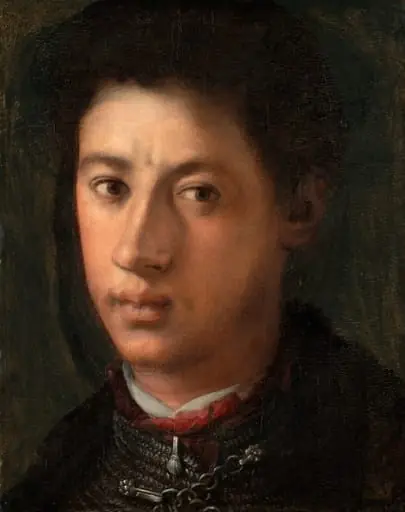
Rosso Fiorentino's Portrait of a Man, painted around 1522, is an oil on panel work housed at the National Gallery of Art in Washington, DC. The painting presents a man's face in a direct gaze, conveying a serious expression. The artist rendered the sitter's detailed clothing with precision, contrasting it with a subtle background that ensures the figure remains the primary focus of the composition.
Own this work as a print
Artist & collection

Artist
Rosso Fiorentino stood out in the Italian Renaissance for one reason, he was always bent on doing things his own way.