Artwork
Diana and Endymion
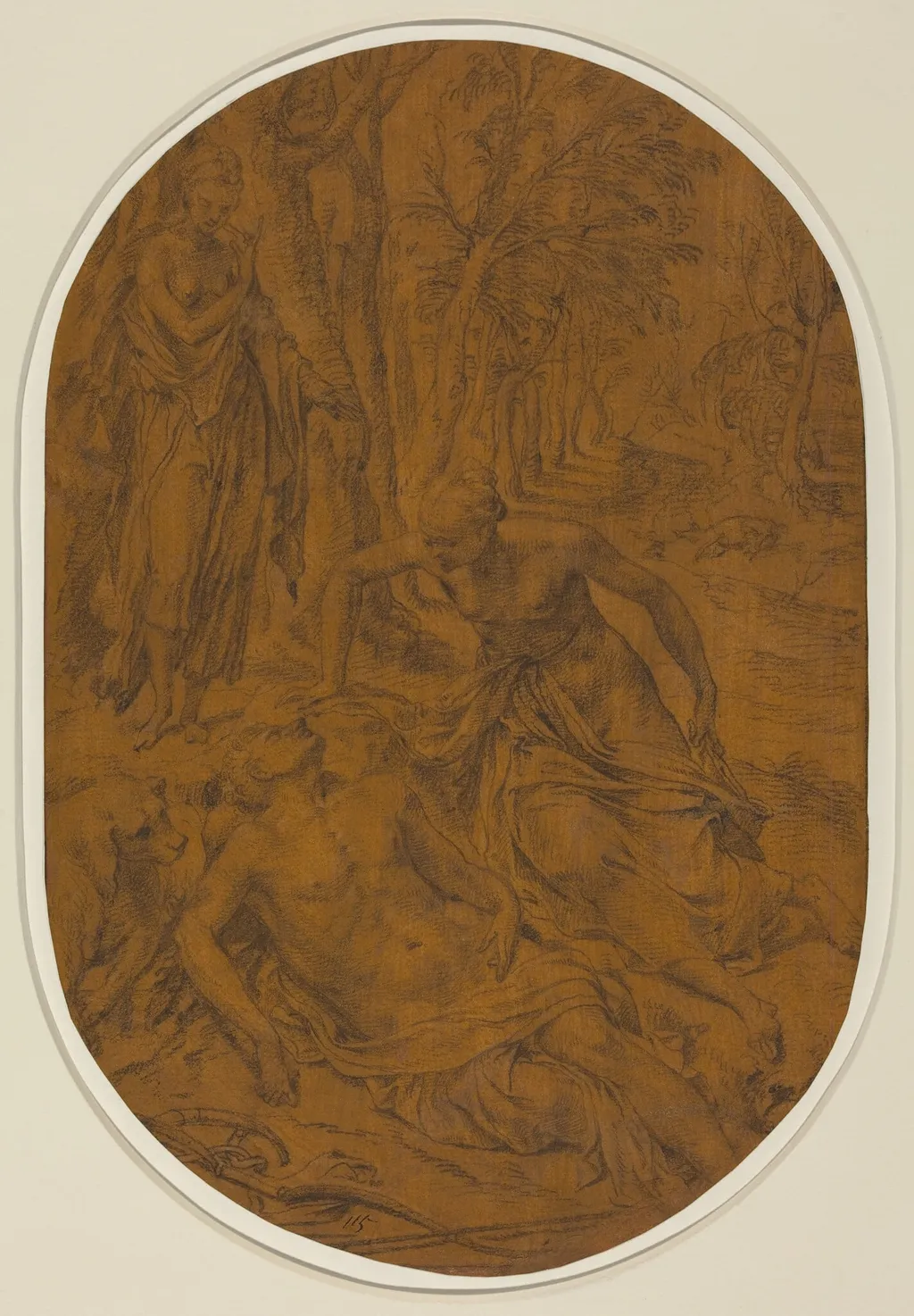
Diana and Endymion is a chalk drawing by the Renaissance artist Frans Floris I. It dates from 1560 and is held in the collection of the National Gallery of Art.
- Inscription
- Inscribed:by later hand, lower left in ink: 115
About this work
Overview
The medium’s simplicity and the urgency of the line suggest it was made to explore form and narrative before a larger painted work.
This drawing by Frans Floris I, dated around 1560, depicts a mythological scene in black chalk on tan laid paper. Executed as a preparatory study, it captures a moment from the legend of Diana and Endymion. The composition centers on a reclining female figure beneath a tree, with animals gathered nearby.
The medium’s simplicity and the urgency of the line suggest it was made to explore form and narrative before a larger painted work.
Subject & Meaning
The scene illustrates the myth in which the moon goddess Diana, disguised as a mortal, encounters the sleeping shepherd Endymion. Though traditionally Endymion is male, Floris here portrays the goddess as the central figure, emphasizing her quiet presence amid nature. The surrounding animals, likely hounds and deer, signal her domain over the wild. The intimacy of the moment reflects Renaissance interest in classical narratives rendered with emotional subtlety.
Technique & Style
Floris employed black chalk on lightly toned paper to create contrast and depth with minimal means. The strokes are loose and energetic, defining drapery, fur, and foliage through rapid, uneven lines rather than refined contours. Texture emerges from the chalk’s grain and the paper’s surface, enhancing the sense of movement. This approach aligns with Renaissance drawing practices, where spontaneity served as a tool for compositional experimentation.
History & Provenance
The drawing originates from Floris’s Antwerp studio during the height of his career, when he was producing designs for large-scale altarpieces and mythological cycles. It likely served as a study for a lost painting or a commission for a private collector. Its survival suggests it was valued as an independent work, possibly retained by the artist or his workshop for reference. No documented early ownership is known, but its condition indicates careful preservation.
Context
In mid-16th-century Flanders, artists increasingly turned to classical mythology as subject matter, influenced by Italian Renaissance ideals. Floris, who had traveled to Italy, brought back compositional and figural innovations, adapting them to Northern traditions. Drawings like this one were essential in bridging conceptual ideas with finished works, reflecting a shift toward the artist as an intellectual creator rather than merely a craftsman.
Legacy
This drawing exemplifies the role of preparatory studies in Flemish Renaissance practice, where rapid sketching was integral to artistic development. Though Floris is better known for his monumental paintings, such works reveal his sensitivity to form and narrative. The piece contributes to understanding how mythological themes were visually negotiated in Northern Europe, influencing later generations of draftsmen who valued expressive line over finish.
Own this work as a print
Artist & collection


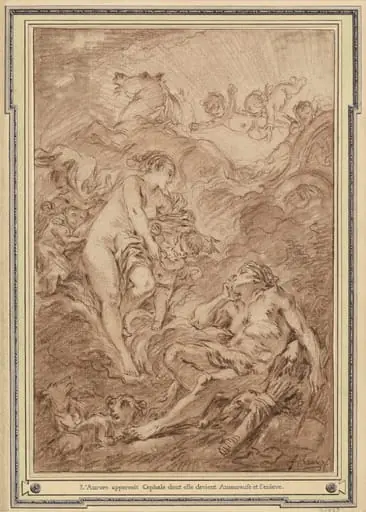 Aurora and Cephalus
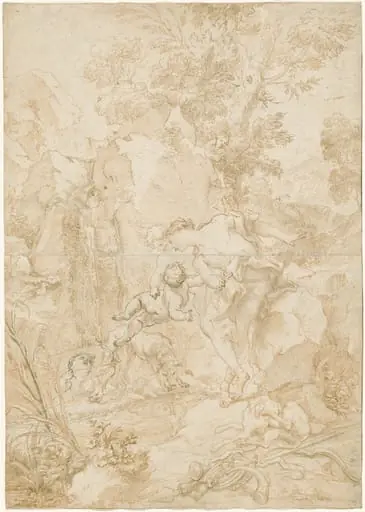 Echo and Narcissus
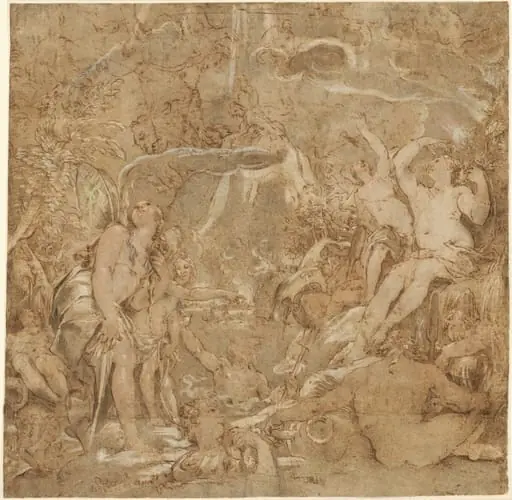 The Daughters of the Po with River Gods
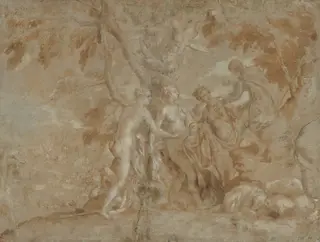 The Judgment of Paris
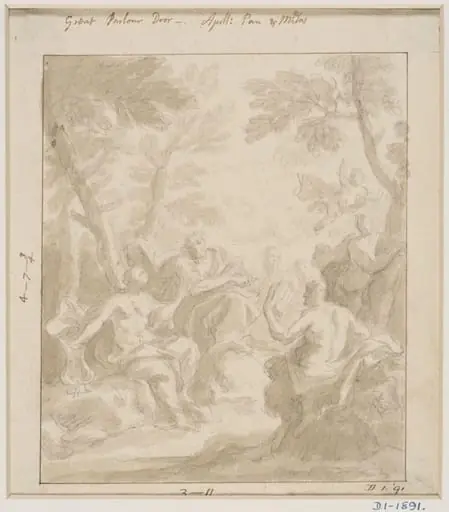 Design for an overdoor painting depicting Apollo, Pan and Midas
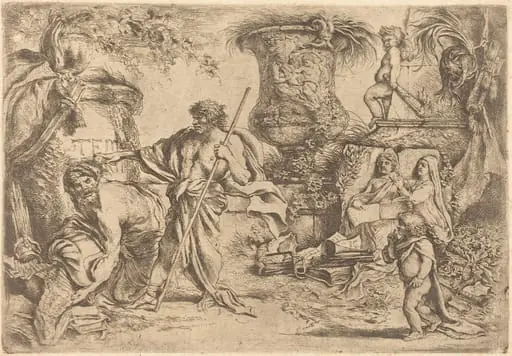 Temporalitas Aeternitas
![Temporalis Aeternitas [Second Version], by Giovanni Benedetto Castiglione](https://artifactworldgallery.com/img/giovanni-benedetto-castiglione--temporalis-aeternitas-second-version--d9ecb26010022a5a-w320.webp) Temporalis Aeternitas [Second Version]
Temporalis Aeternitas [Second Version]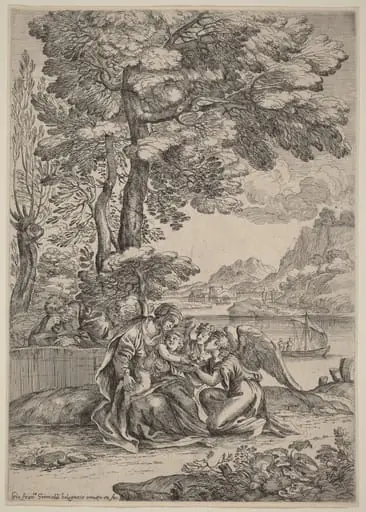 The Rest on the Flight into Egypt
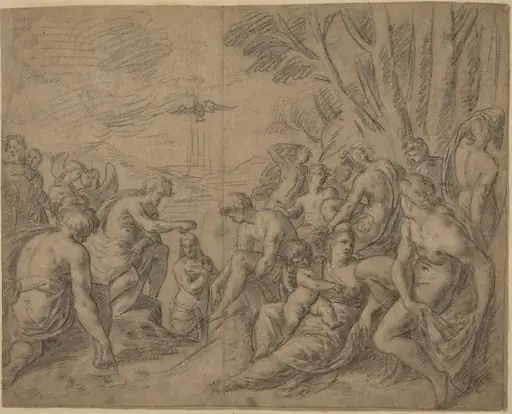 The Baptism of Christ
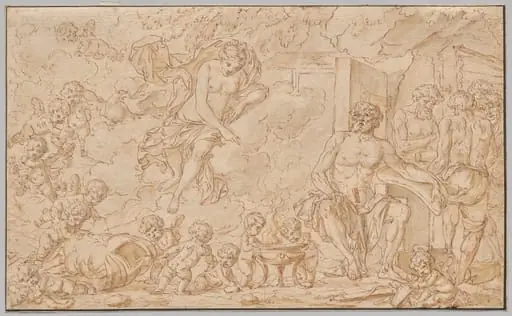 Venus at the Forge of Vulcan
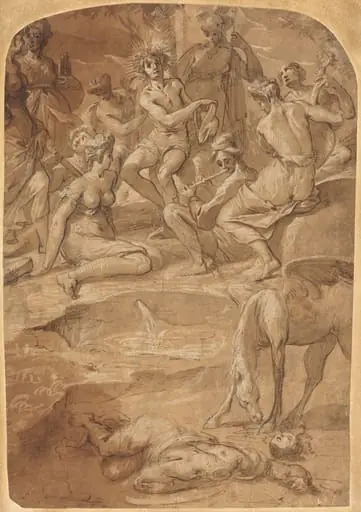 Apollo and the Muses on Mount Parnassus
- Diana and Endymion