Artwork
a) Chimney Corner (recto); b) Two Figures (verso)
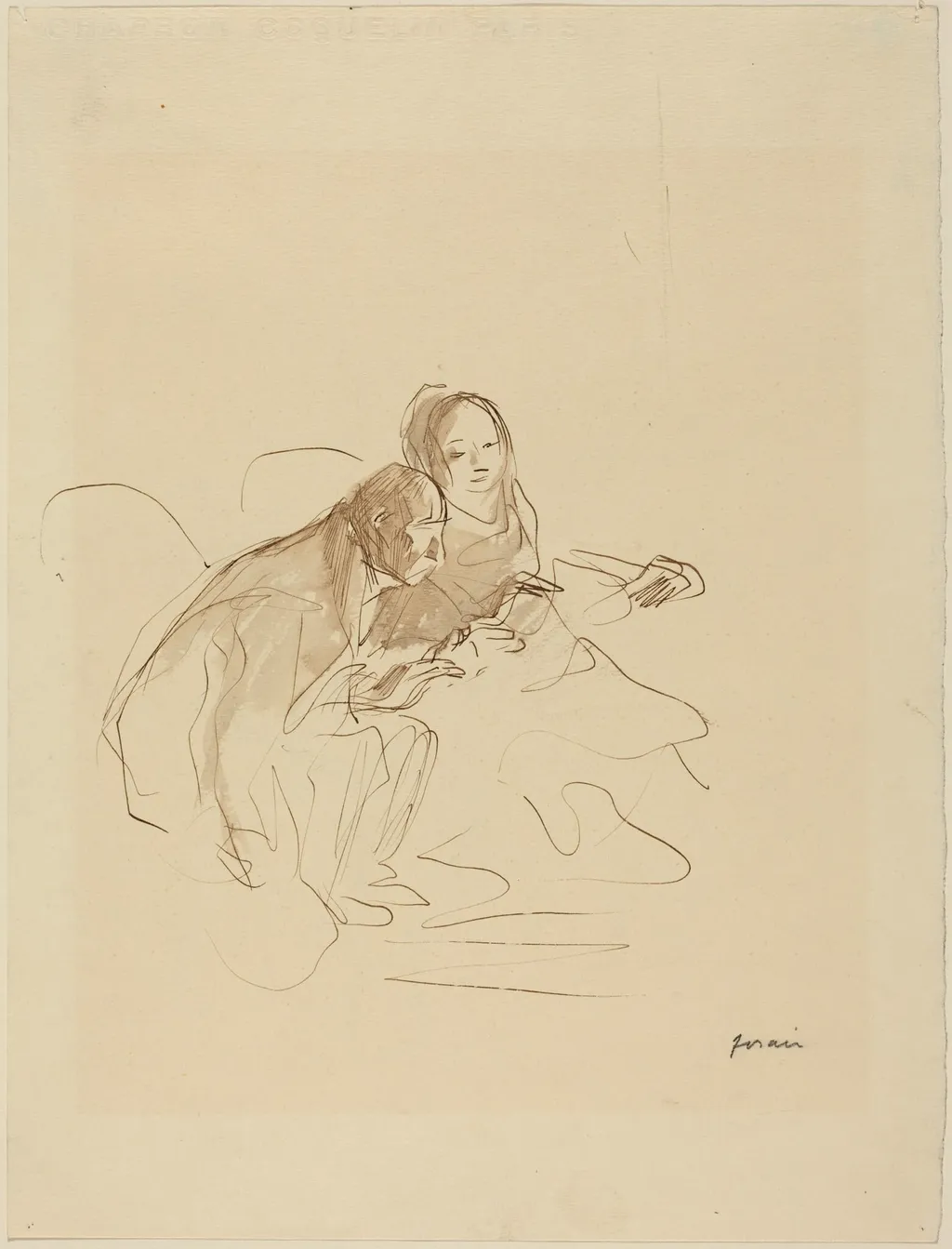
a) Chimney Corner (recto); b) Two Figures (verso) is an ink drawing by the Impressionist artist Jean-Louis Forain. It dates from 1892 and is held in the collection of the National Gallery of Art.
- Inscription
- Inscribed:"forain" lower right margin, black crayon, artist's hand. Not dated. "2013" [encircled] verso, upper right sheet, graphite, unknown hand.
- Markings
- Marked:"LRJ" verso, black stamped ink, (Lugt 1760b). "National Gallery of Art" verso, black stamped ink, (Lugt 1932d).
About this work
Overview
Both works reflect Forain’s fluency in ink drawing and his interest in quiet domestic moments, executed with immediacy and minimal embellishment.
Created in 1892, this double-sided drawing by Jean-Louis Forain features two related compositions on wove Chapron Coquelin paper. The recto, rendered in pen and brown ink with wash, portrays a solitary figure near a chimney, while the verso, executed in pen alone, depicts two women in intimate repose. Both works reflect Forain’s fluency in ink drawing and his interest in quiet domestic moments, executed with immediacy and minimal embellishment.
Subject & Meaning
The verso captures two women seated closely on a couch, one resting an arm around the other’s shoulders in a gesture of quiet companionship. Their relaxed postures and unposed demeanor suggest an unguarded, private interlude. The absence of narrative detail or dramatic tension shifts focus to the subtlety of human connection, aligning with Forain’s tendency to observe ordinary life without sentimentality.
Technique & Style
Forain employed loose, economical pen strokes to define form and movement, with brown wash on the recto adding tonal depth to suggest light falling on walls and fabric. The verso relies solely on ink lines, their fluidity conveying texture and volume through variation in pressure and density. The sketch-like quality reflects a spontaneous approach, prioritizing observation over finish, characteristic of his working method across media.
History & Provenance
The drawing remains in private hands, with no documented public exhibition history prior to the 20th century. Its paper bears a faint watermark consistent with Chapron Coquelin stock, commonly used by French artists in the 1890s. Forain’s signature, placed discreetly in the corner, confirms authorship and suggests the work was likely a personal study rather than a commissioned piece.
Context
Produced during the height of French Impressionism, this drawing aligns with contemporaneous practices of capturing fleeting, unremarkable moments. While Forain was better known for his satirical lithographs and oil paintings, these ink sketches reveal his engagement with the movement’s emphasis on direct observation. They echo the sketchbook traditions of Degas and Renoir, though with a more restrained, intimate tone.
Legacy
Though not widely exhibited, this dual-sided drawing exemplifies Forain’s versatility and his quiet contribution to the graphic arts of the period. It stands as a testament to his ability to convey emotional nuance through minimal means, influencing later generations of illustrators and draftsmen who valued immediacy and psychological subtlety over grandeur.
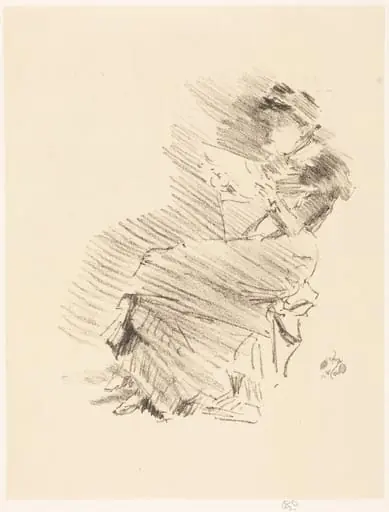
Own this work as a print
Artist & collection

Artist
Jean-Louis Forain (French pronunciation:; 23 October 1852 – 11 July 1931) was a French Impressionist painter and printmaker, working in media including oils, watercolour, pastel, etching and lithograph.

- Reading
 Two Male Figures
 Miss Cumberlege
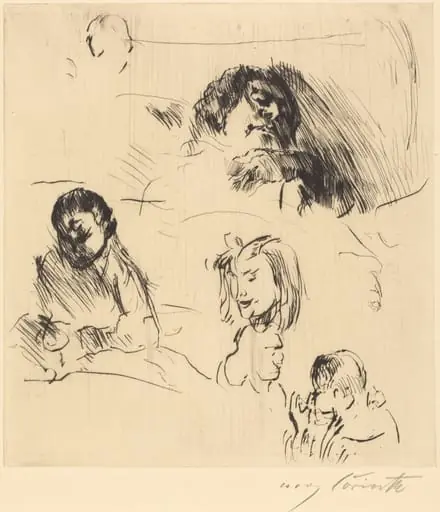 Verschiedene Bilnisstudien (Portrait Sketches)
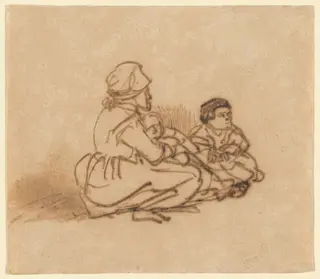 Woman Seated on the Ground with Two Children
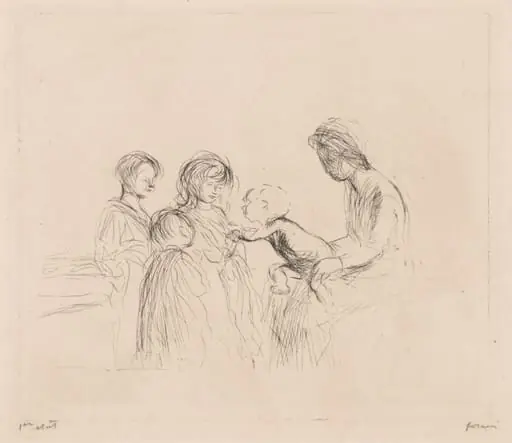 Madonna and Children
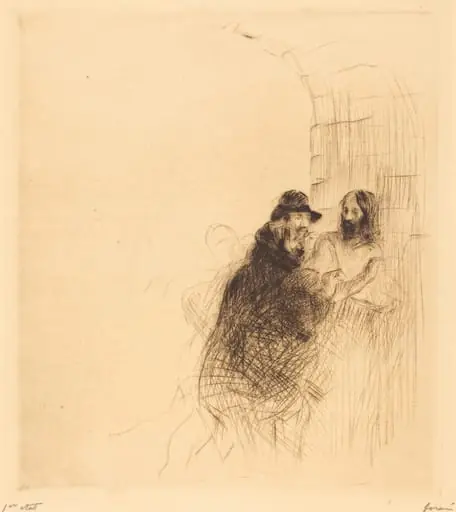 La rencontre sous la voute (2e planche) (The Meeting under the Arch) (second plate)
![Study of a Mother and Child [verso], by David Wilkie](https://artifactworldgallery.com/img/david-wilkie--study-of-a-mother-and-child-verso--91f999f529326586-w320.webp) Study of a Mother and Child [verso]
Study of a Mother and Child [verso] La madone et les enfants (The Madonna and the Children)
 Untitled
 Susanna im Bade (Susanna in the Bath)
 Two Figures on a Road (verso)