Artwork
Formă tronconică; fond alb. Decorul, pictat pe fond alb și amplasat în centrul farfuriei, este reprezentat de un cerc albastru în care se află data : 1888 încadrată sus și jos de două valuri albastre. Pe umărul vasului este amplasată o bandă circulară lată de culoare brună, cu smalțul sărit în mai multe locuri dînd senzația că a fost decorată prin stropire cu pensula. Folosită la decorarea interiorului țărănesc în așa numita - cameră bună.
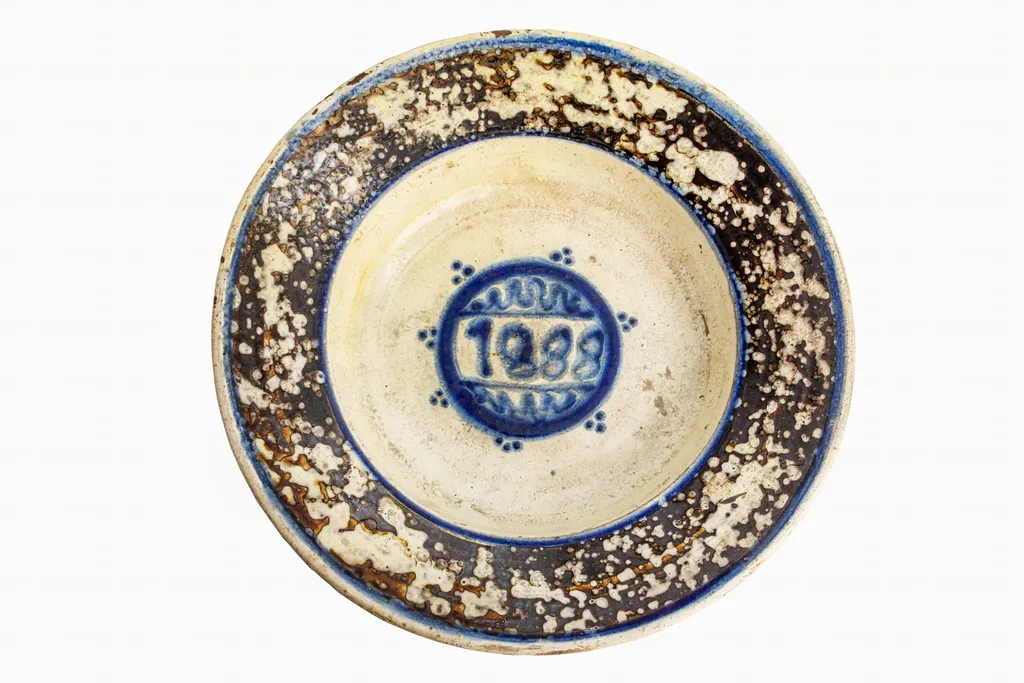
Formă tronconică; fond alb. Decorul, pictat pe fond alb și amplasat în centrul farfuriei, este reprezentat de un cerc albastru în care se află data : 1888 încadrată sus și jos de două valuri albastre. Pe umărul vasului este amplasată o bandă circulară lată de culoare brună, cu smalțul sărit în mai multe locuri dînd senzația că a fost decorată prin stropire cu pensula. Folosită la decorarea interiorului țărănesc în așa numita - cameră bună. is a print by the Impressionist artist Unknown. It dates from 1888 and is held in the collection of the Romanian Peasant Museum. This ceramic plate, dated 1888, is a worn example of traditional decorative art.
About this work
Around the edge, there’s a dark band with splattered white specks, like paint was flicked on.
This is a worn ceramic plate with faded colors. The center has a blue circle with the numbers "1888" inside, framed by wavy lines. Around the edge, there’s a dark band with splattered white specks, like paint was flicked on. The rest of the plate looks chipped and uneven.
The splattered edge suggests someone used a brush to flick paint, a quick way to add texture. This style was common in homes for special rooms called "the good room."
Look up Museum of Ethnography to see more everyday objects like this one.
Overview
This ceramic plate, dated 1888, is a worn example of traditional decorative art. Its surface is faded and chipped, with a central design and a distinctive edge treatment.
Subject & Meaning
The plate's central motif is a blue circle containing the date '1888', flanked by wavy lines, possibly symbolizing water or movement. It was likely used in a special room in rural homes known as 'the good room'.
Technique & Style
The plate's edge features a dark band with a splattered effect, achieved by flicking paint with a brush. This textured, expressive technique was a common decorative method.
Context
The plate is an example of everyday objects used in traditional rural settings, reflecting the aesthetic and functional preferences of the time.
Artist & collection









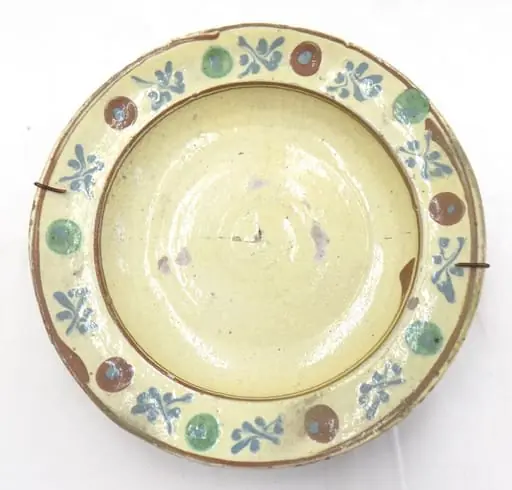
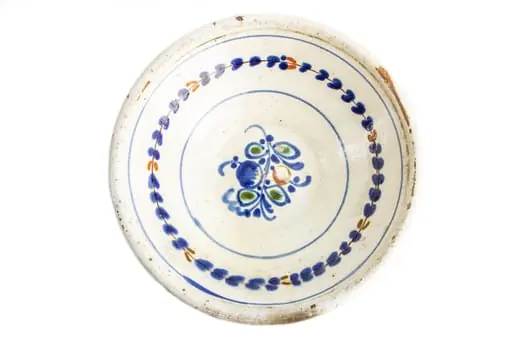 Formă tronconică; fond alb; culori: albastru, verde, cărămiziu; în centrul farfuriei este amplasat un buchet din flori albastre și una de culoare cărămizie, cu frunze verzi, înscris într-un cerc de culoare albastră. Pe perete este amplasat un vrej circular cu frunze albastre și cîteva de culoare cărămizie. Sub buză este dispus un cerc albastru.
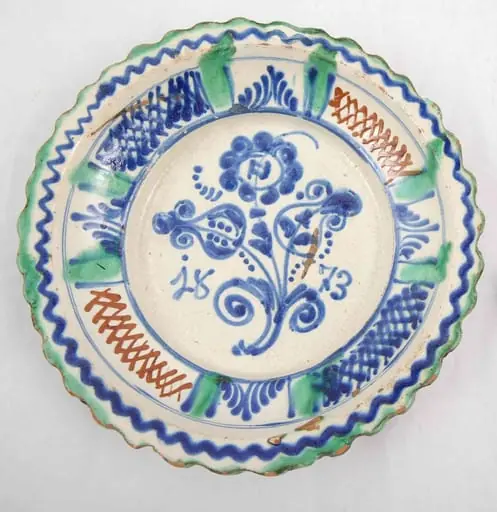 farfurie
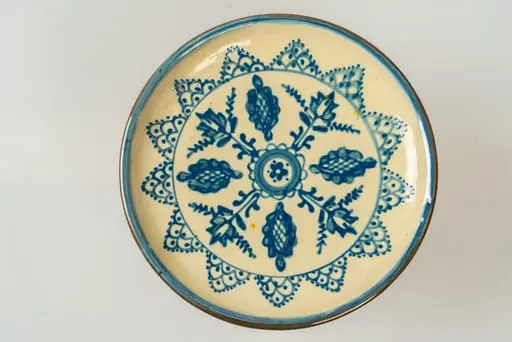 Farfurie mică, plată, cu muchia buzei ușor concavă spre interior. Piesa este modelată la roata olarului și este angobată cu humă albă pe fața sa interioară. Decorul este realizat prin pictare cu pensula, cu linii fine, și se compune din motive florale stilizate, plasate central și încadrate într-un cerc, pe a cărui față exterioară sunt ampalsate grupuri decorative formate din motivul solzi de pește și puncte. Cromatica: alb, albastru. Farfuria este smălțuită pe amble fețe cu un smalț transparent.
 Talger
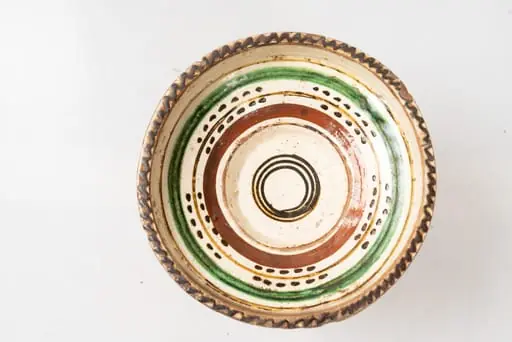 Farfurie adâncă, de tip castron, cu corp îngust tronconic și buză dreaptă. Piesa este modelată din lut la roata olarului și angobată cu humă albă pe fața interioară. Decorul este realizat prin pictare cu cornul și cu pensula și constă în motive decorative geometrice (linie spiralată, două linii groase și trei linii mai subțiri dispuse sub formă de cerc, șiruri de puncte). Muchia buzei este decorată cu o linie ondulată mărunt, de culoare maro. Cromatica: alb, maro, verde, brun roșcat. Farfuria este acoperită cu un strat de smalț transparent pe fața ornamentată.
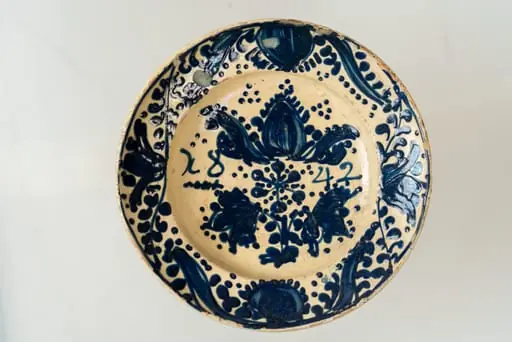 Farfurie adâncă, cu corp scund și buză lată, răsfrântă. Piesa este modelată la roata olarului, angobată cu humă albă pe fața interioară a acesteia. Decorul este realizat prin pictare cu cornul și cu pensula și constă în motive decorative vegetale stilizate (flori și frunze) și geometrice (puncte), dispuse pe întreaga suprafață a farfuriei. Central, pe fundul farfuriei, este înscris anul fabricației "1842", deoparte și de alta a registrului decorativ central. Cromatica decorului: alb, albastru. Farfuria este smălțuită pe interior, cu smalț transparent.
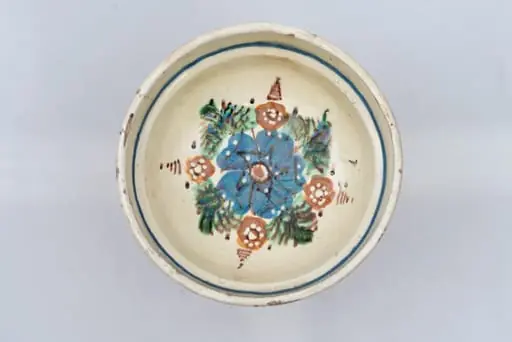 Farfurie adâncă de tip castron, cu corp tronconic, ușor concav, și buza dreaptă și verticală. Este acoperită pe suprafața interioară și pe exteriorul buzei cu un strat de angobă albă. Decorul este pictat cu pensula și cu cornul și se compune din motive florale și vegetale stilizate: central pe fundul farfuriei este pictată o floare cu cinci petale albastre, frunze verzi și patru flori mai mici, maro. O linie circulară albastră marchează pe interior partea inferioară a buzei, iar exteriorul acesteia este decorat cu o linie circulară simplă, ș una ondulată, albastre. Cromatica: alb, albastru, verde, maro. Ambele suprafețe ale farfuriei sunt acoperite cu un strat de smalț transparent.
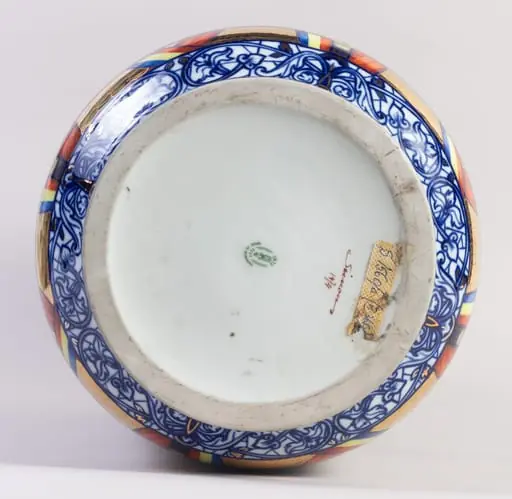 Vază porțelan decorată manual, prezintă scene din istoria orașului Cluj Napoca. Vaza este împărțită în patru registre. Primul registru stema județului Cluj înconjurată de o cunună de laur, ”124 -1974” (anul în care devine așezare urbană și anul în care a fost realizat obiectul), în partea de jos Lupa Capitolina. Al doilea registru prezintă scene din perioada evului mediu și din perioada revoluției de la 1848. Registrul trei Unirea de la 1918 și momentul înființării Partidului Comunist Român 1921 alături de stema PCR. Registrul patru prezintă Clujul în momentul 28 martie 1974, ăn centru tricolorul și stema R.S. România. Pe fundul vasului logo-ul Fabricii de Porțelan ”Iris” Cluj alături de semnătura artistului și datarea ”Simion 1974”. Vază oferită cuplului Ceaușescu.
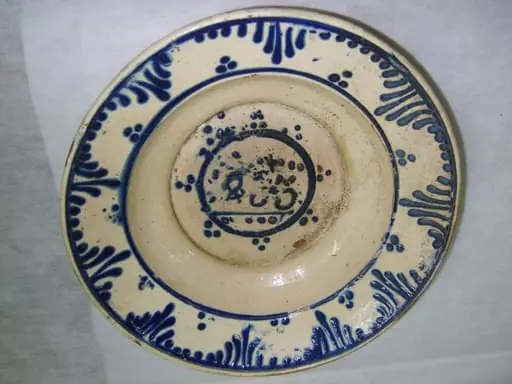 Blid mare
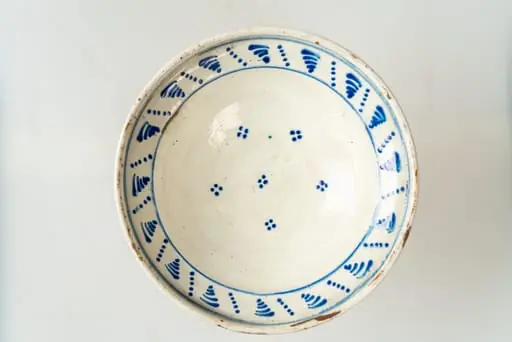 Farfurie adâncă, de tip castron. Piesă modelată la roata olarului, angobată cu alb pe fața interioară și decorată cu motive geometrice (grupuri și șiruri de puncte, grupuri de linii paralele, descrescătoare ca mărime, linii sub formă de cercuri concentrice), dispuse pe fundul farfuriei și pe buza acesteia. Farfuria este smălțuită pe fața interioară cu smalț transparent.