Artwork
The Nativity
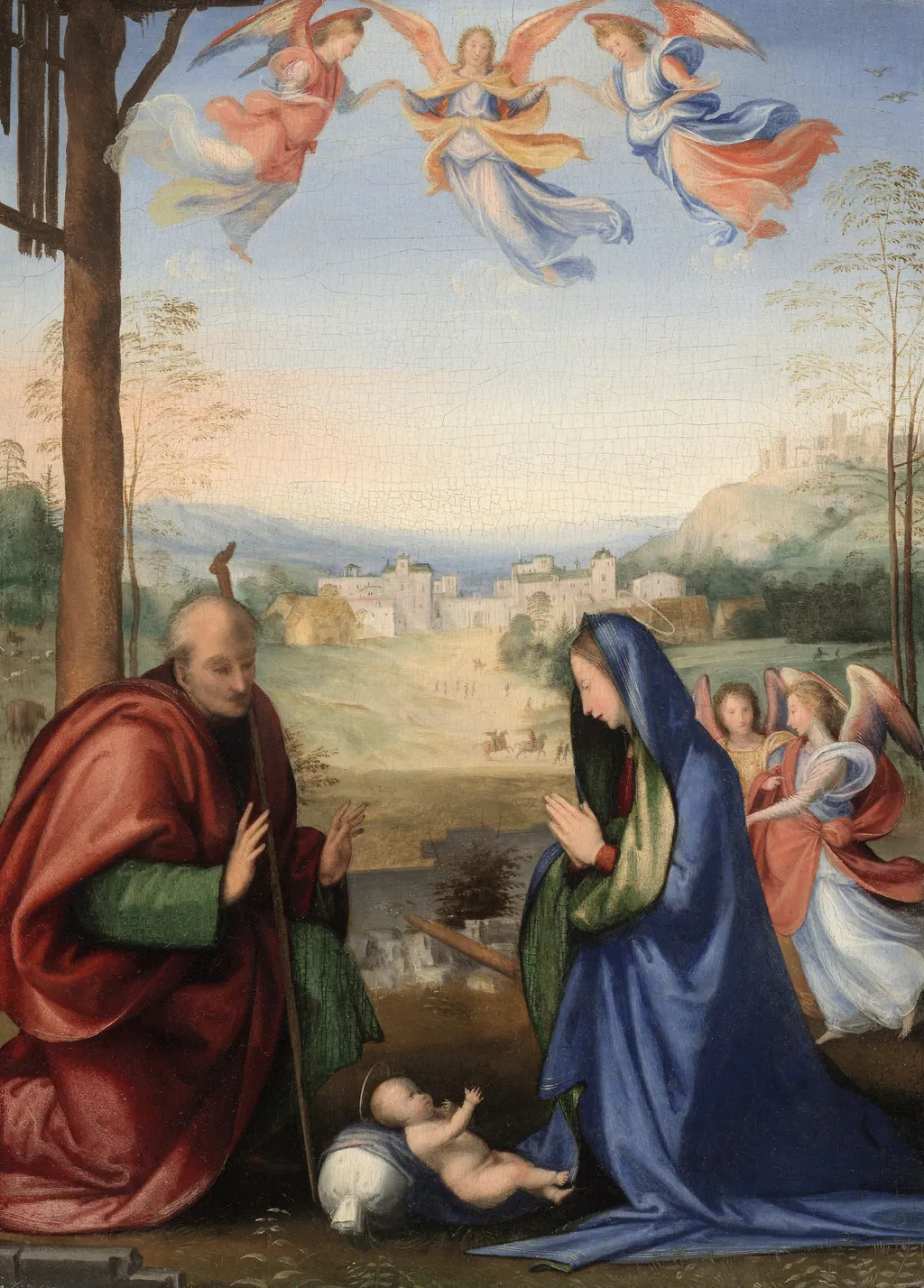
The Nativity is an oil painting by the High Renaissance artist Fra Bartolomeo. It dates from 1504 and is held in the collection of the Art Institute of Chicago.
About this work
Overview
The panel exemplifies the artist's synthesis of Florentine High Renaissance ideals with the spiritual intensity shaped by his Dominican vocation.
The Nativity is a small oil-on-panel painting by the Italian High Renaissance artist Fra Bartolommeo (Baccio della Porta, 1472-1517), executed between 1504 and 1507. Measuring 34 × 24.5 cm (13 3/8 × 9 5/8 in.), the work is held by the Art Institute of Chicago, acquired in 2005. It occupies a significant place in Fra Bartolommeo's oeuvre as one of the first paintings produced after he resumed his artistic career in 1504, following a hiatus of several years devoted to religious life. The panel exemplifies the artist's synthesis of Florentine High Renaissance ideals with the spiritual intensity shaped by his Dominican vocation.
Subject & Meaning
The painting depicts the Nativity of Jesus set within a broad landscape. In the foreground, the Christ Child lies on the ground, haloed and swathed in white cloth. To the left, an older male figure, traditionally identified as Saint Joseph, kneels in a red cloak over green garments, holding a staff with hands raised in adoration. To the right, the Virgin Mary kneels in a deep blue mantle and green dress, hands pressed together in prayer, her head bowed toward the infant. Behind her, two winged angels kneel in gestures of reverence, while three additional angels float above, robed in pink, blue, and gold with wings spread. The background reveals a distant walled town, rolling hills, sparse trees, and a pale sky with soft clouds. A large wooden post with a crossbeam stands at the left edge, prefiguring the Crucifixion. The iconography emphasizes humility and contemplative devotion, with the Holy Family placed on the bare earth rather than in architectural splendor, and the distant town likely alludes to Bethlehem.
Technique & Style
The work is executed in oil on panel, a medium that allowed Fra Bartolommeo to achieve rich color saturation and fine detail. The surface exhibits fine craquelure throughout. Colors are rich yet muted, dominated by deep blues, crimson reds, greens, and warm earth tones. Light falls evenly across the scene with soft shadows, and the finish is smooth with careful attention to drapery folds and facial modeling. The composition demonstrates the lyrical, harmonious qualities that Fra Bartolommeo developed in dialogue with the works of Leonardo da Vinci, Raphael, and Michelangelo during the first years of the sixteenth century. The balanced arrangement of figures, the integration of sacred narrative with atmospheric landscape, and the restrained emotional register all typify the artist's mature style, which favors serene equilibrium over dramatic tension.
History & Provenance
The painting was likely commissioned through the convent of San Marco in Florence and was acquired by Domenico Perini on April 16, 1507. Perini, who had also purchased a Noli me tangere from the artist on April 30, 1506 (now in the Louvre), appears to have sent the Nativity to France shortly thereafter. By 1516, it had possibly entered the collection of Louis XII, King of France, according to a contemporary list of Fra Bartolommeo's pictures. The work subsequently appeared in the collection of Bedemeau de Buxerolles in Poitou, then passed to the Tabarly collection in Blois. Pierre Landry acquired it in 1955, and his heirs sold it at Christie's, London, on July 11, 2001 (lot 68), to the Parisian dealer Haboldt. The Art Institute of Chicago purchased the painting in 2005, with funds drawn from multiple endowments and restricted gifts, and it is catalogued under accession number 2005.49. The panel was exhibited at the Grand Palais, Paris, in France 1500: Entre Moyen Âge et Renaissance (2010-11, no. 200), and at the Art Institute of Chicago in Kings, Queens, and Courtiers: Art in Early Renaissance France (2011, no. 115).
Context
Fra Bartolomme's career was profoundly shaped by his association with the Dominican reformer Girolamo Savonarola. Born Baccio della Porta, he joined the Dominican order as Fra Bartolommeo in 1500 and abandoned painting for several years. His return to art in 1504 coincided with a period of extraordinary creativity in Florence, where he worked alongside Leonardo, Raphael, and Michelangelo. The Nativity embodies the renewed spirituality that infused his post-1504 work, reflecting both Savonarolan religious fervor and the aesthetic ideals of the High Renaissance. Scholars have noted the painting's stylistic affinities with the most lyrical and harmonious tendencies of his Florentine contemporaries, while maintaining a distinctive intimate scale and devotional focus. The work has been discussed by Everett Fahy in the context of Savonarolan Florence and appears in the literature on French royal collections, particularly the studies of Janet Cox-Rearick on Francis I.
Own this work as a print
Artist & collection
Artist
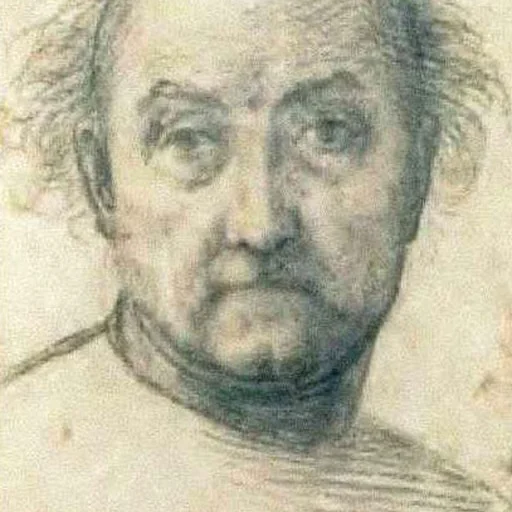
Fra Bartolomeo or Bartolommeo (UK: US: Italian:; 28 March 1472 – 31 October 1517), also known as Bartolommeo di Pagholo, Bartolommeo di San Marco, Bartolomeo di Paolo di Jacopo del Fattorino, and his original nickname…

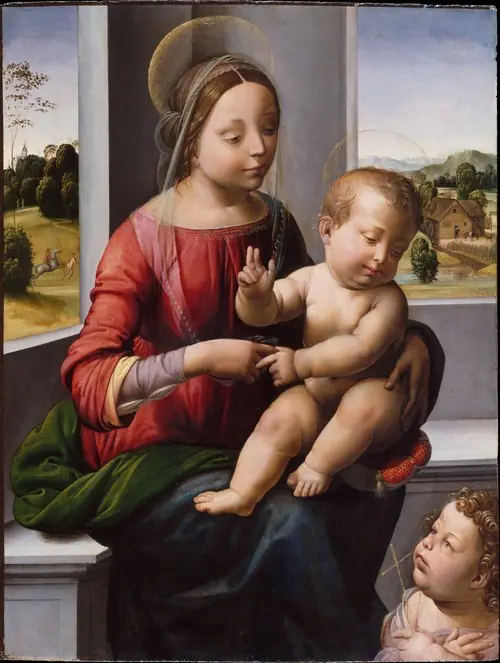 Madonna and Child with the Young Saint John the Baptist
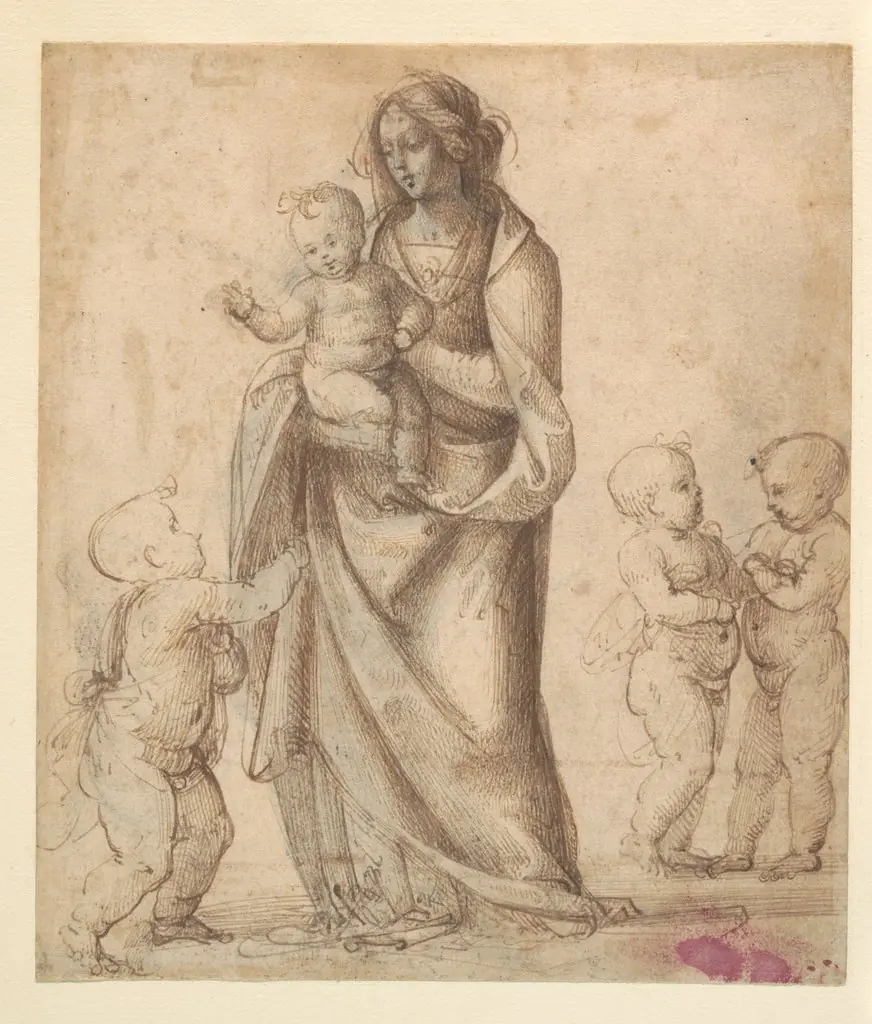 Madonna and Child with the Infant Saint John the Baptist and Two Putti (recto); Madonna and Child with the Infant Saint John the Baptist and a Putto (verso)
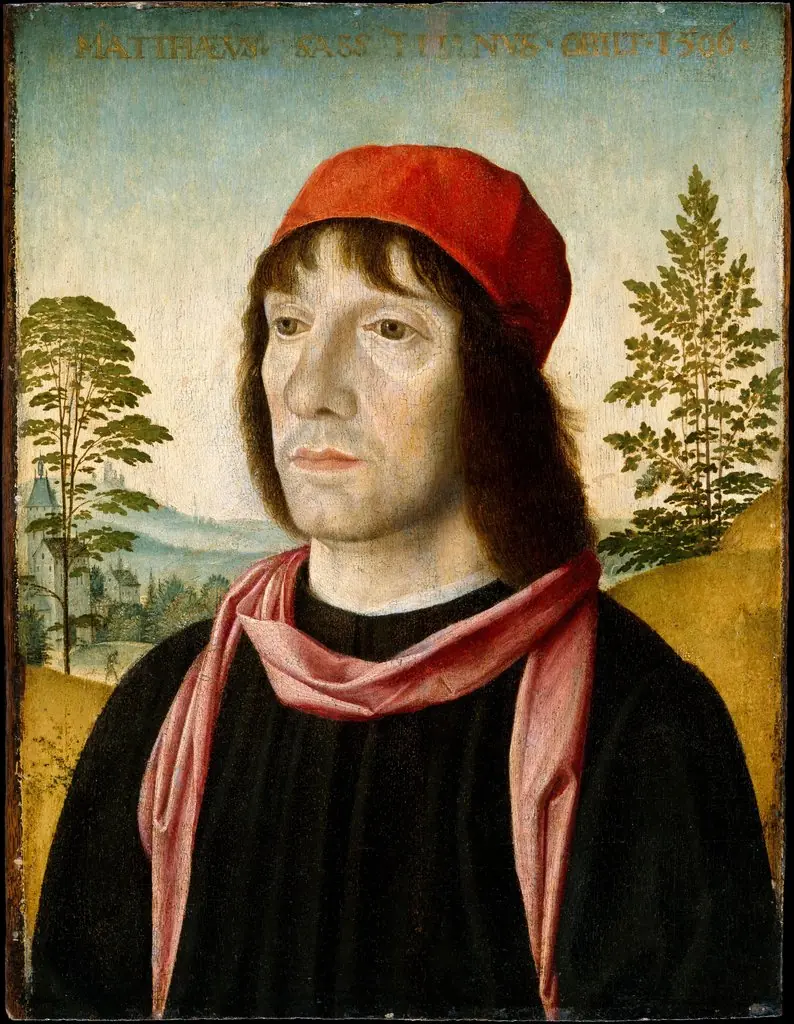 Portrait of a Man
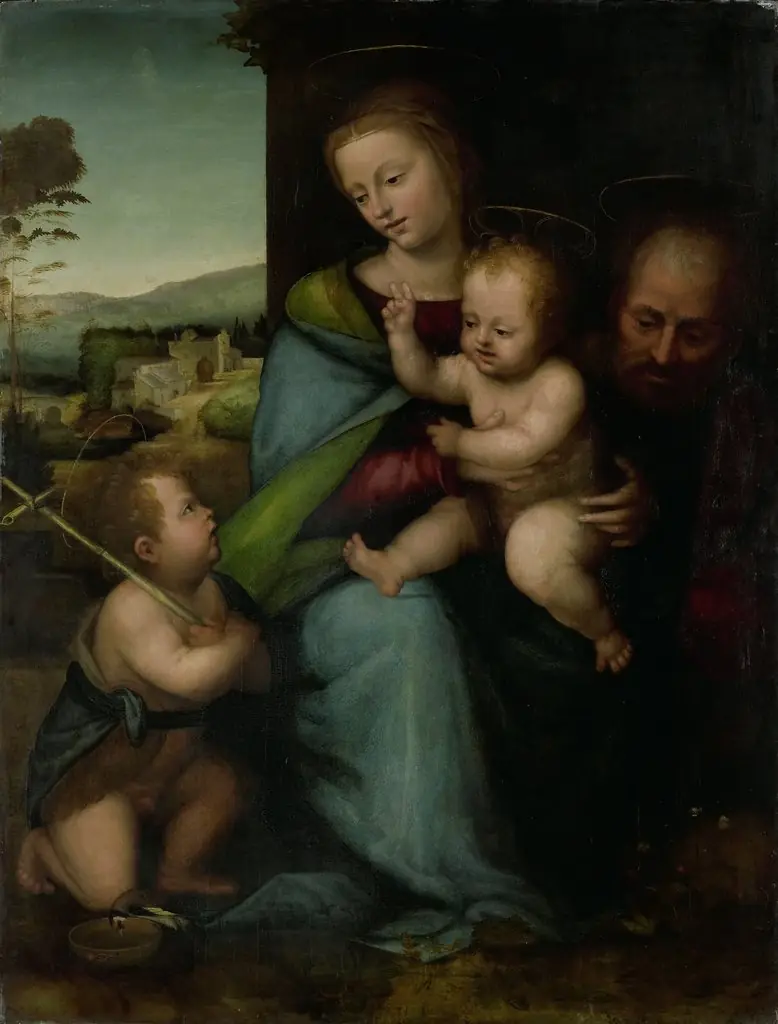 The Holy Family with the Infant John the Baptist
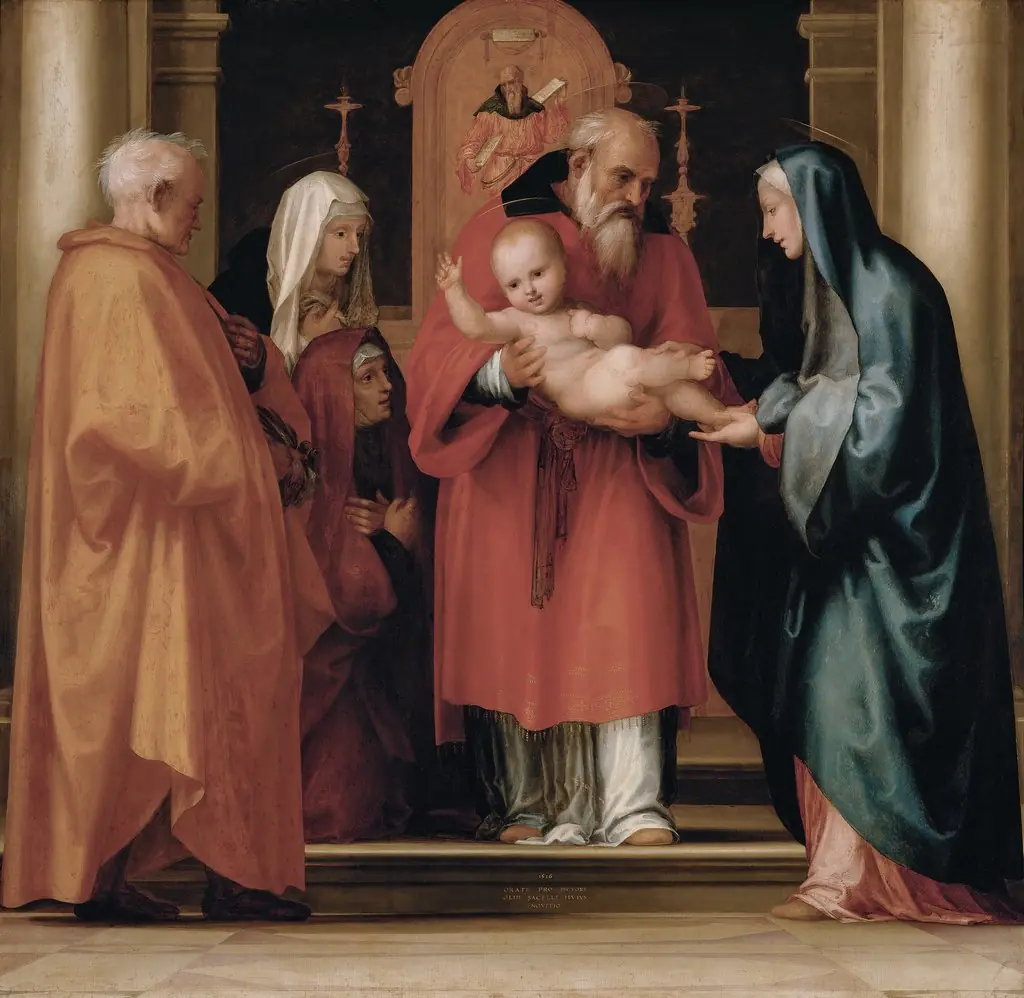 Presentation of Christ in the Temple
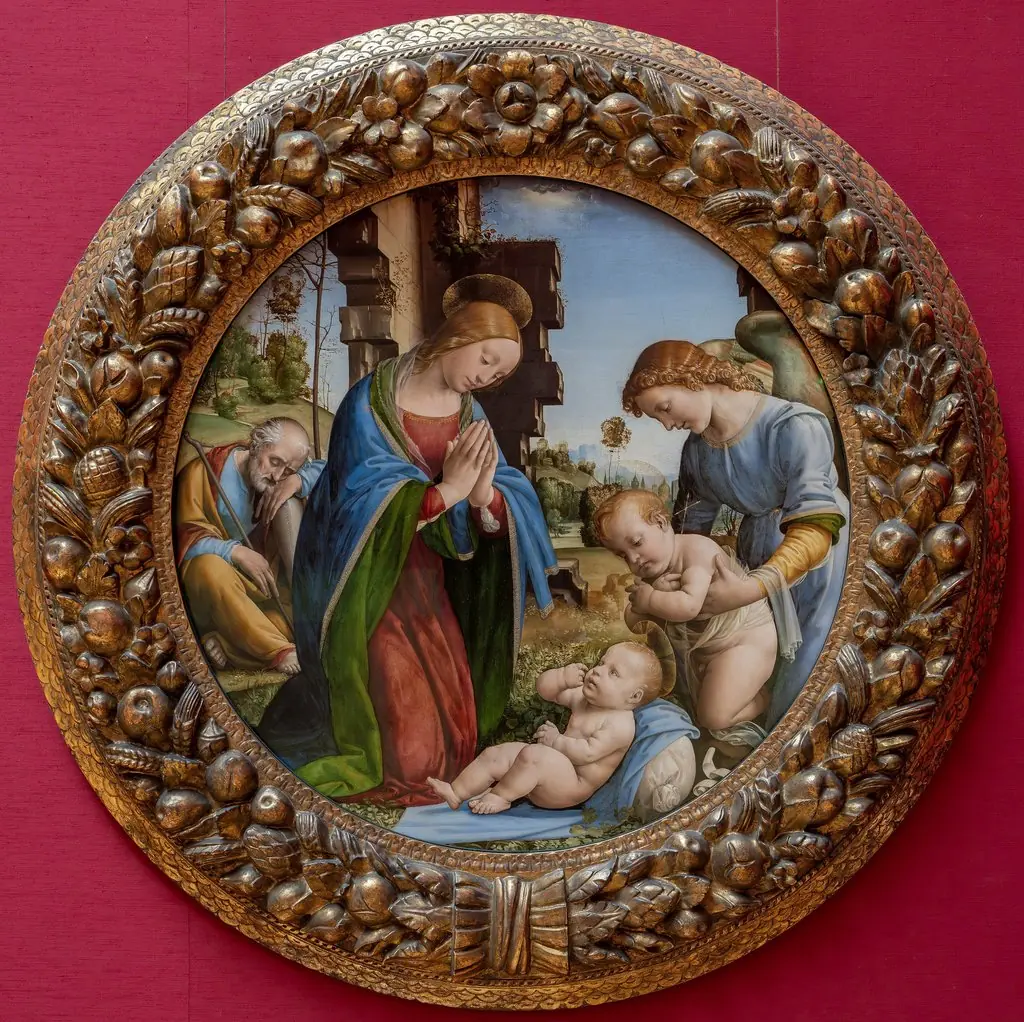 Adoration of the Child - Holy Family with child St. John
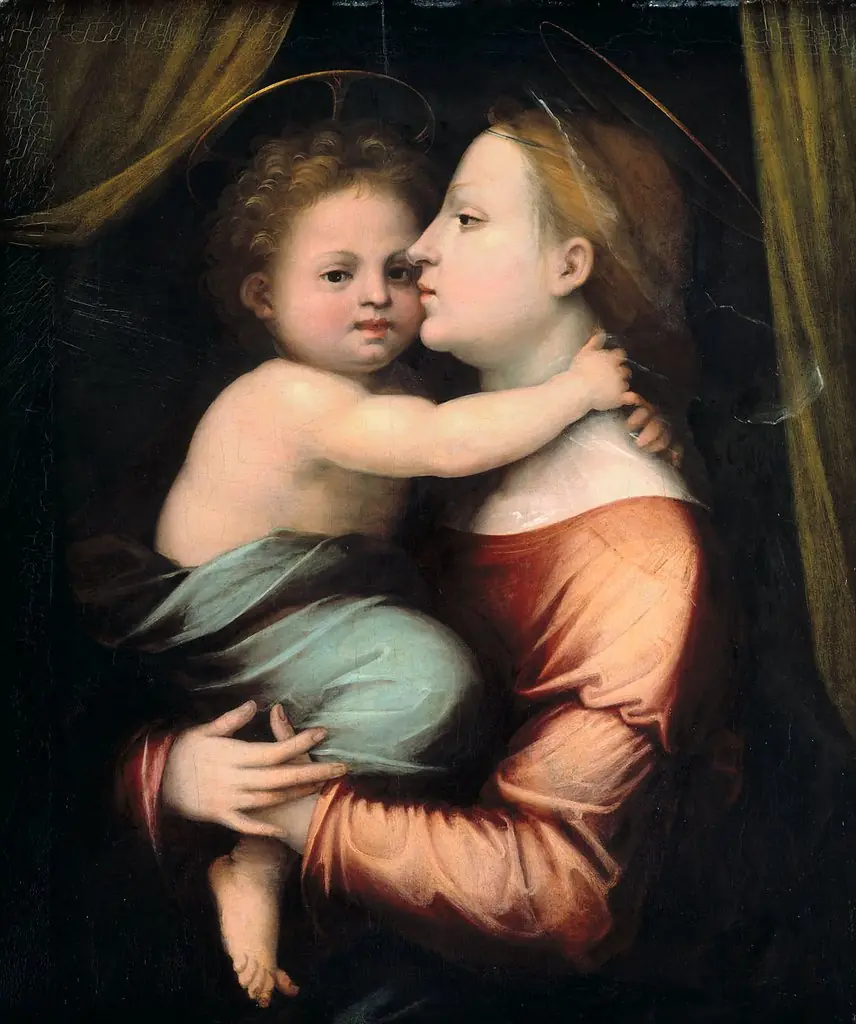 Madonna and Child
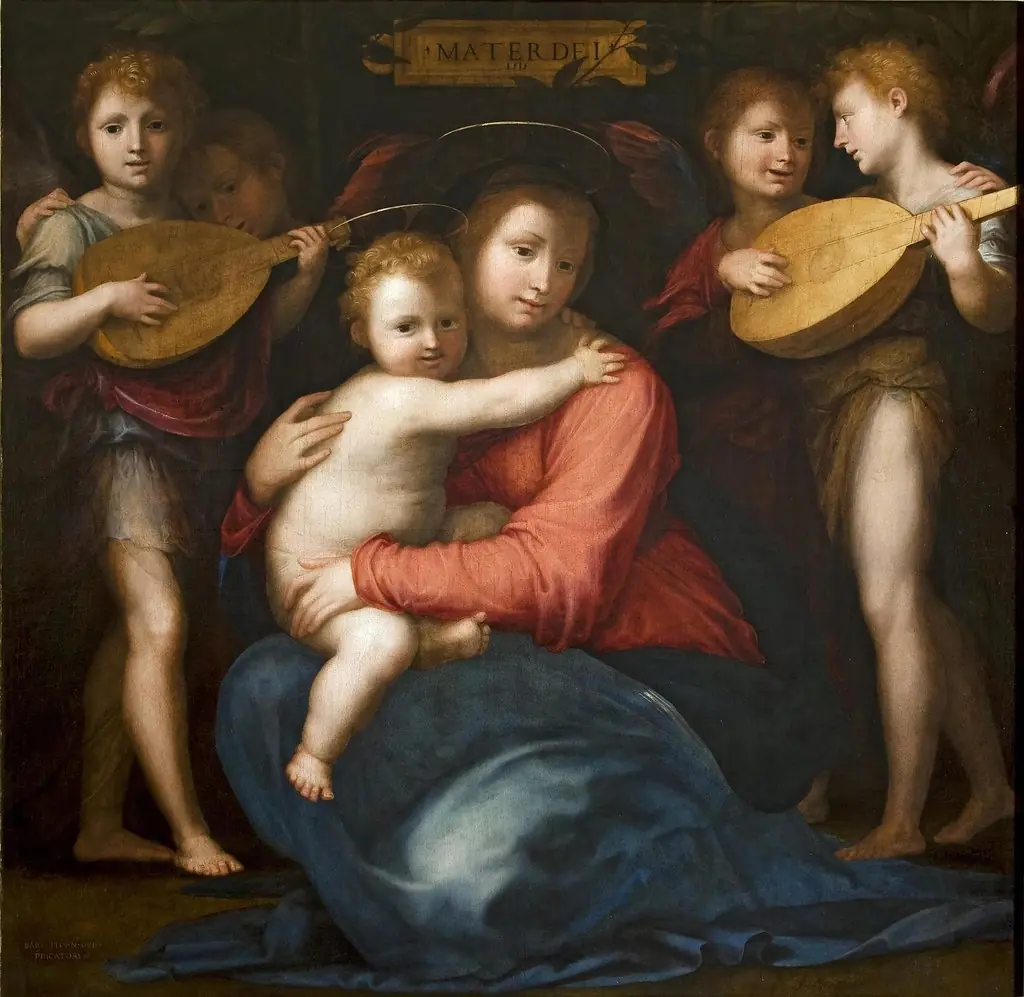 Madonna and Child with Four Angels
- The Nativity
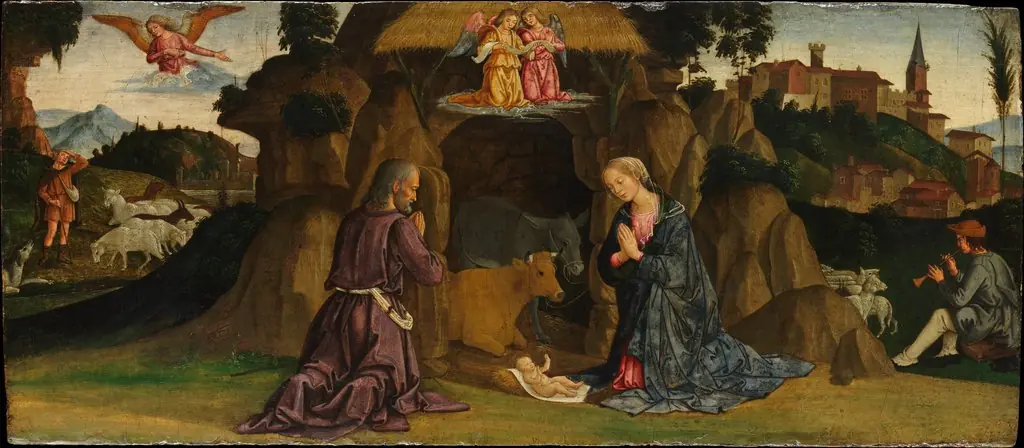 The Nativity
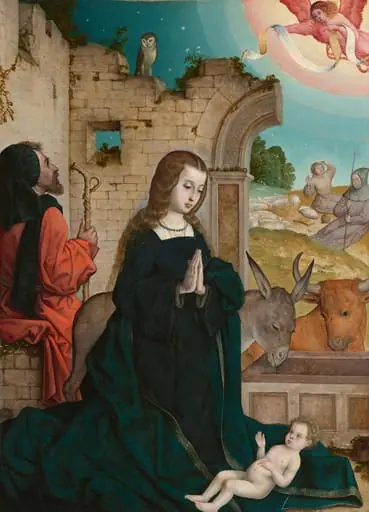 The Nativity
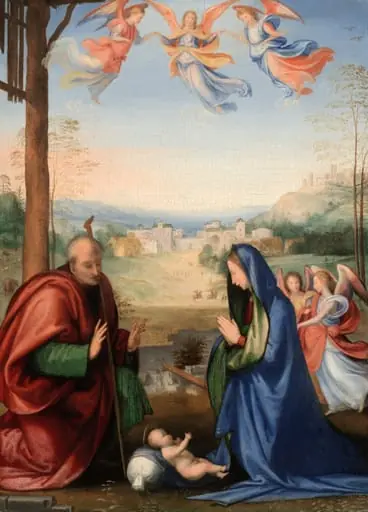 The Nativity
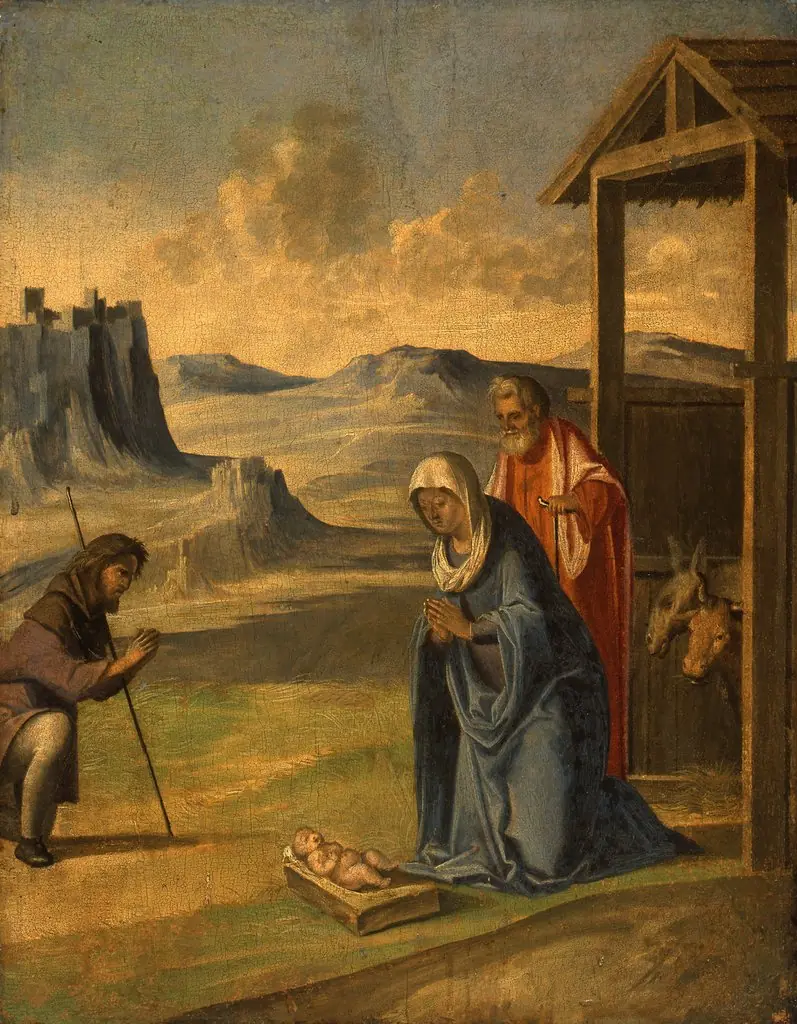 The Virgin Adoring the Child
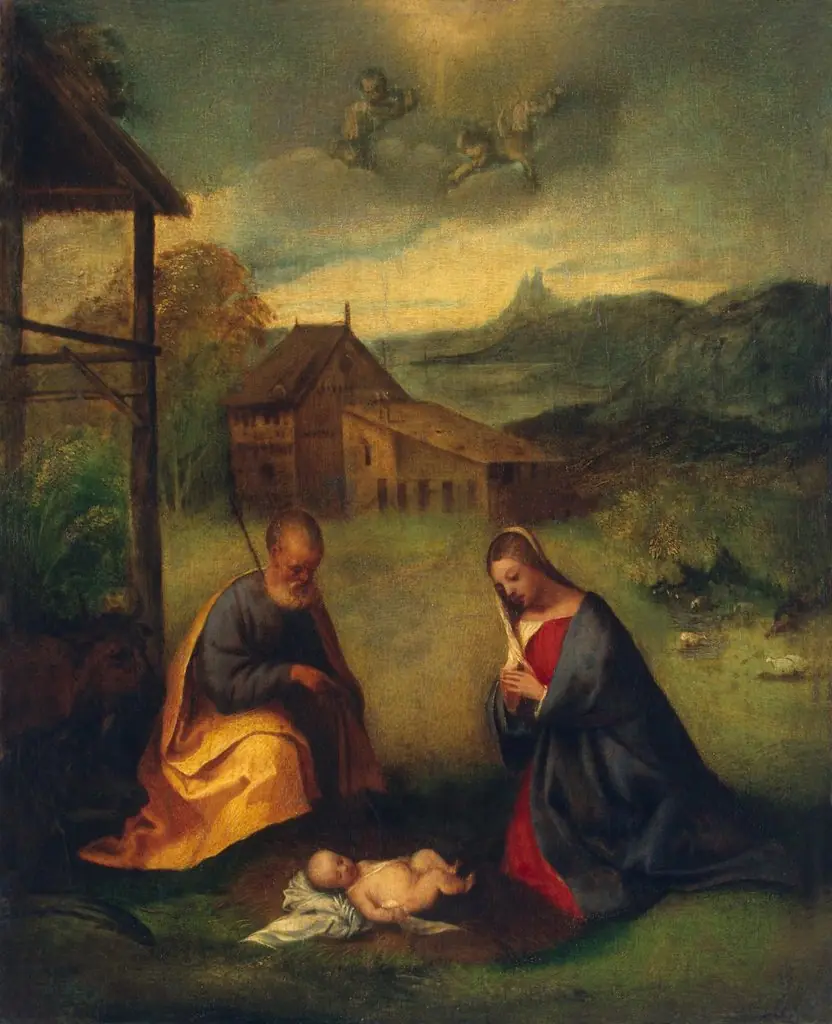 Adoration of the Christ Child
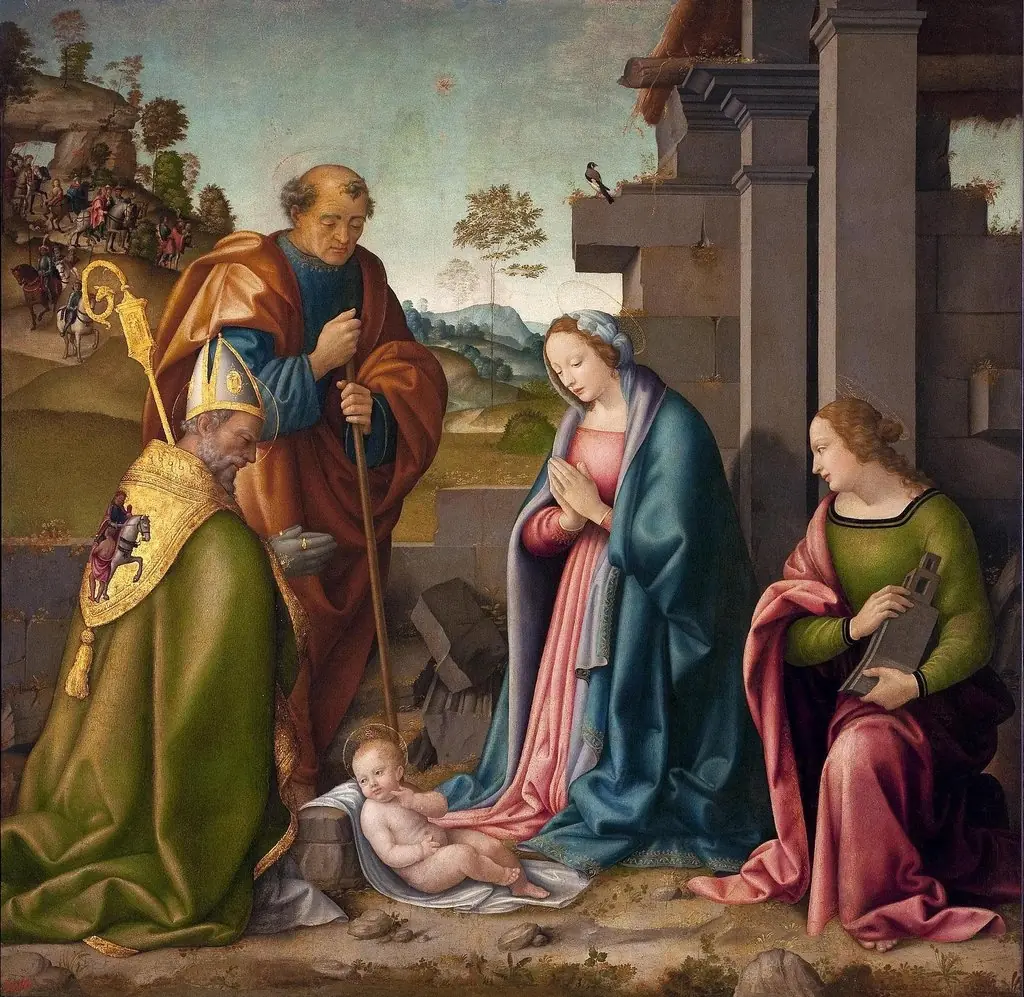 Adoration of the Christ Child, with Sts Barbara and Martin
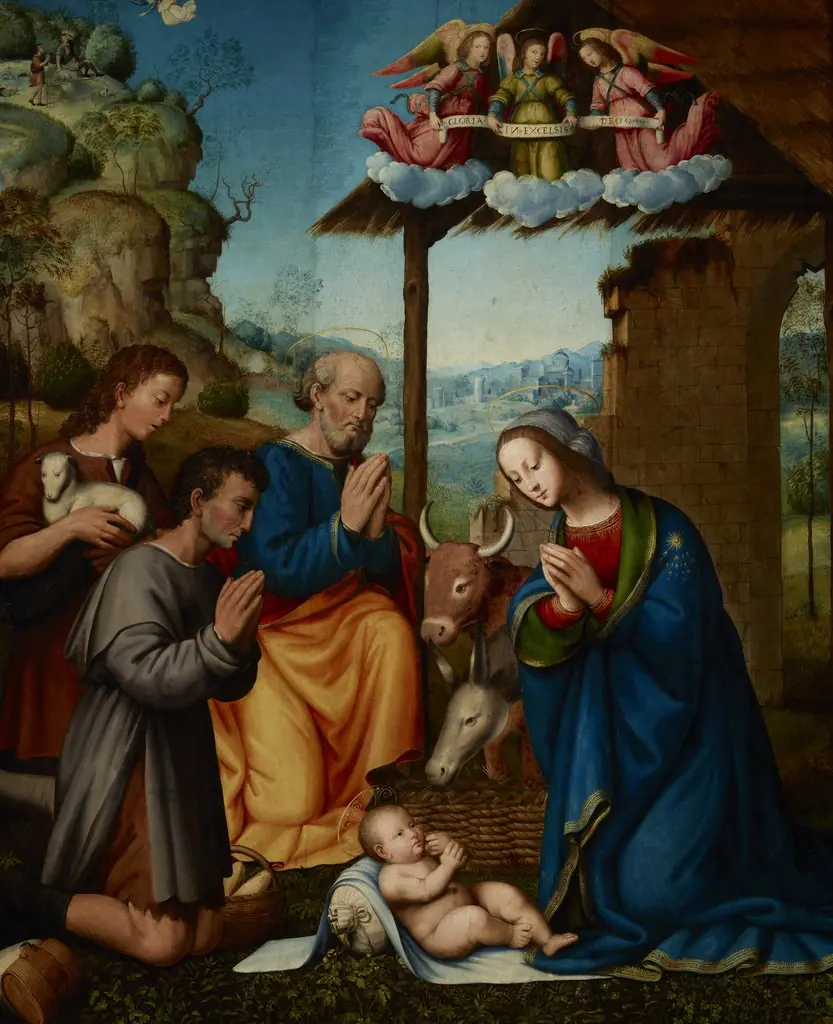 Adoration of the Shepherds (Adoration of the Child by Mary, St Joseph and Shepherds)
 Adoration of the Christ Child
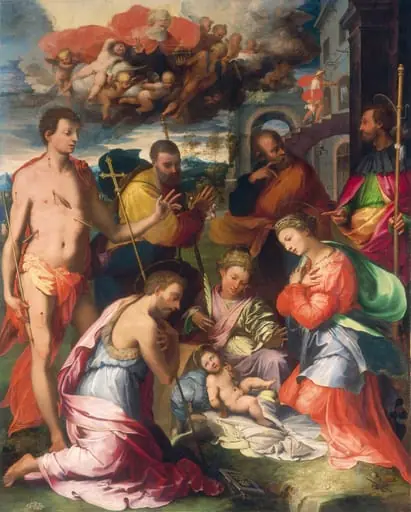 The Nativity
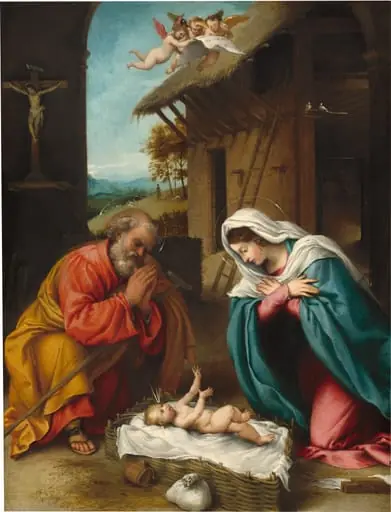 The Nativity
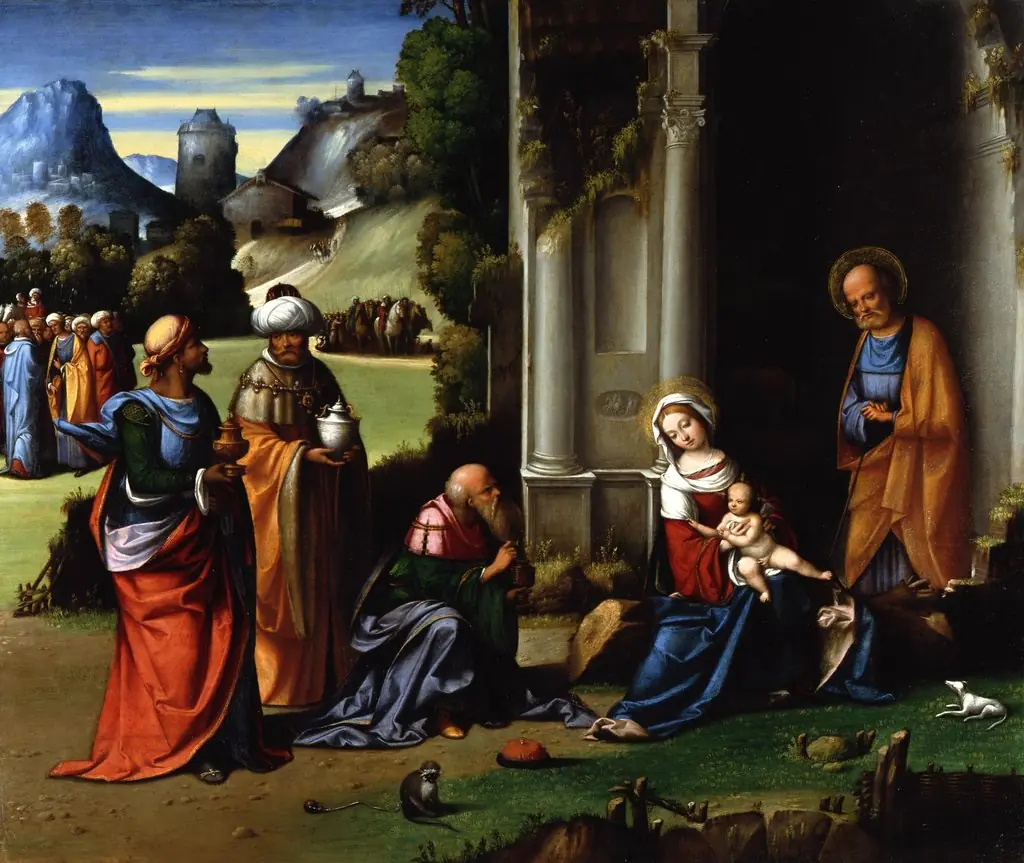 The Adoration of the Magi