Artwork
Adoration of the Christ Child
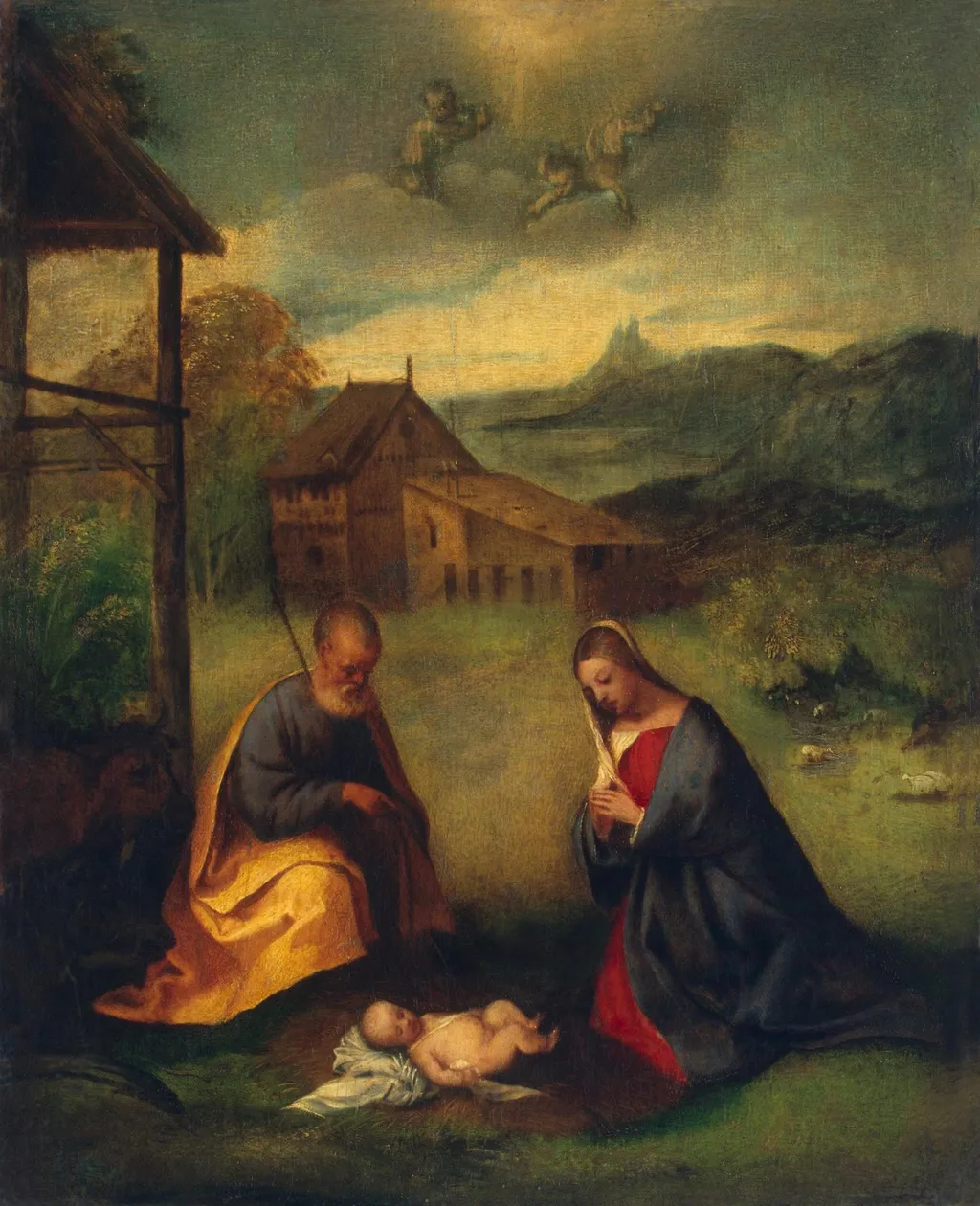
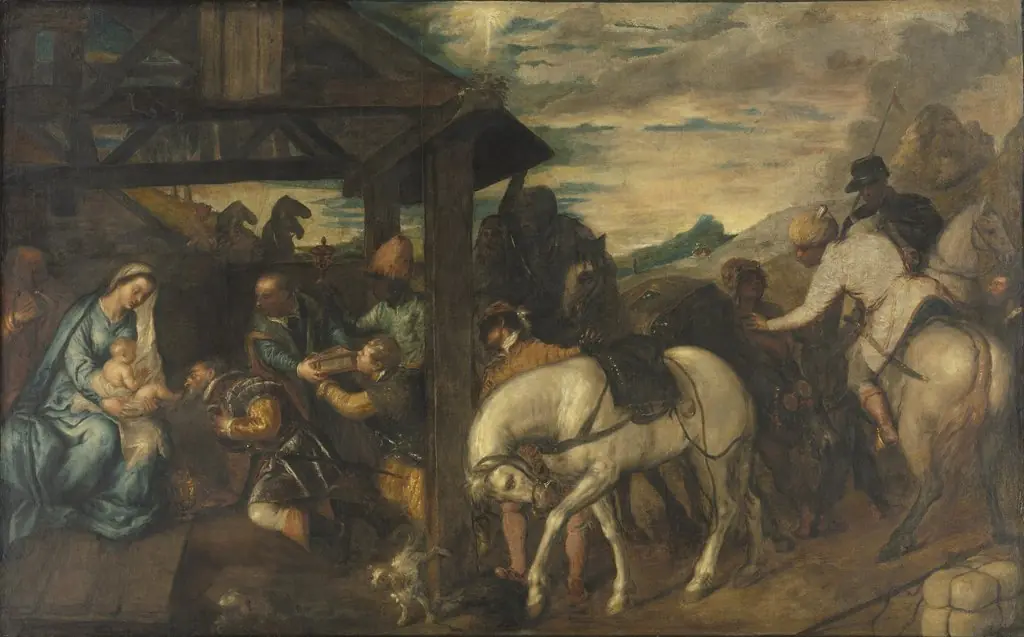
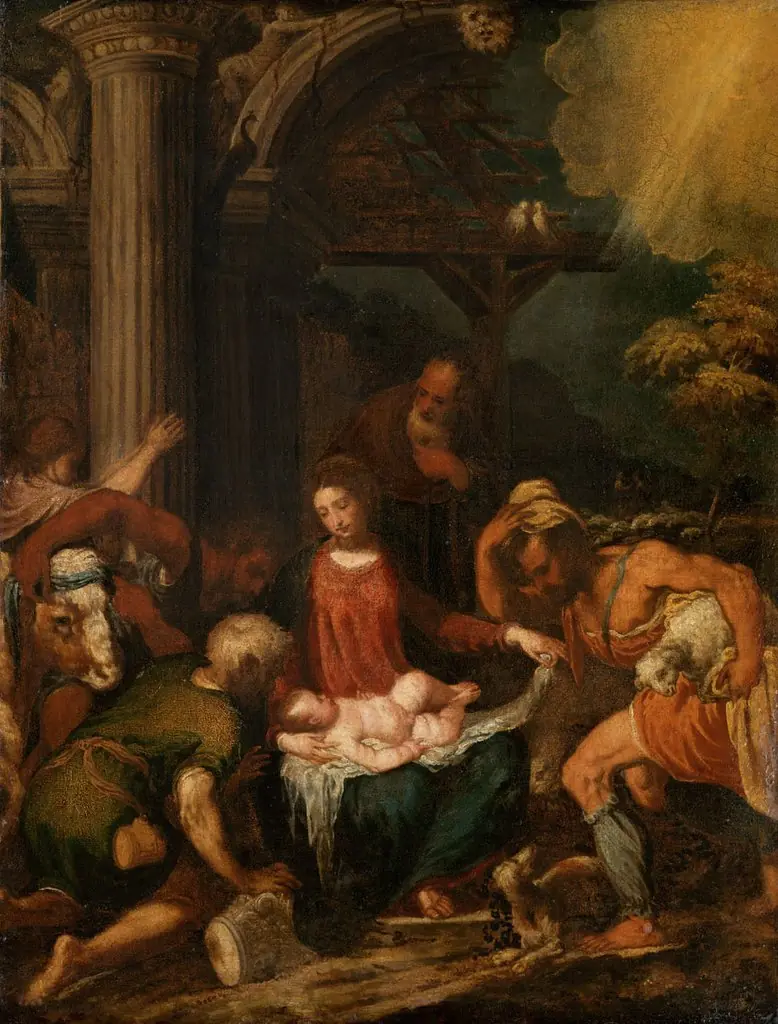
Adoration of the Christ Child is an oil painting by the Venetian Renaissance artist Titian. It dates from 1508 and is held in the collection of the Hermitage Museum.
About this work
Subject & Meaning
The painting depicts the Nativity of Jesus, the central event of the Christian celebration of Christ's birth.
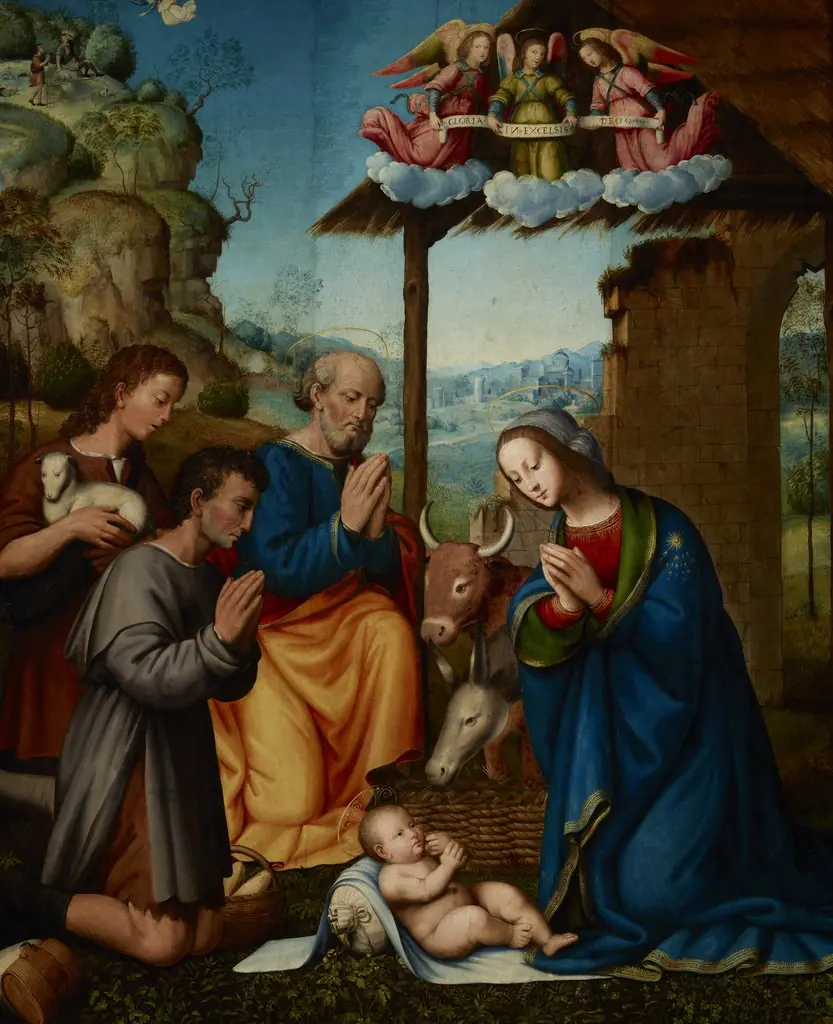
The painting depicts the Nativity of Jesus, the central event of the Christian celebration of Christ's birth. Its iconographic program centers on the Christ Child, who is venerated by the Virgin Mary and Saint Joseph within a humble structure flanked by an ox and a mule, traditional symbols of the stable at Bethlehem. An angel and a putto appear in the scene, reinforcing its sacred character, while the Star of Bethlehem shines above, marking the divine sign that guided the Magi.
A tree, often read as a symbol of life or of the cross to come, frames the composition. Together these elements convey the theological meaning of the Incarnation: the entry of the divine into the human world, presented through the tender gathering of the Holy Family in adoration of the newborn savior.
History & Provenance
The painting Adoration of the Christ Child, attributed to Titian and dated 1508, is part of the Hermitage Museum's collection in Saint Petersburg. The precise accession number is not detailed in the available records. The work depicts the Nativity, with the Christ Child, Mary, Joseph, and attendant figures, and is associated with Titian's early religious works in catalogues and scholarly references.
Overview
Titian's Adoration of the Christ Child, an oil painting from approximately 1508, exemplifies the Venetian Renaissance style. This early work by the renowned artist depicts the Nativity, featuring the infant Jesus, Mary, and Joseph in a humble stable setting. It is currently housed in the State Hermitage Museum, representing a key moment in Titian's developing approach to religious themes and composition.
Technique & Style
Executed in the Venetian Renaissance tradition, the artwork demonstrates an early command of light and shadow. The Christ Child serves as the primary light source, casting a soft glow upon the surrounding figures and drawing the viewer's gaze to the central motif. This strategic use of illumination creates depth and focuses attention, a characteristic technique that would become a hallmark of Titian's mature style and his broader influence on painting.
Context
Created early in Titian's career, this painting predates his full emergence as a dominant figure in Venetian art. It aligns with the broader Renaissance emphasis on naturalism and emotionally resonant religious themes. Titian, who would become celebrated for his innovative use of color and complex compositions, here demonstrates foundational skills that hint at the expressive power he would later achieve, shaping the course of European painting.
Own this work as a print
Artist & collection

Artist
Tiziano Vecellio (Italian:; c. 1488/1490 – 27 August 1576), Latinized as Titianus, hence known in English as Titian ( TISH-ən), was an Italian Renaissance painter. The most important artist of Renaissance Venetian…