Artwork
Putti as Fisherman
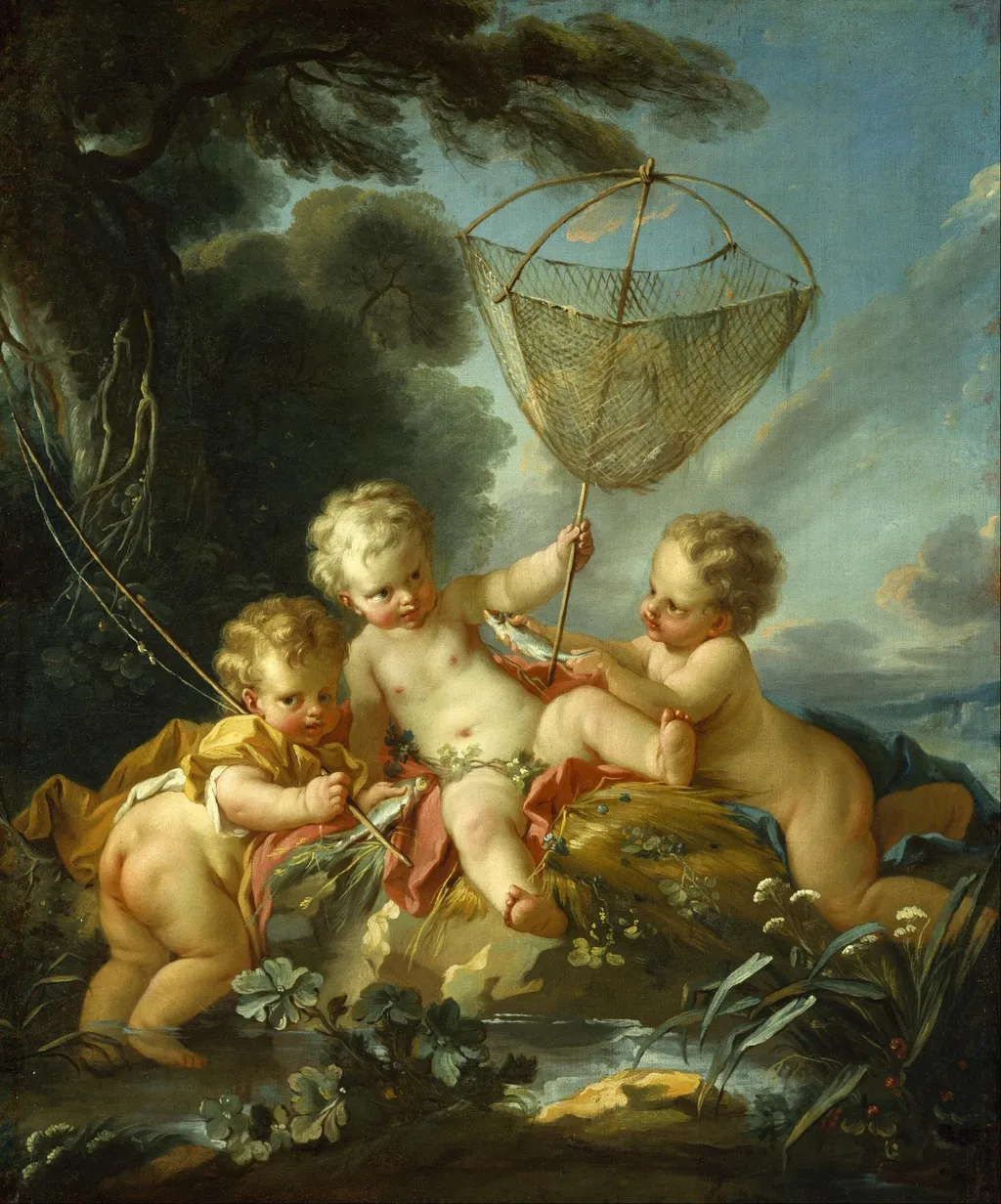
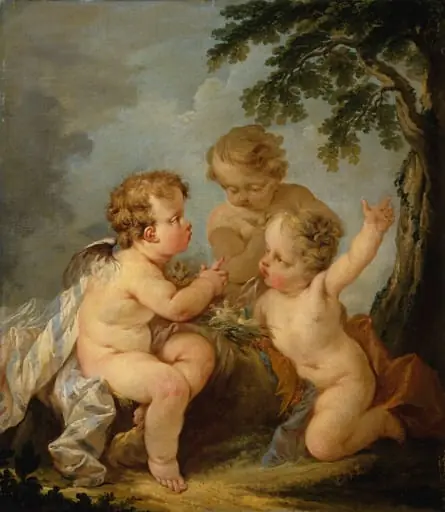
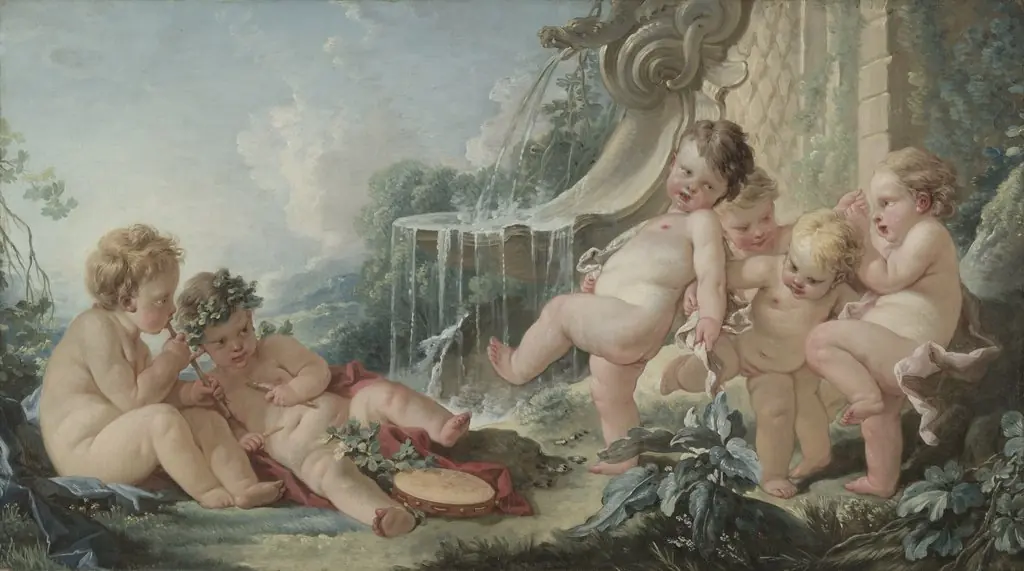
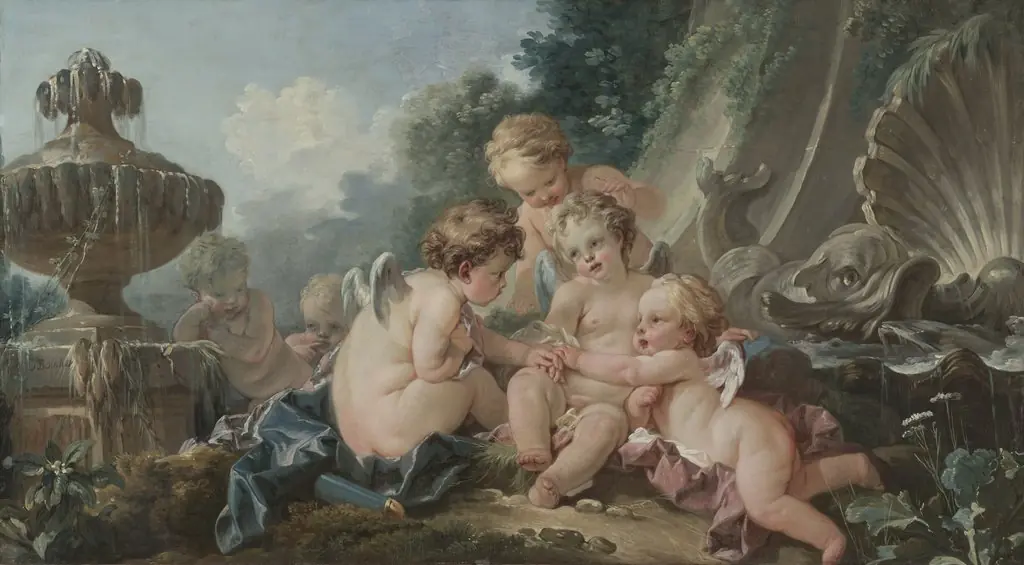
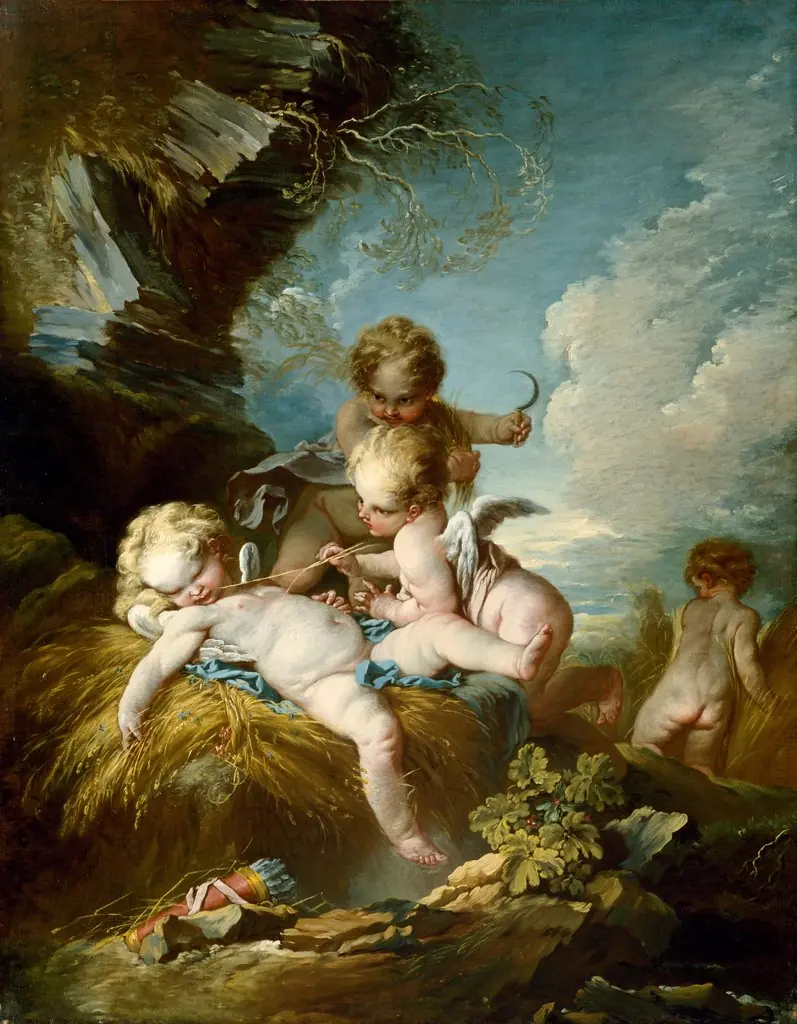
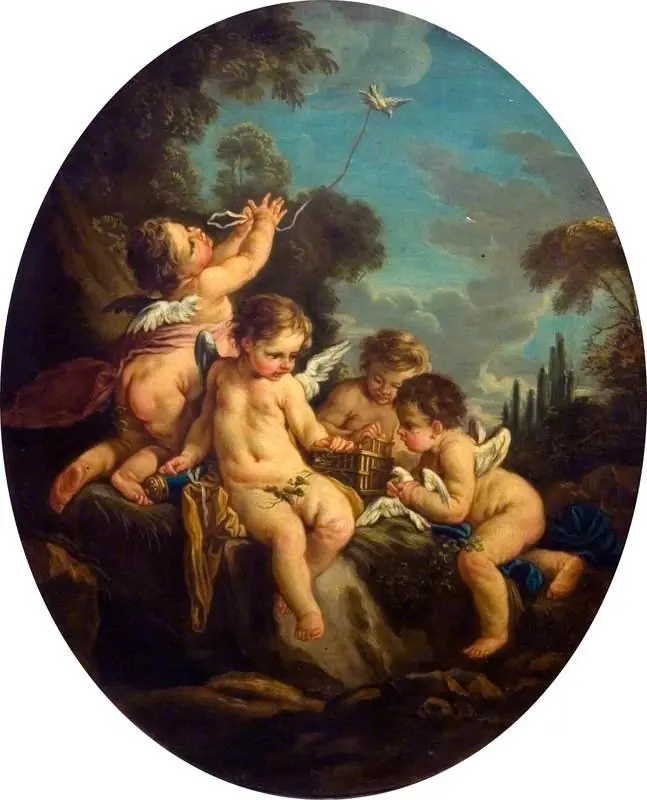
Putti as Fisherman is an oil painting by the Rococo painting artist François Boucher. It dates from 1744 and is held in the collection of the Museum of Fine Arts, Houston.
About this work
Overview
Boucher renders the scene with a light, fluid brushwork and a pastel palette characteristic of his mature period, emphasizing texture and movement.
François Boucher's 'Putti as Fisherman,' executed in 1744, is an oil painting that exemplifies the French Rococo style through its playful subject matter and delicate execution. The work depicts three putti, or cherubic figures, engaged in a fishing expedition within a lush, pastoral landscape. One putto sits upon a rock while the others stand or kneel in the shallow water; they are actively handling a fishing net and a caught fish.
The composition balances the figures against a backdrop of verdant trees and a soft, cloudy sky, creating a sense of idyllic leisure. Boucher renders the scene with a light, fluid brushwork and a pastel palette characteristic of his mature period, emphasizing texture and movement. This piece reflects the artist's frequent exploration of mythological and allegorical themes involving children, often used to convey innocence and the joys of nature.
Created during a time when Boucher was rising to prominence as the leading painter of the French court, the work demonstrates his mastery in blending classical motifs with a distinctly modern, decorative sensibility that defined mid-18th-century French art.
Subject & Meaning
The work features putti, angelic children traditionally associated with innocence, caught in the act of angling. Their playful interaction, with one clutching a net and another displaying a caught fish, suggests a lighthearted allegory of nature’s bounty and the simple pleasures of pastoral life.
Technique & Style
Boucher employs a delicate palette of pastel hues, layering translucent glazes to achieve atmospheric depth. The figures are rendered with smooth, almost sculptural flesh tones, while the surrounding foliage and sky are suggested through loose brushwork, emphasizing the Rococo preference for elegance and decorative softness.
History & Provenance
Created in the mid‑18th century, the painting entered the collection of the Museum of Fine Arts, Houston, where it remains on view. Its acquisition reflects the museum’s broader commitment to representing French Rococo art within its European holdings.
Context
During Boucher’s career, the depiction of putti was a recurring motif, often employed to convey themes of purity, love, or mythological reference. This piece aligns with the period’s fascination with idyllic, courtly scenes that blended mythic symbolism with everyday leisure.
Own this work as a print
Artist & collection

Artist
François Boucher was a French painter, draughtsman and etcher, who worked in the Rococo style.