Artwork
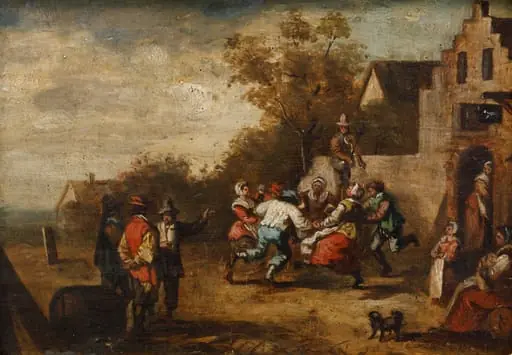
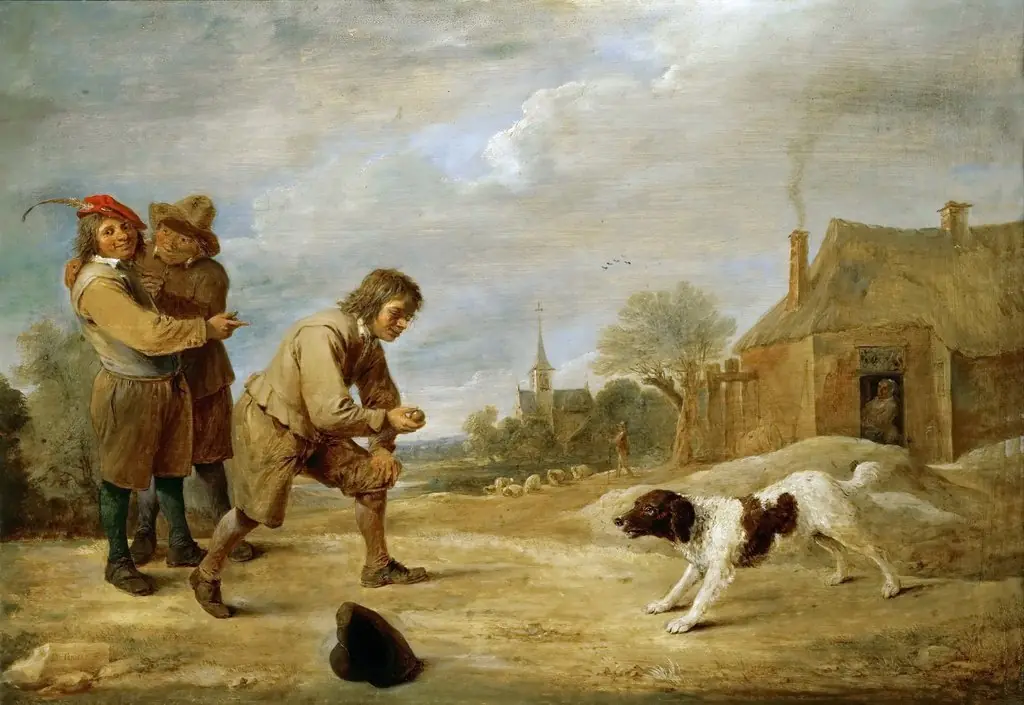
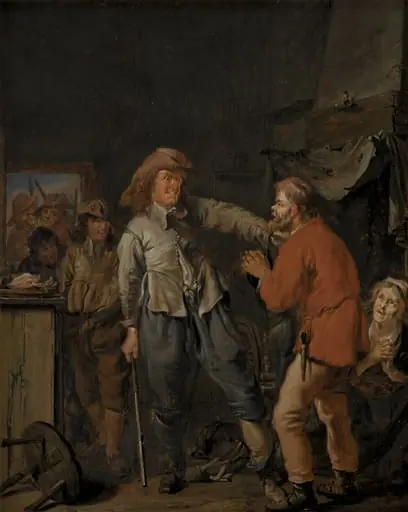
A man dancing with a dog
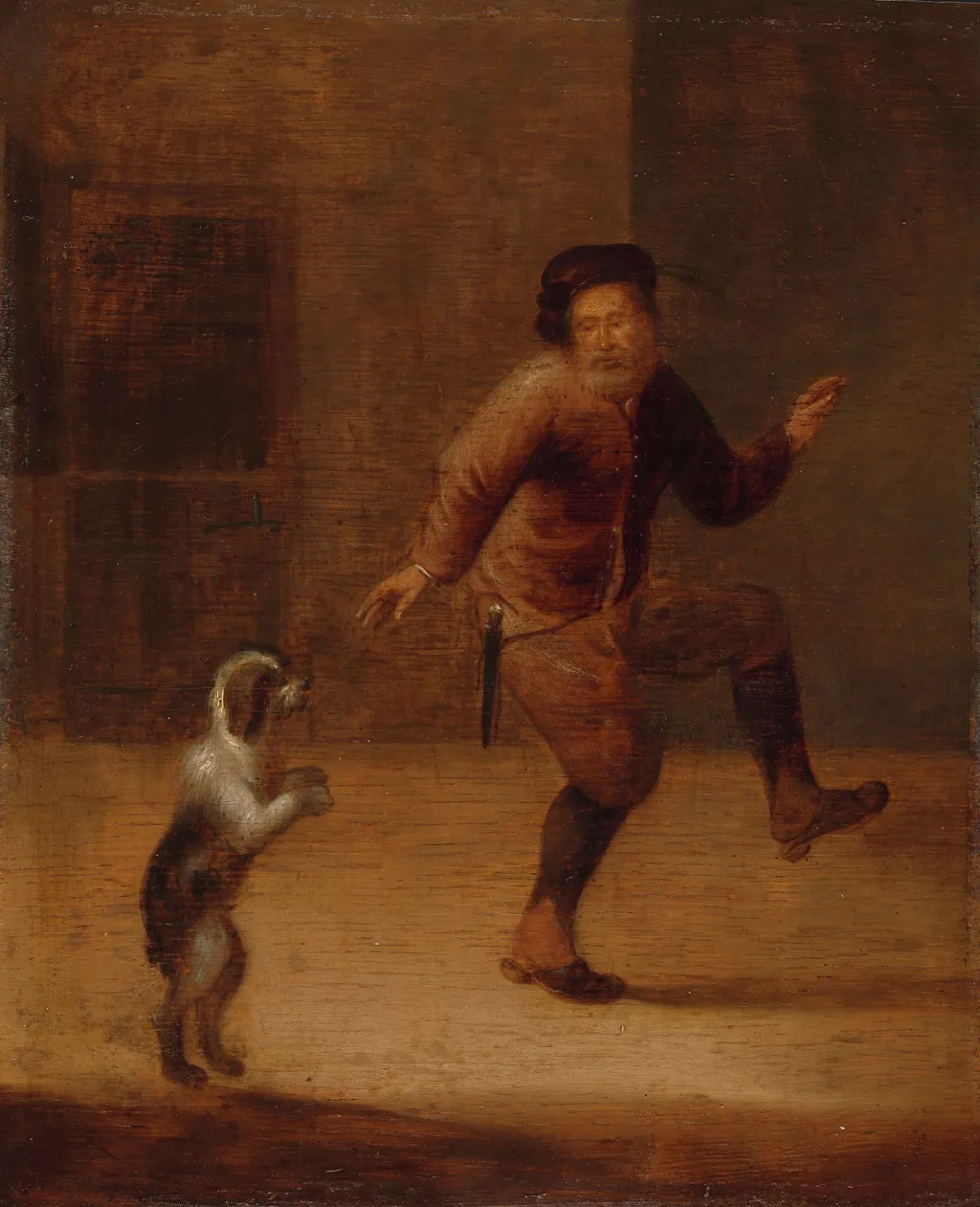
A man dancing with a dog is an oil painting by the Dutch Golden Age artist François Verwilt. It dates from 1650 and is held in the collection of the Rijksmuseum.
About this work
Technique & Style
The work belongs to the tradition of genre art, depicting a lively everyday scene rather than a religious, mythological, or historical subject.
A man dancing with a dog is a small-scale genre painting executed in oil paint on panel, with the support measuring 26.4 cm in height by 22.3 cm in width. The work belongs to the tradition of genre art, depicting a lively everyday scene rather than a religious, mythological, or historical subject. Verwilt's handling reflects the Dutch Golden Age taste for cabinet pictures, in which finely brushed figures and anecdotal narrative are concentrated within an intimate format suited to close-range viewing.
The panel support, typical of seventeenth-century Dutch easel painting, provided a smooth ground that allowed for the precise detail and subtle tonal modeling associated with the period's genre tradition.
History & Provenance
The painting titled A man dancing with a dog was created by the artist François Verwilt in 1650. Executed in oil paint on a panel, the work measures 26.4 cm in height and 22.3 cm in width. It is classified as a genre scene depicting a figure interacting with an animal. The piece is currently held in the collection of the Rijksmuseum.
Context
François Verwilt's 1650 oil painting depicting a man dancing with a dog was created during the Dutch Golden Age, reflecting Baroque-era fascination with everyday scenes and animal subjects. The work measures 26.4 cm by 22.3 cm and is housed in the Rijksmuseum collection, establishing Verwilt's significance within 17th-century Dutch genre painting through his specialized focus on animal interactions. Its presence in a major institutional collection underscores scholarly recognition of Verwilt's contribution to the evolution of animal genre painting in Northern European art.
Art historians studying Baroque genre scenes highlight this piece as representative of the period's thematic exploration of domestic leisure and human-animal relationships, situating Verwilt within broader artistic movements that elevated animal subjects to compositional equals.
Overview
A man dancing with a dog is a 17th-century oil painting by Dutch Golden Age artist François Verwilt, created circa 1650. The work belongs to the genre scene tradition, capturing a playful interaction between a man and a dog.
Subject & Meaning
The painting depicts a carefree moment of a barefoot man, dressed in simple attire, dancing with a small, mostly white dog standing on its hind legs beside him. The scene conveys a lighthearted, intimate connection between the human and animal.
Legacy
While not extensively documented, the piece remains a representative example of 17th-century Dutch genre painting, highlighting the artist’s ability to capture whimsical, relatable moments from daily life.
Own this work as a print
Artist & collection
Artist
Francois (Frans) Verwilt (c.1623 in Rotterdam - 8 August 1691 in Rotterdam) was as a Dutch Golden Age landscape painter.