Artwork
Ship off Carmel Head
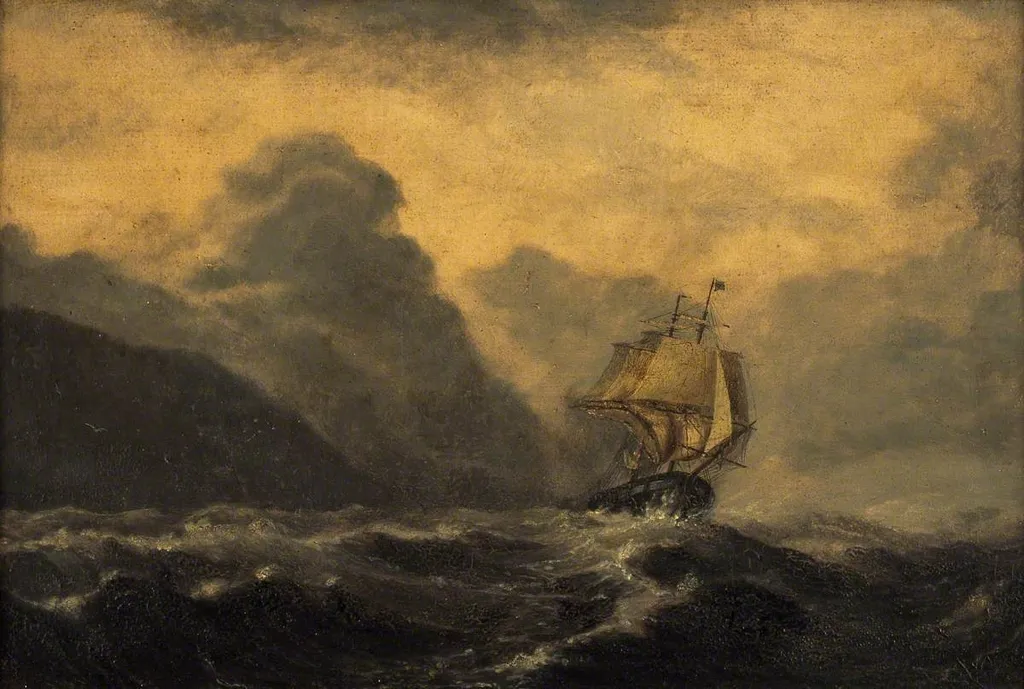
Ship off Carmel Head is an oil painting by the British Romanticist artist Frances Williams. It dates from 1830 and is held in the collection of the National Library of Wales.
About this work
Overview
The painting is held in the National Library of Wales, having been bequeathed by Kyffin Williams in 2006 with the accession number KAC/26.
Ship off Carmel Head is a marine painting by the Welsh artist Frances Williams (1798-1856), dated to circa 1830. Executed in oil on panel, the work measures 19.1 by 29 cm and depicts a sailing vessel navigating turbulent waters near Carmel Head, a headland on the Isle of Anglesey in Wales. The painting is held in the National Library of Wales, having been bequeathed by Kyffin Williams in 2006 with the accession number KAC/26. It forms part of the institution's framed works of art collection and is designated as public domain. The painting represents a significant example of early nineteenth-century British marine painting by a female artist, a genre and period in which women practitioners were notably scarce.
Subject & Meaning
The painting's primary subject is a single sailing vessel with multiple masts and billowing sails, positioned slightly right of center and tilted as it moves through choppy waters. The sea occupies the lower half of the composition, while the upper two-thirds are dominated by a vast sky filled with heavy, layered clouds in varying shades of gray and brown against a yellowish-ochre atmosphere. To the left, a dark, indistinct mass of land or cliff rises, partially obscured by mist or rain, representing Carmel Head itself. The depicted elements, sailing ship, sea, wind wave, and Carmel Head, situate the work within the tradition of British marine painting that emphasized the dramatic relationship between vessels and coastal geography. No human figures are clearly discernible, directing focus toward the vessel's struggle against natural forces and the atmospheric conditions. The restrained palette of browns, grays, and muted yellows, combined with the hazy, atmospheric finish, suggests an interest in conveying the sensory experience of maritime weather rather than narrative or heroic action.
Technique & Style
The work is executed in oil on panel, a support that provided stability for detailed work and was common for smaller-scale marine paintings of this period. The technique displays smooth blending in the sky, creating subtle tonal gradations as light filters through breaks in the clouds, while more textured, visible brushstrokes animate the white-capped waves breaking around the hull and trailing in the vessel's wake. This differential handling, polished atmosphere above and vigorous surface below, creates a formal tension between sky and sea that energizes the composition. The overall finish is atmospheric and somewhat hazy, suggesting the influence of Romantic-era landscape conventions on marine subject matter. The restrained color scheme, dominated by browns, grays, and muted yellows, avoids the high-con drama of some contemporary marine painting in favor of a more nuanced, observational approach to light and weather conditions.
History & Provenance
The painting is dated to circa 1830, placing it in the early mature phase of Frances Williams's career. Its provenance includes ownership by Kyffin Williams (1918-2006), the celebrated Welsh landscape painter, who bequeathed the work to the National Library of Wales in 2006. The acquisition method and the identity of the bequestor connect the painting to a significant lineage of Welsh artistic interest in landscape and coastal subjects. The work was assigned accession number KAC/26 upon entering the collection. No exhibition history is recorded in the available sources, though its public domain status through Art UK has facilitated wider visibility of the image. The painting's current location is the National Library of Wales, where it is held as part of the framed works of art collection.
Context
Frances Williams (1798-1856) worked during a period when women artists faced substantial barriers to professional training and recognition, particularly in specialized genres such as marine painting that were dominated by male practitioners and associated with institutional structures like the Royal Navy and maritime trade. Her activity in Wales during the early nineteenth century places her within a regional context of British art production that has received less scholarly attention than metropolitan centers. The subject of Carmel Head, a prominent headland on the northwest coast of Anglesey, reflects the broader British artistic interest in coastal topography and the dramatic seascapes of Wales, Scotland, and Ireland during the Romantic period. The painting's connection to Kyffin Williams, who bequeathed it to the National Library of Wales, indicates its significance within Welsh artistic heritage and suggests its appreciation by subsequent generations of Welsh painters engaged with landscape tradition. The work's presence in a national collection underscores its value as documentary evidence of both female artistic practice and Welsh marine painting in the early nineteenth century.
Legacy
Ship off Carmel Head survives as a tangible example of Frances Williams's contribution to British marine painting, a genre in which works by women remain underrepresented in both collections and scholarship. Its preservation through bequest to the National Library of Wales, rather than remaining in private hands, has ensured its accessibility as a public resource. The painting's public domain status, confirmed through Art UK, has facilitated digital dissemination and reproduction, supporting its role in educational and research contexts. The work's legacy is intertwined with that of Kyffin Williams, whose bequest connected it to twentieth-century Welsh art history. As a document of early nineteenth-century maritime Wales, it contributes to understanding both the aesthetic conventions of the period and the geographic specificity of Welsh coastal scenery. The painting continues to serve as a point of reference for studies of women artists in Britain and the regional traditions of Welsh landscape and marine painting.
Artist & collection
Artist
Frances Williams painted seascapes in the early 1800s, documenting coastal views in oils.

- Schiffe auf stürmischer See
 A Brisk Gale: A Dutch East-Indiaman Landing Passengers
 Fishing Boats off the Coast in a Gale
 Storm at Sea
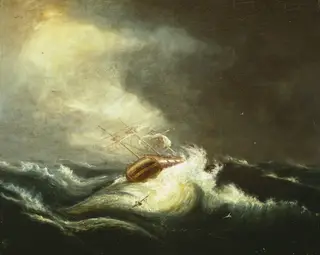 Ship in Storm
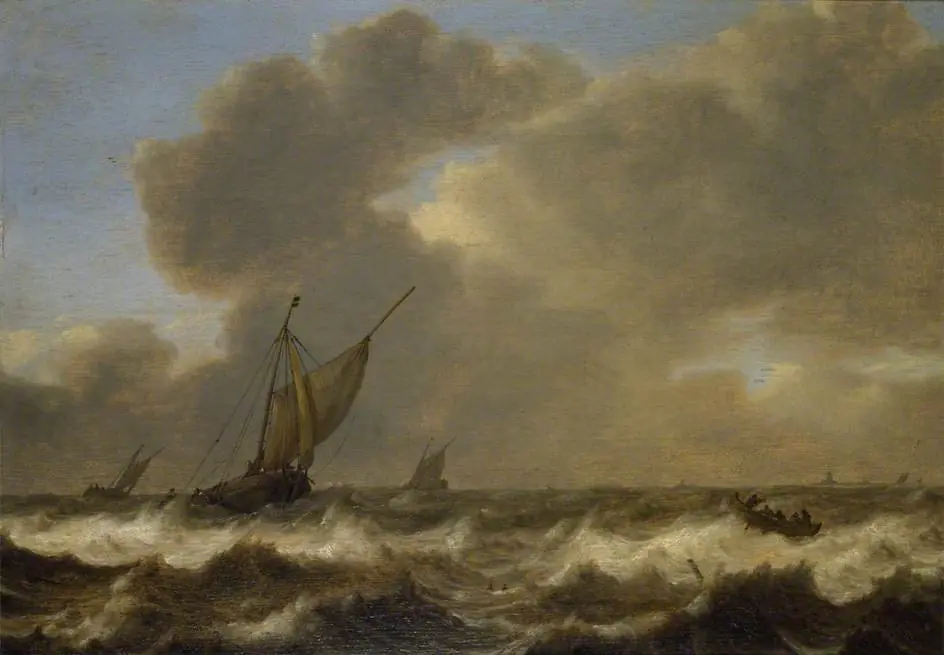 Three Damloopers in a Fresh Breeze
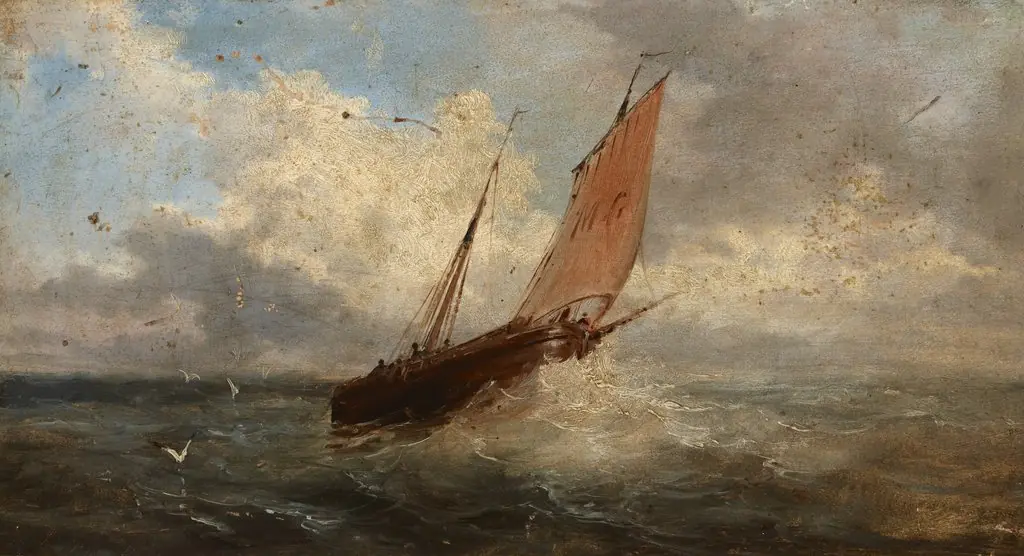 View of the Sea – Boat at the Sea
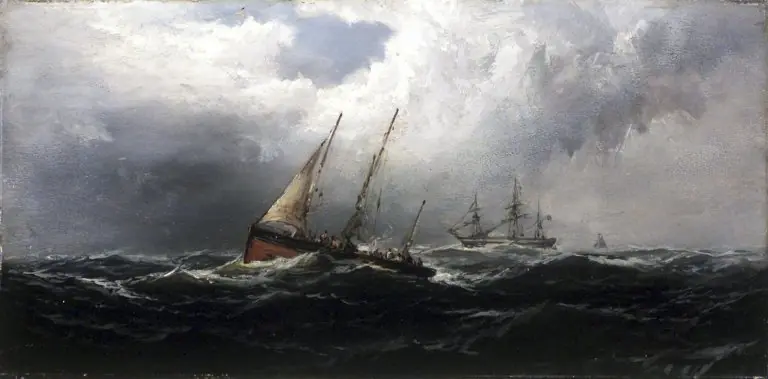 After a Gale--Wreckers
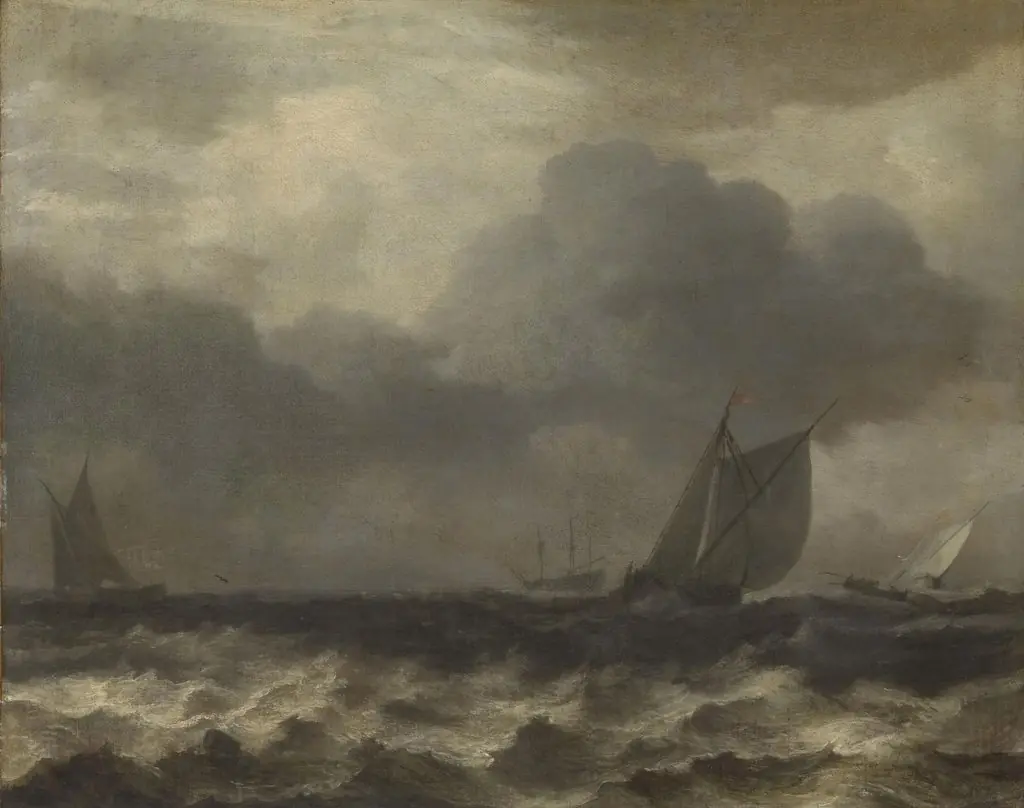 Rough Sea
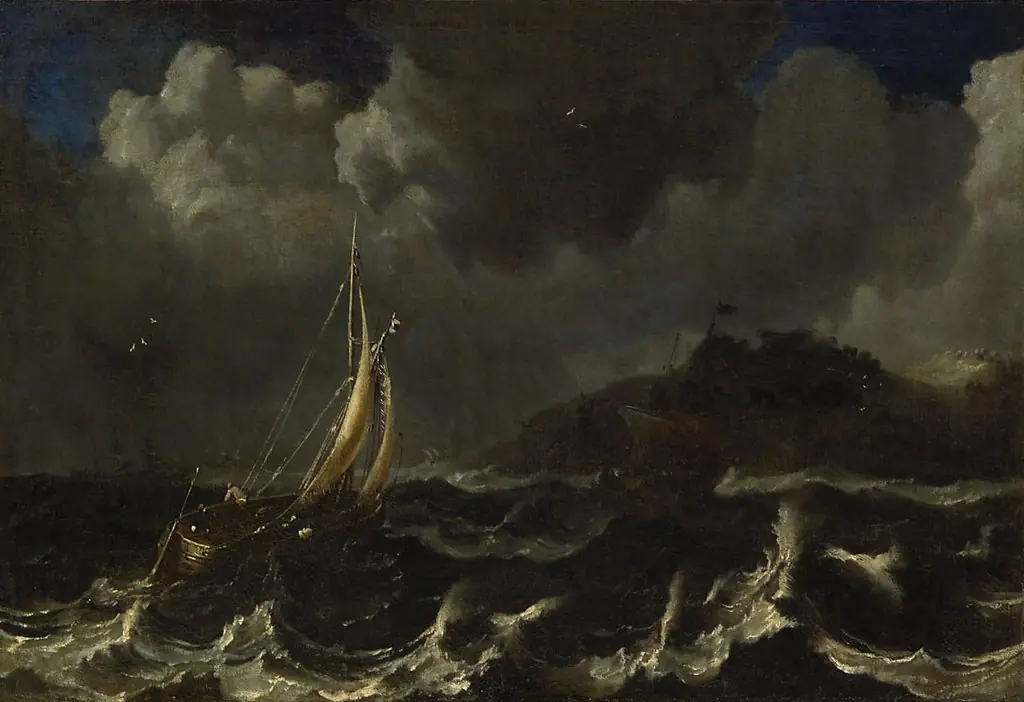 Ein Seesturm mit Schiffen
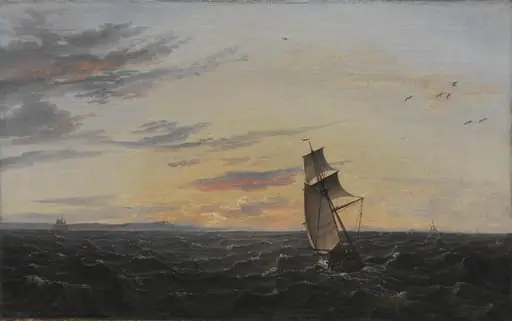 A Seascape. The coast of the Island of Rügen in Evening Light
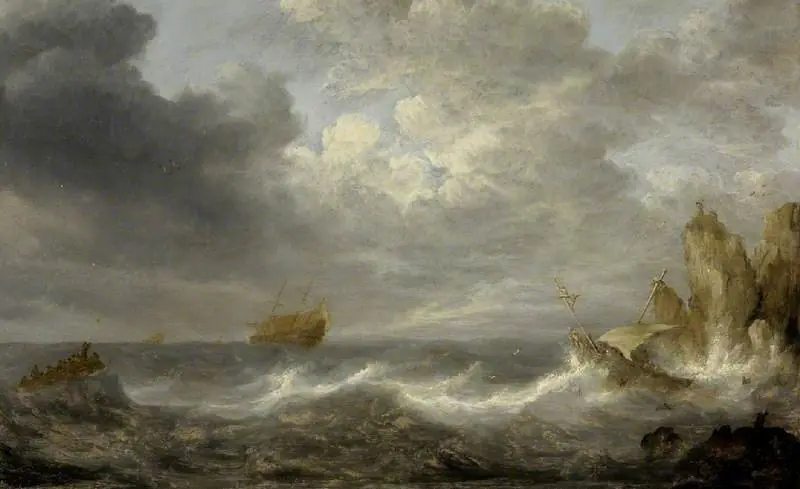 A sea-scene