Artwork
The Woman in the Waves
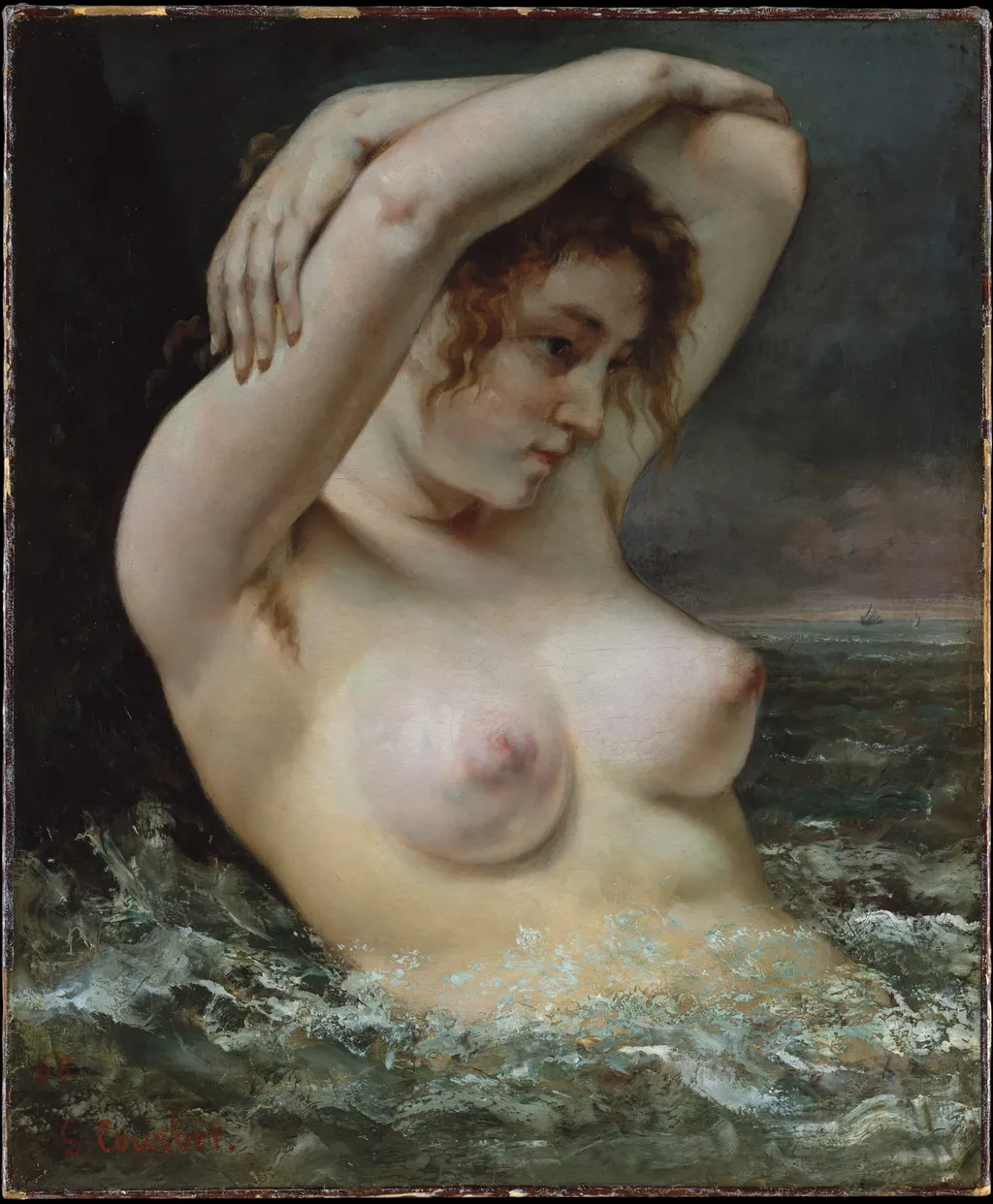
The Woman in the Waves is an oil painting by the Academic Art artist Gustave Courbet. It dates from 1868 and is held in the collection of the Metropolitan Museum of Art.
About this work
Painted in 1868, it belongs to a series of female nudes he made between 1864 and 1868 in answer to the idealized academic nudes of Alexandre Cabanel.
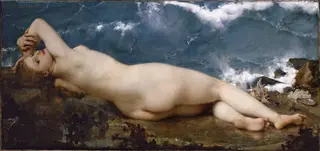
A nude woman rises from churning surf, her skin set against the foam, while Gustave Courbet quietly subverts the Venus myth by leaving his model's underarm hair visible. Painted in 1868, it belongs to a series of female nudes he made between 1864 and 1868 in answer to the idealized academic nudes of Alexandre Cabanel. The Met acquired it in 1929 through the bequest of Mrs. H. O. Havemeyer, and it now hangs in Gallery 811.
Subject & Meaning
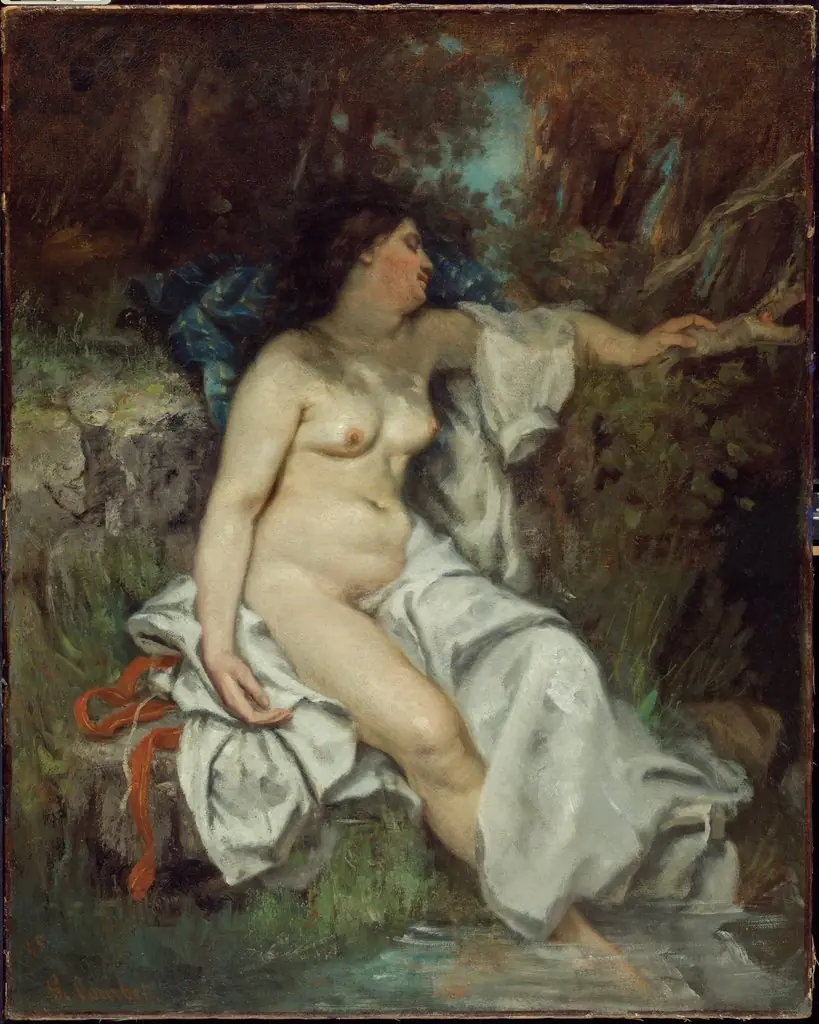
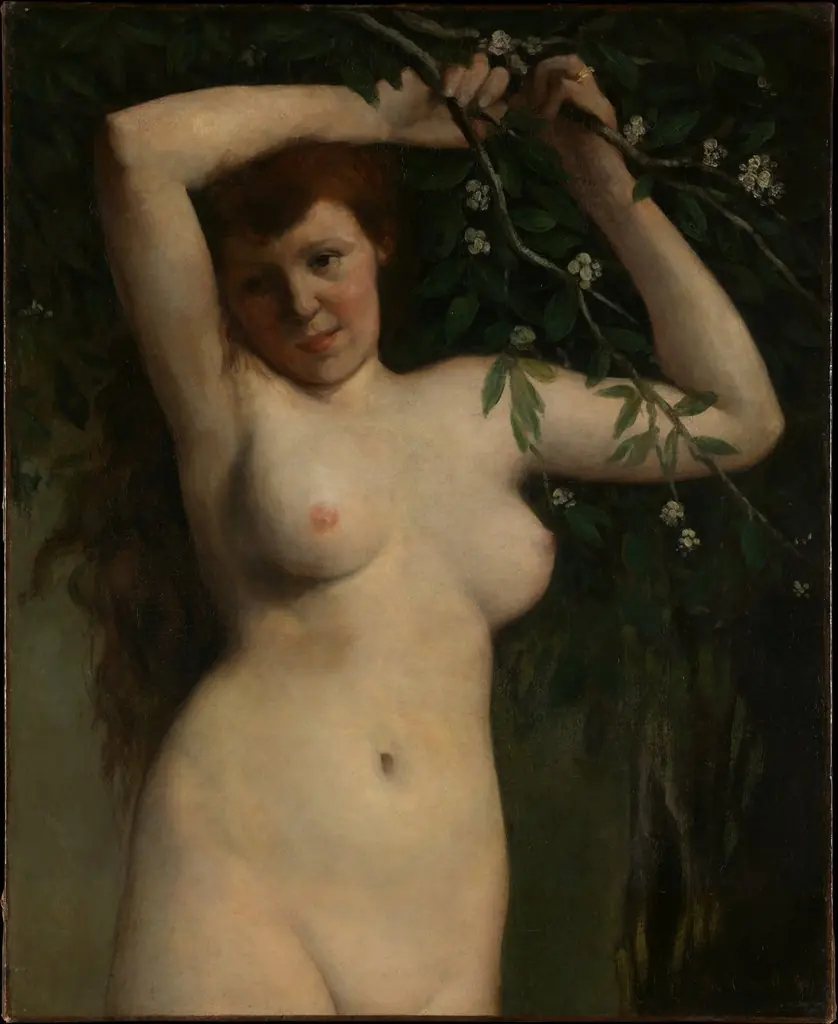
The painting depicts a young woman bathing in the sea, shown as a half-length nude with arms raised above her head, revealing red-brown hair and realistic flesh tones, including visible underarm hair, a detail that was groundbreaking for its time. The composition alludes to mythological representations of Venus (the work was inspired by Alexandre Cabanel's The Birth of Venus), yet Courbet subverts the idealized nymph tradition by grounding the figure in naturalistic anatomy and a dusky, twilight seascape with a distant boat. This fusion of realism and mythological framing creates a deliberately sensual, provocative image that challenges academic conventions.
The dark mood and the woman's exposed, unidealized body emphasize Courbet's intent to depict a living, earthly bather rather than an ethereal goddess, underscoring the tension between traditional allegory and modern, fleshly truth.
Technique & Style
Executed in oil on canvas, The Woman in the Waves (65.4 × 54 cm) exemplifies Gustave Courbet's Realist style while engaging academic traditions. The painting depicts a half-length nude woman wading in a dark sea, her raised arms crossed above her head revealing reddish-brown curls and prominently rendered underarm hair. Courbet's handling emphasizes realistic flesh tones and translucent skin, achieved through subtle gradations of light and color.
The composition is set at twilight, with a distant sailing ship and a looming dark rock on the left, creating a somber, almost mythological atmosphere. The paint is applied with a smooth yet tactile brushwork that captures the foam of small waves splashing against the figure's torso. This combination of unidealized anatomical detail, such as underarm hair, and a classical bather motif underscores Courbet's challenge to conventional academic nudes of the era.
History & Provenance
Gustave Courbet painted The Woman in the Waves in 1868. The work was first exhibited at the Salon of Ghent in 1868 and later at the Salon of Brussels in 1872. It belongs to a series of nudes Courbet created from 1864 to 1868, inspired by the success of Alexandre Cabanel's The Birth of Venus; the model may have been Joanna Hiffernan.
In 1873, Courbet sold the painting to dealer Paul Durand-Ruel, who in 1875 sold it to baritone Jean-Baptiste Faure. Durand-Ruel repurchased it in January 1893 and sold it that same month to American sugar magnate Henry Osborne Havemeyer and his wife Louisine. After Louisine Havemeyer's death in 1929, the painting was bequeathed to the Metropolitan Museum of Art as part of the H. O. Havemeyer Collection.
The Woman in the Waves is held at the Metropolitan Museum of Art in New York (accession number 29.100.62). It was donated by Louisine W. Havemeyer in 1929 as part of the H. O. Havemeyer Collection. The painting debuted at the Salon of Ghent in 1868 and was shown at the Salon of Brussels in 1872.
It has since been lent to numerous international venues, including the 2015–2016 traveling exhibition “Discovering the Impressionists: Paul Durand-Ruel and the New Painting.” The work is on permanent display in the museum's Gallery 811.
Context
Painted during Courbet's 1864–1868 series of nudes, 'The Woman in the Waves' responds to the acclaim of Alexandre Cabanel's 'Birth of Venus' (1863) and academic nude painting. The work is notable for its stark realism, including realistic flesh tones and the depiction of underarm hair, which art historian Daniel Arasse cited as one of the first instances of female body hair in painting. This fidelity to nature deliberately subverted Salon conventions.
At the 1872 Brussels Salon, critics derided the painting as the 'unhealthy fruit' of a 'deranged mind and a very sick heart.' Yet the work situates Courbet within French Realism while challenging idealized depictions; its earthy sensuality and mythological veneer, inspired by Venus imagery, mark a transitional moment that undermined academic norms and foreshadowed modernist approaches to the nude.
Legacy
The Woman in the Waves has been exhibited extensively at major museums worldwide, including the Musée d'Orsay, the Royal Academy of Arts, and the Alte Pinakothek, reflecting its lasting prominence in art-historical collections. Its legacy is further marked by art historian Daniel Arasse, who identified the painting as one of the earliest depictions of women's underarm hair in Western art. The work also appears in literature, cited in Patrick Grainville's novel Falaise des fous.
These factors contribute to its enduring reputation as a key example of Courbet's realism and a subject of ongoing scholarly and cultural interest.
Overview
Gustave Courbet's The Woman in the Waves, painted in oil on canvas in 1868, depicts a female nude emerging from turbulent water. This work concludes a series of nudes the artist produced between 1864 and 1868. Measuring approximately twenty-five by twenty-one inches, the painting presents a figure that subtly references classical mythology while firmly grounding itself in Courbet's commitment to depicting reality without idealization. It serves as a key example of his realist approach to the human form.
Own this work as a print
Artist & collection
Artist
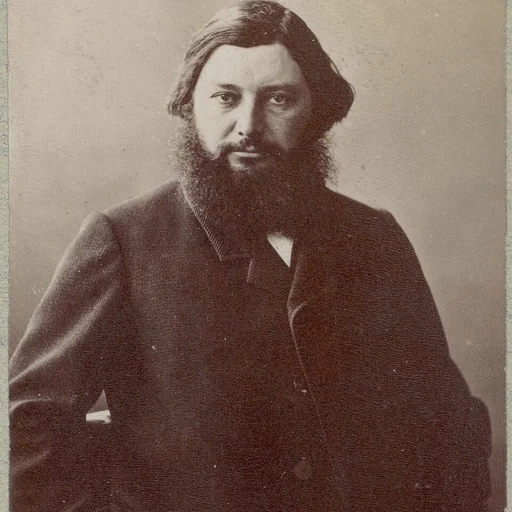
Jean Désiré Gustave Courbet (UK: KOOR-bay; US: koor-BAY; French:; 10 June 1819 – 31 December 1877) was a French painter who led the Realism movement in 19th-century French painting.