Artwork
Goddess of Chaste Love
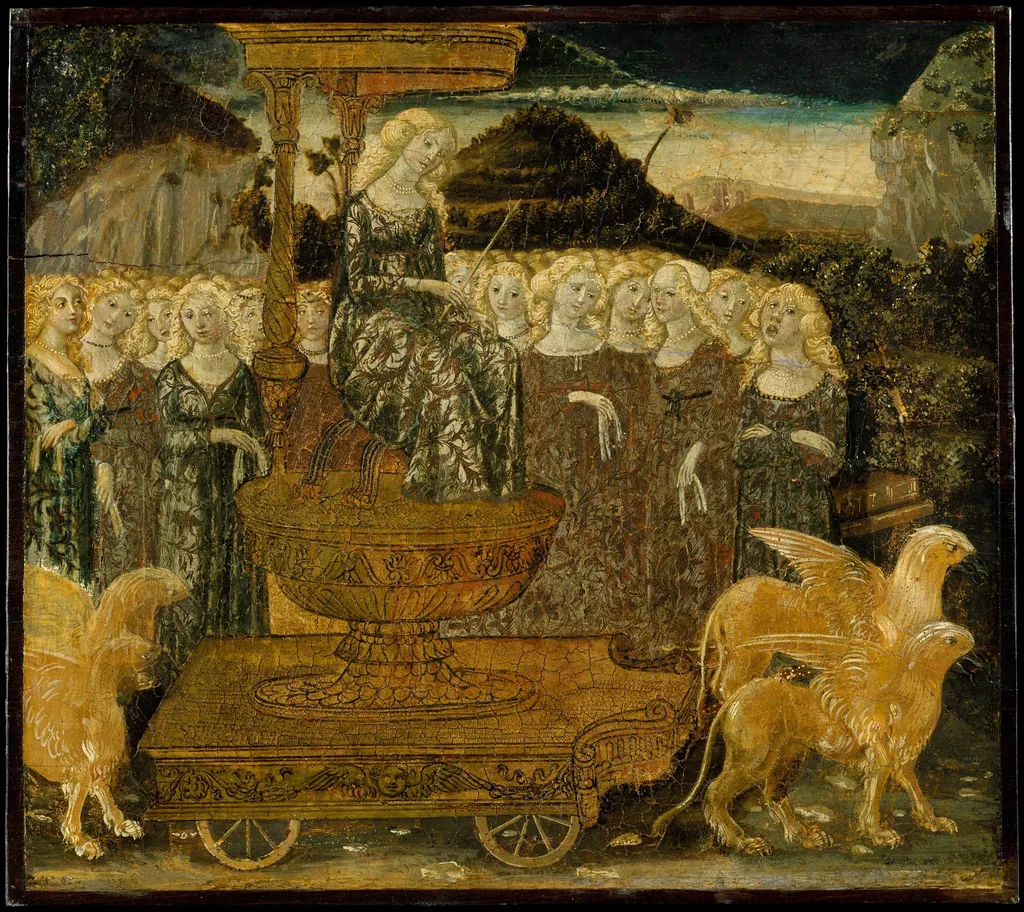
Goddess of Chaste Love is an unspecified painting by the Early Renaissance artist Francesco di Giorgio. It dates from 1471 and is held in the collection of the Metropolitan Museum of Art.
About this work
Technique & Style
The handling combines delicate linear definition with softly modeled flesh and drapery, aligning with mid-Quattrocento Sienese practice.
The panel painting employs tempera on poplar wood support, executed in 1471 by Francesco di Giorgio. Its small, vertical format measures 43.8 cm in width by 39.4 cm in height. The handling combines delicate linear definition with softly modeled flesh and drapery, aligning with mid-Quattrocento Sienese practice.
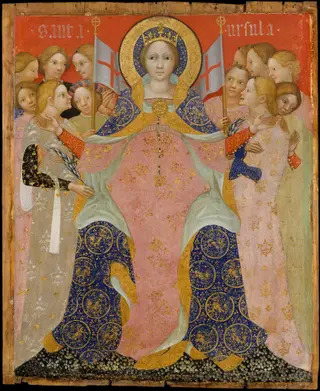
The composition centers a crowned female figure with flowing hair, rendered in pale, luminous tones against a neutral ground. Linear hatching in the costume and restrained chiaroscuro suggest an emphasis on contour and clarity rather than volumetric illusionism. No record of later repaints or significant damage appears in the cited sources.
History & Provenance
The Goddess of Chaste Love, painted by Francesco di Giorgio in 1471, is held in the collection of the Metropolitan Museum of Art. Its physical dimensions are recorded as 39.4 cm in height and 43.8 cm in width.
No specific accession number or exhibition history is documented in the available sources.
Context
The painting Goddess of Chaste Love by Francesco di Giorgio Martini, created in 1471, resides in the Metropolitan Museum of Art in New York. Measuring 39.4 cm by 43.8 cm, it portrays a woman embodying chastity through symbolic attributes. Scholars have examined its iconography within Renaissance devotional practices and its stylistic ties to Quattrocento Florentine aesthetics, situating it amid contemporary treatises on moral virtues.
The work's composition reflects broader humanist interests in allegorical representations of love, as discussed in art historical studies of the period.
Overview
Francesco di Giorgio’s 1471 oil painting titled Goddess of Chaste Love is part of the Metropolitan Museum of Art’s collection. The work presents a mythic tableau centered on a seated female figure on a throne‑like vehicle, accompanied by a group of similarly attired women and fantastical beasts. The composition combines a celestial backdrop with enigmatic symbols, creating a scene that balances reverence and mystery.
Subject & Meaning
The central figure, interpreted as a personification of pure love, holds a tall staff topped by a cross, suggesting a fusion of classical and Christian iconography. Around her, pale‑haired women kneel or stand in flowing garments, their nearly identical faces lending an ethereal, almost otherworldly quality. The winged lion‑eagle creatures pulling the chariot reinforce the painting’s allegorical nature, linking love with power and the divine.
Own this work as a print
Artist & collection

Artist
Francesco di Giorgio Martini (1439–1501) was an Italian architect, engineer, painter, sculptor, and writer.

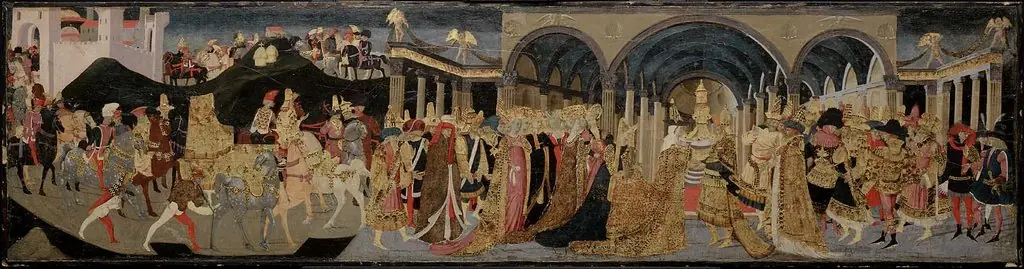
- Meeting of Solomon and the Queen of Sheba
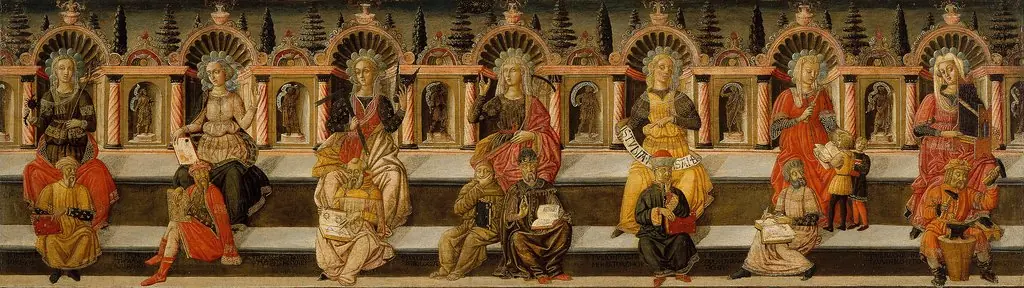 The Seven Liberal Arts
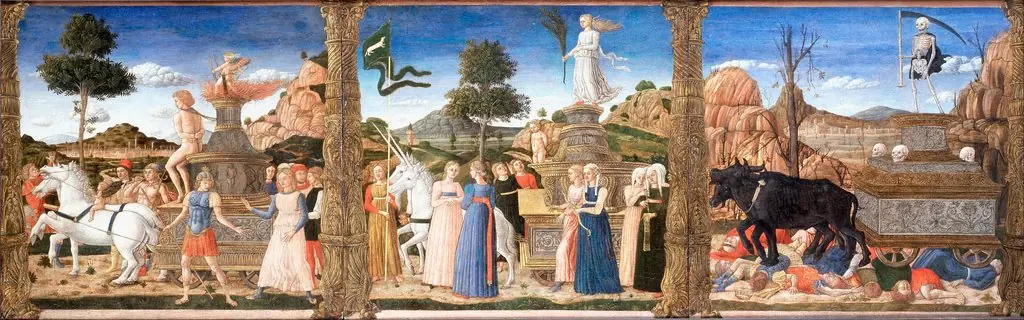 The Triumphs of Petrarch
 Garden of Love
 Story of Psyche
 Triumph of Chastity
 Episodes from the Lives of Mary Magdalen and Saint John the Baptist
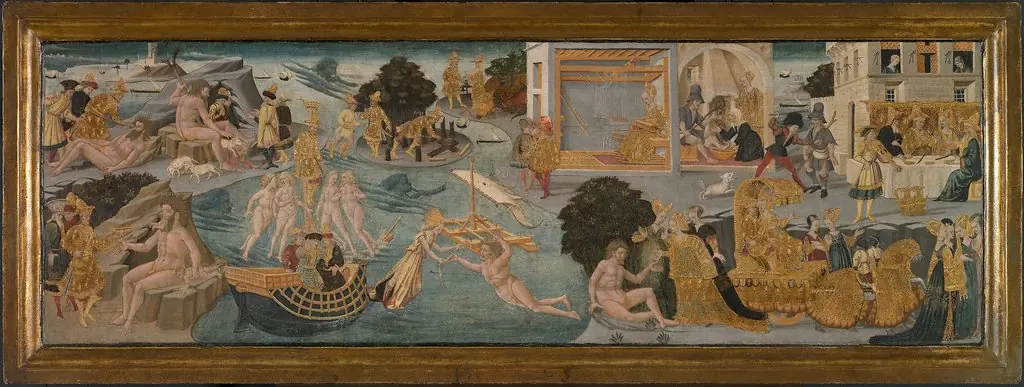 The Adventures of Ulysses
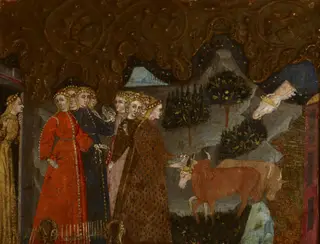 Mythological Scene (Abduction of Europe?) – Fragment of a Cassone
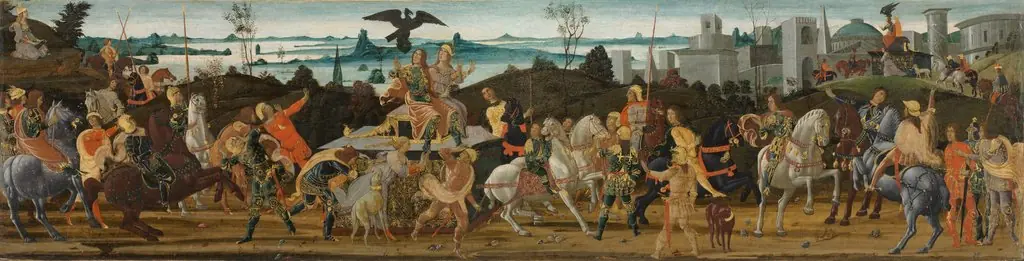 Tarquinius Priscus Entering Rome
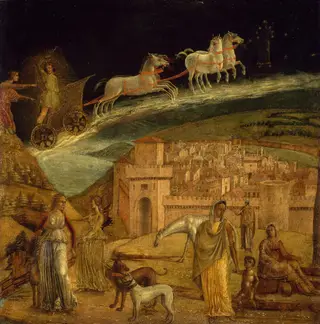 Phaeton Driving the Chariot of Phoebus
 Saint Ursula and Her Maidens