Artwork
The Nativity, with God the Father Surrounded by Angels and Cherubim
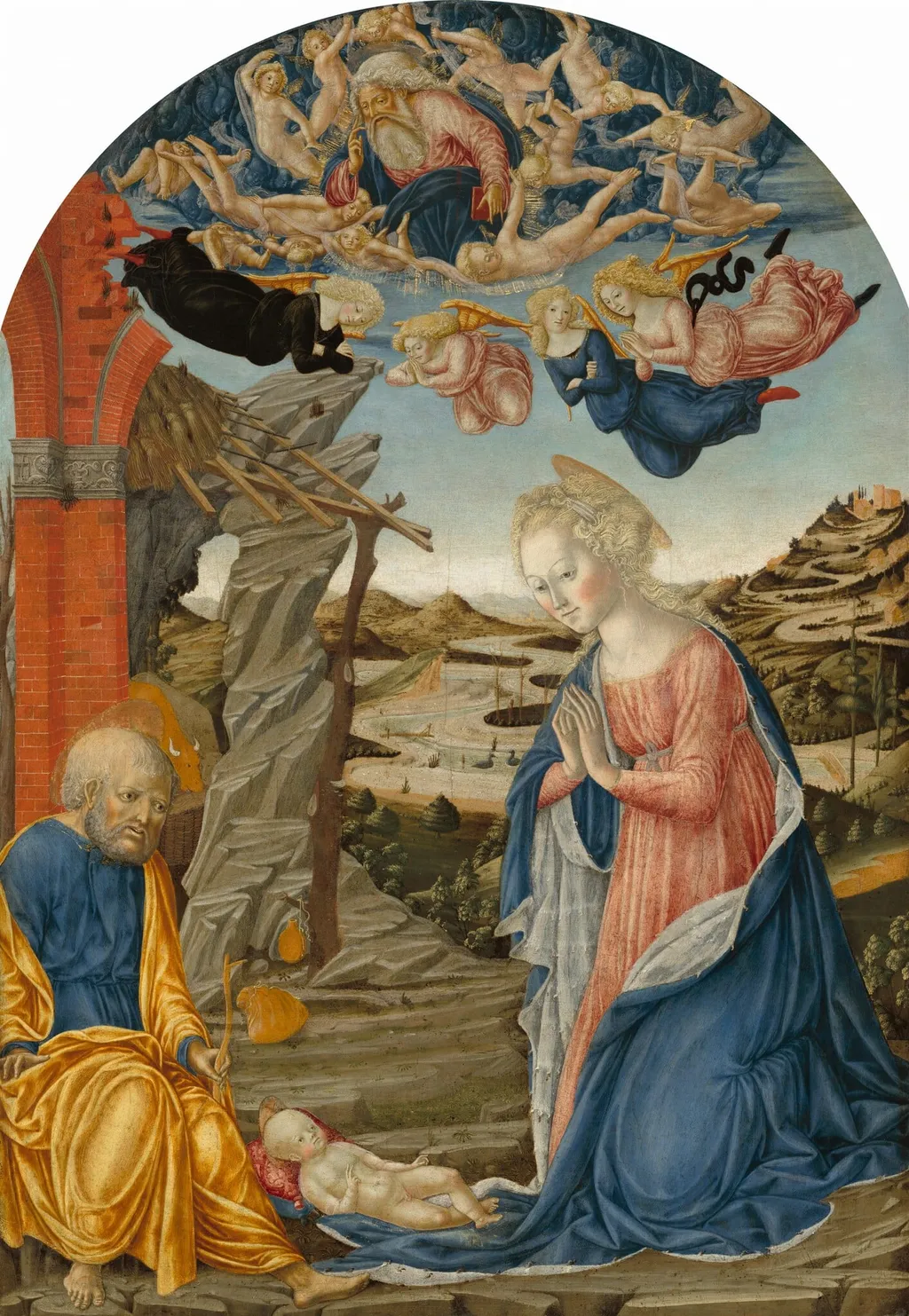
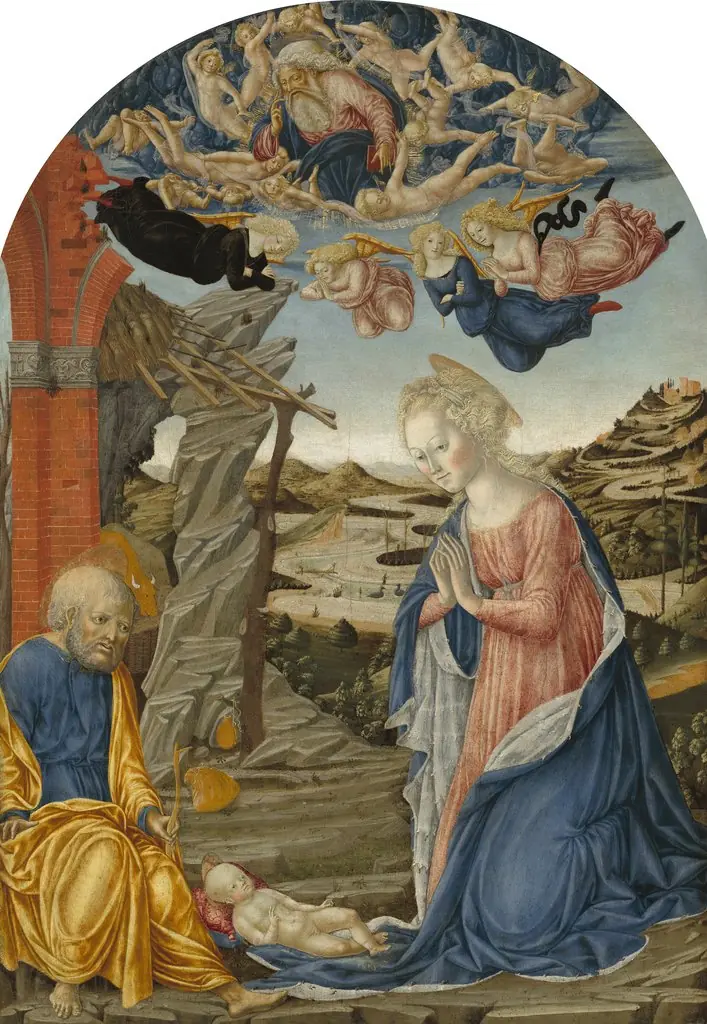
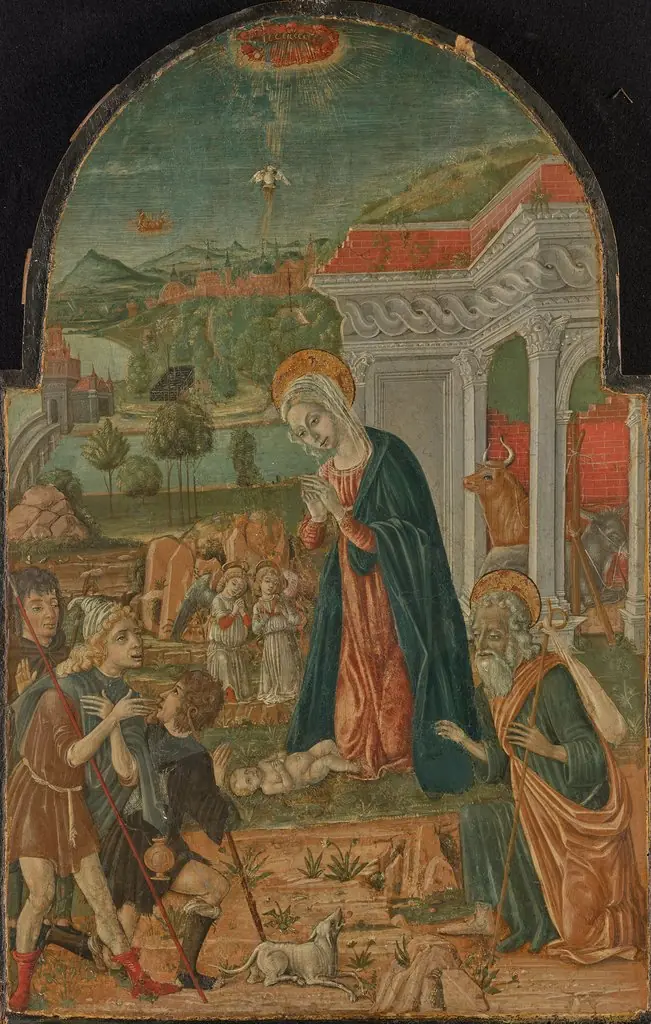
The Nativity, with God the Father Surrounded by Angels and Cherubim is a tempera painting by the Early Renaissance artist Francesco di Giorgio. It dates from 1470 and is held in the collection of the National Gallery of Art.
About this work
Subject & Meaning
This iconography aligns with typical Renaissance religious imagery, where the heavenly host and divine parent emphasize the sacredness of the incarnation.
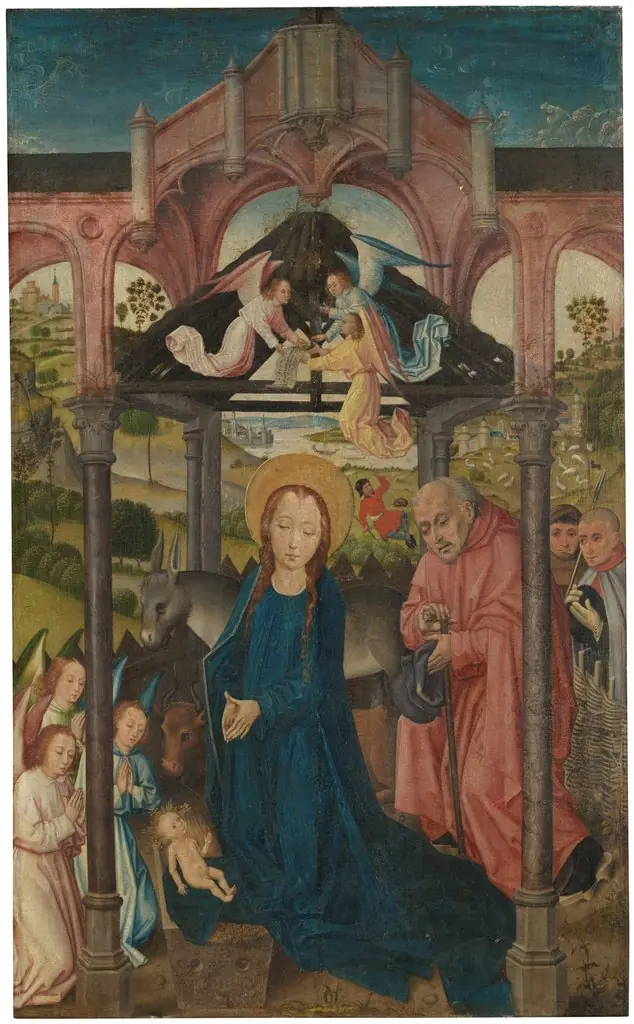
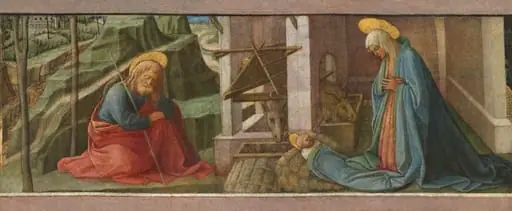
The work portrays the Nativity of Jesus, showing the infant Christ Child surrounded by angels and cherubim with God the Father hovering above. This iconography aligns with typical Renaissance religious imagery, where the heavenly host and divine parent emphasize the sacredness of the incarnation. The painting’s religious genre and its depiction of the Nativity scene reflect its function as a visual meditation on the birth of Christ, a theme that conveys theological concepts of salvation and divine presence. The composition thus communicates the spiritual significance of the Nativity within Christian art.
Technique & Style
The Nativity, with God the Father Surrounded by Angels and Cherubim is painted in tempera on a wooden panel and dates to 1470. It belongs to the religious painting genre, depicting the Nativity with the divine Father flanked by angels and cherubim. The work’s provenance is documented from 19th‑century private collections through sales to the National Gallery of Art and the Metropolitan Museum of Art, where each version is now housed. The material and support are consistently recorded as tempera on panel across both institutional records.
History & Provenance
The Nativity, with God the Father Surrounded by Angels and Cherubim is a tempera on panel by Francesco di Giorgio Martini dated 1470. The work has a bifurcated provenance because it consists of two panels that passed through separate ownership chains before being reunited. The God the Father Surrounded by Angels and Cherubim panel was held by Alphonse Kann in Paris until January 1917, when Duveen Brothers purchased it; Robert Lehman acquired it on 12 November 1920, and in June 1943 the Samuel H. Kress Foundation bought it, later gifting it to the National Gallery of Art in 1952.
The Nativity panel was owned by Charles Butler and Warren Wood by 1897, passed through Thos. Agnew & Sons, was bought in March 1904 by Robert and Evelyn Benson, returned to Agnew's, and sold in June 1905 to Alexandre Imbert in Rome; in 1917 Francis Mason Perkins sold it to George and Florence Blumenthal of New York, who donated it to The Metropolitan Museum of Art in 1941.
The painting is held in two museum collections: the National Gallery of Art in Washington, D.C., where it entered the collection as a gift in 1952, and The Metropolitan Museum of Art in New York, which received it as a gift in 1941. Its entry into the National Gallery occurred through a series of transactions that began with a 1917 purchase from Alphonse Kann and culminated in a 1952 donation, while the Met’s version passed through several European dealers before being gifted in 1941. The provided documentation does not record any exhibition history for either version.
Overview
Francesco di Giorgio Martini, a prominent figure of the Sienese Renaissance, created The Nativity, with God the Father Surrounded by Angels and Cherubim around 1470. Executed in tempera on panel, this painting showcases a central religious event, the birth of Christ, framed by celestial beings. Martini was notable for his diverse talents, excelling as both a painter within the Sienese tradition and a significant architect and military engineer.
Context
Beyond his contributions to painting, Francesco di Giorgio Martini was widely recognized for his architectural and engineering prowess. He designed numerous fortifications, notably for Federico da Montefeltro, demonstrating a practical and innovative mind. His artistic output, including this Nativity, aligns him with the Sienese School, which often blended traditional devotional themes with emerging Renaissance artistic and technical innovations.
Own this work as a print
Artist & collection

Artist
Francesco di Giorgio Martini (1439–1501) was an Italian architect, engineer, painter, sculptor, and writer.

- The Nativity
 The Nativity
 The Nativity
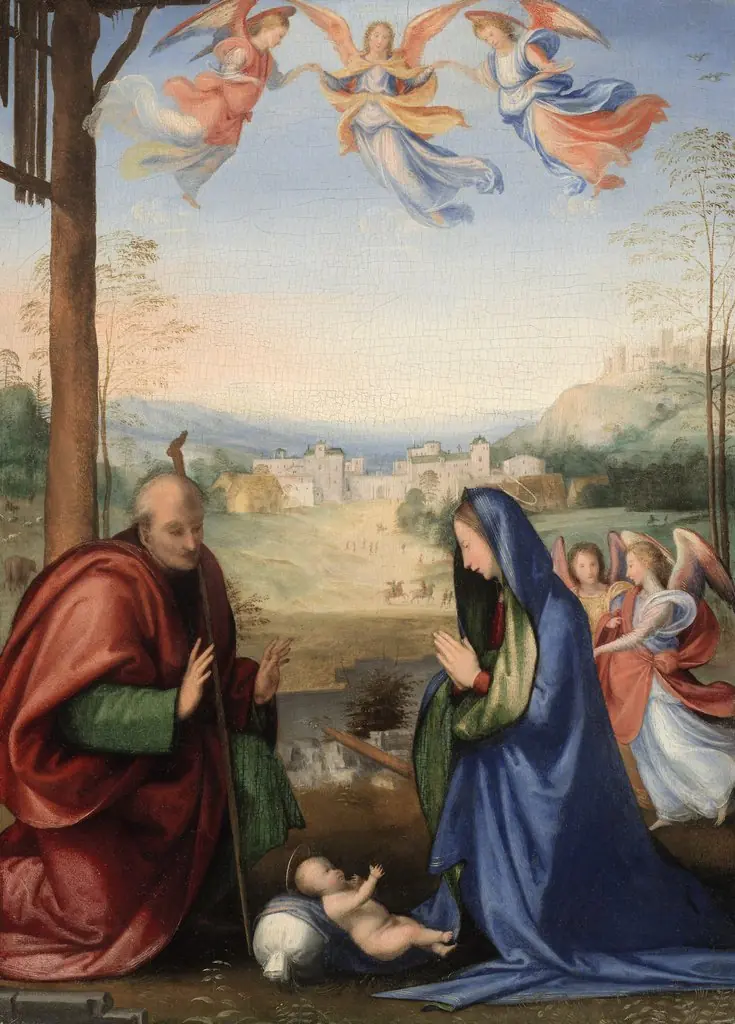 The Nativity
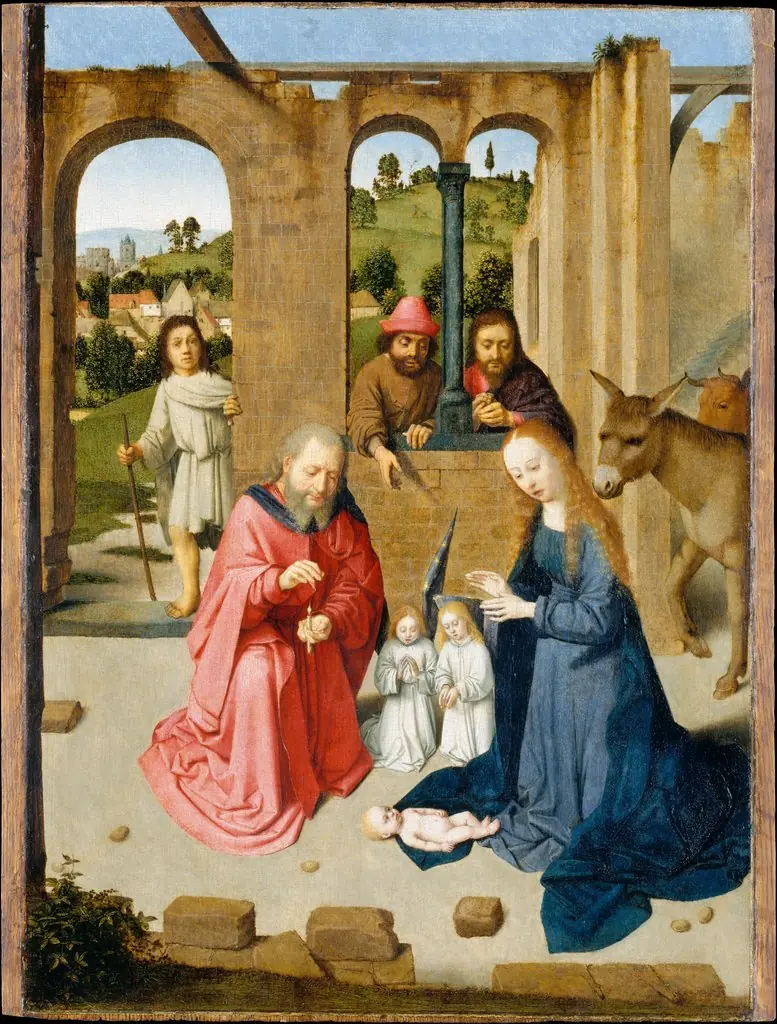 The Nativity
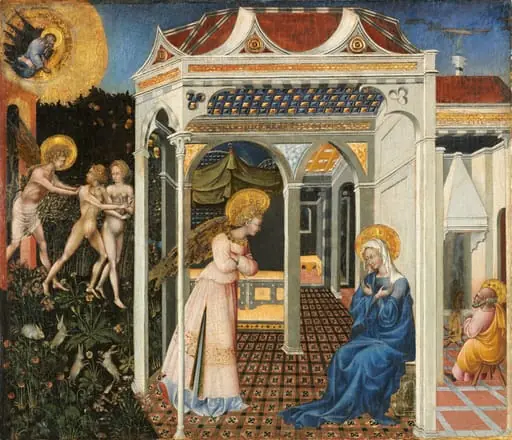 The Annunciation and Expulsion from Paradise
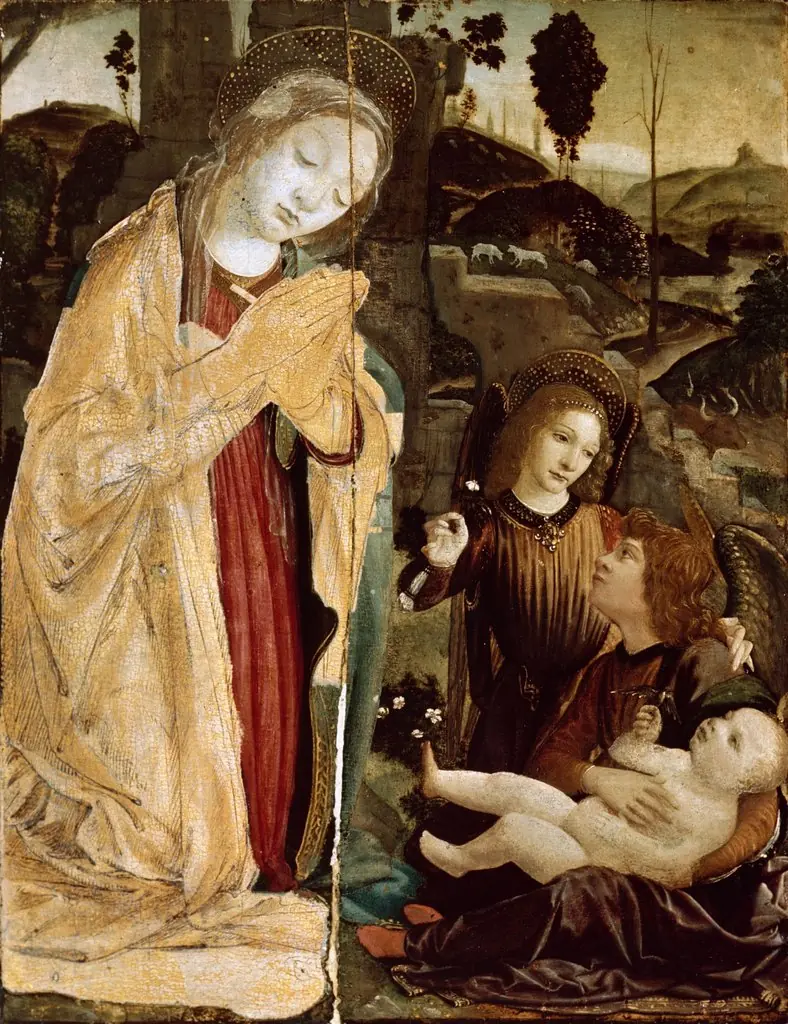 Madonna with two Angels Adoring the Christ Child in a landscape
 The adoration of the Shepherds
 The Adoration of the Christ Child
 Madonna Adoring the Child with Musical Angels
 The Adoration of the Magi